- D
- J
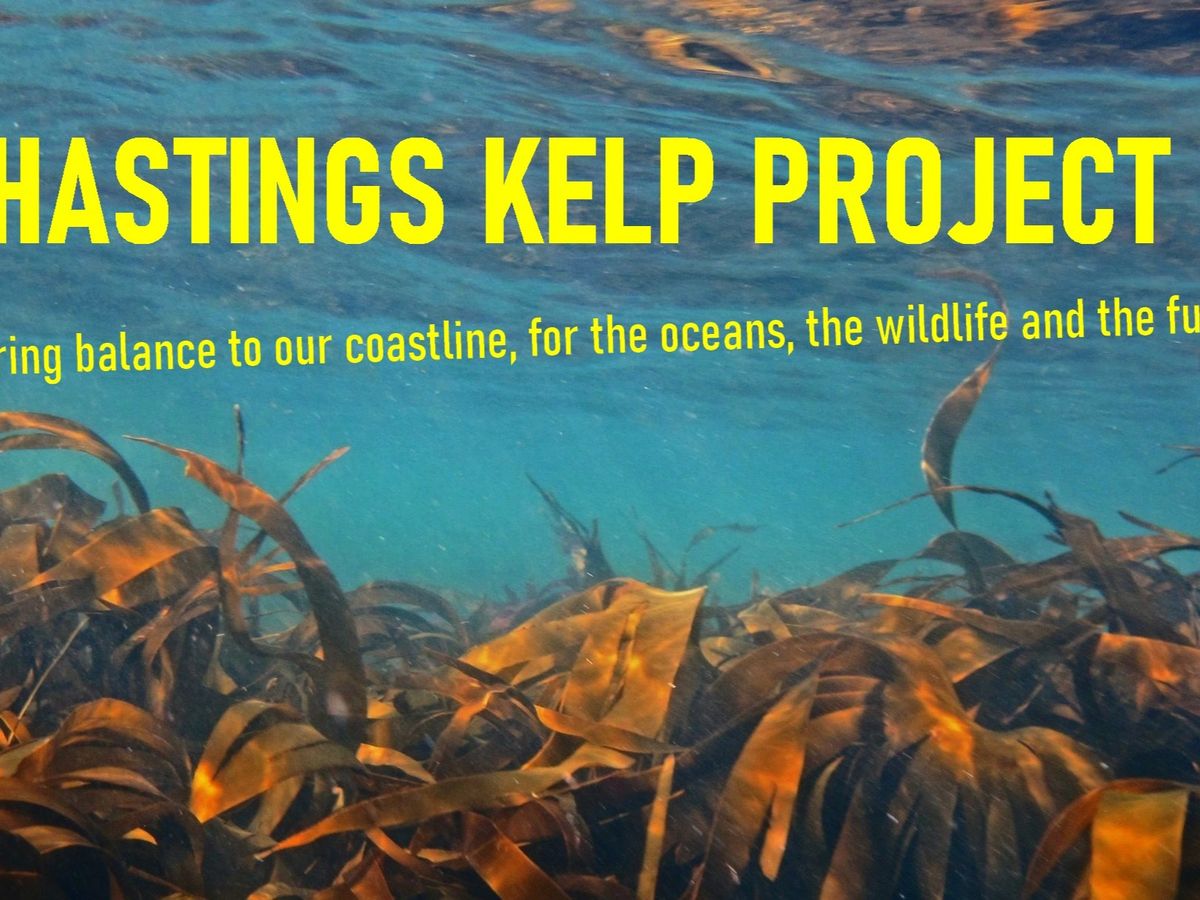
Hastings Kelp Project for wildlife and climate change
0% complete
£639 raised of
27 donations
Just off the Hastings coast, there used to be underwater forests.
Kelp forests are some of the richest habitats in British seas: swaying canopies that shelter cuttlefish, crabs, wrasse, starfish, sea snails and countless smaller creatures that live nowhere else. Along much of the Sussex coast they’ve all but disappeared, lost to pollution, warming seas and damaged seabeds.
We’re the Hastings Kelp Project, a community-led, not-for-profit group of volunteers, divers and scientists who think they can come back.
What we’ve built so far, with no government funding:
✔️ A kelp research lab behind Hastings Aquarium, with grow tanks and experiment tanks
✔️ Kelp tanks at Hastings Aquarium itself, including the public display tank
✔️ A native kelp seed bank, with stock from Falmouth, Bognor and Oban kept in a red-lit cold store
✔️ 33 hectares of shallow rock mapped where kelp could grow again
✔️ Free Saturday open labs, where anyone can come in and do real science
✔️ Sessions with 10 primary and 3 secondary schools, plus rockpooling, seaweed ID and beach cleans
✔️ A volunteer network of hundreds, including around 50 divers
How we work
Natural methods only. We grow native kelp from spores in the lab, raise it on local rocks and return it to the reefs where it belongs. No ropes, no artificial structures, and we never harvest it. This is about the wildlife, nothing else.
What we need now
Our first target is £15,000 for a proper research boat: a small centre-console RIB with a trailer and safety kit. At the moment we beach-launch a basic boat that limits where and when we can work. A reliable RIB would let us survey the reefs, monitor the water and, once approved, start planting kelp back in the sea.
After that, donations go towards:
Underwater light, temperature and water-clarity loggers, to find out exactly where kelp can survive
Seabed surveys of the reefs from Rock-a-Nore towards Pett Level
Keeping the lab, tanks and seed bank running
Free education sessions for schools and the community
Organizer

Hastings Kelp Project
Organizer