- k
English below - Francais ci dessous
Hallo, mijn naam is Almut Schlaich en ik zamel geld in om in januari 3 nieuwe GPS-zenders aan te schaffen voor het onderzoek aan overwinterende Grauwe Kiekendieven in Senegal. Deze actie maakt deel uit van het Dutch-African Landbird Initiative (DALI) en wordt uitgevoerd door Grauwe Kiekendief – Kenniscentrum Akkervogels in nauwe samenwerking met studenten van de masteropleiding Ornithologie aan de Université Gaston Berger (UGB) in Saint-Louis.
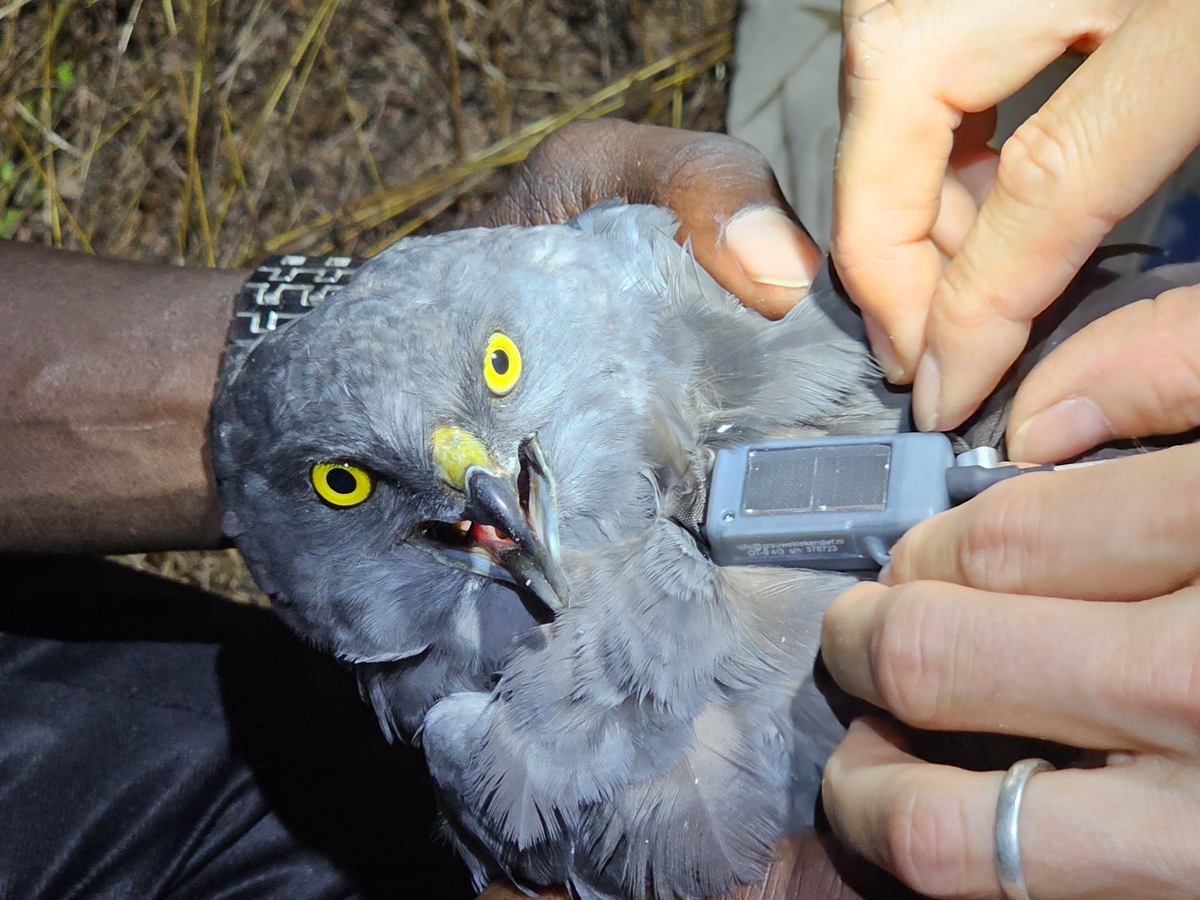
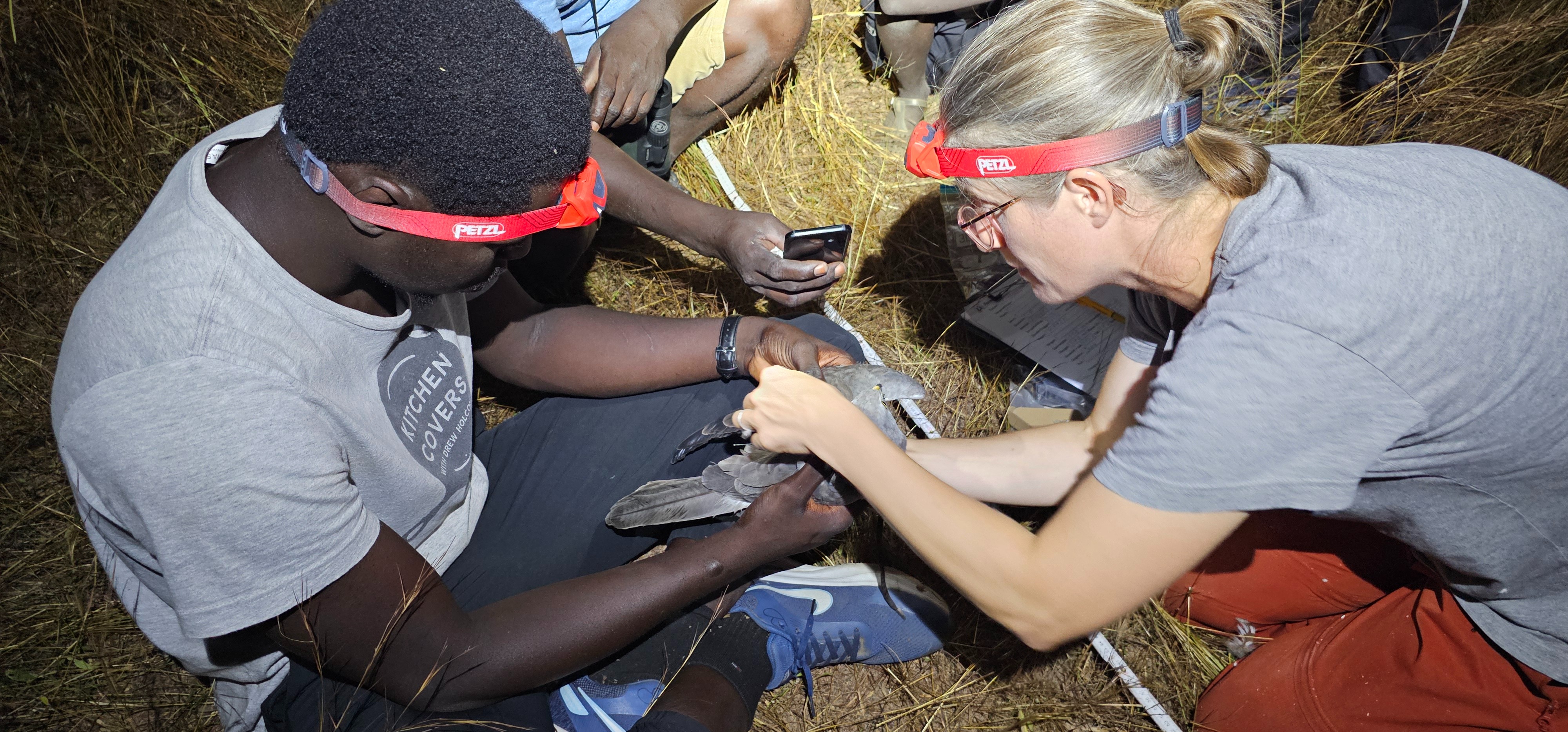
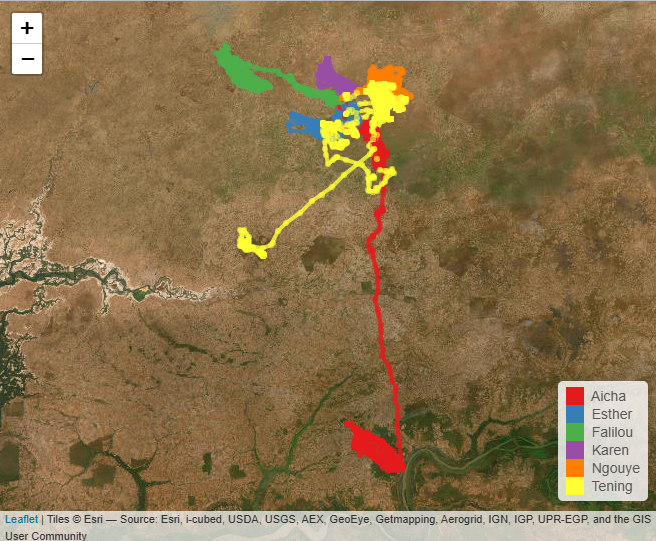
Tijdens onze recente veldmissie hebben we een grote stap vooruit gezet. Voor het eerst zijn zes overwinterende Grauwe Kiekendieven gezenderd in hun Afrikaanse wintergebied. Bijna dagelijks ontvangen we nieuwe GPS-posities via het lokale GSM-netwerk. Dat betekent dat we nu live kunnen volgen waar de vogels jagen, rusten en slapen — een unieke kans om het wintergedrag in detail te bestuderen.
Deze gegevens zijn ongelooflijk waardevol. Dankzij de actuele posities vinden we slaapplaatsen die nooit eerder bekend waren, en krijgen we inzicht in hoe de soort het landschap in de Sahel gebruikt in een periode waarin voedsel, vegetatie en landgebruik sterk veranderen.
Drie van de gezenderde vogels hebben het onderzoeksgebied inmiddels verlaten, wat normaal is zo vroeg in het seizoen. Om een volledig beeld te krijgen van het hele droge seizoen — tot februari/maart — willen we in januari nieuwe individuen zenderen die dan naar verwachting de rest van de winter in het studiegebied blijven. Januari is onze enige kans om dat te doen tijdens de volgende gezamenlijke missie.
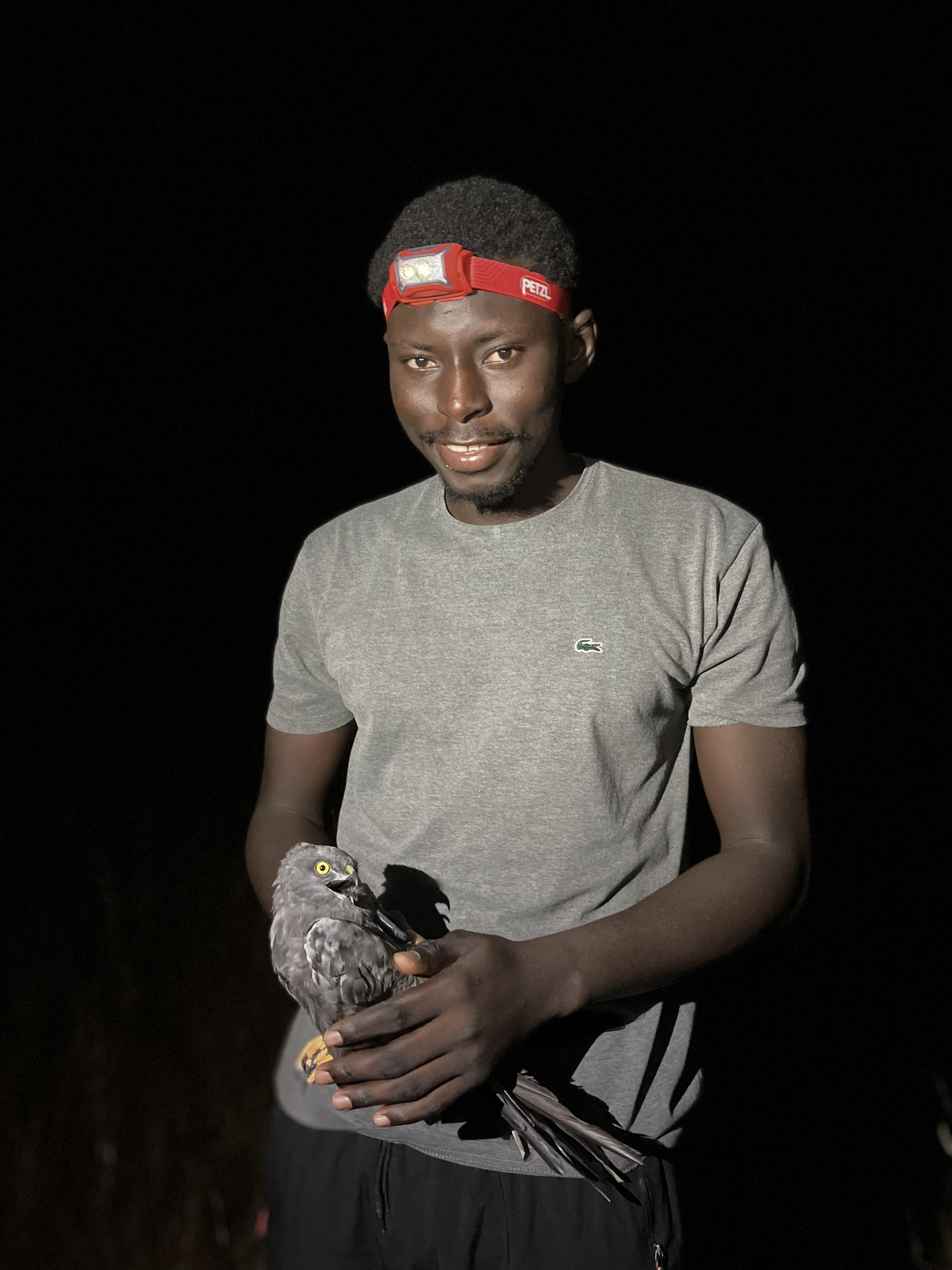
Het project is bovendien een belangrijke investering in lokale capaciteitsopbouw. Twee masterstudenten van de UGB zijn intensief door ons getraind in veldwerk, meetmethoden en gegevensverwerking. Zij zetten het onderzoek nu zelfstandig voort en gebruiken de GPS-data voor hun eigen masteronderzoek. Deze training vormt een cruciale stap in hun ontwikkeling tot toekomstige ornithologen en natuuronderzoekers in Senegal.
Dit project is mede mogelijk gemaakt dankzij een eenmalige bijdrage van Vogelbescherming Nederland, die binnen DALI specifiek de capaciteitsopbouw ondersteunt – zoals de samenwerking met onze Senegalese partners. De gebruikte GPS-zenders van de afgelopen veldmissie vallen buiten deze ondersteuning en zijn volledig gefinancierd dankzij donaties aan Grauwe Kiekendief – Kenniscentrum Akkervogels. Een GPS-zender kost €1.250; voor drie nieuwe zenders is daarom €3.750 nodig. Voor de aanschaf van deze zenders zijn we opnieuw afhankelijk van particuliere bijdragen.
Met jouw steun kunnen we:
• in januari 3 nieuwe Grauwe Kiekendieven uitrusten met GPS-zenders,
• actuele data verzamelen tijdens het volledige overwinteringsseizoen,
• Senegalese studenten helpen uitgroeien tot de volgende generatie onderzoekers.
Elke bijdrage helpt — klein of groot! Daarmee steun je het behoud van deze bijzondere trekvogel én de opbouw van lokaal onderzoek in Senegal.
--------------------------------------------------------------------------
Hello, my name is Almut Schlaich and I am raising funds to purchase 3 new GPS tags in January for our research on wintering Montagu’s Harriers in Senegal. This project is part of the Dutch-African Landbird Initiative (DALI) and is carried out by Grauwe Kiekendief – Kenniscentrum Akkervogels in close collaboration with master’s students of the Ornithology program at Université Gaston Berger (UGB) in Saint-Louis.
During our recent field mission, we made a major step forward. For the first time, six wintering Montagu’s Harriers were tagged in their African wintering grounds. Thanks to frequent GPS uploads via the local GSM network, we now receive new locations almost daily. This means we can follow the birds’ hunting areas, resting sites and roosts in near real time — a unique opportunity to study their winter ecology in detail.
These data are incredibly valuable. The up-to-date positions allow us to discover previously unknown roost sites and to understand how the species uses the Sahel landscape during a period in which food availability, vegetation and land use change rapidly.
Three of the tagged birds have already left the study area, which is normal this early in the season. To obtain a complete picture of the full dry season — through February/March — we aim to tag new individuals in January, as these birds are expected to remain in the study area for the rest of the winter. January is our only opportunity to do this, during our next joint mission.
The project is also a key investment in local capacity building. Two UGB master’s students have been intensively trained in fieldwork, measurement methods and data processing. They now continue the research independently and use the GPS data for their own master’s theses. This training is a crucial step in their development into future ornithologists and conservation scientists in Senegal.
This project has been made possible thanks to a one-time contribution from Vogelbescherming Nederland, which supports capacity building within DALI — such as collaboration with our Senegalese partners. The GPS tags used during the recent field mission fall outside this support and were fully financed through donations to Grauwe Kiekendief – Kenniscentrum Akkervogels. Each GPS tag costs €1,250; therefore, three new tags require €3,750. We therefore rely once again on private donations to purchase these new tags.
With your support, we can:
• tag 3 new Montagu’s Harriers with GPS units in January,
• collect real-time data throughout the wintering season,
• support Senegalese students as they grow into the next generation of researchers.
Every contribution helps — large or small! Your support strengthens both the conservation of this remarkable migratory bird and the development of local research capacity in Senegal.
--------------------------------------------------------------------------
Bonjour, je m’appelle Almut Schlaich et je collecte des fonds pour acheter 3 nouvelles balises GPS en janvier afin de poursuivre notre étude sur les Busards cendrés hivernants au Sénégal. Ce projet s’inscrit dans le cadre du Dutch-African Landbird Initiative (DALI) et est mené par Grauwe Kiekendief – Kenniscentrum Akkervogels, en étroite collaboration avec des étudiants du master d’Ornithologie de l’Université Gaston Berger (UGB) à Saint-Louis.
Lors de notre récente mission de terrain, nous avons franchi une étape importante. Pour la première fois, six Busards cendrés hivernant en Afrique ont été équipés de balises GPS. Grâce aux transmissions régulières via le réseau GSM local, nous recevons presque quotidiennement de nouvelles positions. Cela nous permet de suivre presque en temps réel leurs zones de chasse, leurs sites de repos et leurs dortoirs — une occasion unique d’étudier en détail leur écologie hivernale.
Ces données sont d’une grande valeur. Les positions actualisées nous permettent de découvrir des dortoirs jusqu’ici inconnus et de comprendre comment l’espèce utilise le paysage sahélien pendant une période où la nourriture, la végétation et l’usage des terres évoluent rapidement.
Trois des oiseaux équipés ont déjà quitté la zone d’étude, ce qui est normal en début de saison. Pour obtenir une vision complète de toute la saison sèche — jusqu’en février/mars — nous souhaitons équiper de nouveaux individus en janvier, car ceux-ci devraient rester dans la zone d’étude jusqu’à la fin de l’hiver. Janvier est notre seule opportunité de le faire, lors de notre prochaine mission commune.
Le projet constitue également un investissement essentiel dans le renforcement des capacités locales. Deux étudiants du master de l’UGB ont été formés de manière intensive au travail de terrain, aux méthodes de mesure et au traitement des données. Ils poursuivent désormais le suivi de manière autonome et utilisent les données GPS pour leurs propres mémoires de master. Cette formation est une étape cruciale dans leur développement en tant que futurs ornithologues et chercheurs en conservation au Sénégal.
Ce projet a été rendu possible grâce à une contribution unique de Vogelbescherming Nederland, qui soutient spécifiquement le renforcement des capacités dans le cadre de DALI — notamment la collaboration avec nos partenaires sénégalais. Les balises GPS utilisées lors de la dernière mission ne sont pas couvertes par ce financement et ont été entièrement financées par des dons à Grauwe Kiekendief – Kenniscentrum Akkervogels. Chaque balise GPS coûte 1 250 € ; l’achat de trois nouvelles balises nécessite donc 3 750 €. Nous dépendons donc une nouvelle fois de contributions privées pour acquérir ces balises.
Grâce à votre soutien, nous pourrons :
• équiper 3 nouveaux Busards cendrés de balises GPS en janvier,
• collecter des données actualisées tout au long de la saison d’hivernage,
• soutenir la formation de la prochaine génération de chercheurs sénégalais.
Chaque contribution compte — petite ou grande ! Votre aide soutient à la fois la conservation de cet oiseau migrateur remarquable et le développement de la recherche locale au Sénégal.
Organizer
St. Grauwe Kiekendief
Organizer