- J
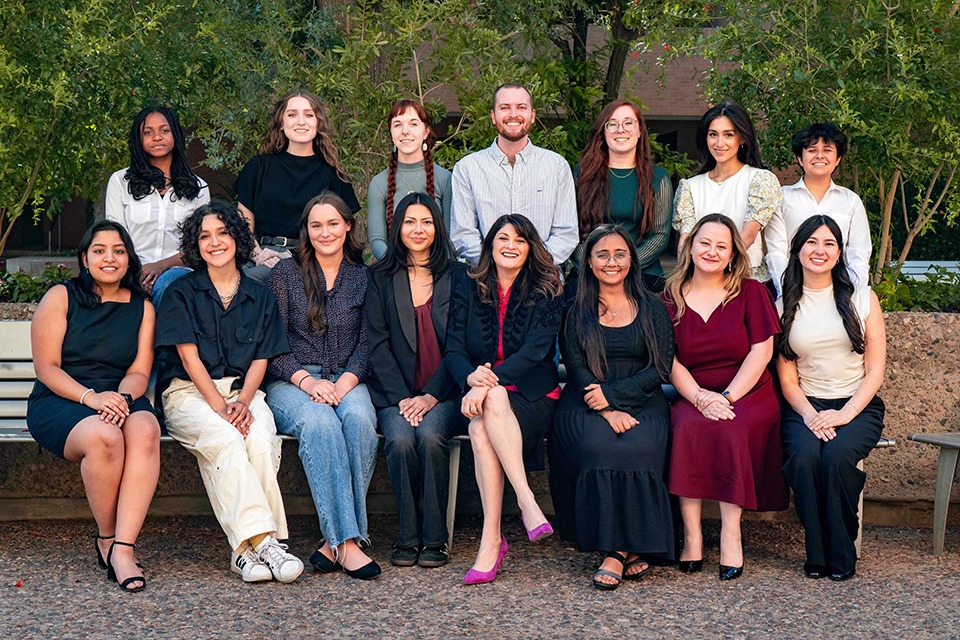
Fund Science & Student Training for Menopause Research
0% complete
$4,910 raised of $7.5K
40 donations
RATIONALE FOR CROWDFUNDING FOR WOMEN’S HEALTH SCIENCE:
- Devastating scientific budget cuts have yielded unprecedented concerns to keep critical medical science moving.
- In response, as the Laboratory Director, I am launching this crowdsourcing campaign to keep our Neuroscience of Menopause and Memory Laboratory functioning. This will allow our research, and training of student scientists, to continue. They are the future of science, they need our support.
- Our immediate goal is to complete our current experiment. For historical context, funding is now dire due to cuts to scientific topics driven by newly dictated administrative priorities. Until March of 2025, our laboratory had continuous two decades-long NIH funding to support our students and science. There is now none.
- I will not give up on the science of women's health, and on my students' training.
ABOUT US- THE BIMONTE-NELSON NEUROSCIENCE OF MENOPAUSE AND MEMORY LABORATORY:
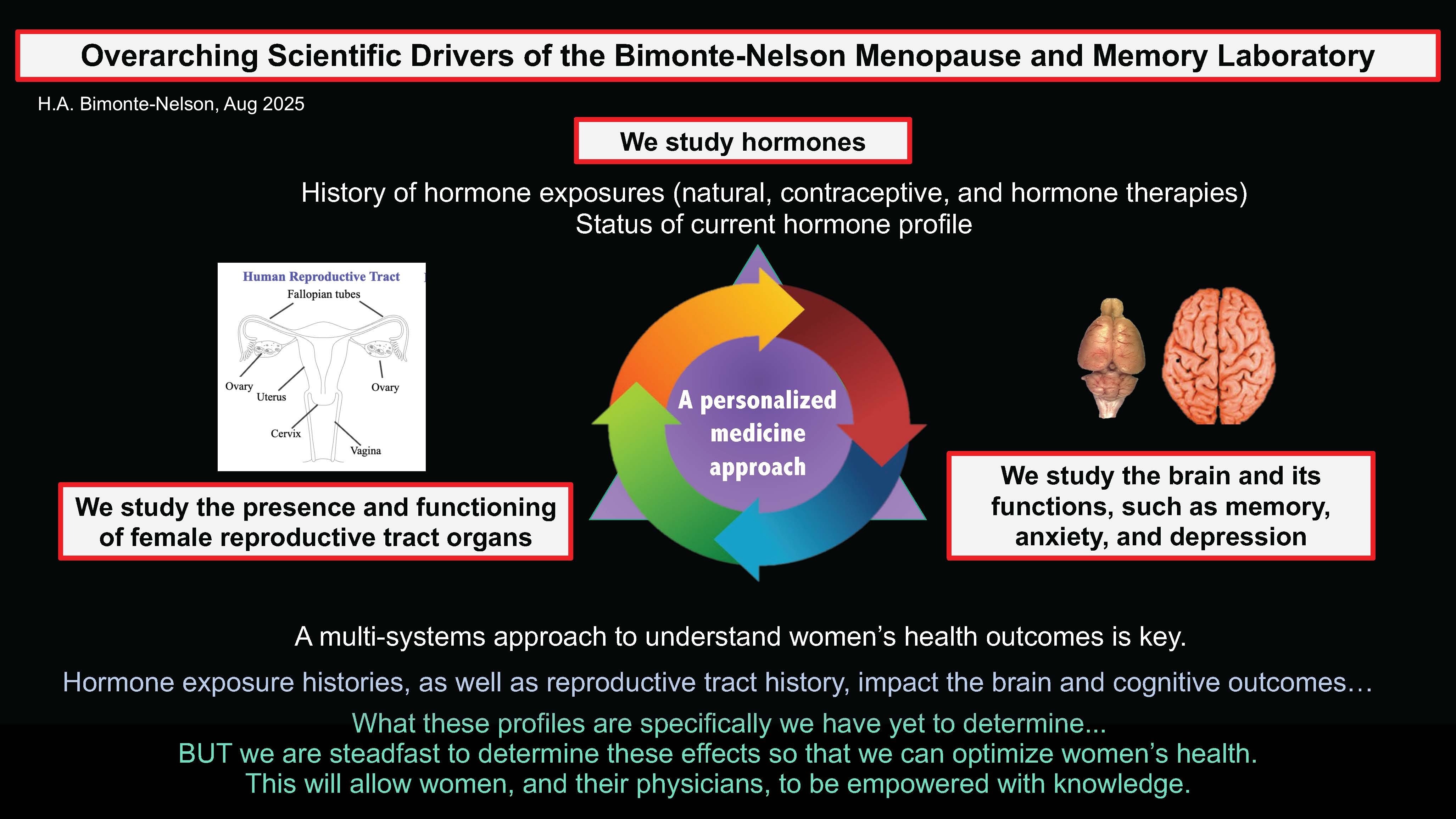
- For nearly 30 years, I (Heather Bimonte-Nelson) have tested memory and the brain as related to menopause, menopausal hormone therapies, contraceptive hormones, and aging. Our overarching goal is to optimize understanding of ovarian hormone and female reproductive organ functions across the lifespan so that optimal quality of life and wellness can be achieved.
- The focus of our science is to benefit women’s health, and closing the deep disparity gap in women’s health knowledge; women’s health questions are only about 3% of neuroscience research.
- We have a summary of our lab goals in a photo below.
A BRIEF SUMMARY OF OUR MOST RECENT FINDINGS:
- Our research indicates that estrogen exposures across the lifespan impact the brain and its functions, including into aging. We have also recently shown that the presence or absence of the uterus impacts memory functioning, and are on the cusp of discovering why this is so. We are now showing memory detriments and particular brain changes after removal of the uterus alone, and this work has been prematurely halted.
- Uncovering the driving factors will allow a new understanding of how female reproductive organs and hormones contribute to whole body health, including functions such as memory, anxiety, and depression, including during aging and with a range of neurodegenerative diseases.
More information about me and our laboratory: Heather Bimonte-Nelson, Ph.D. https://psychology.asu.edu/research/labs/behavioral-neuroscience-of-memory-and-aging-lab
Your generous contribution, whether it is by sharing this campaign or monetary, is so very appreciated. All donations will support the purchase of supplies, thereby simultaneously permitting our lab students to complete their data collection.
Students are the heart and lifeblood of my career as a neuroscientist, and our laboratory's research. I am steadfast to continue this tradition; this is the driver of why I have created this crowdfunding campaign. I have been the proud primary mentor to over a dozen PhD students, 140 high school/undergraduate students, and over 30 undergraduate honors students. I have over 110 peer-reviewed publications in medical journals and book chapters, and a book on memory, the majority of which include my students as co-authors.
THE CURRENT STUDY AT RISK:
- My laboratory students and I thought initiating a stepwise procedure was the optimal way to approach our goals, with the hopes of being able to complete our laboratory’s recent study from generous contributions via crowdsourcing. We believe the public cares about women’s health research, and our next generation of scientists, so while this mode of funding is unprecedented for laboratory research support, these are unprecedented times and we must adapt or lose it all. My highly dedicated students believe the world will invest in their training, and will see the importance of continuing to study women’s health research questions.
- We have recently discovered memory and other physiological effects after treatment with a newly approved menopausal therapy used in women, but never evaluated for brain and these other effects. We are showing that these effects are impacted by the history of surgical menopause, including removal of the ovaries or removal of the uterus.
- With more research on the mechanisms of these effects, our discoveries will drive new understanding of how the ovaries or uterus can impact brain functioning, what specific targeted menopause therapies can do, and could uncover novel avenues to treat cognitive decline, dementia, or neurodegenerative-associated cognitive changes in women.
- Women's health research must have a personalized health history approach, as we have shown in several studies that the PRESENCE OR ABSENCE OF THE UTERUS MATTERS for brain function (Bimonte-Nelson and Bernaud, 2023; Koebele et al., 2019, 2023). The non-pregnant uterus carries with it a long-standing dogma that it is a “quiescent” and “useless” organ as an independent structure that only serves to “accommodate and support a fetus” (Navot and Williams, 1991; Rosen and Cedars, 2007). However, this is not true. The non-pregnant uterus has a unique, dynamic capacity to respond to body challenges and has direct connections to the central nervous system. The uterus is not simply a structure for housing and developing a fetus.
- Our work over the last few years is building, showing memory impairments weeks to a year after hysterectomy. We believe this "useless non-pregnant uterus" dogma must be overturned. Please join us in discovering the truth through rigorous scientific methods and experiments, collecting data across multiple systems.
THE IMMEDIATE GOAL:
In order to complete this study and submit it for a peer reviewed publication to a medical journal, and to ascertain the next necessary scientific questions, we have several steps remaining:
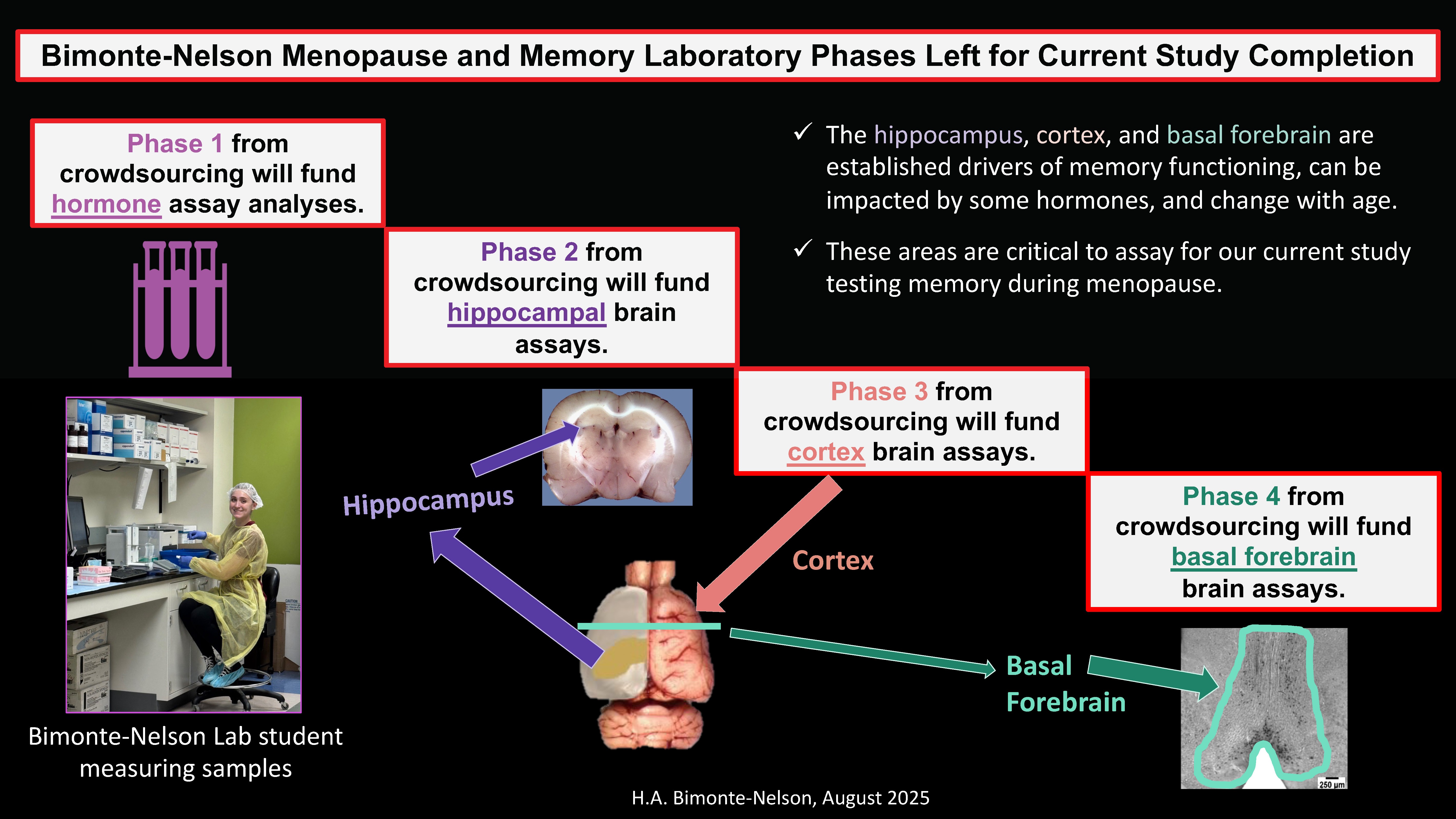
1. We need to determine hormone levels in the blood to understand how hysterectomy and the drug could be working. We have the blood samples, and to analyze them will cost about $15,000 in total. We decided to start with an initial goal of $7500 to run the first half of the hormone measurements.
2. After this full hormone assay step has been achieved, we plan to run neurochemical assays on the hippocampus and cortex areas of the brain. These are brain areas that drive memory function and have receptors responsive to neurotransmitters affecting memory. Receptors are like “catcher mitts” for the neurotransmitters, so that the neurotransmitter signals can be read by the body.
3. The hippocampus samples will be chemically assayed first. The cost to assay the hippocampus samples will be $10,000.
4. The next goal will be to chemically assay specific cortex samples. The cost of the cortex samples will be an additional $10,000.
If we are lucky enough through your generosity to have funds that extend these goals, we will perform neurochemistry assessments in the basal forebrain brain area, which will cost another $10,000. This brain area has important nerve network connections to the hippocampus and cortex. This addition will permit a more complete understanding of the networks facilitating the memory types we evaluated.
We have a summary of these phased study completion goals in a photo below.
IN SUMMARY
These assessments will further enrich our scientific discovery regarding the effects of female reproductive organs and hormones on the brain and other systems, and permit model development for our next studies on menopause. It will also permit my two amazing graduate students to progress to their next milestones so that they can complete their PhDs, and facilitate undergraduate junior scientist training, including obtaining data for several student honors theses. A heartfelt thank you for considering supporting our students and scientific research.
Organizer