- N
- T
- K
Hi, my name is Pema. I live in Australia with my family, but I am actually from Bhutan. I am starting this campaign to raise funds for a project to bring back some old songs (1980s). To this end I will be reaching out to budding young artists and musicians in Bhutan who will be the beneficiaries of the funds raised. The goal of this project is to tell a story of Bhutan's 1980s popular music culture and in the process give a little boost to the nascent music industry in Bhutan. I would really appreciate it if you could spend some time reading this proposal and donate.
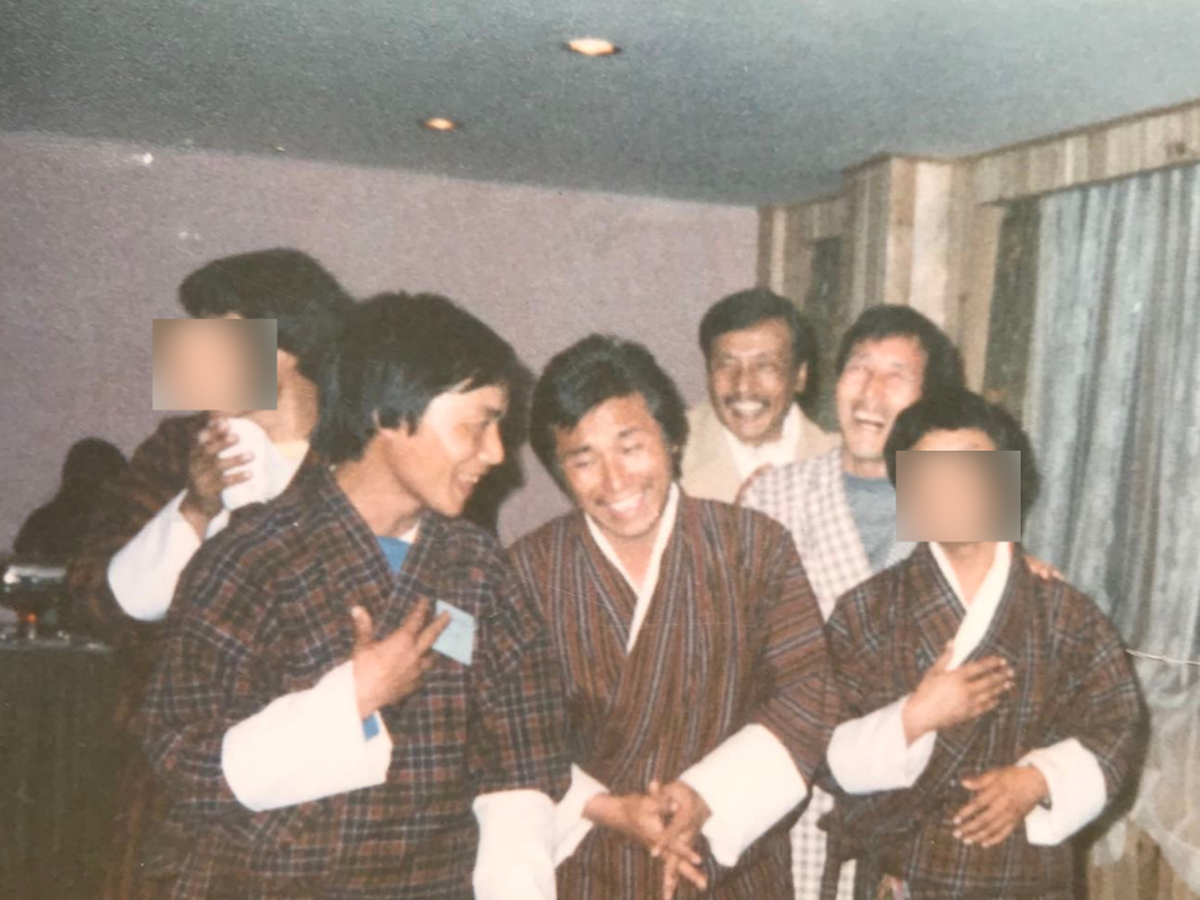
I am trying to revive some forgotten songs that my father, Thinley Gyamtsho and his friend, Uncle Tashi Gyeltshen wrote and sang in 1980s Bhutan. The songs remain in bits and pieces, but people have long forgotten the persons behind the songs. My project will revive those songs with the help of young budding artists and musicians in Bhutan, and introduce the younger generation as a whole to 1980s Bhutan's popular music culture.
I am trying to revive some forgotten songs that my father, Thinley Gyamtsho and his friend, Uncle Tashi Gyeltshen wrote and sang in 1980s Bhutan. The songs remain in bits and pieces, but people have long forgotten the persons behind the songs. My project will revive those songs with the help of young budding artists and musicians in Bhutan, and introduce the younger generation as a whole to 1980s Bhutan's popular music culture.
In the 1980s, Bhutanese music saw an emergence of a popular trend, a new genre moving away from the more traditional Zhungdra and Boedra genres. A new genre called Rigsar (pretty sure it wasn't called Rigsar then) was born. Until then (1960-70) Bhutanese popular songs mainly included Dzongkha versions of Bollywood (India) songs.
A paper by Dr. Sonam Kinga on Bhutanese music argues that one historical event that marked this emergence was when in 1980 Thinley Gyamtsho (Full disclosure - he is my father), then a teacher at Samtse High, composed and sang "Dorozam" during a school concert. His songwriting & singing first began in the 1970s & early 1980s to teach Dzongkha to Lhotsampa students who found it easier to learn Dzongkha through the songs. This little experiment later gave us fantastic tunes associated with 1980s Bhutan. Many of us who were adults or kids around mid-1980s remember the songs like "nga gi choe lu masong", "Gola bumta mathra", "droba atara" and many more playing on the radio and in shops!
The original version of the songs was just vocals backed by an acoustic guitar played by uncle Tashi Gyeltshen. Uncle Tashi would often sing songs that were more jovial. Most of the songs were jointly composed by Thinley Gyamtsho and Tashi Gyeltshen, known as Gyamtsho & Tashi. But unfortunately, there was no music industry then and no recording studios. So whatever small number of cassettes produced (by using a tape-recorder, in our bedroom) had all but vanished by the early 1990s (apologies to the young who are not familiar with tape-recorders and cassettes).
There have been many covers/renditions through the years, but to date, almost all of them did not get the complete lyrics of any of the songs. I have scrambled youtube/google and have not found one!
I have always dreamed of restoring the original songs and producing music videos that will also introduce to the younger generation my father and uncle Tashi's contribution to Bhutanese music in the 1980s. These videos will include short clips of them telling the story behind each song. That way, I believe in the future, people will remember them as the men behind most of the 1980s tunes they are familiar with.
To revive the songs, I am venturing on this project of restoring at least ten songs (to begin with) for which the original singer/composer has supplied the full lyrics. The project has two parts:
1) to record the songs with original lyrics wrapped in the musical skills of the 2020s Bhutanese youth
2) produce music videos.
However, this fundraiser is only for the first part but that being said additional support for producing music videos is also highly appreciated. I was advised that recording each song will cost around Au$200 ($100 to the studio & $100 to the singer), so a catalogue of 10 pieces will cost Au$2000. This studio I would like to contract offers a platform to the youth in Bhutan, and the singers I have in mind are mostly students but are pretty famous. So think of this as a contribution to the nascent music industry in Bhutan as well. Receipts of expenses will be made public. In addition, all final recordings of the songs will be made freely available via various social media platforms.
The next stage will be producing music videos and if possible a documentary on story behind the songs, which will cost a couple of hundred for each song, totaling to around $7000 for the whole catalogue. If donations exceed the goal, I intend to use it to fund the production of music videos and documentary. So Please contribute. Any amount is highly appreciated. Even a $10 contribution will go a long way in supporting this project. Thank you very much for your support.
Cheers,
Pema