- T
- M
Goal:
To covert the over 100 year old Quinn
Chapel AME Church to a museum to
house rare artifacts and documents of
local, state, and national significance.
Project:
The Freedmen Institute Museum Project has been in the planning and acquisition
stage for a number of years during which a large number of rare and original
artifacts and documents of local, state,
and national significance have been
collected. The property chosen to house this museum is the over 100 year old
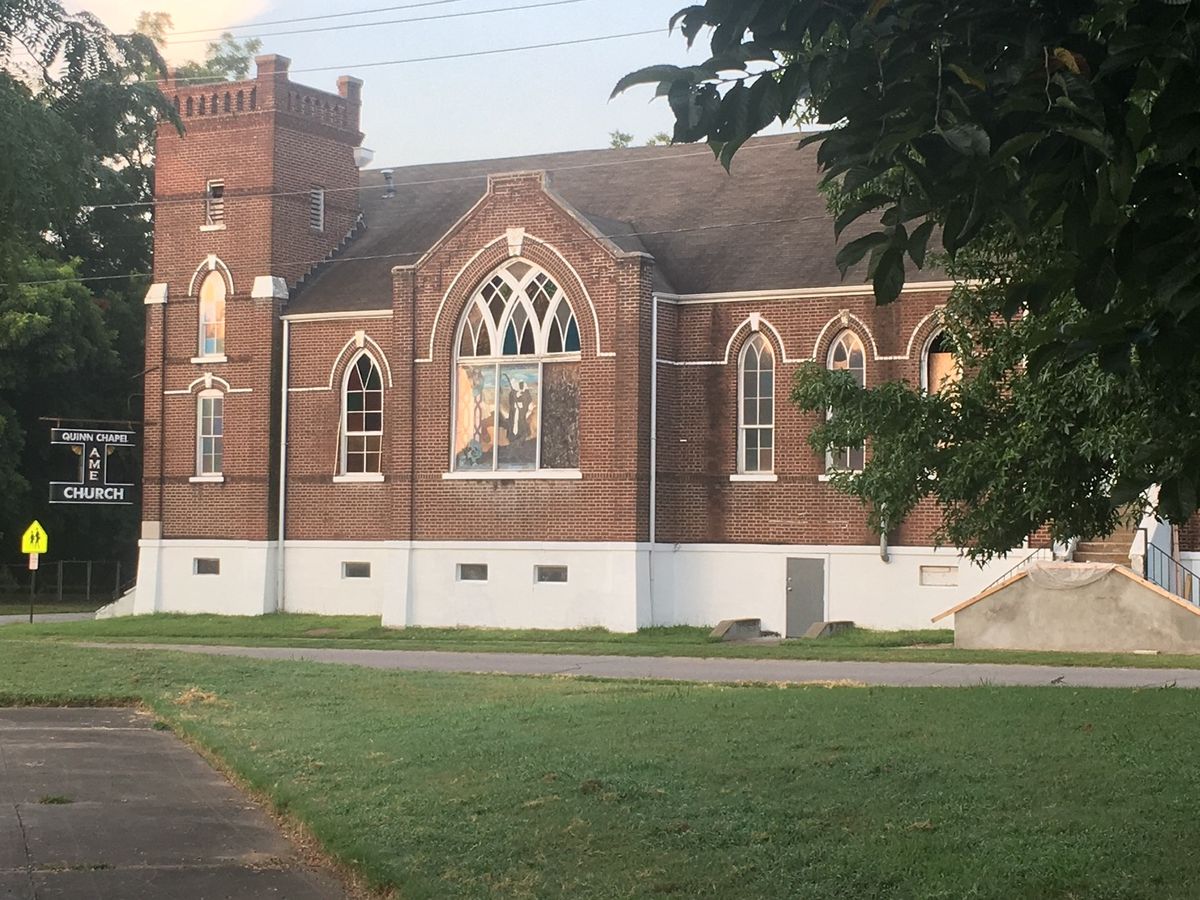
former Quinn Chapel African Methodist Episcopal Church, Fort Smith, Arkansas. The next stage is to begin the immediate process of stabilizing and restoring this
property.
This historic property has been placed on
the list of one of the Most Endangered
Places in the State of Arkansas (https://preservearkansas.org/wp-content/uploads/2016/05/MEP-Press-Packet-2018-compressed.pdf) and is in immediate need of significant repairs.
Across the country, these historic black
churches are vanishing as a result of
arson, vandalism, or have fallen into
disrepair. Saving and converting this
structure into a museum to house and
preserve historical documents, rare
artifacts and a learning center of local,
state, and national significance is the goal
of “The Freedmen Institute Museum
Project.” It would be symbolic to have
your participation and contribution in
saving this endangered structure and to have your names placed on the donor
board that will be part of a permanent
fixture within this museum for many
generations to come.
Your donations may remain “Anonymous should you desire to do so:
www.freedmeninstitute.com
The Property:
The property selected to the house
historical collections, artifacts and
learning center of the Freedmen Institute is the former Quinn Chapel AME Church, Fort Smith, Arkansas. The church was
organized in 1864, during the height of
the Emancipation Proclamation, by
former slaves, freedmen, free persons of color, and a number of volunteers. It is
believed to be the first African-American church structure built in Fort Smith,
Arkansas. In 1917, the church structure underwent significant renovations to its current Gothic architectural design. In
2013, the congregation moved to
another location in the city and the
building has remained vacant since that
time. In 2018, the building suffered a
small fire in the northwest corner of the
basement and 1st floor; however, the
main chapel was spared any significant
damage other than smoke and water
damage in the same corner. Thus, the
building has been declared structurally
sound.
The most pressing issues, at this time, are
Phase I:
(1) deteriorating and crumbling cement
steps to both front and side entry need to be repaired or replaced immediately to
address citations and safety issues by the City of Fort Smith Building Inspectors
(2) securing building against intrusion
from vandals and vagrants (3) complete
clean out and removal of debris,
damaged carpeting and other material
repairs (4) secure, repair, and seal
window trim to protect remaining
stained glass and windows (5) address
any exterior, interior, and potential
electrical issues (6) upgrades to existing restrooms and plumbing.
Phase II:
(1) Incorporate in the above layout the
design plan for housing and displaying
historical documents and other artifacts
(2) space considerations for scaled down chapel, media, and research area
(3) replace damaged or loss stained glass (4) restoring woodwork, pressed
architectural tin ceiling, balcony, and
other structures to its original design.
Fort Smith Arkansas History
The historic city of Fort Smith, Arkansas played a significant role in the United
States government’s Land Expansion, as part of the Indian Removal Act. To
accomplish this expansion, the
government sought to remove the
”Native American Indians” off their land
throughout the Southeastern part of the country by signing a number of Treaties with various Indian Tribes, particularly
the Seminole, Cherokee, Choctaw,
Chickasaw, and Creek, forcibly marching them from their land, in what has
collectively been referred to as the
Trail of Tears. The border town of Fort
Smith, Arkansas was the last destination of these groups where they were
processed and crossed into “Indian
Territory” now, present day Oklahoma. It wasn’t widely known, until more recently, that along the Trail were large numbers
of ‘blacks’ who were slaves of those
Indian Tribes as well as many Free
Persons of Color. During that time, these individuals lived among or in
communities in close proximity to the
various tribes and others indigenous to
the areas. Many of these People of Color were often indistinguishable from the
Native Indians or had intermarried into
the various tribes. A landmark marking
the area of the final crossing of those
tribes and other people of color is
presently located in downtown Fort
Smith. While large numbers of the
Seminoles escaped back to Florida, many any of these former slaves and other Free Persons of Color escaped enslavement
by crossing back into the town of Fort
Smith, Arkansas where they established
families, built prosperous communities,
churches, and engaged in helping to
shape the fabric of the city of Fort Smith, Arkansas.
Additionally, during the time immediately following the Civil War, as the
Freedmen’s Bureau was helping to
establish schools across the country for
the education of newly freed slaves, the
Fort Smith area received assistance from the bureau and established the first
school for “Negroes” in 1867. The school was named (Howard School) after
General Otis Oliver Howard, the head of the Freedmen’s Bureau and founder of
Howard University, Washington, DC. As enrollment increased, a larger brick
structure was built one block away,
bearing the same name (Howard). The
former Quinn Chapel AME Church lies
adjacent to the land that housed Howard School. Church records reveal that the
congregation gave up the opportunity to own that land so that the school for
“Negroes” could be built there, opting
instead to build on the land adjacent to
the school’s location.
The Urgency
All across this country, these historical
structures are vanishing as a result of
arson, vandalism, or simply fallen into
disrepair, often leading to their
demolition. Our once prosperous
communities and neighborhoods are
being changed forever, as some of the
most fragile and elderly citizens are
transitioning or being edged out, leaving these once cherished structures (homes, businesses, and places of worship) vacantvandalized, and destroyed. The current
structure (former home of Quinn Chapel African Methodist Episcopal Church) is
listed as one of the State of Arkansas’
Most Endangered Structures and is on
the brink of being lost forever.
Your contribution (regardless of the
amount) to help preserve this structure will be greatly appreciated.