- C
- D
- S
Football Boots to Wheelchair: Ollie’s Fight Against CRPS
0% complete
£3,420 raised of £7K
117 donations
We are Lee and Emma, the parents of Ollie, an 11-year-old boy whose life has been turned upside down by Complex Regional Pain Syndrome (CRPS).
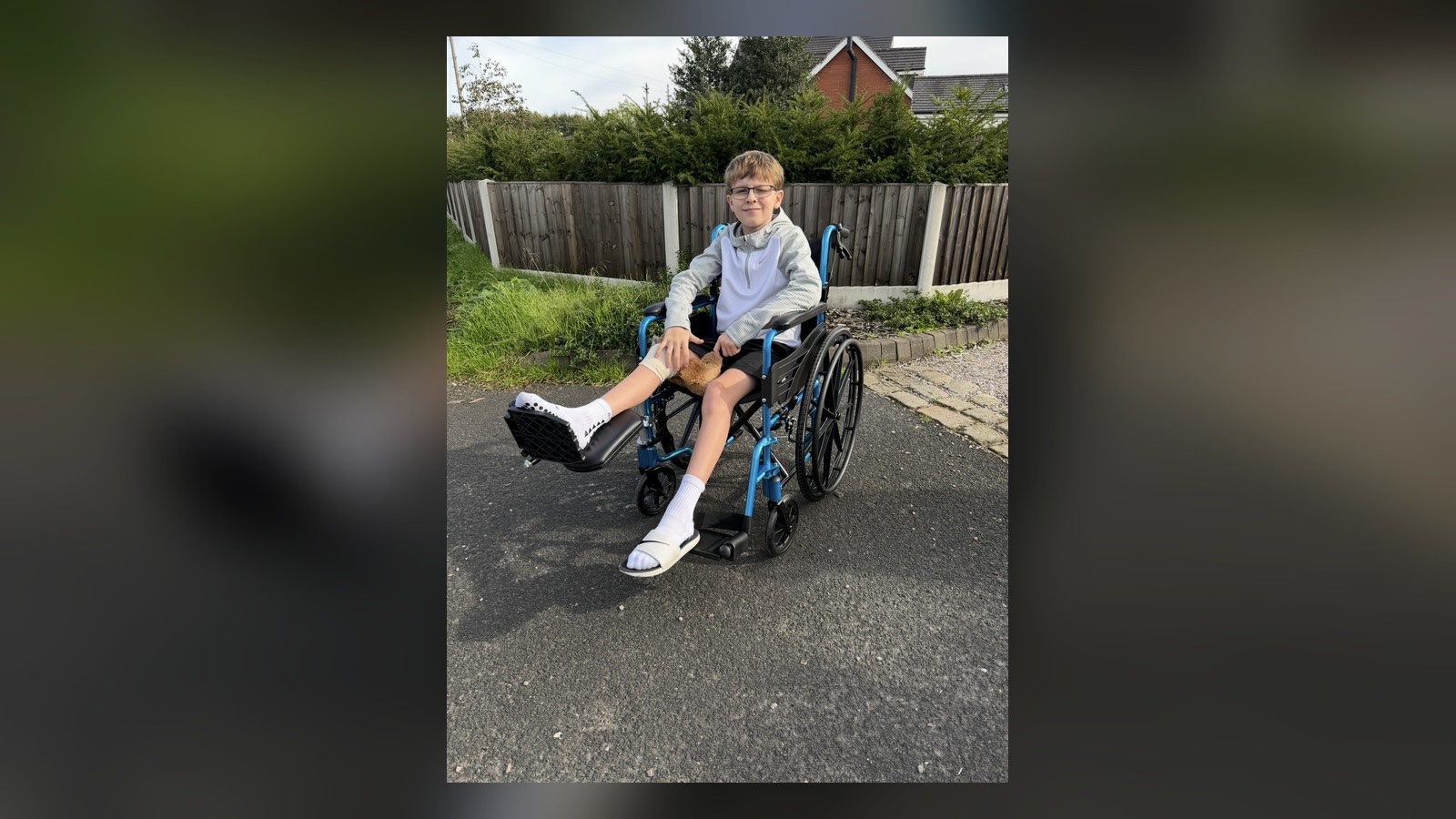
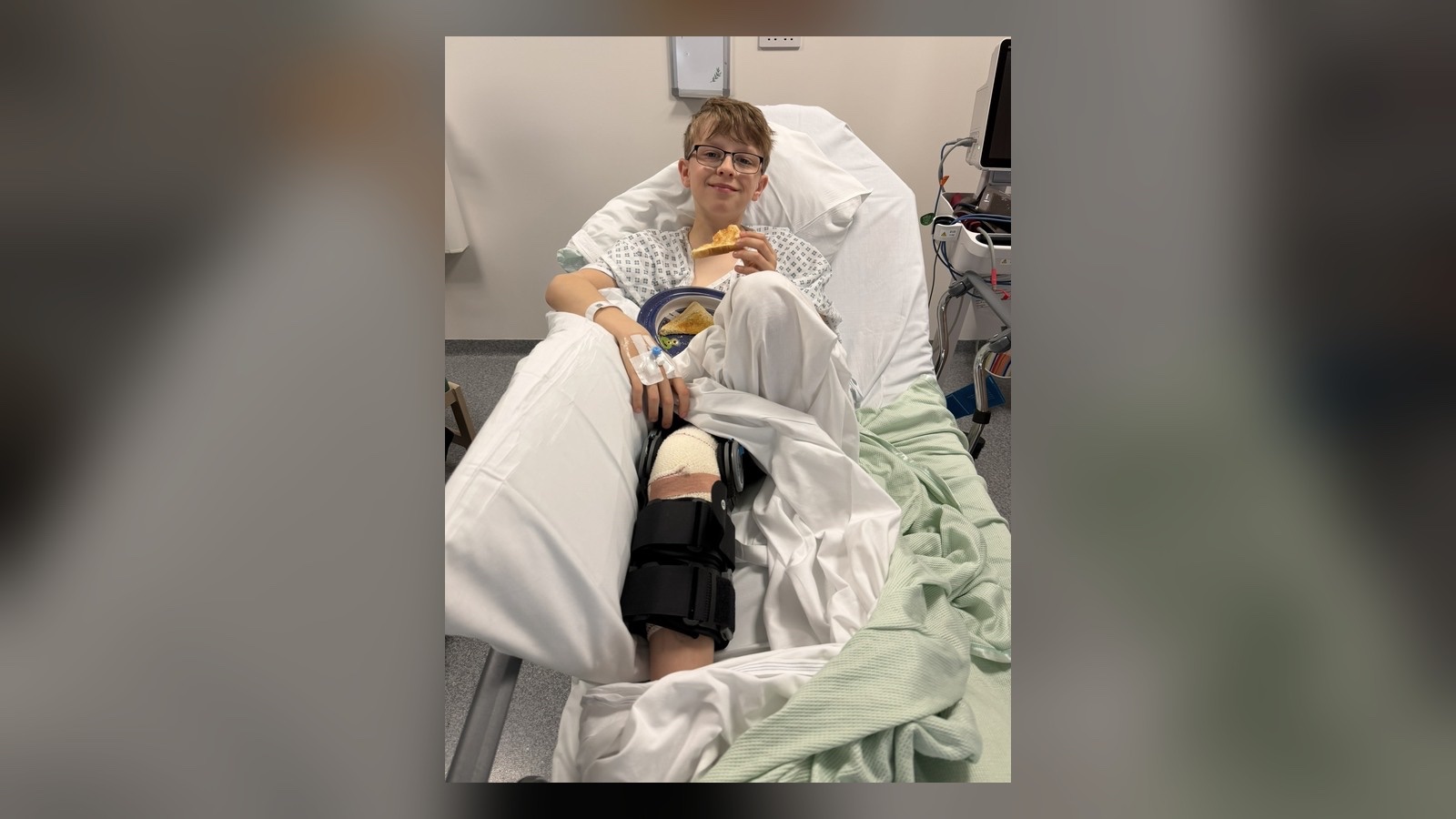
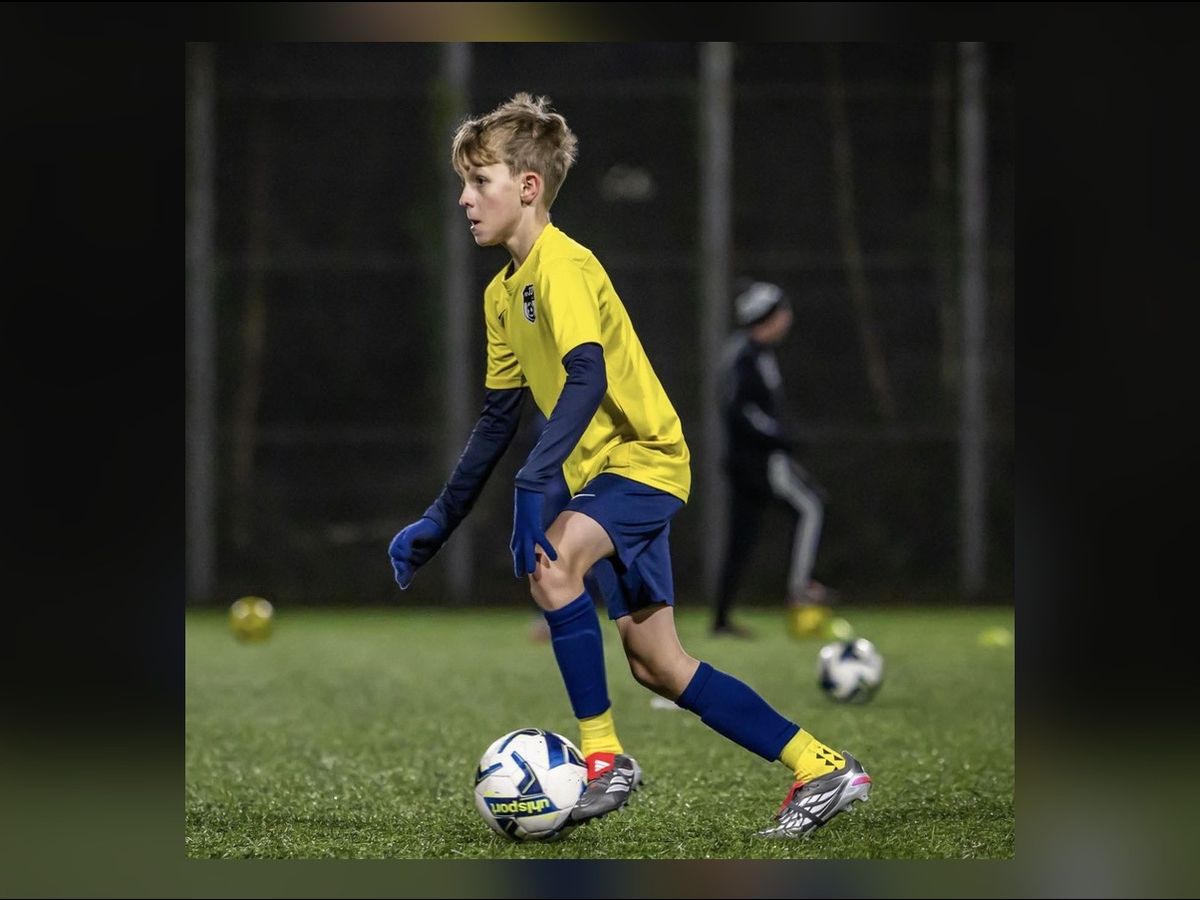
Eight months ago, Ollie was an extremely fit, healthy and active boy who loved football. Today, he spends most of his days in bed, relies on a wheelchair and lives with severe, relentless pain.
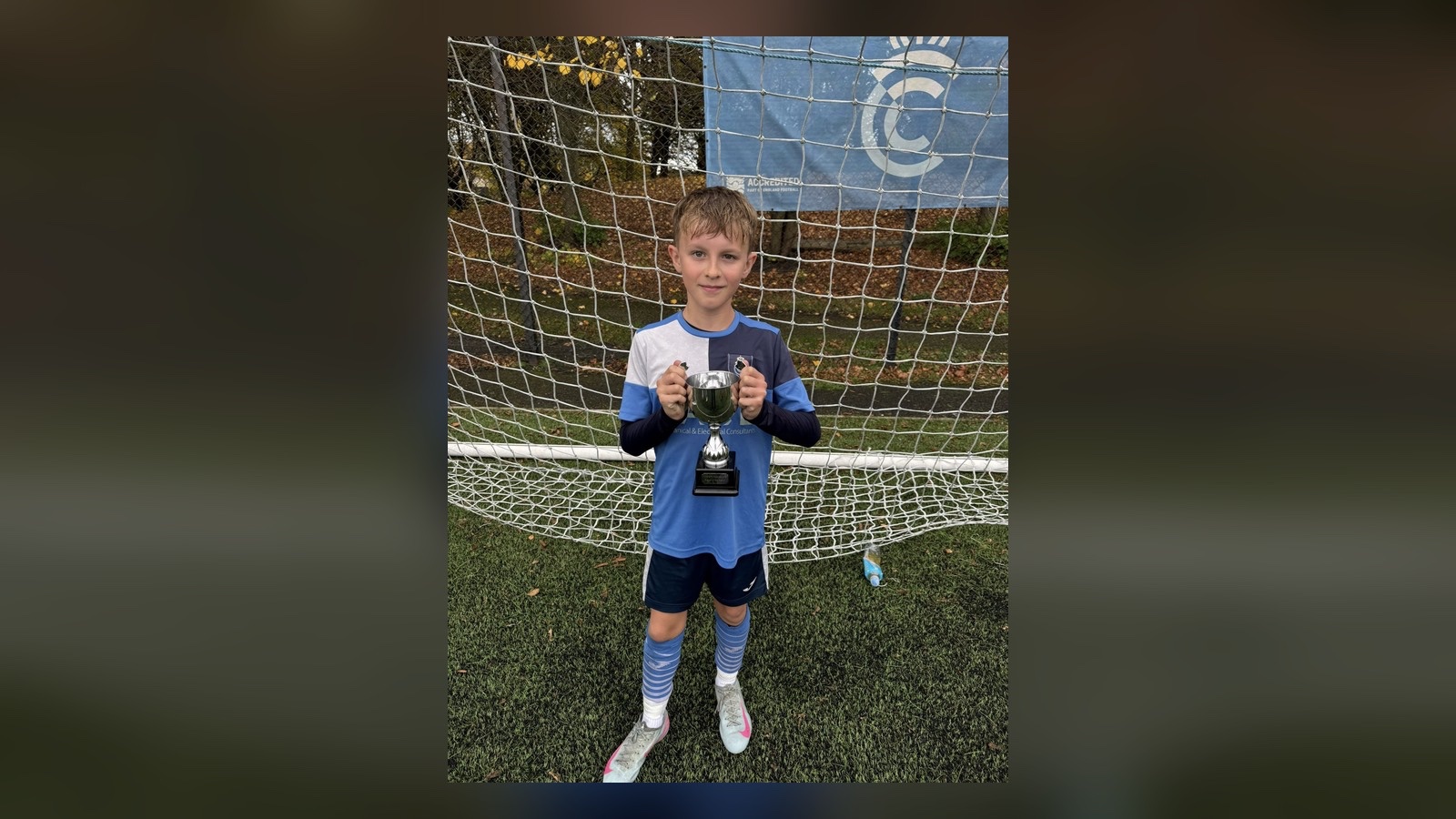
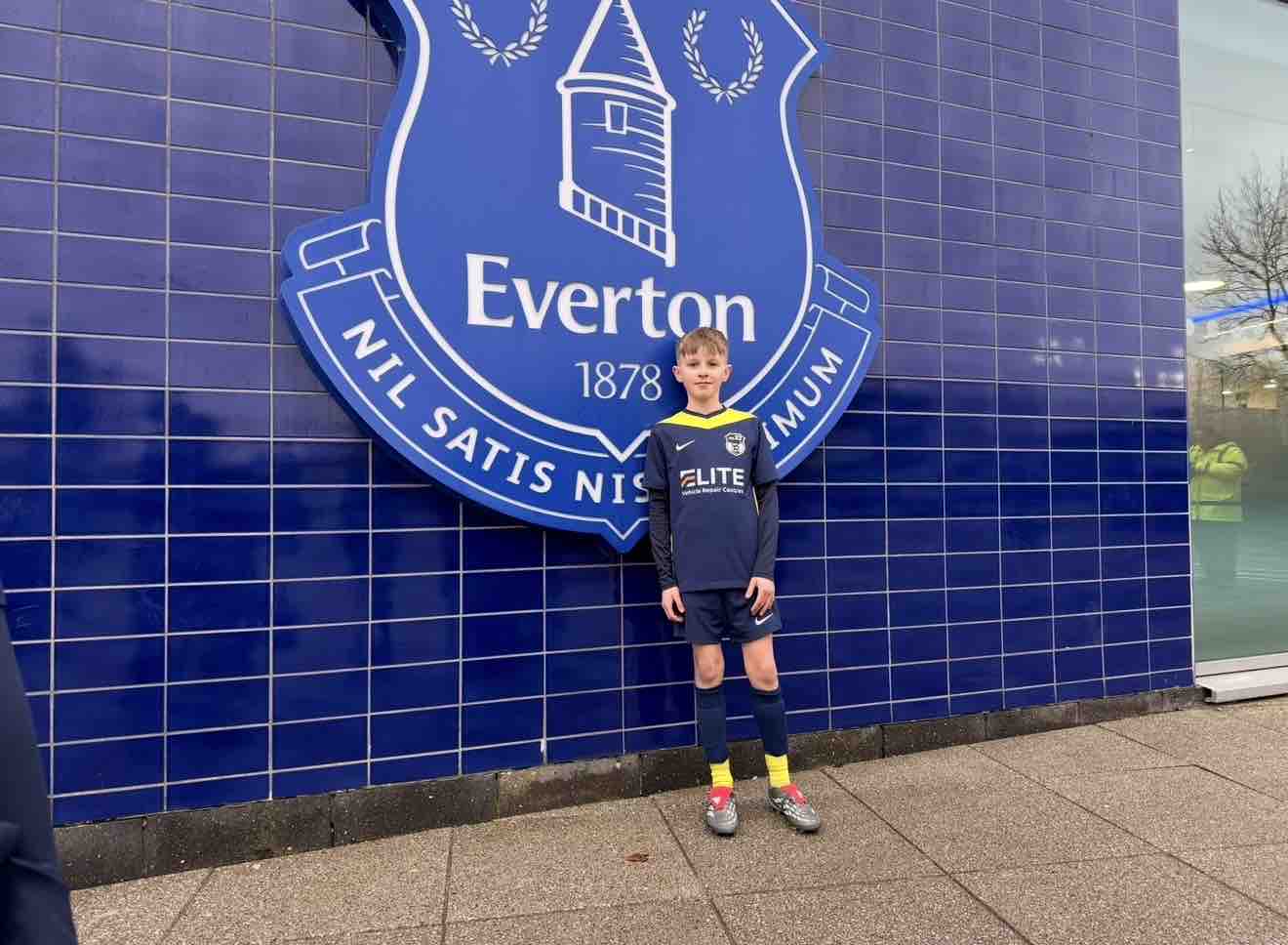
Before his injury, Ollie played football for two teams, attending two training sessions and playing two matches every week. He was constantly on the move, full of energy and enjoying his childhood.
Now, he cannot stand or sit down independently. He needs help with everyday activities, and even the lightest touch against part of his leg can cause agony.
He has managed just 1 hour and 45 minutes of secondary school in total.
We are asking for help to give our son an opportunity to regain some of the childhood this condition has taken away.
How did this happen?
In February 2026, when Ollie was just 10 years old, he injured his knee while playing football.
Initially, the problem wasn’t severe pain. His knee simply wouldn’t bend or move properly and appeared almost locked.
What seemed like a relatively straightforward knee problem became the beginning of an eight-month ordeal that none of us could have imagined.
Doctors carried out investigations, including an exploratory arthroscopy, to try to establish what was preventing his knee from moving normally.
Unfortunately, the procedure did not reveal a clear explanation for the problem.
Following the surgery, Ollie developed increasingly severe and persistent pain. His condition deteriorated, and what had initially been a problem with his knee movement became something far more debilitating.
After months of investigations, hospital appointments and treatment, Ollie has now been officially diagnosed with Complex Regional Pain Syndrome (CRPS).
CRPS is a condition that can develop following an injury or surgery, causing severe, persistent pain that can be disproportionate to the original injury.
Ollie is also experiencing neuropathic pain, which is associated with changes or disruption in how the nervous system processes pain signals.
This can cause burning, shooting or electric-shock-like pain, and even ordinary sensations can become extremely painful.
For Ollie, the pain is not simply the result of trying to move an injured knee. His nervous system is producing pain that affects almost every aspect of his daily life.
What began as a knee that wouldn’t move properly has left our little boy relying on a wheelchair, unable to attend school and spending most of his days in bed.
Eight months of pain. A childhood put on hold.
Before his injury, Ollie’s life revolved around football, school and his friends.
Now, he spends much of his time confined to bed.
He cannot stand or sit up independently and needs help with everyday activities that most of us barely think about.
He requires a wheelchair to get around. Although he can use crutches for short periods, doing so causes considerable pain.
Even sitting can be extremely difficult.
After so many months of being unable to use his right leg normally, Ollie has lost much of the muscle mass and strength in that leg.
To go from being so physically fit and independent to being unable to walk without assistance in just eight months has been devastating.
And perhaps one of the most difficult things to understand is that Ollie doesn’t even have to move to experience agonising pain.
When even the lightest touch causes agony
One of the most distressing symptoms of Ollie’s condition is an area of skin around his affected knee that has become so sensitive that even the lightest touch can cause excruciating pain.
This is known as allodynia, a form of pain sensitivity that can occur with neuropathic pain and CRPS.
Something as ordinary as clothing brushing against his skin can be unbearable.
Ollie wears a protective bandage over the sensitive area to prevent his clothing or other objects from accidentally rubbing against it.
Imagine being 11 years old and having to protect part of your body from something as simple as the touch of your own clothes.
His pain isn’t limited to walking, standing or bending his knee. Even ordinary contact with his skin can cause him significant suffering.
This is the reality Ollie faces every day.
Just 1 hour and 45 minutes of secondary school
Starting secondary school should have been an exciting new chapter in Ollie’s life.
After months of pain, he was determined to give it a try.
He managed just 45 minutes on his first day.
He tried again on two further mornings, managing only 30 minutes each time.
In total, Ollie has attended just 1 hour and 45 minutes of secondary school.
Since then, his severe pain has prevented him from returning.
While other children his age are settling into their new schools, making friends, learning and enjoying new experiences, Ollie spends most of his days in bed.
He is missing out not only on his education but also on the friendships, independence and social experiences that are such an important part of growing up.
We are now waiting for a medical-needs teacher to be arranged so Ollie can begin receiving some education at home.
The isolation and uncertainty have also caused him significant anxiety, adding to the physical pain he already endures.
At just 11 years old, Ollie should be looking forward to his future, not spending his days in bed wondering when he’ll be well enough to return to school.
Even the medication brings challenges
Ollie is taking several medications to try to manage his pain, including amitriptyline, gabapentin, paracetamol, ibuprofen and Oramorph, a strong morphine-based painkiller.
Despite these medications, his pain remains severe.
Unfortunately, gabapentin has also affected his mood, and his dosage is now being gradually reduced under medical supervision. This also forms part of preparing for the specialist treatment we are pursuing.
We don’t yet know whether reducing the medication will increase his pain or whether he will manage without it.
It’s another uncertainty in an already incredibly difficult journey.
We never imagined our little boy would need this level of pain management, particularly when the medication itself can bring further difficulties.
Working alongside Alder Hey Children’s Hospital
We are incredibly grateful for the care and support Ollie is receiving through the NHS at Alder Hey Children’s Hospital in Liverpool.
He is being supported by a specialist team providing physiotherapy, psychological support and care from a specialist pain doctor.
These are all important parts of managing CRPS and neuropathic pain, and we recognise the dedication of the professionals helping him.
However, despite the treatment and support he is receiving, Ollie continues to experience severe pain that has left him unable to walk independently or attend school.
We have therefore decided to explore an additional treatment called Scrambler Therapy, which is not currently available to Ollie through the NHS in the UK.
Our decision to seek additional treatment is not a criticism of the NHS or the care he is receiving at Alder Hey.
We simply want to explore every reasonable opportunity to help our little boy regain some quality of life.
Our hope: Scrambler Therapy in Ireland
After eight months of watching Ollie suffer, we are determined to explore an additional opportunity that might help him.
We have arranged for Ollie to undergo an initial two-week course of Scrambler Therapy in Ireland, consisting of 10 evening treatment sessions.
Scrambler Therapy is a non-invasive treatment that uses electrical stimulation through electrodes placed on the skin. It aims to alter the way pain signals are communicated to the nervous system.
It is being explored as a treatment for neuropathic and other forms of chronic pain.
Some people have reported improvements following this treatment, although the scientific evidence for its effectiveness in CRPS remains limited.
We know there is no guarantee that it will work for Ollie.
Our hope is that it may reduce his pain sufficiently to help him make greater progress with physiotherapy, regain some mobility, return to education and begin enjoying life again.
Depending on his response, additional treatment sessions may be recommended in an attempt to achieve or maintain meaningful pain relief, potentially even remission.
However, we understand that remission cannot be promised.
Why Ireland is our only practical option
We initially explored specialist treatment in Germany and Italy, where the costs were considerably lower.
Unfortunately, Ollie’s physical limitations have made flying impractical.
He cannot tolerate sitting in a normal seated position for extended periods, and airlines cannot accommodate his need to keep his leg extended across seats during take-off and landing.
This has left us with only one practical travel option that we have found: Ireland, by car and ferry.
Travelling this way means we can stop regularly, help Ollie change position and manage his pain throughout the journey.
Although treatment in Ireland is significantly more expensive than the alternatives, it is the only option we have found that allows Ollie to make the journey while accommodating his needs.
We aren’t choosing the most expensive option. We’re choosing the only one he can realistically manage.
Ollie’s dream is to play football again
Despite everything he has been through, Ollie hasn’t given up on the sport he loves.
More than anything, he wants to get back onto that football pitch with his teammates.
Even if Scrambler Therapy successfully reduces his pain, he will still face a significant rehabilitation journey to rebuild his strength, improve his mobility and work towards walking independently.
We would love to provide Ollie with additional physiotherapy and rehabilitation alongside the care he receives at Alder Hey, where appropriate and guided by his medical team.
Private physiotherapy sessions are expected to cost between £30 and £60 each, and he may need many sessions over the coming months.
We understand that recovery from CRPS cannot be rushed and that rehabilitation must be carefully managed.
But we want to give him every reasonable opportunity to work towards his goal.
Ollie isn’t asking for anything extraordinary. He just wants to run, play football and enjoy being a child again.
What we’re fundraising for
The initial treatment course and essential travel expenses represent a considerable financial commitment.
Our estimated costs are:
Expense Estimated cost
Scrambler Therapy — 10 sessions £3,500
Accommodation for two weeks £1,000–£2,000
Return ferry crossings £800
Fuel, including daily treatment journeys £250
Food for two weeks £200–£300
Additional physiotherapy and rehabilitation £30–£60 per session
Potential further Scrambler Therapy To be confirmed
Initial treatment and travel subtotal £5,750–£6,850
The initial subtotal excludes additional physiotherapy, potential further treatment and fundraising fees.
Accommodation costs will depend on availability and finding somewhere suitable for Ollie’s mobility needs. We are doing everything we can to keep expenses as low as possible, but we also need somewhere Ollie can rest comfortably between treatment sessions.
We are hoping to raise £7,000 to help cover the initial treatment, essential travel and accommodation costs, fundraising fees and, where funds allow, additional rehabilitation.
If Ollie responds positively but requires further Scrambler Therapy sessions, we may face additional treatment, accommodation and travel expenses.
Any donations remaining after the initial course would be used towards appropriate additional physiotherapy, further treatment and Ollie’s rehabilitation needs.
We will keep supporters informed if our plans or costs change.
Please help us give Ollie a chance
We know Scrambler Therapy might not work.
We know there are no guarantees.
But after eight months of watching our son endure severe pain, lose his independence and miss out on so much of his childhood, we want to give him this opportunity.
We don’t expect miracles. We just want our little boy to have a chance at getting his life back.
A chance to sit without overwhelming pain.
A chance to stand and walk independently.
A chance to return to school, learn and make friends.
And perhaps, one day, a chance to pull on his football boots and run onto a pitch again.
Eight months ago, Ollie was running around a football pitch four times a week. Today, he needs a wheelchair.
With your help, we hope that one day he’ll be able to lace up his football boots and run onto that pitch again.
We cannot give Ollie the last eight months back. But we hope we can help him look forward to a brighter future.
If you’re able to donate, however small the amount, we would be incredibly grateful.
And if you cannot donate, please consider sharing Ollie’s story. Every share helps us reach someone else who might be able to help.
Thank you for taking the time to read Ollie’s story and for helping us give him hope.
With love and gratitude,
Lee and Emma ❤️
Ollie’s mum and dad
Organizer