
Fishermen vs government in court over eco damage
0% complete
$5,980 raised of $100K CAD
82 donations
A very real wildfire crisis that occurred in other areas of Nova Scotia is continuing to be used to push a political wedge issue, whereby the Emergency Measures Act continues to be used to overrule a federal fish passage order in Windsor NS. This ongoing and unprecedented political overstep at the Avon River sets the stage for future autocratic governance. Our democracy and environment must be protected.
Since 1970, two metal gates at Windsor causeway have controlled the flow of water on the Avon River located in Windsor/Falmouth Nova Scotia. These gates can be opened to provide natural river state or closed to impound freshwater above the causeway. In March 2021, the federal department of Fisheries and Oceans (DFO) recognized scientific findings obtained through a Two-Eyed Seeing approach, and made the determination that the operations of the structure to impound water upstream did not comply with the Fisheries Act and infringed Mi’kmaq Rights. As such, the DFO ordered that the gates be operated to not impound water upstream and that the gates be opened on the outgoing tide with a minimum of 10 minutes of saltwater entry permitted upstream on each incoming tide. This order improved fish passage through the structure and returned this extremely stressed ecosystem to a healthier and more productive estuary as nature intended.
In mid-May 2023, Premier Tim Houston and MLA Melissa Sheehy-Richard created a video that was posted on Facebook describing the lack of a reservoir as “appalling” and called on the federal government to “reach a decision that respects the impact on the watershed”, which to the Premier meant “restoring the lake”. Two weeks later in late May 2023, two major wildfires broke out in Nova Scotia after a period of little rain. A province wide burn ban was put in place and woods travel restricted. During this wildfire crisis, the provincial government declared a state of emergency for the area around and including Pisiquid Lake, Windsor, Hants County of Nova Scotia on June 1, 2023 citing the many wildfires burning in several areas of the Province. The declaration of the state of emergency further included a poorly worded statement that some fires “continue to be out of control and to create extreme demands upon resources and personnel in the attempts to prevent further loss of property and to protect the health and safety of residents”.
The Minister of Municipal Affairs and Housing then issued a direction under the state of emergency, directing that “the owners and operators of the sleway connected to Pisiquid Lake, and any associated infrastructure, manipulate that sleway as directed by the Provincial Fire Marshal, in his role as the fire suppression and prevention co-ordinator, with the goal of maximizing the water supply resource available for the wildfire suppression efforts”. These actions were cited as “necessary for the protection of property and the health or safety of persons in the Province”.
Given the declared state of emergency, the province believed it could then overrule the federal order to impound water upstream of the causeway under the guise of a risk to public safety. The problem here is that the province claimed a request was made by the fire services to impound water above the causeway, but signed affidavits have been obtained from the Windsor Fire Chief and Captain with the Brooklyn Fire Department saying that request was never made and that Lake Pisiquid in Windsor is not required to fight wildfires in the area around Windsor and would never be used for fighting wildfire because other water sources are closer to the nearby forests where wildfire could occur. The CAO and West Hants Regional Municipality Emergency Management Office reported that “it goes without saying that a secured freshwater supply is added support for fire protection. If the declaration is discontinued, then WFD (Windsor Fire Department) will revert back to the operational plan that was in place for the past two years utilizing treated water and alternative raw water sources (fresh and salt water if needed). WFD is confident in operating under both scenarios”.
The municipality and emergency officials had no concern regarding the ability to fight wildfires in the region under natural river state provided through the DFO order. How and why did the province identify the need to declare a state of emergency and order the gates of this structure be closed, blocking fish passage and destroying the surrounding ecosystem? Why is this the only area where the province felt the need to declare a state of emergency, and the causeway was the only structure ordered to be closed to impound water given that the province cited the need to control this structure to provide resources for the PROVINCE. Why were all the other dams and tidal barriers (Annapolis tidal turbine included) not ordered to impound water as well?
The province is in the middle of a political war to “save a lake” and construct a new tidal barrier downstream of the causeway which they say is needed to finish the highway 101 twinning project between Windsor and Falmouth, NS. Simply put, the province abused their power by taking advantage of a wildfire crisis to declare an unjust state of emergency that overruled federal law so they could reinstate a reservoir (lake) above the causeway. This has resurrected a political wedge issue to further divided this community for the purposes of putting political pressure on the DFO minister to authorize a new gated structure.
Closing the gates on this structure has been the only measure taken to resolve an emergency that doesn’t actually exist. There has been no regulation of water use for car washing or watering lawns or any other alternatives to this extreme action. $1,105,000.00 of taxpayer money was recently spent to ensure Ski Martock could withdrawal water from the watershed under natural river state. Dry hydrants can be relocated and there are plenty of other water sources that could be used instead of this reservoir to fight fires.
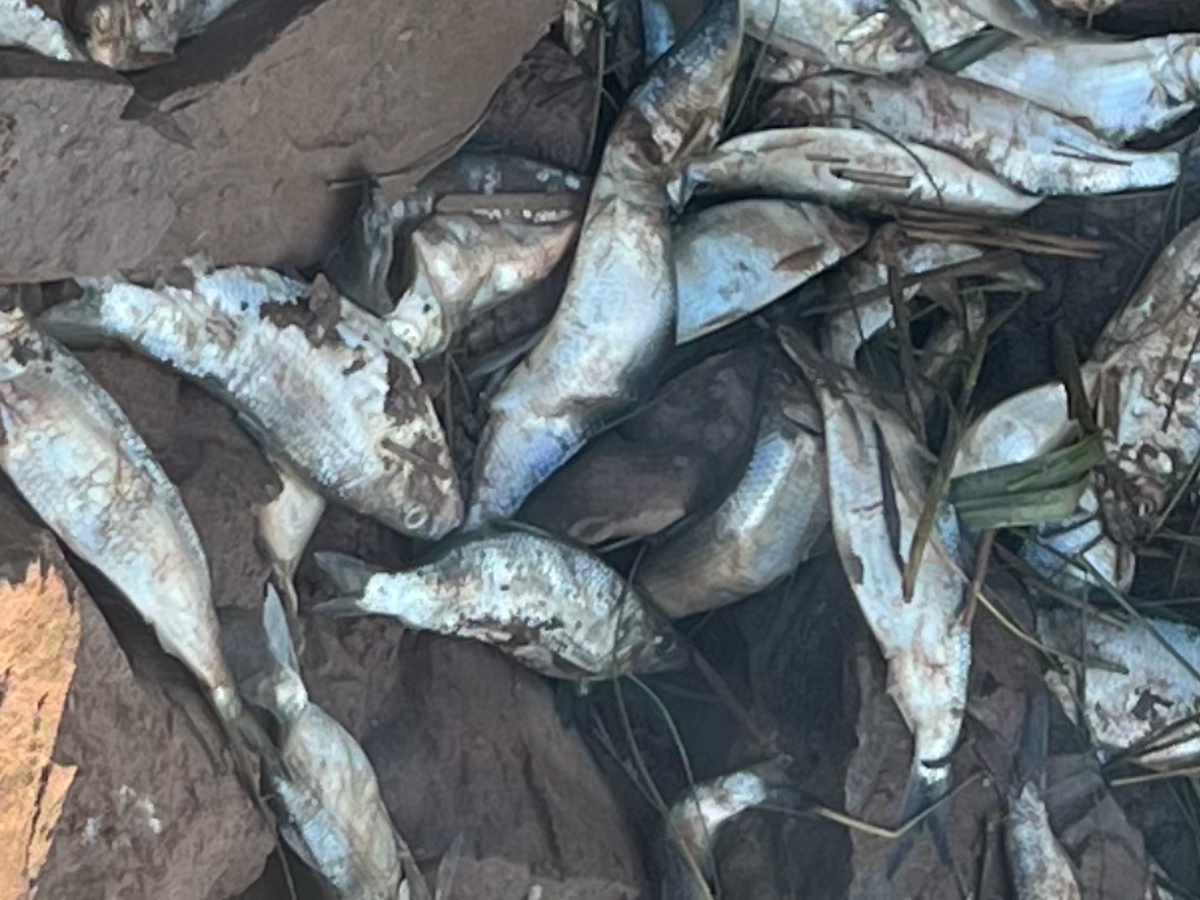
Since the state of emergency was declared on June 1, 2023, fish now die during the low tide period when sufficient water is not supplied downstream to support aquatic life, especially in warm temperatures when oxygen is more easily depleted. The free and timely passage of fish is also not being provided, and gaspereau have not been able to pass through this structure and fulfill their lifecycles. Inner Bay of Fundy Atlantic Salmon (a critically endangered and culturally significant species) utilize this estuary and are at risk of being killed, including two smolt caught just above the causeway in spring 2024. A sudden change from an estuarine ecosystem to impounding freshwater has impacted the osmoregulation of fish and has quickly destroyed the years of habitat recovery that has occurred in this system, both upstream and downstream of the causeway. Corophium, the building blocks and foundation of this ecosystem, die within hours of being submerged in freshwater. They were establishing in mud flats upstream and downstream of the causeway but have likely been substantially impacted due to this sudden change in gate operations.
This is not only an attack on democracy but an attack on the ecosystem, which is why legal action continues to be taken through my lawyer Jamie Simpson to challenge the validity of the state of emergency. We initially filed a notice of application for a judicial review of the June 1, 2023 decision from the minister responsible for emergency management, John Lohr, to issue a declaration of state of emergency. In August 2023 Justice Scott C. Norton ruled against the application describing that Minister Lohr's order was not subject to judicial review and that I lacked sufficient grounds required to seek standing for a judicial review. This decision was appealed and on April 9, 2024 the Court of Appeal wrote that "standing depends on the circumstances of each case. There may well be circumstances when a threat to a source of livelihood will suffice for private interest standing… I do not accept that, if Mr. Porter otherwise had standing, he would lose it by pausing to help design a more effective gate structure at this causeway, before resuming fishing as his livelihood”. The Court of Appeal also disagreed with the Justice Norton’s statement that issues of policy are not reviewable for reasonableness citing that “there is no such thing as absolute and untrammelled ‘discretion’, and any exercise of discretion must accord with the purposes for which it was given”. Simply put, Minister Lohr’s state of emergency is indeed subject to a reasonableness review. Our next legal step is a Motion for Directions, currently scheduled for August 28, 2024.
This is an expensive process but one of upmost importance, as the state of emergency continues to remain in place and is continuing to blocking fish passage and degrade habitat at the Avon causeway. I appreciate any donation to help fight for what is right for this important ecosystem.