- T
- B
- W
I left the U.S. in October of 2011 with Kathmandu, Nepal as my first destination. Within an hour of landing, I found myself in a very unlikely place: the ‘Indian Zopadpatti of Boudha’, otherwise known as the Indian ‘slum’. Boudha is a section of Kathmandu named after one of the world’s largest Buddhist stupas (temples).
I was there by invitation of a young Indian man—a “shoe-shiner” that I’d met on the street only moments after walking out of the front door of my guesthouse. I would later learn that many Indians choose to live in Nepal as it is actually cheaper than living in India. He invited me, only moments into our initial conversation, to join him for tea in a ‘real Indian household’. With my just-arrived-anything-goes-attitude and my fresh-from-America-optimism, I agreed to join him.
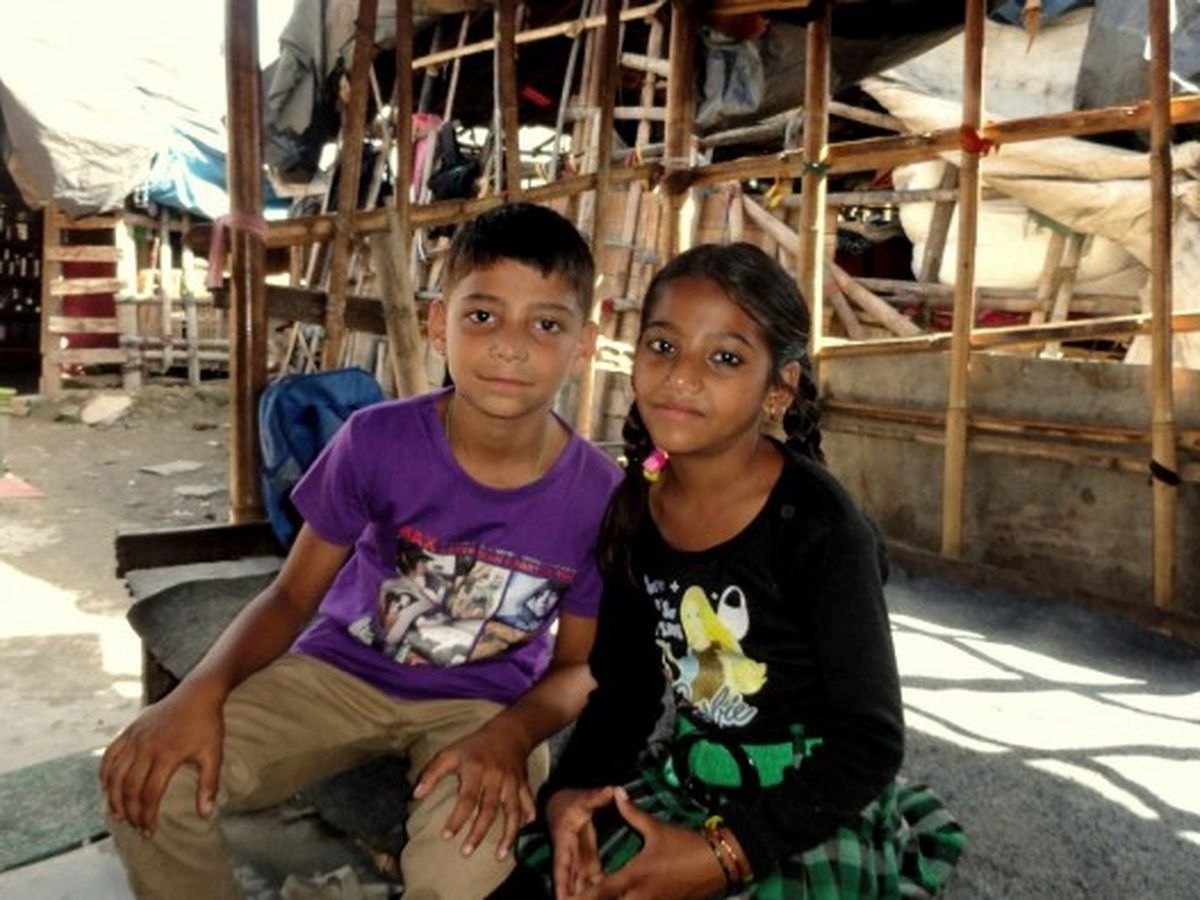
That Indian household, as it turned out—much to my initial horror—resided in what appeared to be an abandoned garbage dump about the size of a standard soccer field. The field was covered by approximately 60-80 separate dwellings constructed primarily of bamboo frames covered with cheap plastic.
His wife prepared hot chai over an open flame on the dirt floor while naked children ran past smiling—eager for a glance at the foreigner that had come to visit. His wife, three children (the youngest was still an infant) and mother-in-law all lived in a leaky plastic-roofed dwelling
no larger than the average-sized U.S. bedroom.
Once the original shock had passed, that experience turned out to be an incredible, humbling one that led to an unlikely friendship with another young man that I met during that same visit.
Sanjay (Sam), lived and continues to live in the same slum along with his mother, father, two brothers and sisters. I found out from our conversation that Sanjay had taken it upon himself to educate some of the younger children living in the slum. At only eighteen years old at the time, he chose to spend his free-time
teaching these children basic educational skills. Schooling, even at the elementary level, I would learn, is not free in Nepal. It is also impossibly unaffordable to those impoverished families that live in the slum. Sanjay's dream at that time was to find a way to provide some of the more eager students the opportunity for a real education.
We—Sam and I, along with a private donor saw his dream fulfilled a year later when we placed two of those children, Sahil (one of Sanjay’s brighter students) and Sneha (Sanjay’s younger sister), into the Madan Bhandari Memorial School located just next to the slum.
The situation worked out perfectly up until recently when our private donor pulled his funding for personal reasons.
Sanjay's dream has become my dream also. The full extent of this dream includes the continuation of funding all the way through university level. I firmly believe that if such a goal is achieved it has the possibility of creating a significant, lasting impression—not only for Sahil and Sneha—but for the entire slum. Educating even a small percentage of these children can have ripple effects that will be felt many years later.
Eventually it is mine and Sanjay's hope as well, to be able offer the same opportunity to more of the children in the slum. While education is hopelessly unaffordable to the families of the slum, for us Westerner's the cost is almost laughable. Please help me to help them.
(If anyone has questions or are interested in helping on future projects, please feel free to contact me. RON)
I was there by invitation of a young Indian man—a “shoe-shiner” that I’d met on the street only moments after walking out of the front door of my guesthouse. I would later learn that many Indians choose to live in Nepal as it is actually cheaper than living in India. He invited me, only moments into our initial conversation, to join him for tea in a ‘real Indian household’. With my just-arrived-anything-goes-attitude and my fresh-from-America-optimism, I agreed to join him.
That Indian household, as it turned out—much to my initial horror—resided in what appeared to be an abandoned garbage dump about the size of a standard soccer field. The field was covered by approximately 60-80 separate dwellings constructed primarily of bamboo frames covered with cheap plastic.
His wife prepared hot chai over an open flame on the dirt floor while naked children ran past smiling—eager for a glance at the foreigner that had come to visit. His wife, three children (the youngest was still an infant) and mother-in-law all lived in a leaky plastic-roofed dwelling
no larger than the average-sized U.S. bedroom.
Once the original shock had passed, that experience turned out to be an incredible, humbling one that led to an unlikely friendship with another young man that I met during that same visit.
Sanjay (Sam), lived and continues to live in the same slum along with his mother, father, two brothers and sisters. I found out from our conversation that Sanjay had taken it upon himself to educate some of the younger children living in the slum. At only eighteen years old at the time, he chose to spend his free-time
teaching these children basic educational skills. Schooling, even at the elementary level, I would learn, is not free in Nepal. It is also impossibly unaffordable to those impoverished families that live in the slum. Sanjay's dream at that time was to find a way to provide some of the more eager students the opportunity for a real education.
We—Sam and I, along with a private donor saw his dream fulfilled a year later when we placed two of those children, Sahil (one of Sanjay’s brighter students) and Sneha (Sanjay’s younger sister), into the Madan Bhandari Memorial School located just next to the slum.
The situation worked out perfectly up until recently when our private donor pulled his funding for personal reasons.
Sanjay's dream has become my dream also. The full extent of this dream includes the continuation of funding all the way through university level. I firmly believe that if such a goal is achieved it has the possibility of creating a significant, lasting impression—not only for Sahil and Sneha—but for the entire slum. Educating even a small percentage of these children can have ripple effects that will be felt many years later.
Eventually it is mine and Sanjay's hope as well, to be able offer the same opportunity to more of the children in the slum. While education is hopelessly unaffordable to the families of the slum, for us Westerner's the cost is almost laughable. Please help me to help them.
(If anyone has questions or are interested in helping on future projects, please feel free to contact me. RON)