Empowering Kenyan Farmers for Food Security
Be the first to donate
Inspire others and help John build momentum.
1st donor
The Problems: food production, hunger and malnutrition and open defecation
Food Production
Conventional, chemical-based agriculture practices have increasingly negative impacts on Kenyan and other SubSaharan Africa farmers and their food security, including reductions in farmer and consumer health, disruptions of environmental systems, yield gaps in production and economic burden on farming families. Degradation of soil quality and the depletion of soil nutrients in Sub-Saharan Africa has increased through the use of chemical agriculture (Moya, 2017), decreasing Kenyan farmers’ ability to meet their nutritional and economic needs.
Over dependence on external inputs has made small-scale farmers fall deeper into debt and poverty because the majority cannot cope with the ever-rising prices of farm inputs. Currently the cost of chemical fertilizers have skyrocketed beyond the economic reach of small-scale farmers. A 50-kilogram bag of fertilizer is now costing over ksh.7000, more than double its previous cost only a year ago of ksh.3000, due to the current war in Ukraine. Additionally, the majority of the small-scale farmers live in areas with poor road infrastructure and they cannot easily reach stores that sell those agrochemicals and transportation of these inputs is increasingly difficult. Hybrid, treated and/or genetically modified seeds and a loss of seed-saving skills have brought about the severe decline in indigenous food stuffs and seed banks. All these unintended outcomes of conventional chemical agriculture has led to an overall decline in food sovereignty.
Hunger and malnutrition
The situation is increasingly dire as the majority of the households are unable to access sufficient and nutritious food. Children, the aged, expectant mothers and people living with disability are highly affected. Nutrition related ailments are rampant among children and the aged. In Kenya, 26.6% of children are stunted and 4.2% are wasted, and the situation is even worse in the project counties. These areas are in great need and current global geopolitical problems and climate change are only exasperating these problems.
Open defecation
Globally 13% of the world's population participate in open defecation (OD). In Kenya 23.5% of the population participate in open defecation (Njuguna, 2017). This practice causes personal and public health ailments such as diarrhea, typhoid, dysentery and cholera. OD places additional burden on the health of women during pregnancy and child rearing, and increases women’s vulnerability to verbal, physical and sexual abuse and violence (Saleem, 2019). The health risks of OD are compounded by many families in rural homes using crude pit latrines that eventually break down during rains and floods, releasing fresh feces and the pathogens they contain into community water supplies.
The solution: improve food production, nutrition and reduce open defecation in a wholistic way.
Improve Food Production
Combining Grow Biointensive Sustainable Agriculture (GBSA) with properly treated human waste/fertilizer seems to be a natural and practical step toward attaining food sovereignty. GBSA has a long and well-proven history as an effective and sustainable small scale food production method in Kenya and throughout the world. GBSA’s core principle is to grow the soil sustainably using simple but sophisticated methods that require few resources, making it a system of agriculture available to almost anyone. GBSA synergistically utilizes 8 sound practices to produce food and improve the soil, including deep soil quality, carbon farming (growing compost crops), efficient and effective composting, integrated diet design, intensive planting, functional diversity of crops, open pollinated seeds, and whole system sustainability (water, energy, land use, etc.).
A four-year four-farm study in Kenya (Beeby/Moore et al, 2020) has shown the capacity of these synergized practices to be effective in increasing food, compostable residue and increasing soil fertility and quality.
Improve nutrition
GBSA has been repeatedly shown over a wide range of soils and climates to be capable of consistently producing yields of up to 2 to 6 times more compared to conventional farming methods. In addition to more production GBSA designs production to meet over 30 major vitamins minerals, essential amino acids and macronutrients thus improving overall nutrition and health. GBSA has shown its capacity to increase food production in Kenya (Omondi, 2014), and in the USA, (Moore, 2010). GBSA has shown improved smallholder’s nutrition and health in Ethiopia (Alemu, 2019), Nepal ((Ambuhang, 2016. Rajbhandari, 2011) and Nicaragua (Simon, 2020). With its ability to increase yields with fewer resources, GBSA has the capacity to be an effective means of improving food security and sovereignty, livelihoods, and the overall health and well-being of families and communities.
Reduce open defecation
Human waste or human derived fertilizers (HDF) have been used as a fertilizer for millennia. Human waste strategically combined with GBSA’s carbon production capacity (i.e. maize, sorghum, amaranth) into a hygienically/environmentally safe and produce effective nutrient closed-loop nutrient cycling. This approach will also reduce the need and cost of adding hard to get and hard to transport fertilizers.
Despite the many positive benefits, cultural and religious beliefs can inhibit the handling and use of human waste. Utilizing community based demonstrations of dry toilets, garden yield improvements and training These social obstacles can be overcome.
The Project
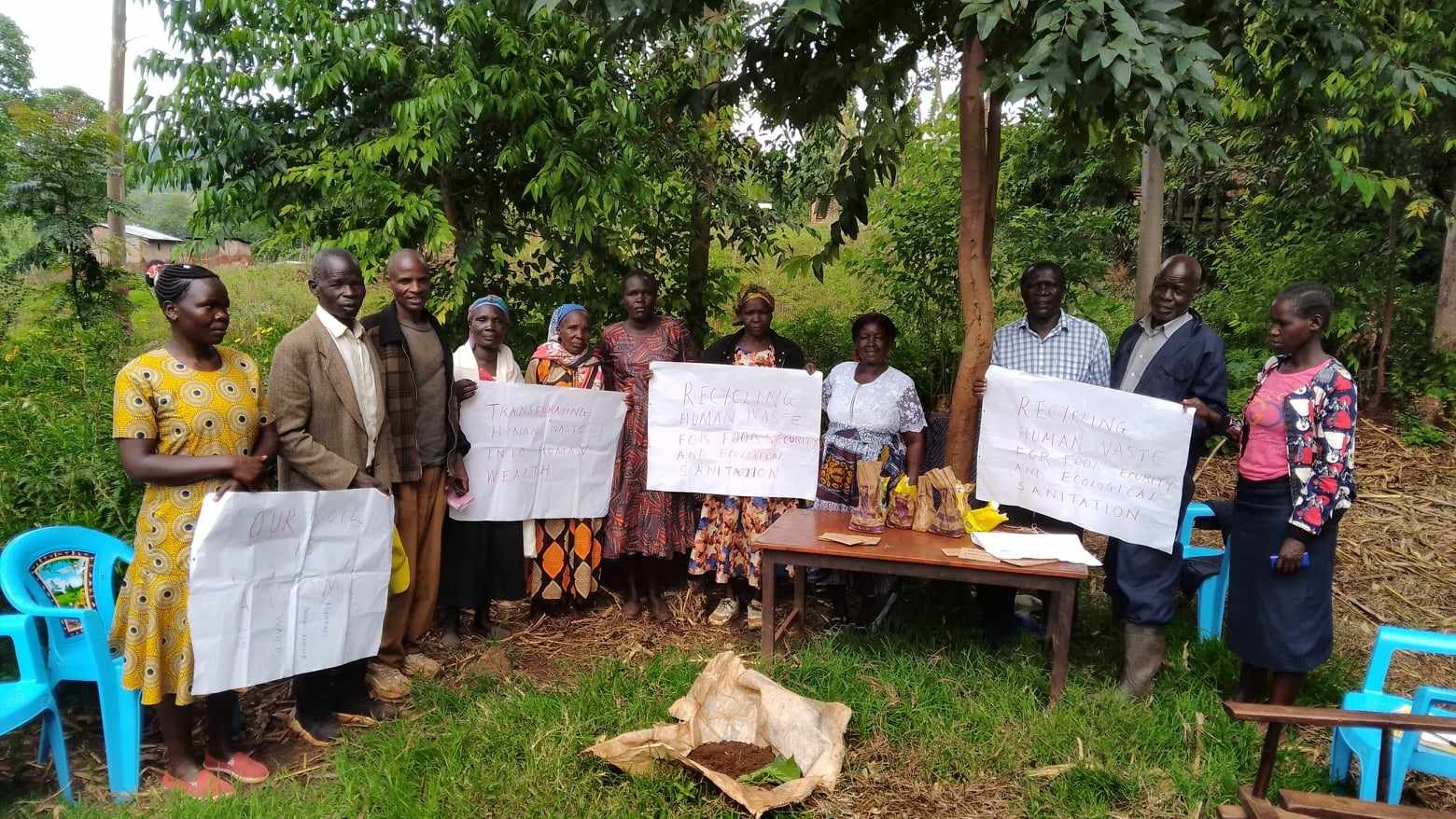
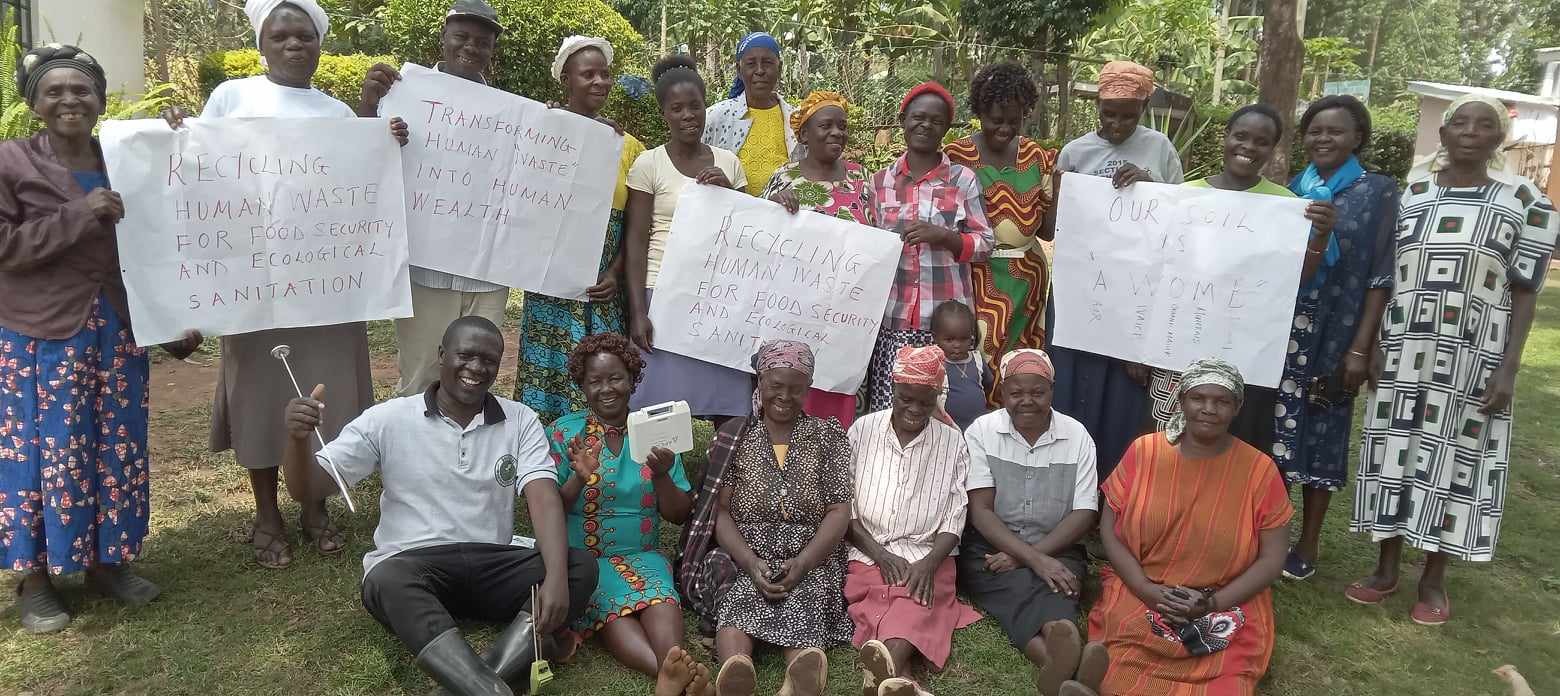
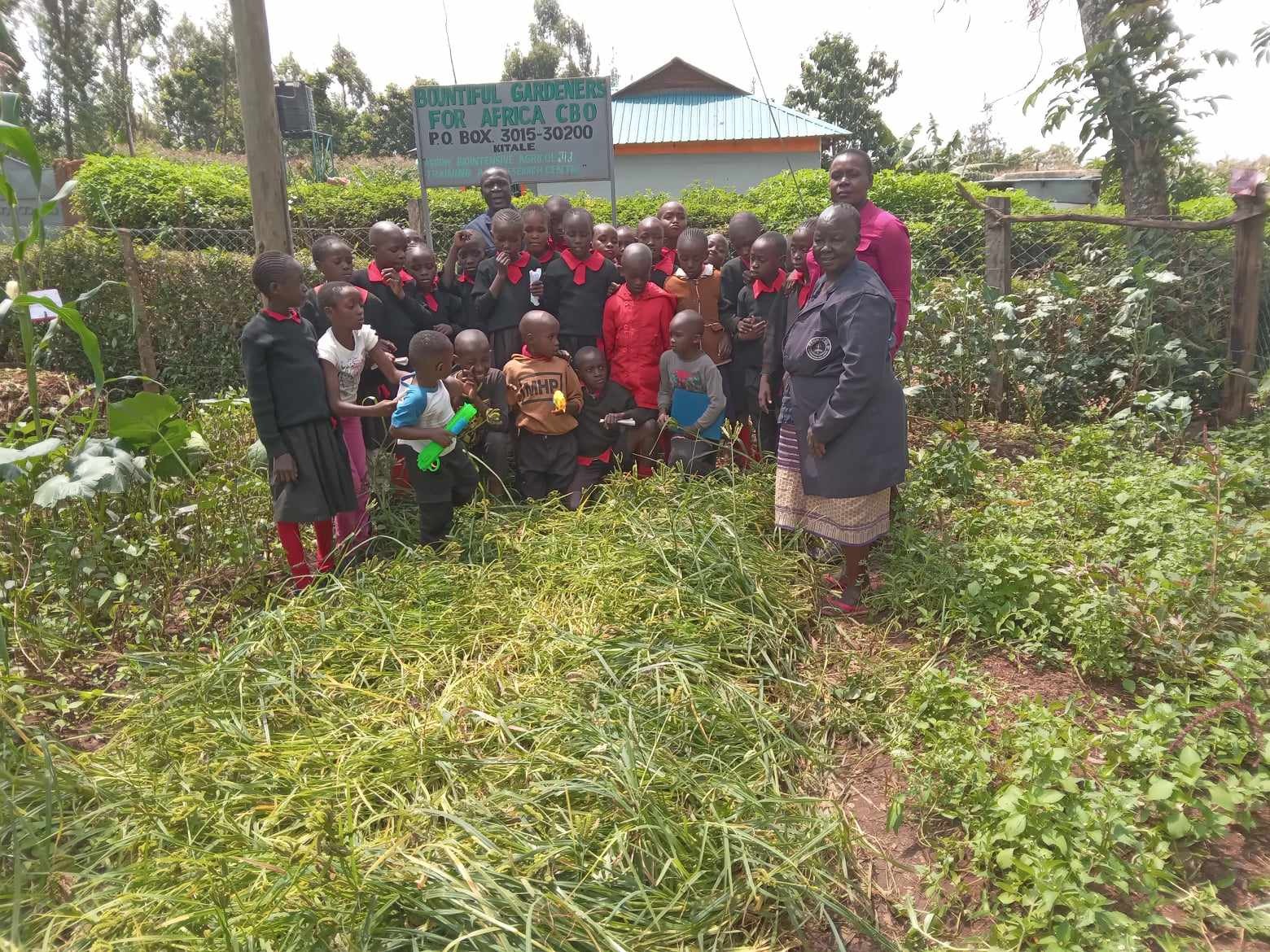
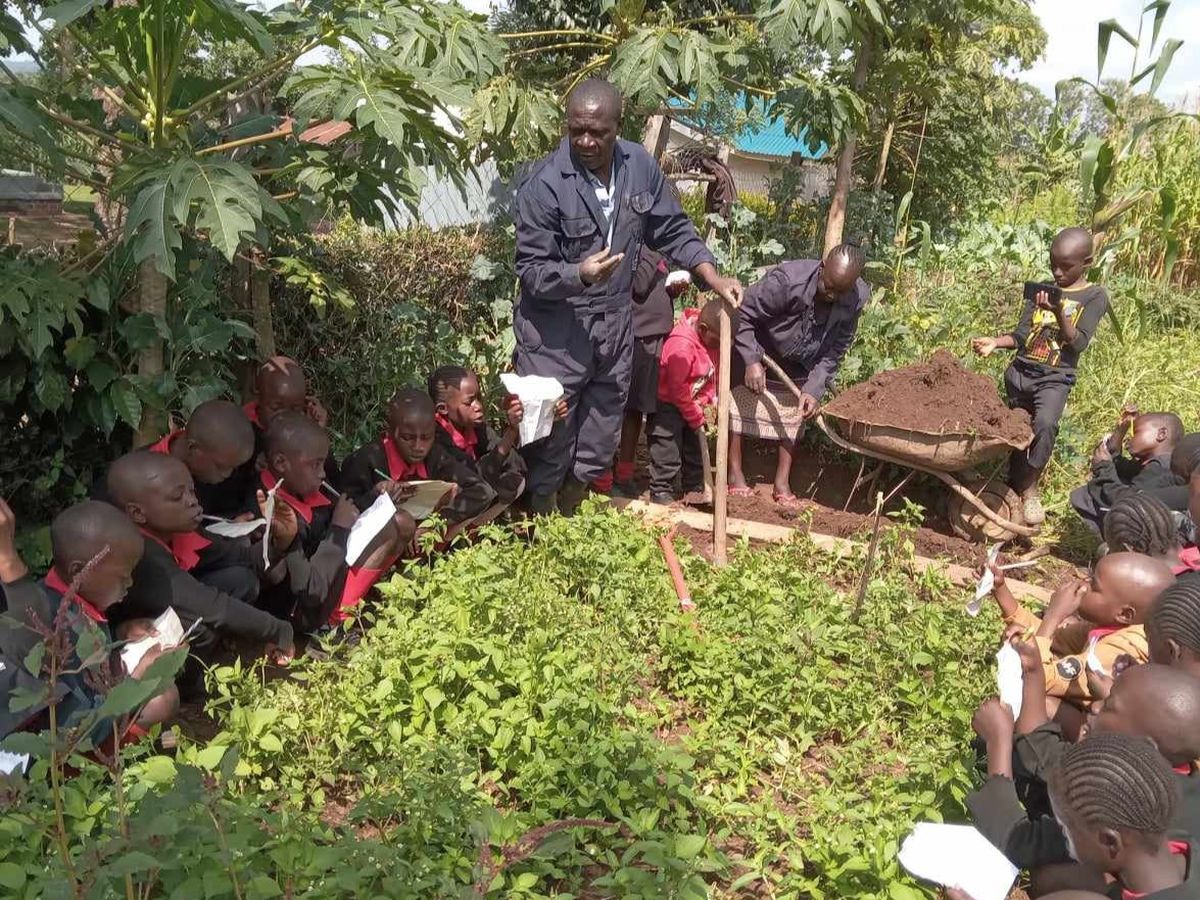
Bountiful Gardeners of Africa will provide farmers, community members and train future trainers on GBSA and the production and utilization of human derived fertilizers. This work has signed support of the Kenyan Ministry of Health and Agriculture and has received endorsement by local tribal leaders. The local chief has said “this is our future.”
Urine diverting dry toilets have been will continue to be built and used as a demonstration and for training. Technical training of GBSA and the safe collection of human waste is ongoing. A major training emphasis will be tackling social representation, commodity fetishism and disgust that have been barriers to utilization of human decomposed excreta as a resource. Pre- and post-training surveys are administered to assess and improve the effectiveness of the training and identify the existence of lingering societal, cultural or religious concerns that might inhibit adoption. Each year BGA will carry out an evaluation to determine the progress of the project activities.
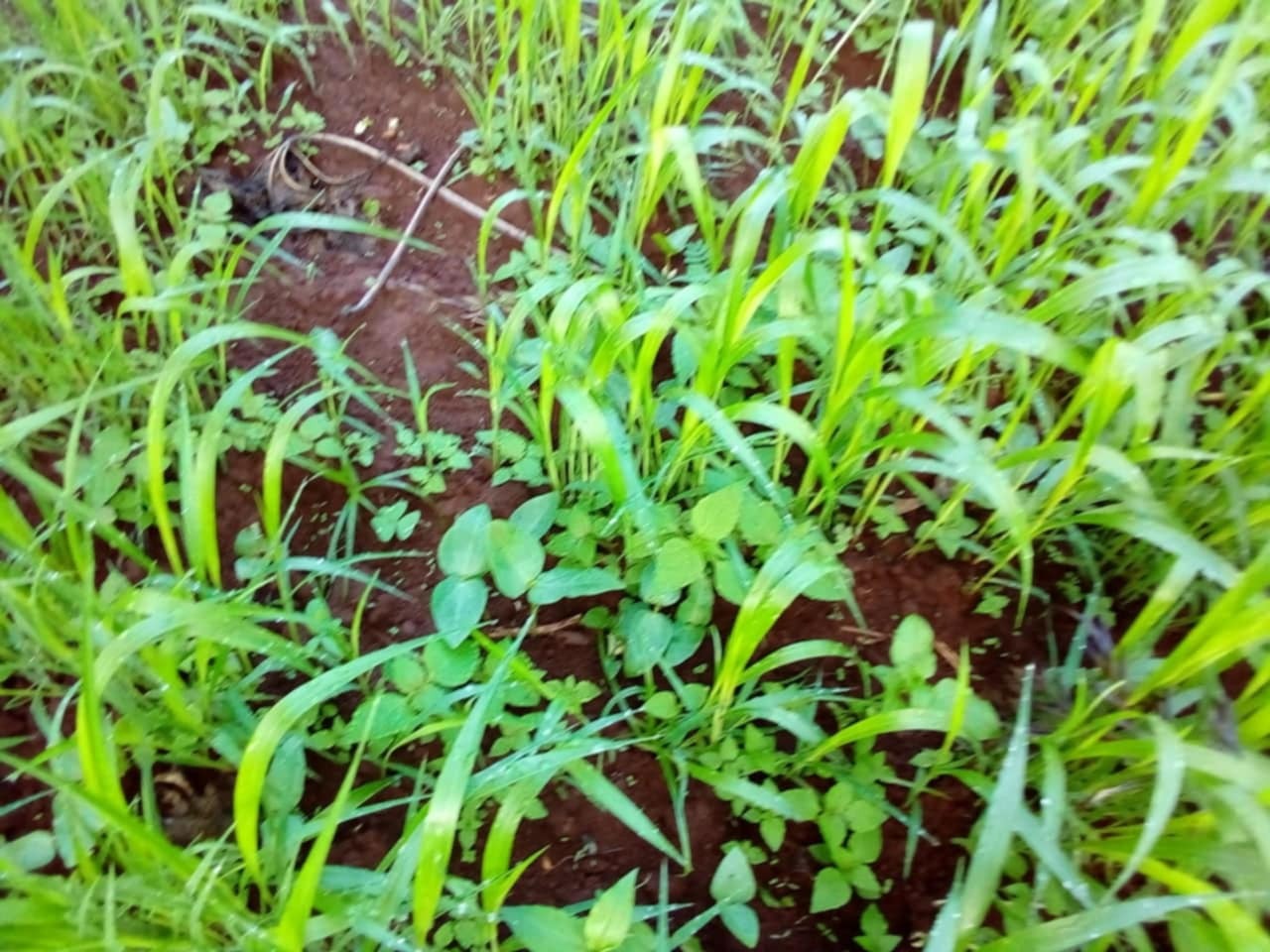
A demonstration garden has been established comparing GBSA practices, combined with human waste derived fertilizers, will be compared with current food production methods. Yield data is being taken. Seeing is believing and the major motivator for adoption especially in these communities is demonstration.
Research continues (see research tab) in an effort to improve the system. The aim of the research is to close the nutrient loops, improve the effectiveness and increase the efficiency of composting procedures. Increase food production and closing the yield gap.
It is anticipated that this data from the demonstrations and certified labs will be reviewed and published. Data sets will include comparative crop yields, pathogen reduction, and soil testing.
All raised funds will be sent directly to Bountiful Gardeners for Africa.