- H
- B
- A
Empower Ugandan Children with Education
0% complete
$8,495 raised of $17.4K
13 donations

Help Rural Ugandan Children Stay in School in 2026 and Beyond
Twenty years ago, our small church in Austin, Texas—Bluebonnet Hills Christian Church—went looking for a way to support children in Africa in a real, tangible way.
We found a young community organizer in Uganda named Robert Kibaya, who was trying to help rural children stay in school. At that time, primary school tuition was technically “free,” but every student still had to bring their own basic supplies—just pencils and paper—at a cost of about 75 cents. For the children Robert was serving, even that tiny amount was out of reach. They were literally dirt-poor.
Our church sent $600. That first gift allowed around 800 children to get the pencils and paper they needed to start school.
A few weeks later, we received a large packet in the mail: hundreds of tiny scraps of paper, each smaller than a postcard, with “Thank you” written by hand. Many had careful little drawings of birds, animals, and flowers. We were moved to tears.
Since then, for the past twenty years, we have been sending funds to Uganda every three months. Those funds have helped provide:
• School supplies and fees for children
• Food for elderly community members
• Chicken coops (with a rooster and two hens) for families
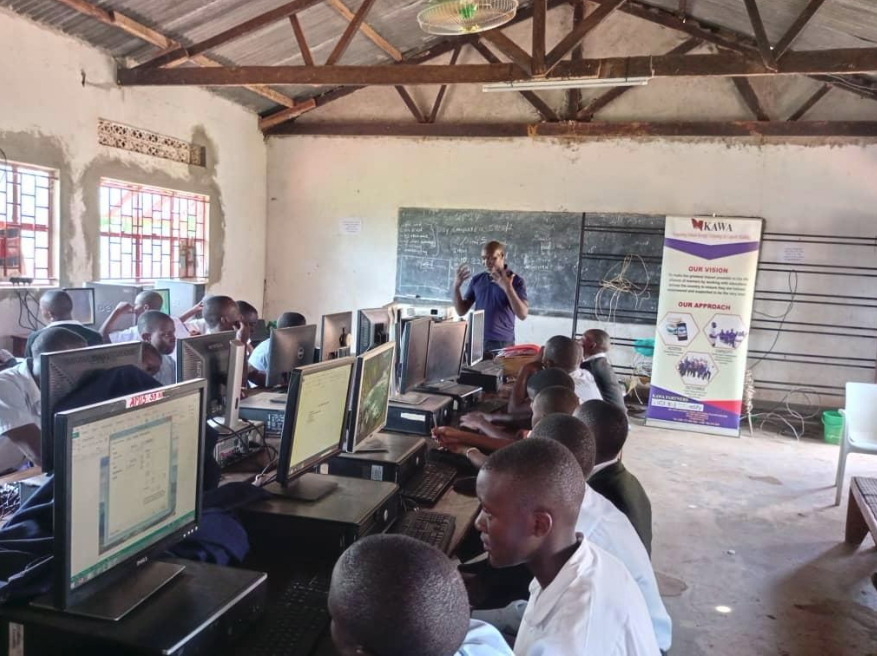
• Training in computer skills for youth
• And many other small but life-changing projects
Now we are inviting you into this story—to help us keep rural Ugandan children in school at a time when the need is greater than ever.
________________________________________
Meet Robert: From War-Torn Childhood to Community Advocate
“The greatest gift you can give to a poor rural African child is education.” – Robert Kibaya
My name is Robert Kibaya. I am a rural community developer, farmer, and father of three, born in 1978 during Idi Amin’s regime, a period marked by violence and political instability in Uganda.
I started school in 1982 but had to stop in 1985 because of the war that brought the current government to power. I returned to school in 1986 at Kikandwa Church of Uganda Primary School, a rural school with almost no facilities. Our classrooms had grass-thatched roofs and mud floors. There were very few teachers, no desks, and almost no learning materials.
Every week, pupils were required to bring:
• Cow dung to repair the classroom floors
• Hoes for growing food at school
• Firewood for cooking porridge
• Spear grass for roofing
• Brooms for sweeping
• Slashers for clearing the compound
Each morning started with digging in the gardens at home before walking to school. Once a week, we dug again as part of school activities.
Only a few of us ever made it to high school, and fewer still to university. By God’s grace, I received a government scholarship and completed university in 2003. I never forgot what it took for a rural African child to get an education—and how many children never got that chance.
After university, I began using my computer skills to reach out for support on behalf of children like the child I once was: bright, motivated, but blocked by poverty. I discovered that many rural children lacked not only school fees and scholastic materials, but sometimes even food.
Since then, I have dedicated my life to helping children stay in school. To date, I have supported more than 2,000 children, as documented on my Rural Africa Facts Blog:
My focus now is on the children of Ntenjeru Sub-County in Mukono District, one of the poorest areas in our district and a place where education can truly break the cycle of poverty.
________________________________________
Where We Work: Ntenjeru Sub-County, Mukono District
Robert lives and works in Mukono District in Uganda, which has:
• 11 rural sub-counties
• 2 urban divisions in Mukono Municipality
• 5 town councils
His current concentration is Ntenjeru Sub-County, a rural area facing serious educational challenges that mirror much of rural Uganda.
Key challenges in Ntenjeru include:
• Inadequate infrastructure
- Not enough classrooms
- Overcrowded classes
- High pupil-to-teacher and pupil-to-latrine ratios
• Teacher challenges
- Few teachers willing or able to live in rural areas
- Lack of housing for teachers near schools
- Teacher absenteeism and low morale due to poor conditions
• Barriers to access and enrollment
- Children often walk very long distances to reach school
- High dropout rates driven by poverty, child labor, and early employment
- Early pregnancy among girls
- Families too poor to afford even “hidden costs” like uniforms, exam fees, and supplies
• Low quality of education
- Limited instructional materials, including very few textbooks
- Underfunded schools and minimal government support
- Policy issues (like automatic promotions) that can weaken academic standards
• Poverty and daily survival
- Many families rely on children’s labor in gardens, markets, or household work just to eat
- Children are pulled from school when money runs short
In short: even when school is “officially free,” education is not truly accessible for a rural child without help.
________________________________________
Why Costs Are Higher Now—and Why Boarding School Matters
When our church first partnered with Robert, many of the children were learning in very basic structures: roofs with no walls, dirt floors, and very few desks—if any at all.
Over the past two decades, some conditions have improved in certain areas. Schools are more likely to be in actual buildings now, but that also means:
• Higher operating costs
• Higher fees for families
• Greater pressure on schools to provide more than just a place to sit
More importantly, in places like Ntenjeru Sub-County, day school is often not enough to keep children safe and learning consistently.
Many rural children:
• Walk long distances each way to school
• Go without food for much of the day
• Face risks on the roads, especially girls (including harassment and early pregnancy)
Because of this, Robert increasingly tries to place students in boarding schools when possible. Boarding schools:
• Provide regular meals
• Offer safer, more stable environments, especially for girls
• Give students better access to qualified teachers and learning materials
• Reduce the daily burden of long walks and physical exhaustion
This is one major reason costs are higher now than they were twenty years ago—but the difference in safety and educational quality is significant.
________________________________________
What This Campaign Will Support
Your donation will help rural children in Ntenjeru Sub-County and other high-poverty areas of Uganda stay in school and thrive in 2026 and beyond.
For this upcoming year, we are fundraising for:
• 20 students in Elementary/Primary school
- Cost: $215 per child per year
- Structure: 3 terms per year
• 25 students in Secondary school
- Cost: $287 per child per year
- Structure: 3 terms per year
• 7 students in Higher Education programs (university and vocational/technical programs)
- Cost: $430 per student per year
- Structure:
- University: 2 semesters per year
- YMCA and other vocational institutes: 3 terms per year
The total base cost of the students’ annual fees is covered within this plan.
Our total fundraising goal is $17,495, which includes:
• The tuition and fee support listed above
• Essential scholastic materials (exercise books, pens, pencils, uniforms, exam fees)
• Help with transport, food, and boarding school-related costs
• Necessary money transfer and banking fees to ensure funds actually reach the schools and students
Every dollar goes toward helping these specific students stay in school, learn, and move toward a different future than the one poverty has scripted for them.
________________________________________
How the Money Will Be Handled (Transparency & Accountability)
This GoFundMe is being organized by:
• Pastor Landon Shultz, PhD-DMin, Bluebonnet Hills Christian Church
• Aleah Ruiz, MSW, member of Bluebonnet Hills Christian Church
We are based in Austin, Texas, USA.
Here’s how the funds will flow:
• GoFundMe will deposit funds into a bank account in the United States, as required by GoFundMe policies.
• From there, funds will be sent to Robert Kibaya in Mukono District, Uganda, using reliable international transfer methods.
• Robert will then use the funds to pay school fees, boarding costs, and scholastic materials directly to schools and trusted vendors, and to provide accommodation in his home for students who need it to access better schools.
Documentation & Updates
Robert has committed to:
• Sending pictures of the students, schools, and learning environments (with appropriate consent)
• Sharing school fee deposit receipts and other documentation every academic term
We, as organizers, will:
• Post regular updates here on GoFundMe
• Share photos and summaries of how the funds were used
• Report on how many children were helped each term and each year
Our next critical deadline:
• Children report back to school in the first week of February, and funds are needed before or by that time to secure their places.
If we do not meet the full goal by January 26, any amount raised will still be sent and put to immediate use—prioritizing the most vulnerable children and the most urgent needs.
________________________________________
A Long-Term Partnership: Not Just a One-Time Gift
This is not a brand-new project.
For two decades, our church and community have walked alongside Robert and the children he serves—quietly, consistently, in the background. GoFundMe now allows us to open that circle wider and invite others to join in.
Our hope is that:
• This campaign will meet the immediate needs for the upcoming school term/year.
• Similar campaigns can be run in the future, offering more consistent support to these children as they move through primary school, secondary school, and on to higher education or vocational training.
Education doesn’t just change one child’s life; it can change the trajectory of entire families and communities.
________________________________________
How You Can Help
No gift is too small.
• A modest donation can help supply exercise books, pens, and basic materials.
• A larger gift can help cover boarding and school fees for a term or even a full year.
• Sharing this campaign with friends, family, your church, or your social networks helps more people learn about the children of Ntenjeru and how they can help.
Even if you can only give a little, combined with others, it truly makes a difference.
________________________________________
Thank You
From the children in rural Uganda, from Robert and his family, and from all of us at Bluebonnet Hills Christian Church, thank you for caring.
Thank you for seeing the value of a child’s education, even when that child lives far away, in a village you may never visit.
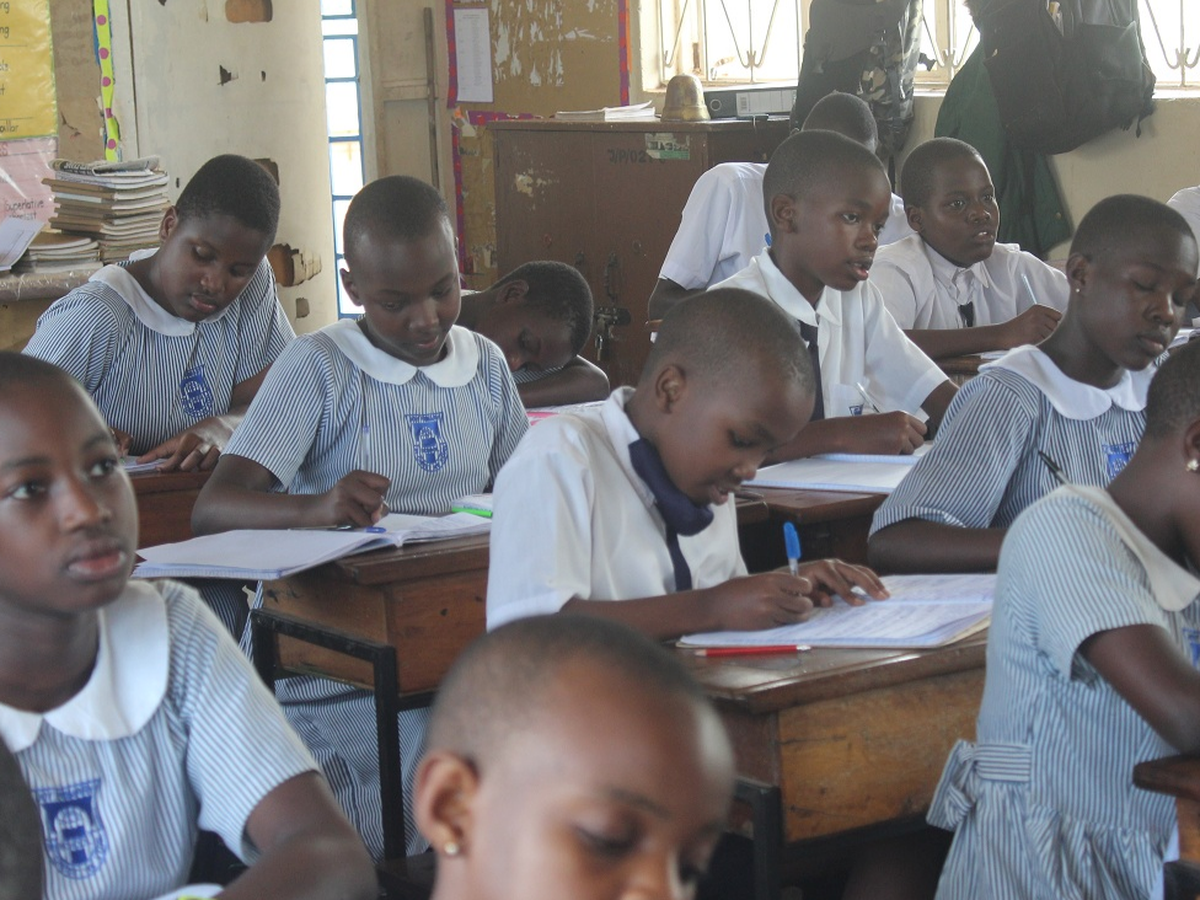
Your generosity helps a rural African child do something simple and profound: wake up, put on a uniform, and walk into a classroom where their future is bigger than their poverty.
Thank you for helping them stay in school.