- F
- M
Resilience is not about surviving the storm. It is about what you build while it rains."
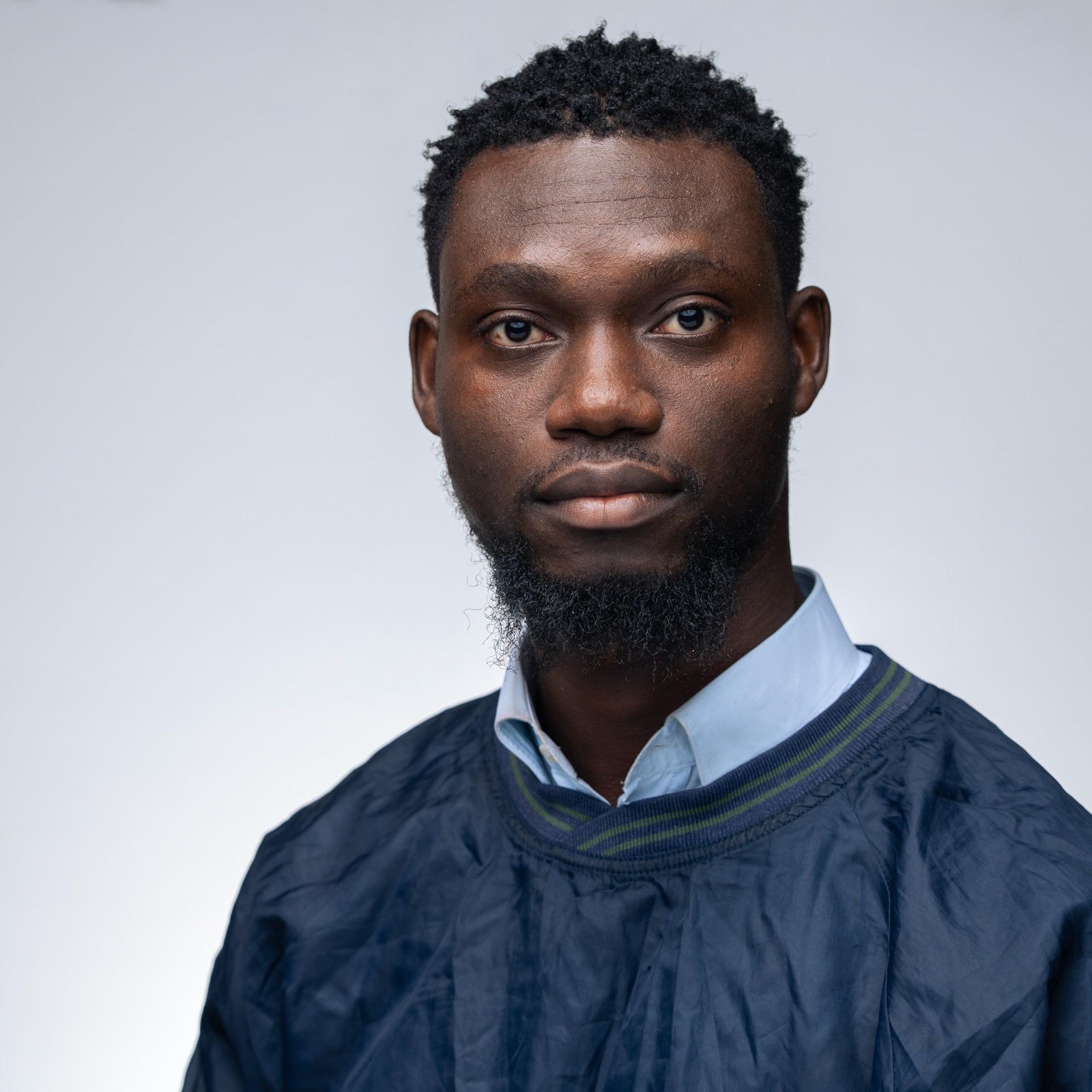
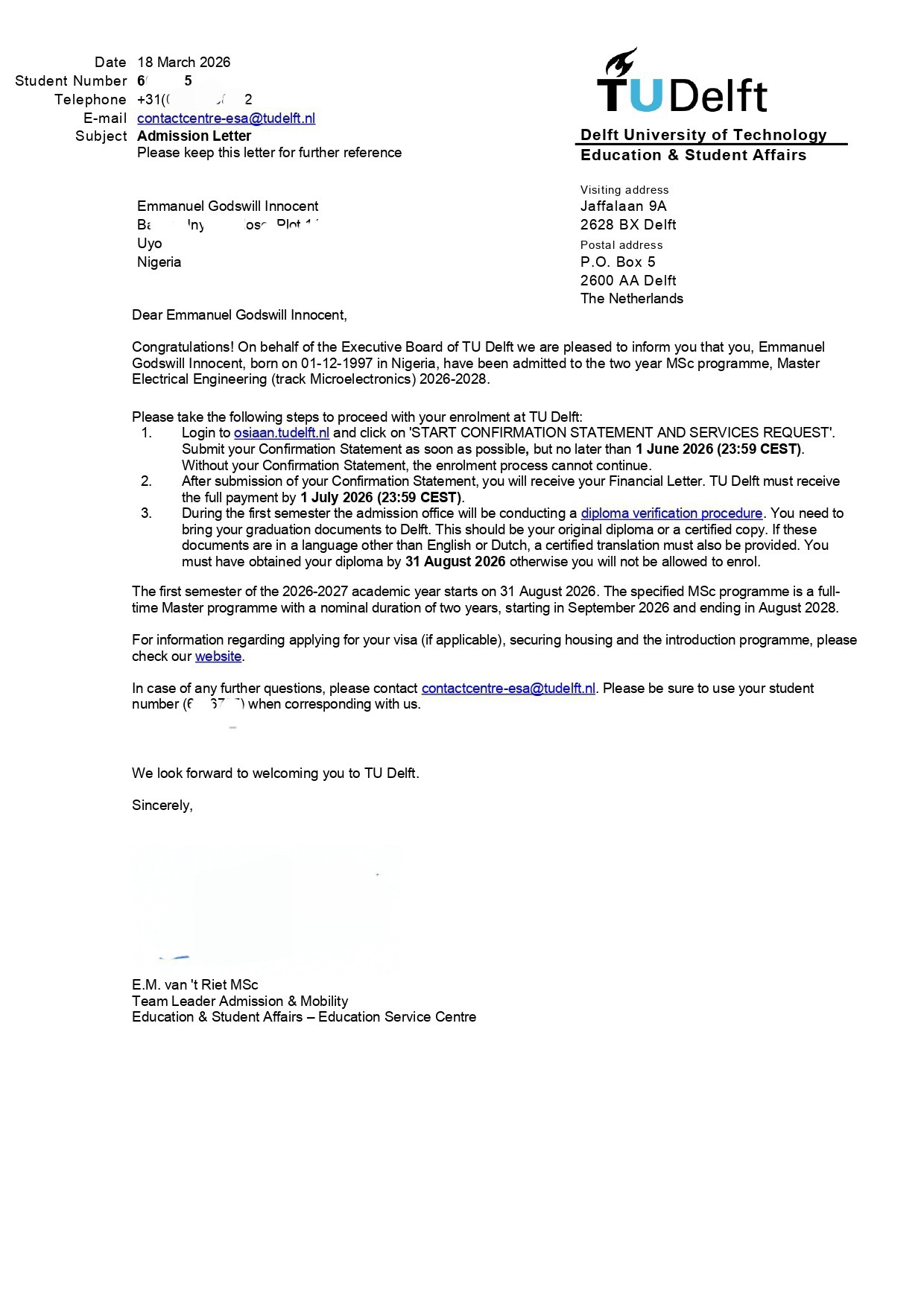
My name is Emmanuel Innocent. I am from Akwa Ibom State, Nigeria. In September 2026, I will begin an MSc in Electrical Engineering (Microelectronics Track) at Delft University of Technology (TU Delft) in the Netherlands — one of the world’s leading technical universities. I also received the TU Delft Microelectronics Scholarship covering my full tuition. I am now raising €7,000 to cover my flight, first months of accommodation, feeding, health insurance, laptop, and the essential costs of settling in. That is what this campaign is for.
My father, a soldier, died in a land dispute before I could know him. My mother raised me, trading on the streets to make sure I had what I needed. She passed away when I was 13, after battling congestive heart failure from hypertension. I became a first-generation university student after earning a BSc in Electronic and Electrical Engineering from Obafemi Awolowo University, Ile-Ife. What she sacrificed before her death is not something I take lightly.
In my second undergraduate year, I became fascinated by microelectronics — specifically by how tiny semiconductor circuits (microchips) are quietly reshaping every sector that matters to human life: healthcare, agriculture, communication, energy, transportation. The more I learned, the more one question stayed with me: Why is Africa, a continent that should understands her own problems better than anyone, producing so few of the people who build this technology? I decided that instead of asking that question from the outside, I would go deep into the field and start answering it from within.
ItIt was not an easy path to choose. Microelectronics expertise is scarce in Nigeria. The tools are expensive. The learning curve is long, and the rewards are not immediate — not in economy where purchasing power erodes faster than most people can save. At one point, I was nearly the only student in my department working on an IC design project.

I turned to open-source chip design tools and got to work. My undergraduate thesis was a programmable gain amplifier — a circuit that acts like a precision volume knob for electronic signals, controlling exactly how much a weak signal is boosted before it enters a processing system, with direct applications in medical devices and wireless communications. That work earned poster presentations at the International SoC Design Conference (ISOCC) in Sapporo, Japan in 2024, and at HeiChips 2025 in Heidelberg, Germany. It also earned me the IEEE SSCS Rising Stars 2024 Award — one of 24 students selected globally — and took me to the International Solid-State Circuits Conference (ISSCC), the world's most prestigious chip design conference, in San Francisco in 2023 and 2025. In early 2026, I was named one of 26 Next Generation Circuit Designers worldwide by the IEEE SSCS — and gave my presentation at ISSCC virtually because the travel funds did not come together in time.
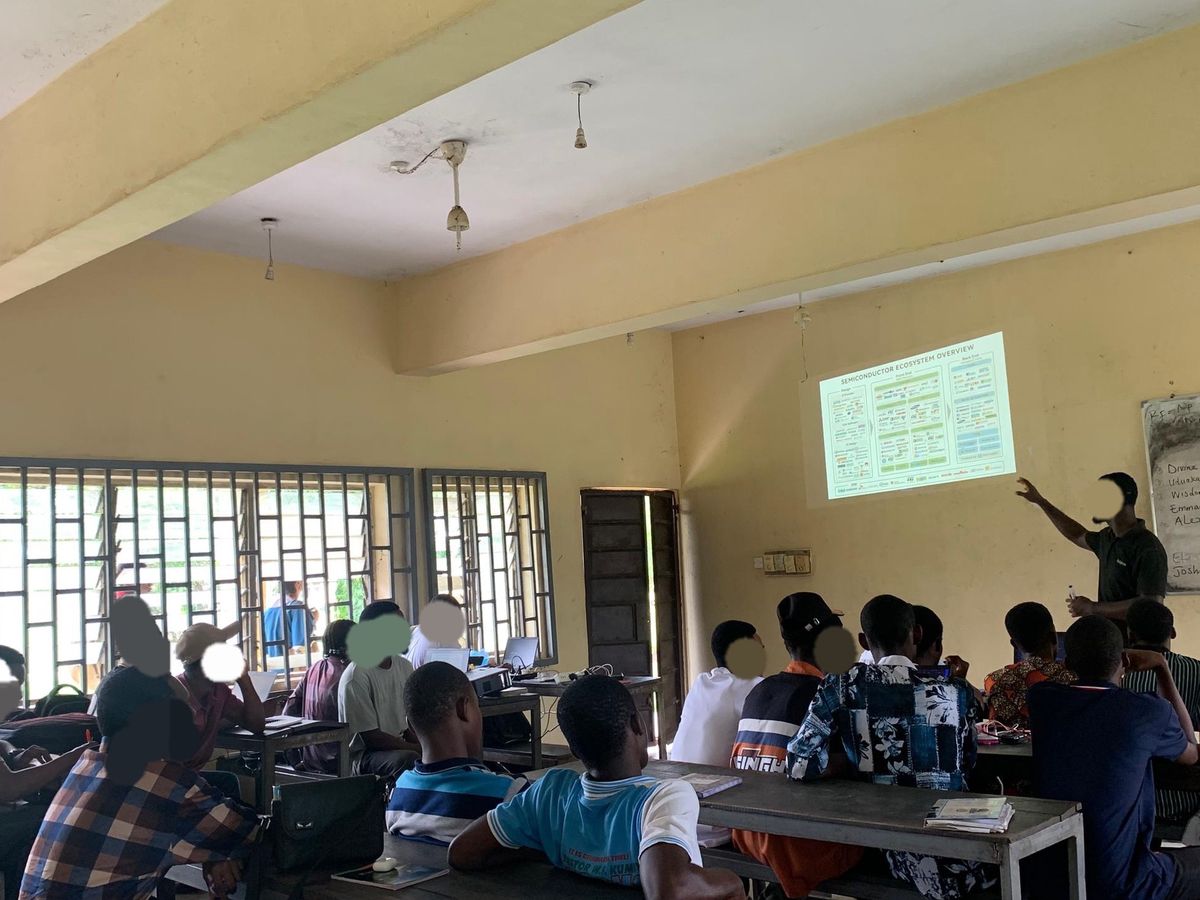
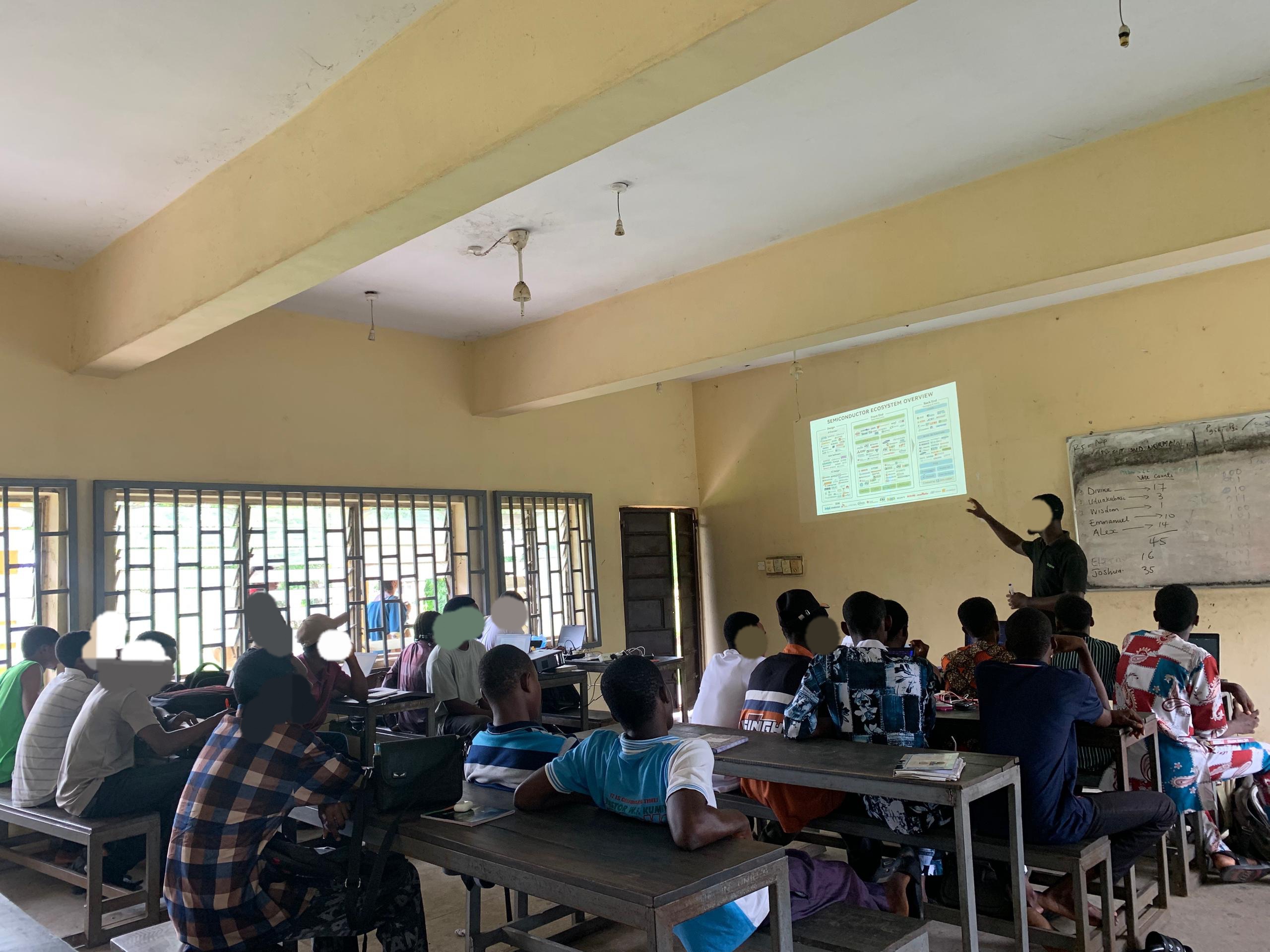
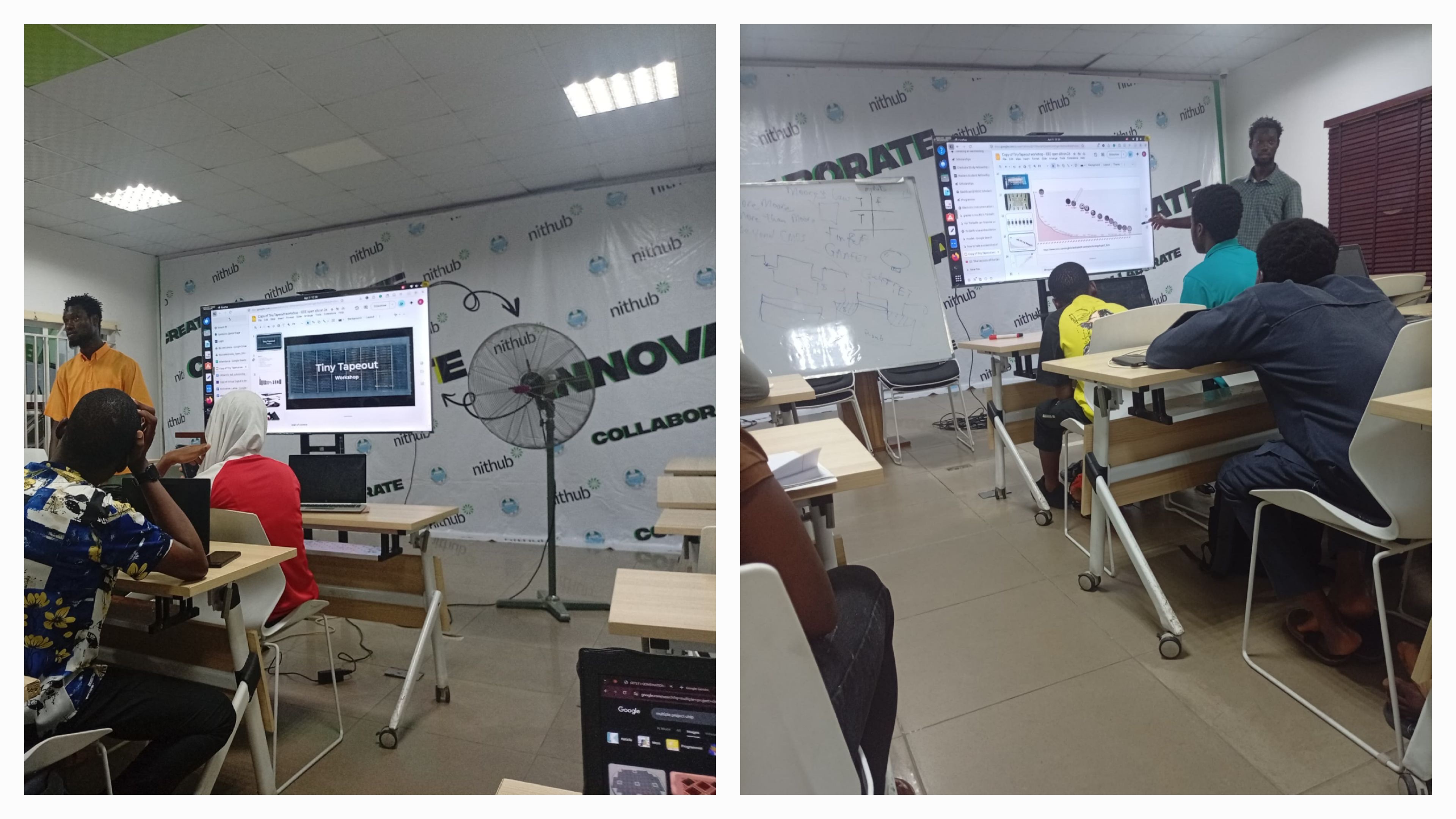
Beyond my own research, I founded and lead a pan-African open-source IC design community connecting members across five African countries, training students who have no conventional access to chip design tools or mentorship. I recently organized and led a chip design bootcamp where six teams — each working on a real Nigerian problem: power shortages, urban traffic, smallholder agriculture irrigation, water safety — designed and taped out four digital chips to actual silicon. Not simulations. Real chips, solving real problems, built by people who had never touched chip design before that boot camp.
Non-EU international students must pay a €14,200 financial solvency deposit before a visa is issued — upfront, before anything else. This is not cash I can spend. It stays locked as proof of solvency and is only released after I arrive in the Netherlands, secure housing, and complete municipal registration — none of which is possible without first covering flight, rent, and basic settling-in costs entirely out of pocket. With no viable loan options available for this purpose in Nigeria, a crushing exchange rate, and shrinking purchasing power, raising that amount felt almost impossible. Through months of saving and loans from a colleague and IC design professionals who believed in me and my work, I raised every euro of it. That is done — but none of it is money I can actually spend on arrival.
What remains is the settle-in gap — the real, immediate costs that the deposit cannot touch. A one-way flight. Rent — where paying 2-3 months upfront before getting keys should be expected. Basic furniture for what will likely be an unfurnished room. Food and essentials while a student bank account settles. Health insurance. A bicycle, which is not optional in Delft. The high-performance laptop TU Delft's Faculty of EEMCS officially recommends for the Microelectronics programme. Together: €7,000. Money that no longer exists after what it took to raise the deposit.
My mother traded on the streets to care for me. I intend to make that count — for her, for the students I am training across Africa, and for a continent that has every reason to contribute to building the technology of the future, not just using it.
If this story moved you, please share it even if you cannot give. And if you can — €10, €50, €200 — know that it is going somewhere purposeful.
Thank you.