(Dear reader. The 330,000 NOK we hope to raise here, amounts to 30,063 $ - there's more on this technical note in a section further below. The exchange rate is: 1 USD = 11 NOK)
My name is Amal Astal, and I live in Khan Younis, Gaza, together with my family. I will turn 20 years old in February. When I was 5, I lost my sight due to a tumor in the brain, and I have been receiving treatment from then up until the war broke out in Gaza. Life in Khan Younis without eyesight has not been easy, but I’ve found ways to maneuver the city on my own, and in June 2023, I finally completed 12 years of schooling. My dream is to become a translator at the UN, and to help fulfill this dream, I registered to begin translation studies at the Open University in Gaza in October 2023.
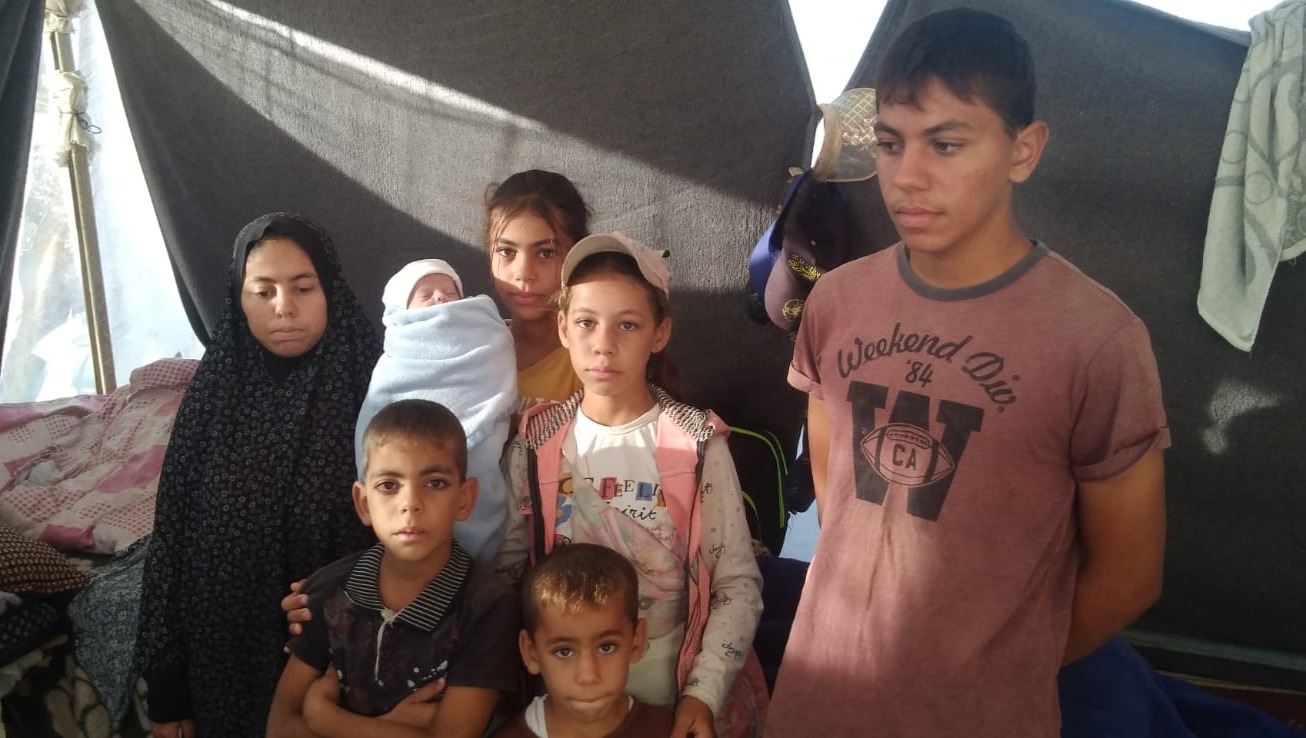
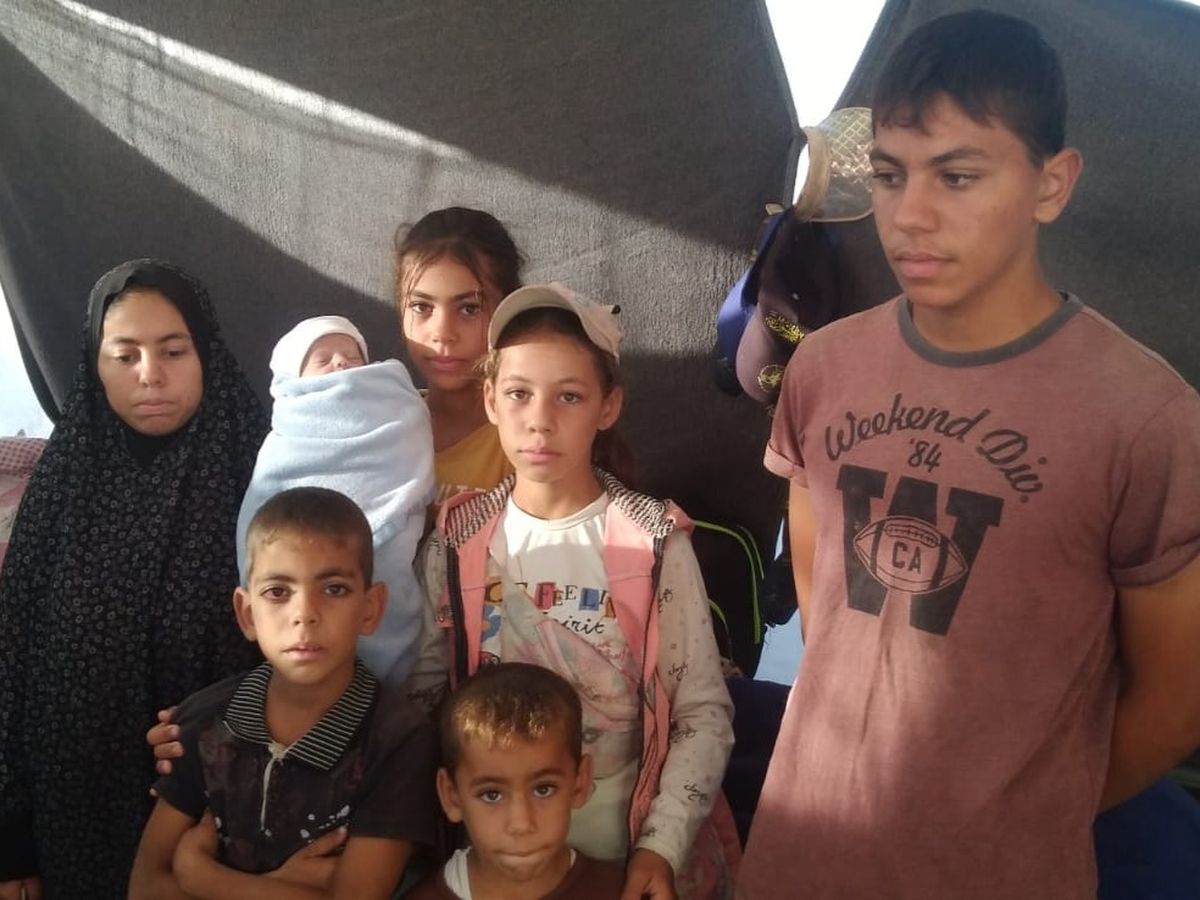
Here are my siblings and me.
Up until the war, I volunteered in an aid organization that help children with cancer in Gaza. Since I was treated for cancer outside of Gaza, I knew much of the bureaucracy and procedures families in Gaza had to go through. I was able to help families, and explain to them what needs to be done in order for their child to receive the much needed therapy and care.
Before the war broke out, my father was a farmer, and that was our source of livelihood. Today, there is nothing left of my family’s olive groves, and the once fertile ground around the ruins of our home is scattered with ammunition and wreckage, making it unsuitable for agriculture.
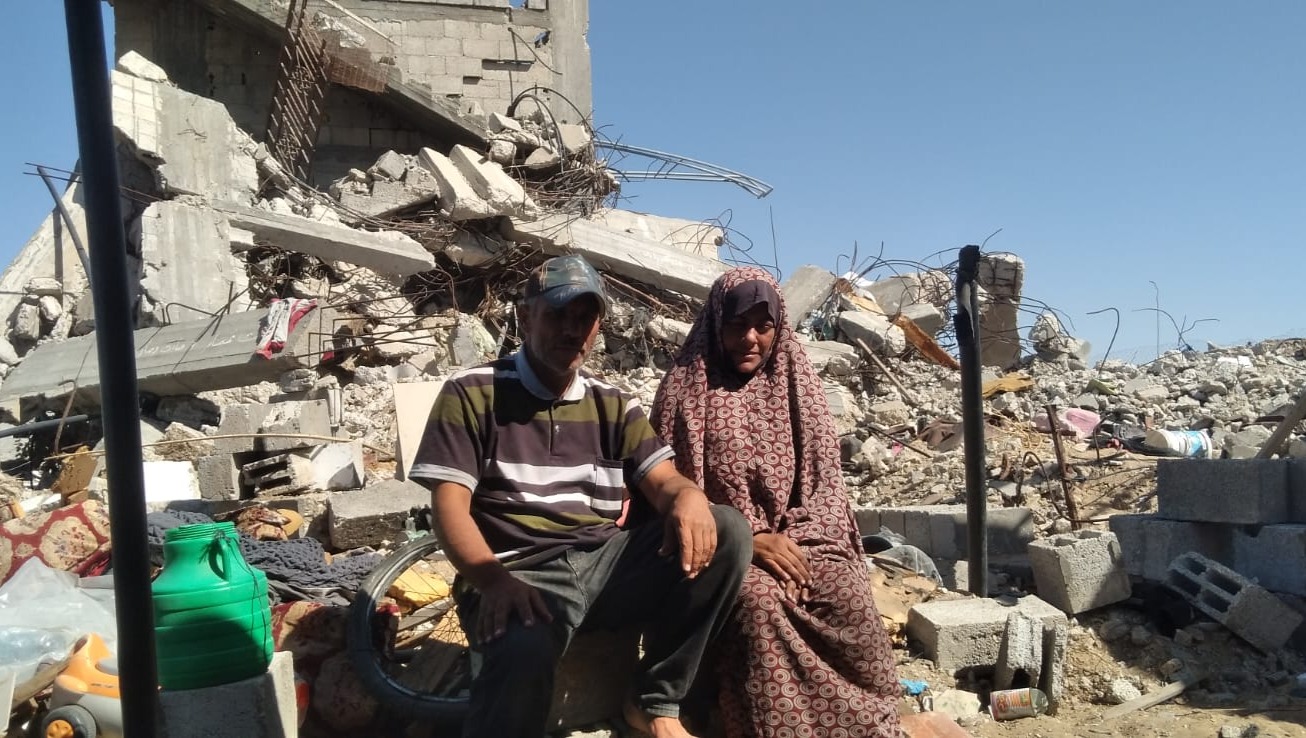
Here are my parents.
Who am I raising this money for?
The fundraising is for my family – my two parents, my nine siblings, including my youngest sister who was born on October 2024, and myself.
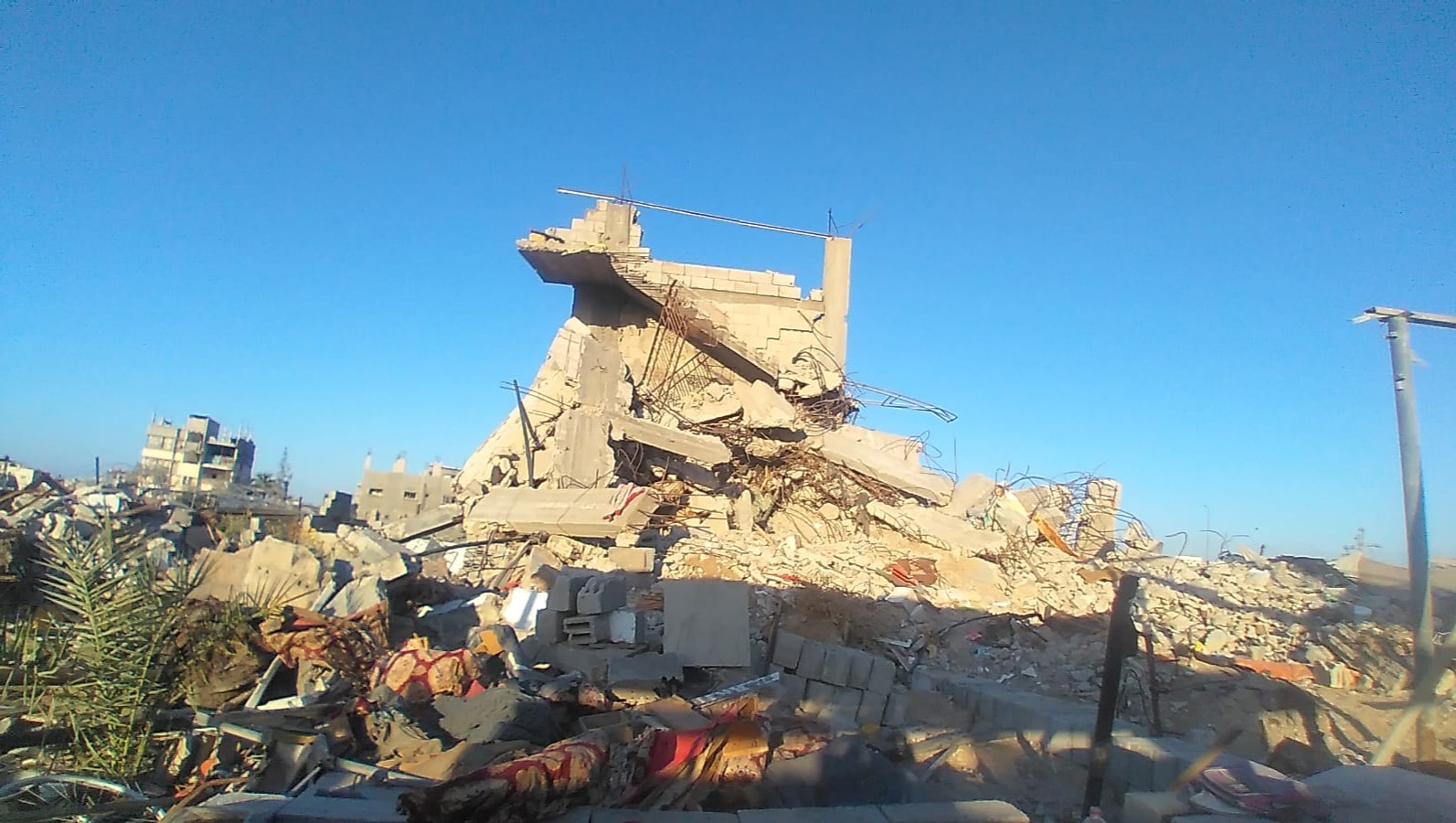
This is our destroyed home.
What we have gone through since the war broke out
On October 7th, we woke up early in the morning and heard the sound of rockets. We watched the news on television, and I was scared that there would be a big war, like the war in 2014.
Towards the end of October 2023, rumors began that the Israeli army had entered Gaza, and I realized that the war that started in northern Gaza would eventually reach us in Khan Younis.
When the evacuation from Khan Younis to Rafah began, I wasn’t scared for myself, but I was afraid for my parents and my siblings. I was confused and I was worried because we didn’t manage to take anything from the house when we left it.
My father tried to return to Khan Younis to try and retrieve some items from the house, but he couldn’t.
In Rafah, we had no tent. My father managed to put up a fence around the patch of sand where our whole family stayed. I didn’t know the area, and I sat on the ground all day. I didn’t dare move because I didn’t know this area at all.
Slowly, I got used to this new space because it had a fence around it.
My brothers, especially my younger brother Saraj, were very scared and cried a lot. For Saraj, it was the first time he had experienced war, which was very hard for him.
In early May, we returned to Khan Younis. The Israeli army had left a few days earlier, and my father rode his scooter to see what was going on with our home. When he returned, he told us that our home was completely destroyed.
I was very sad, but I was also happy that we at least returned to live near the house because this is a familiar environment for me. I could find my way around here, leave the shelter my father built on my own, and feel more independent.
For the longest time, I really wanted to go back to helping sick children, but I couldn’t. It was a very hard time because I thought about it day and night, and I was very confused. My whole family was very scared of the Israeli army. My parents noticed that I wasn’t in such good shape and asked me what was going on, but I didn’t tell them that this was troubling me.
Only after we returned to Khan Younis was I able to reconnect with the aid organization, and we tried to help sick children we knew who needed treatment outside of Gaza. We made connections with several doctors in Gaza hospitals, but it was very, very hard to help, especially after the Rafah crossing was closed.
Today we are living in the shelter that my father built next to the ruins of our house.
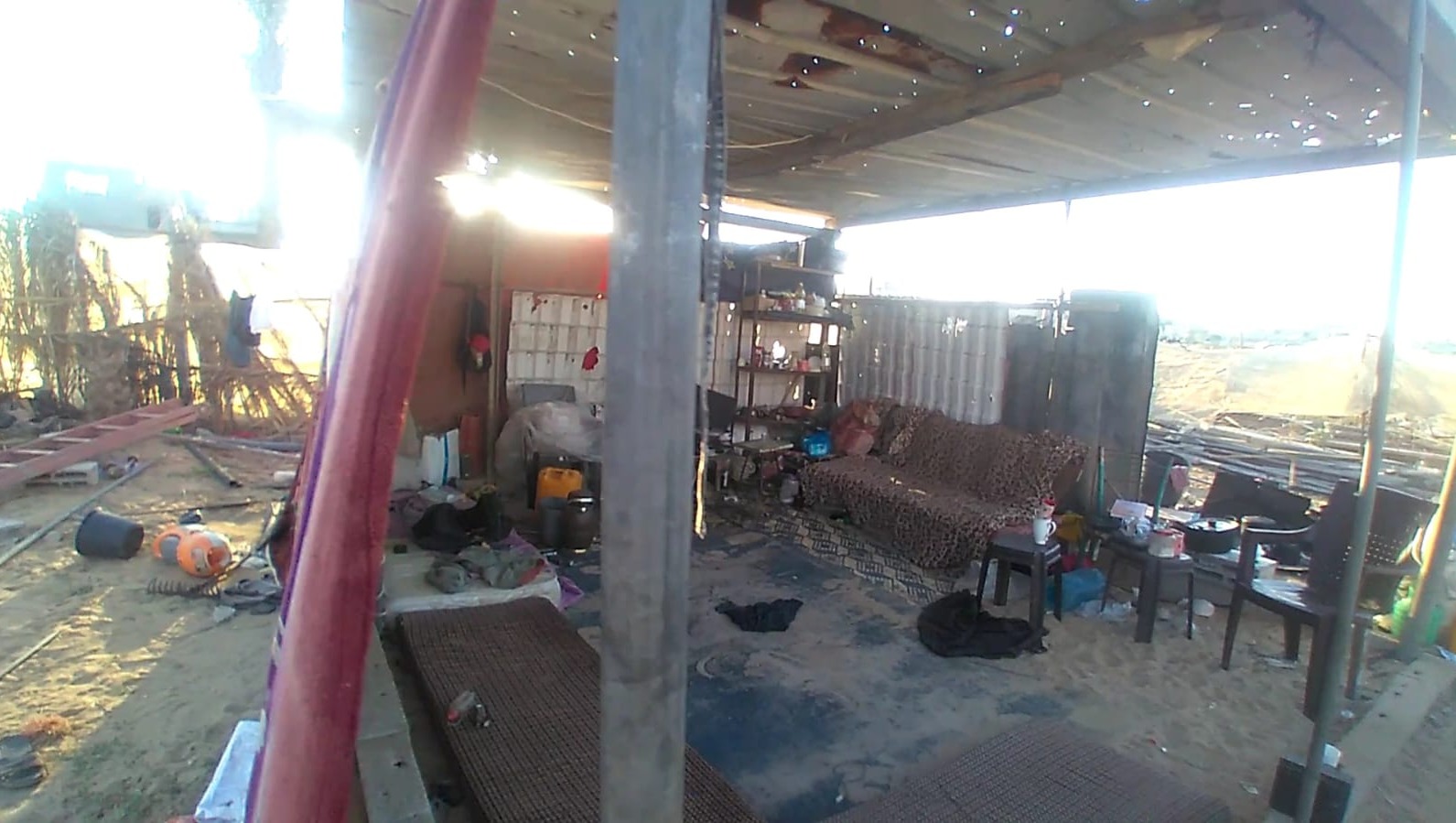
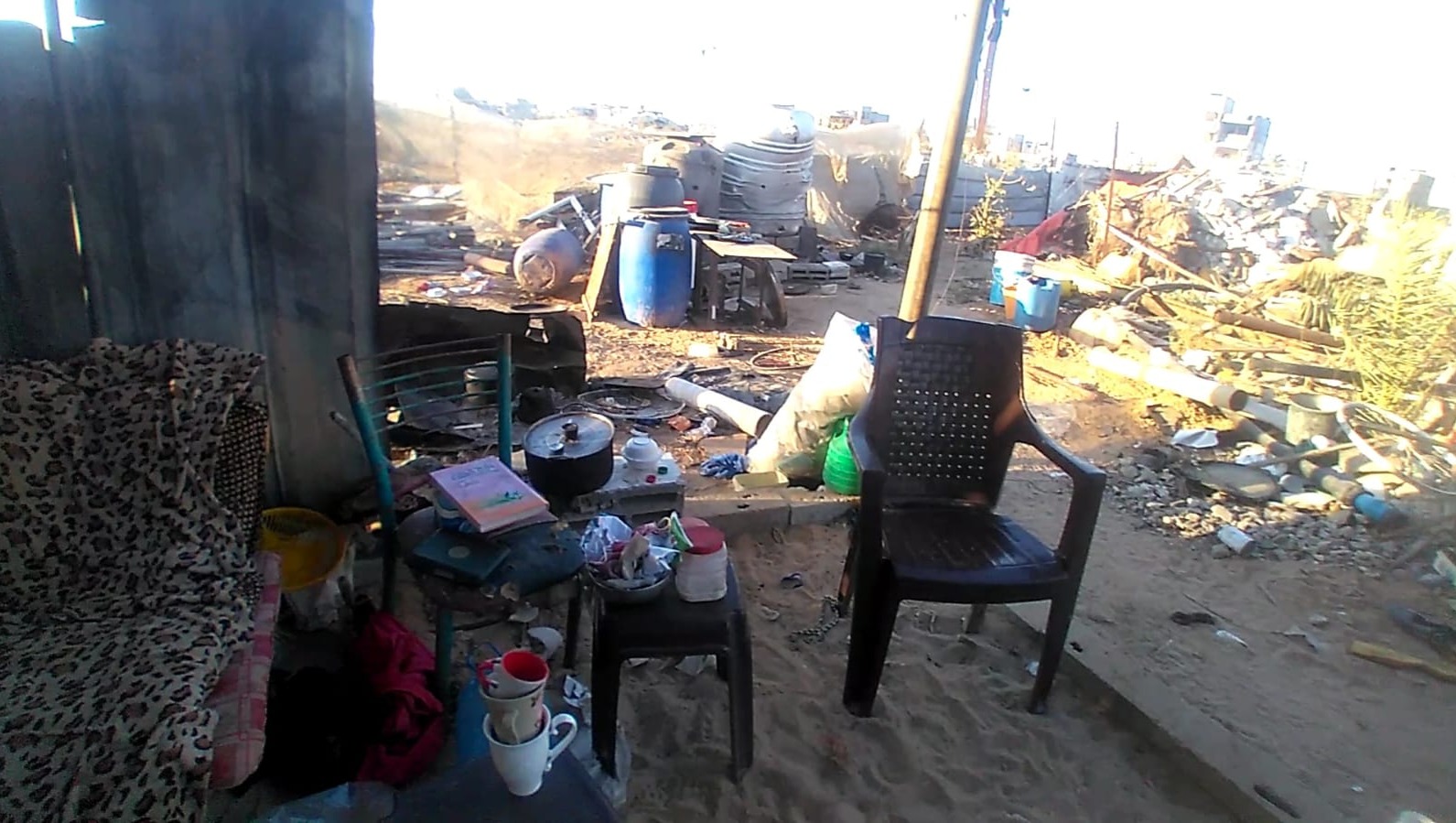
This is our current shelter.
How will the funds be used?
(This paragraph has been informed by Amal’s father, and co-authored with Tor Rivlin)
The goal of the fund is to cover the short-term survival needs of our family, and to start rebuilding and repairing our life and livelihood in the longer term.
The emergency aid we ask for, will go toward meeting our most basic needs – food and water, baby formula, clothing and diapers for the young infant who is currently in serious danger, as well as mattresses, blankets, cooking pots, eating utensils, sanitation products, firewood and so on.
In addition, the funds are intended to enable us to build a temporary shelter that will be able to carry the family through winter. This part is critical and essential for the family's survival.
A video in two parts where I explain the current situation.
Two technical notes on the fundraising
1. I have partnered with a Norwegian author based in Oslo, Tor Rivlin, to set this fundraising to life, for the simple reason that the fundraising platform has restricted its use to a limited number of countries, one of which is Norway. I got in contact with Tor through the aid organization "Basmat Amal". In parallel with the fundraising, he will transfer all donations directly to my Palestinian bank account.
2. The currency of the fundraising is in Norwegian NOK (there was no alternative, when using a Norwegian bank account) but the transfers to Amal's bank account will be made in dollars. The exchange rate is as follows (on the 30th of november): 100 $ is approx. 1,100 NOK, meaning that the 330,000 NOK we hope to raise here, amounts to 30,063 $. This is the short-term goal of the fundraising, that will be used for survival. If we get there, we will relaunch with the hopes of raising another 80,000 $, which will be used to build a new home.
The following paragraphs are written by Tor Rivlin
A lot of devastation hit Amal and her family when Gaza was attacked. They lost their home and their livelihood and close to everything that went into their normality. In the year and more that has passed since then, the family has lived through more or less uninterrupted hardship, without stable shelter, without access to proper sanitation and perpetually short on food, water and medicine. They are a large and caring family and in October last year they became one member stronger. I've never met them, but I've gotten to know their resilience and warmth from afar. They do everything they can to keep each other going and that is really euphemistic because their lives are threatened, as so many Palestinian lives are right now. And I think that everyone with a heart knows how bad all of this is, and the question really becomes: What do we do?
What we can do is donate in accordance with our private economy - to organizations, as well as in a direct line, such as is asked here. If you do not have the economy to contribute, or feel that you have given what you could, that’s perfectly fine. In that case: I ask on behalf of Amal, that you keep reading reports from Gaza, and that you keep imagining the reality of Gaza. That is not inconsequential.
Every donation will help support and save Amal and her family.
Organizer