- M
PSYCHE AND EROS - THE FILM
HELLO, lovers of poetic and timeless films, sacred stories, mythology... of movies meaningful and out of the ordinary...
We are planning to make a short/proof-of-concept film of the Greek myth Psyche and Eros in May-June 2024.
WE HAVE SOME OF OUR FUNDING AND ARE NOW QUICKLY TRYING TO RAISE THE REST. HELP US REACH OUR GOAL!
Amazingly, this fascinating story has not yet been made into a major film.
Our film tells the spiritual journey of Psyche (which means "soul")--the very first heroine in literature!--from her beginnings as a naïve and simple girl to her sacred marriage with the god Eros among the gods of Olympus.
Psyche's beauty is such that the people neglect to honor the goddess Aphrodite. Enraged by their worship of a mortal girl, Aphrodite summons her son, the capricious god Eros, to shoot an arrow at Psyche and make her fall in love with a hideous beast. But, instead, Eros falls in love with her himself.
And thus follows one of the most romantic--and most often painted and sculpted--stories in all of history.
Every night Psyche joyfully receives her beloved husband Eros--who visits her only in the dark. But she is forbidden to look at him and must trust what she feels "beyond any seeing." Psyche faithfully holds to this promise--that is, until her two envious sisters persuade her to break her oath and look at her husband's face. For this transgression, Psyche is banished into exile and wandering.
There she must undergo a series of impossible tasks and trials, including entering into the underworld--and even giving up her own life--before she can fully blossom into being and be reunited with her divine husband.
OUR PLANS
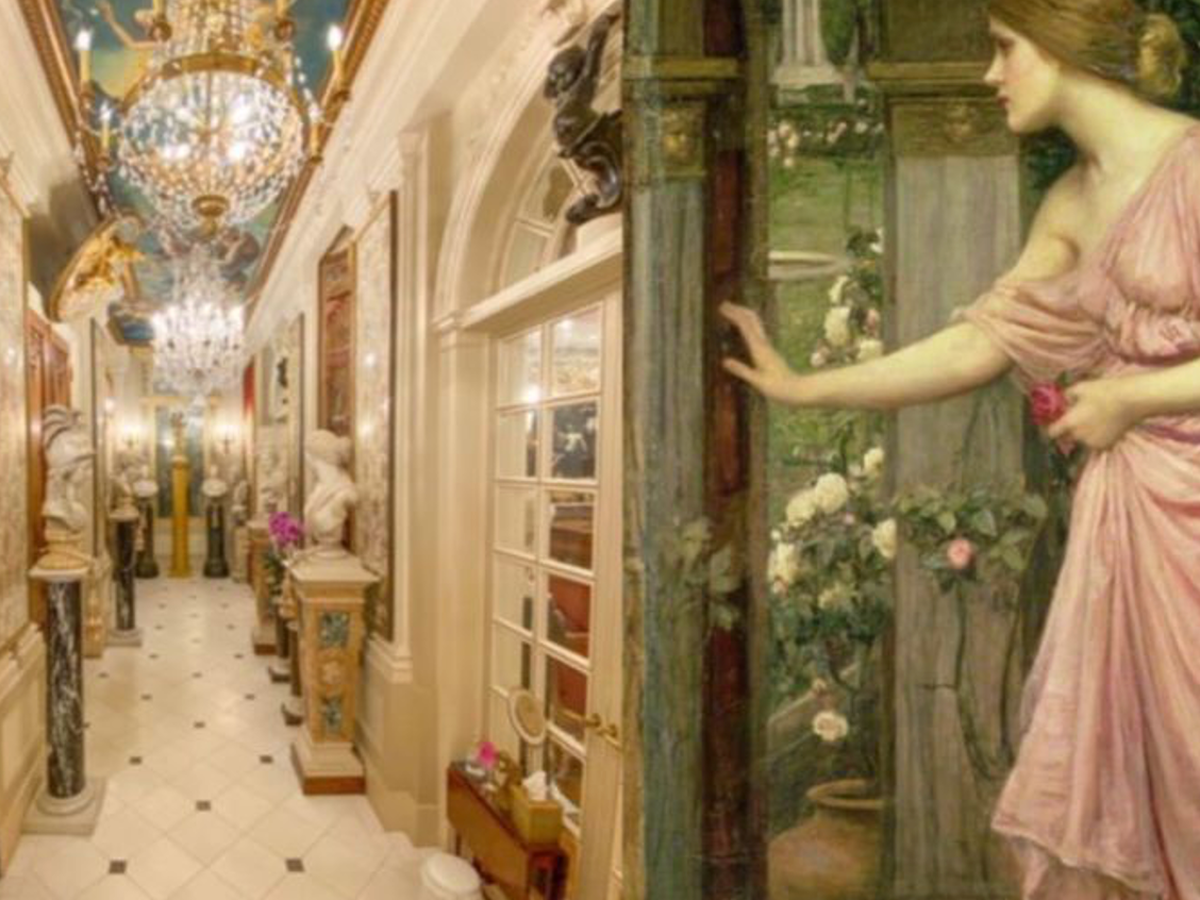
We plan to shoot over three weeks in May-June 2023--the loveliest months--on the idyllic grounds of a private Northern California estate, adorned with fountains, statuary, and gardens. Our costumes will be in the pre-Raphaelite style to match the classical impressions.
Locations will be free, as will the participation of the actors and much of the crew. But your donations will help pay for the many other costs of our shoe-string budget, including costumes; rental of equipment; some crew; food service; materials, special effects and other contingencies. (See the budget breakdown below).
Please help us make this beautiful film a reality by contributing as generously as you can! We have to do it soon! Even a small donation will go a long way towards helping us achieve our goal. And please share our link with others!
OUR VISION
We envision Psyche and Eros as an an epic fairytale for adults (although children will love it too). It presents the classic arc of the hero's journey, but laced with exquisite beauty, celestial enchantment, broad humor, divine madness, and touches of tragedy.
The myth itself is the genesis of many of our popular fairytales, including Beauty and the Beast, Cinderella, and Sleeping Beauty. Shakespeare's Midsummer Night's Dream also draws elements from this archetypal tale.
The story goes deeper than most fairytales, as there are many existential questions at stake: What is reality? Is Psyche just dreaming her existence in Eros' palace or was her previous life a dream? Why is she forbidden to look at her husband? Are the gods punishing her or helping her? What does it mean for a mortal to become an immortal?
WHY THIS FILM?
What first attracted us to this project was the poetry, power and mystery of this story. We feel passionately that it possesses all the elements of a compelling and highly visual film.
The romance of Psyche and Eros has long been the paradigm of erotic-mystical love, depicted in innumerable works of art.
It is also an allegory of the journey of the soul from darkness to light.
The myth originated in the 4th century BC and, while there are many images of it from that time, the first recorded version is from Metamorphoses by Apuleius, a 2nd-century Neo-Platonist.
Our film tells of the transformation of Psyche from her beginnings as a naïve and innocent girl, whose dazzling beauty incenses the goddess Aphrodite, to her eternal union with the god Eros. In fact, Psyche also means "butterfly," and she is sometimes even depicted with butterfly wings (as seen below).
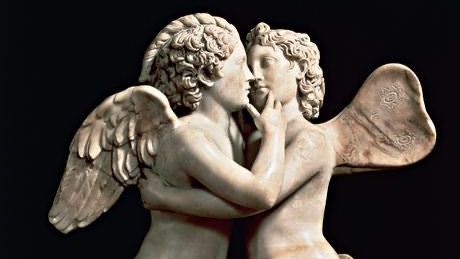
But it is far more than an allegory; it’s a very human story too. As Psyche moves between different worlds, she must overcome her naivety, loneliness, doubt, remorse, pity, indecision, terror, until, through her many incredible trials, she fulfills her destiny.
It is our earnest hope, through this film, to bring something beautiful, uplifting, amazing and thoughtful to this dark world.
OUR AIM
Our plan is to complete the proof-of-concept film by September 2024 with the goal of making the full-length film of Psyche and Eros in 2025 or 2026. This proof-of-concept film, while a work of art in itself, will also be used to help us attract investors and producers to the project. All of the pieces are already in place for the full-length version, including script, director, DP, actors, crew, locations, props and costumes.
OUR VISUAL LANGUAGE
The film is divided into three main parts: the known world of the protagonist, Psyche; Eros' palace; and the underworld. We will make a clear distinction between these three worlds as she moves through her journey, mainly through the use of different color palettes to reflect Psyche's psychological state.
The known world of the kingdom of Psyche and her royal family will have a colorful palette.
The interior of Eros' enchanted palace will have no direct light and will be shot with special lenses, sometimes out of focus, to reflect Psyche's changing state.
The world of her exile, wandering and the underworld will feature mainly dark tones, reflecting the turbulent state of Psyche's soul.
Finally, there is the world of the gods and goddesses, which will be created through light, color correction, and special effects. We will also use special effects for some of the enchanted scenes in Eros' palace (such as a platter of food magically floating down to her), for the tasks given to her by Aphrodite, as well as for the scenes that take place in the underworld.
The main reference for our film is Cocteau's Beauty and the Beast, which wonderfully employs simple theatrical elements to achieve fantastic effects.
To this end, our team has come up with unique, creative solutions for the set design, inspired as well by Alejandro Jodorowsky's The Dance of Reality.
Camera: RED
Lenses: 25-290mm, 15-40mm, 28-76mm
SOME OF OUR GREAT TEAM
Director: Olga Melnikova
Screenplay: Judith Grace Bassat
Producer: Charles Rodkoff
Production Design: Paulina Herrera
Costume Design: Tania Vatury
Score: Alex Simu
Lighting: Eyal Graif
Sound: Michael Caspi
Choreography: Guy Pontecorvo
Visual Effects: Andrei Drimbu
Props: William Galvin
Psyche: Clio Capaccioli
Eros: Michael Parks
Aphrodite: Ingrid Claes
King: Charles Rodkoff
Queen: Cornelia Kalkapoulou
Thana: Laura Frew
Mora: Ioana Badea
Gull: William Galvin
Zephryus: Riccardo Andreatta
Pan: Julian Branston
Oracle: Mari Reeves
Persephone: Andra Smirna
Zeus: Benjamin Moore
Hera: Silvia Moore
Tower: Conrad Cecil
Muse: Diana Desai
Budget breakdown:
- Crew: $8000
- Costumes $3000
- Equipment rental $3000
- Post-production $3000
- Food service $3000
- Materials $2000
SYNOPSIS OF THE STORY
The princess Psyche is the most beautiful maiden in the world. While her two older sisters, Thana and Mora, are also lovely, Psyche’s beauty is incomparable. People come from all over Greece to see and worship Psyche as a goddess, bringing tributes and gifts of gold. In doing so, they neglect to honor the true goddess Aphrodite, trampling and defiling her altar.
Psyche’s parents, the King and Queen, look the other way to the wrongful worship of their daughter pleased with the good fortune that she brings them. In fact, they plan a lavish wedding for Mora and Thana that will be the envy of all Greece. But, as for Psyche, because of her unearthly beauty, no man even dares to think of loving her as a woman, leaving her deeply lonely and unhappy. She curses her beauty and longs for true love… deep, pure and eternal, not blind, meaningless adoration.
Meanwhile, in her chariot in the sea, the goddess Aphrodite is incensed by the peoples’ worship of a mortal girl rather than of her, the immortal goddess of beauty and love. The gossipy, garrulous Gull, her trusty servant, commiserates with her and insists that Psyche should be punished for imitating her beauty. Aphrodite then summons her son, Eros, instructing him to shoot Psyche with one of his golden arrows that make people fall in love to have her fall in love with a monstrous beast.
However, when Eros goes to Psyche’s chamber and looks at her, he is so overwhelmed by her beauty that he strikes himself with his own arrow and falls desperately in love with her.
Psyche’s unhappiness so distresses the King that he goes to the Oracle and asks it to grant a husband for her. The Oracle responds that Psyche will have no mortal husband but must be taken to the edge of the cliff where she will be taken away by “a fearsome winged beast that brings terror to men and gods.” The King is grief-stricken and repents of his foolishness.
The citizens lament Psyche’s fate and form a procession to take her to the edge of the cliff. As they wind their way to the cliff, the citizens play instruments and sing a marriage-funeral song. Then the procession turns back, leaving Psyche with the King and Queen, who ask for Psyche’s forgiveness. They too leave. Psyche turns to the void and embraces her unknown destiny with her monster-spouse. She is swept away in smoke and wind.
Psyche finds herself in a beautiful garden with flowers, astonished to be alive, and wearing the same wedding dress, untouched. She sees a shimmering palace in the distance and walks towards it. She hesitates at the door but the voices of celestial spirits beckon her in. She enters and is dazzled by the unearthly beauty of the palace.
Invisible celestial voices tell her that the palace and all its treasures are now hers. They invisibly serve her a banquet, bathe and a bring her to the bridal chamber. There Psyche waits in bed, fearing who will come to her in the night—husband or beast.
Eros arrives in the dark and the two embrace as lovers, repeating beautiful words of love to each other.
As dawn appears, Eros leaves. Psyche begs him to let her see him, but he says that she can never look upon him or know his name. He tells her to delight in her new palace and promises to visit her every night at sunset.
A montage of scenes shows the passage of time in the palace as Psyche explores the gardens and fountains, and is visited by Eros in the dark, who then again departs at sunrise. She asks the invisible spirits who attend her why all the clocks in the palace are stopped. They reply it is because there time does not exist. She asks them to see her husband’s face, but they warn that is not permitted to her.
Meanwhile the King and Queen lock themselves up in their palace, grieving. The newly married Mora and Thana suddenly appear to their parents to commiserate with them. They promise that they will go to the cliff and look for the remains of Psyche’s body.
Back in Eros’ palace, Psyche hears the voices of Mora and Thana calling out and begins to weep. When Eros asks why, she says that her family is grieving for her and she would like to invite her sisters to the palace to show them her happiness and allay their sorrow. He warns her against that, but she persists, and Eros finally relents. He says that she can offer them gifts of gold and jewels but may not, under any circumstance, speak of him. Psyche agrees and sends Zephyrus to bring her sisters to the palace.
At the edge of the cliff Mora and Thana outdo each other with fake wails and howls of sorrow for Psyche. Zephyr sweeps them to the Eros’ palace where they are astonished to be greeted by Psyche. She tells them of her happy life shows them through the palace. They marvel jealously at the magnificence of the place. Then they are served a banquet to the sound of invisible musicians. Mora and Thana question Psyche about her new life and husband and she makes up a halting story about him being a youthful hunter who goes out to hunt every day. When they continue to question her, she offers them coffers of gold and gifts to deflect them. She also gives them a ring to offer to the King and Queen to let them know of her happiness and to ease their sorrow. Then she commands Zephryus to bear her sisters home.
Mora and Thana land on the cliff and express their jealousy of Psyche’s new life. They feel that, not only does she have wonders beyond compare, but she has a young and handsome husband unlike their old, bald ones. They think it unfair that the youngest daughter has all the fortune. They feel that Psyche was lording her riches over them and looking down on them. Noting her halting answers when questioned about her husband, they devise a plan to visit Psyche again and discover what her secret is. They bury the gifts she had given them, including the ring intended for their parents, and, so as not to increase her glory, they pretend that Psyche is dead.
Eros warns Psyche that her sisters are sisters are plotting to destroy her, but the tender-hearted Psyche defends them and asks if she can invite them back to the palace. He warns her not to listen to their pleas and tells her that, if she keeps their secret (that she has never looked on him and does not know his identity), the child in her belly will become an immortal god. If she fails in this, her child will become a human. Excited about the prospect of a having a child, she promises him with kisses that she will never betray her vow to him. He agrees, knowing how it will end.
Psyche greets her sisters again and offers them a splendid banquet attended by celestial servants with celestial musicians. They bombard her with questions about her husband, tripping her up in her answers. Psyche becomes confused and finally confesses that she has never seen his face. At this revelation, Mora and Thana begin to egg each other on, inventing more and more frightening stories on the spot. They tell Psyche that the reason she hasn’t seen her husband is that he has put a spell on her to make her think that she lives in a palace, while, in fact, it’s a dark dungeon. They tell her that he is a serpent, and that the reason he is hiding from her is that he plans to devour her and her newborn child in the dark. They remind Psyche of the Oracle, which prophesied that she would marry a terrifying monster. Psyche protests at first and denies her sisters’ accusations, but gradually she begins to believe them. They tell her that she must destroy her monster-husband before he destroys her and her child. They advise her to take a knife and an oil lamp, and, when her husband is sleeping, to slay him. Then they say she should return to the world she knows where they will find her a worthy husband.
Psyche is torn with conflict. She calls on the gods to give her courage. She recalls the moments of delight and sweet moments of love she shared with her husband, but then she remembers her sisters’ words that he has only bewitched her. Finally, she summons up the courage to slay her husband, and goes to find an oil lamp and knife.
That night, once she has ensured that Eros has fallen asleep, Psyche takes out the knife and oil lamp to look on him. But rather than a monster, she sees the most beautiful, glorious being she has ever seen—Eros, the god of love himself. She throws the knife to the ground, horrified that she had thought to kill an immortal god. But, in doing so, a drop of oil from her lamp falls on to Eros, waking him.
He immediately sizes up the situation and flees without a word. Psyche throws herself on her knees, asking his forgiveness and begging him to stay. But he insists that she has broken her vow to him and, in so doing, has lost all the gifts given to her above all mortal girls. She weeps and implores him to stay, but he leaves her on the ground, telling her that her sisters’ fate will soon be revealed and that she will be exiled from his presence forever, condemned to wander in aimless darkness.
Psyche, slightly pregnant and disheveled, lies on the ground, weeping, in a strange new landscape outside Eros’ palace, which has vanished. Goat-footed Pan leaps over to her and asks her the cause of her distress. She tells him that she broke her oath to her husband and he has left her forever. He suggests that she find him and beg his forgiveness, but she tells him he is none other than Eros, the god of love. Pan, too, says he has been struck by Eros’ arrows and advises Psyche to search for him, as it is her fate. He tells her to follow the signs.
Encouraged, she begins to walk, coming to a fork in the road, where she turns left. There she comes to a gatekeeper guarding a gate. When she asks which place this is, he says it is the kingdom of Queen Thana, her sister. She asks the gatekeeper to announce to Thana that she is there. Thana arrives with Mora and they greet Psyche and ask her the cause of her fallen condition. She tells them how she followed their counsel to look upon her husband, who turned out to be none other than Eros, the god of love. He then banished her for betraying her oath to him. Upon hearing this, Thana pretends to commiserate with Psyche, but then says that Eros prefers her, Thana, as his wife. Mora insists that Eros prefers her, Mora, as his wife. The two of them race to the cliff where Zephyrus is waiting and throw themselves off its side, believing that Zephryus will take them to Eros’ palace as he had done before. However, Zephyrus does not catch them and the two sisters plunge to their deaths on the rocks. Psyche laments her sisters’ deaths, but Zephyrus reminds her that they were devoured by their own jealousy. With this realization, Psyche sets out with more determination to find her spouse.
Meanwhile, Gull comes to inform Aphrodite that her son has had a unseemly tryst with a maiden, who is now pregnant with his child. When Aphrodite learns it is Psyche, she is further incensed. She declares that she will have to punish her and commands Gull to make an announcement offering a reward of coins and wine to all who seek the runaway Psyche and punishment to whomever hides her. The men, frenzied, search everywhere for Psyche, who conceals herself behind a boulder. With both gods and men now after her, she seeks for a place to hide from the wrath of the goddess. She spies Demeter’s temple on a hill and climbs up to it.
She finds Demeter’s temple in disarray and begins to tidy it. The goddess, speaking from above, thanks her for her pious act. But when Psyche asks if she can take refuge there, Demeter says that she cannot go against the wishes of her sister Aphrodite. She tells Psyche the only way out is to confront Aphrodite directly. Psyche is terrified, but a wind prompts her to leave.
Gull watches as Psyche walks fearfully towards Aphrodite’s abode. He flies ahead to inform Aphrodite of Psyche’s visit. When Psyche arrives, Gull informs her that she cannot look directly on the goddess and must wear a veil. Terrified, Psyche finally meets Aphrodite, supplicating herself before the goddess. When Psyche asks for her blessing to marry Eros, Aphrodite replies that a mortal can never marry a god, as a mortal quickly dies and a god is deathless and unchanging. She says that Psyche has not the power to withstand the heavenly light of a god. Psyche pleads with Aphrodite to win her favor. Aphrodite finally relents, presenting Psyche with three tasks to accomplish. If she fails, she will be blinded and never look upon love again. Psyche agrees.
Aphrodite presents Psyche’s first task—sorting out a mound of grains, beans, seeds into piles without putting one grain in the wrong place. Aphrodite leaves Psyche to complete this impossible task. Psyche makes several attempts at sorting the grains, but the piles keep toppling over. Finally an Ant arrives and calls on his fellow ants to help Psyche complete her task. The army of ants quickly sorts out the seeds into different piles and departs. When Aphrodite appears and finds the piles in tidy mounds, she exclaims that Psyche did not accomplish it on her own, but only through divine assistance. Psyche pleads for another chance to win Aphrodite’s favor before being blinded.
Aphrodite agrees, and presents her with a second task—to retrieve the icy waters of the River Styx and return them in a vial without spilling a drop. Terrified, Psyche walks to the deadly river and attempts to take some of the water. But the Waters warn of the danger, and, as lions roar. Psyche freezes in fear. Just then an Eagle swoops down and takes the vial from Psyche’s hand. He retrieves the water from the river and hands it to Psyche, who unfreezes. She carefully carries the vial back to Aphrodite’s abode.
Again Aphrodite accuses Psyche of having divine aid and of being too frail and human to accomplish the tasks on her own. Psyche pleads for one more chance, wiping her tears on Aphrodite’s feet. Finally Aphrodite relents and offers her a third, and most difficult, task. She gives her a box and direct her to go to the goddess of Persephone in the Underworld and ask her to put some of her beauty into the box. Although Psyche is terrified, as no mortal has ever returned from the Underworld, she agrees to go. Then Aphrodite warns her not to look into the box or it will be her death.
Psyche walks with the box through the strange landscape, fully knowing that the goddess wants to destroy her. She sees a Tower and climbs it, deciding to throw herself off the tower to end her life and thus enter the Underworld. However, as she mounts the Tower, it begins to speak, urging her not to take her own life and instructing her on how to reach the Underworld.
As he speaks, she enacts his instructions. First she is enter through a hole, taking two honey cakes and two coins in her mouth. At the River Styx, she is to give a coin to Charon, the ferryman, who will ferry her across the river.
As she is ferried across, dead corpses reach out to her, begging her to take them aboard. Among them are her dead sisters Mora and Thana, but, as the Tower instructs, she shows them no pity. At the gate to the palace of the Underworld, she gives one cake to Cerberus, the ferocious three-headed dog that guards the gate, which makes him drowsy.
Psyche enters Persephone’s palace and asks her to fill the box with her beauty to give to her mistress Aphrodite. Persephone entices Psyche to eat a fancy banquet and to rest on a downy cushion, but Psyche resists, as anyone who partakes of the food of Hades or becomes comfortable there must remain there forever. Psyche also rejects Persephone’s offer to reign with her as Queen of the Underworld. Finally Persephone fills the box with her beauty and gives it to Psyche.
Psyche leaves Persephone’s palace with the box of beauty. She retraces her steps, giving a cake to Cerberus and a coin to Charon, who ferries her across the river of dead souls. At last she emerges into the light of day and praises the glorious world after being in the hideous pit of Hades. She marvels that she is the only mortal to have ever returned alive from the Underworld. She looks down at the box filled with immortal beauty and struggles with whether she should open it. She remembers Aphrodite’s warning that if she opens the box it would bring her death. But then she thinks that perhaps Aphrodite is only testing her and that the contents of the box will bring her closer to her lover. She decides that she would rather not live if she is without her beloved, and so opens the box, asking the spirit that is guiding her to help her one last time.
She is immediately enfolded in the sleep of death and falls to the ground like a corpse. Just as when Pandora’s box is opened, all the participants of her play (King, Queen, Thana, Mora, etc.) appear and dance in a gleeful Walpurgis Night.
However, after a while Eros appears and the spirits retreat. He lifts the dead Psyche’s veil and kisses her, saying that he will remove the cloud of mortal dreams from her forever. The spirits disappear. Psyche awakens and looks at Eros. He chastises her for coming again to the brink of ruin, but she says that she only did it win back his love. He replies that he has always been with her. She says that she can now see Eros’ face. He tells her to bring the box of beauty to his mother and he will see that that are no longer apart.
Eros goes to the Abode of the Gods and appeals to Zeus to let him marry the mortal girl Psyche. Zeus wonders why he should grant Eros that favor since he has disobeyed the commands of his mother, Aphrodite. Eros replies that Psyche is the most devoted of all mortals and has shown herself worthy of love. Zeus summons all the gods to the theater of the gods.
Zeus presents Eros’ petition to the gods. Hera and Aphrodite object to the union because it is against the law for a mortal to marry an immortal. Demeter says that Psyche has wandered the whole earth with a child in her belly searching for Eros. Apollo then says, with finality, that it was prophesied in his Oracle. For indeed Eros is the fearsome creature who terrorizes both men and gods with his arrows. At this last assertion, Zeus proclaims that he will make Psyche an equal so that she can marry Eros. Aphrodite agrees to this and Zeus summons Zephyrus to bring Psyche before the assembly.
Psyche arrives in a simple white garment. Zeus gives her a chalice filled with the ambrosia of immortality and tells her to drink of it to become immortal and to shed her human sufferings. Psyche humbly drinks the ambrosia of immortality. She is joined in marriage with Eros and is welcomed forever into the circle of the gods. The gods, goddesses, Muses and Graces celebrate the divine eternal union.
Organizer