- H
- T
In the interest of full disclosure, this is my second GoFundMe request. The first was posted in October 2013, and may be viewed here . I have copied some of the following regarding my background from that posting:
I am a single mom, and I have one daughter, age 22. My daughter and I are both physically disabled. We have Osteogenesis Imperfecta (OI) Type III/IV. We also both have severe scoliosis, are short-statured (4'2" tall) and we both use manual wheelchairs full time for mobility. People who have OI have bones that are thin, brittle, and break very easily - often without trauma.
Since birth, I've had approximately 150 fractures, as well as numerous surgeries to stabilize fractures, correct bone deformities, and strengthen my bones with the insertion of intramedullary rods (which act as internal splints). My daughter is less severely affected than I - she has had approximately 40 fractures and surgeries.
Despite the many physical challenges I've faced, I was raised to be independent and financially self-sufficient. My father told me (repeatedly!): "When you grow up you have to work and support yourself as long as you can. That way, if at some point you cannot work anymore, everyone will see how hard you tried, and they will bend over backwards to help you."
As I discovered (too late, unfortunately) that is not the case.
After graduating from high school, I accepted an offer for a job with a major airline as a reservations sales agent. I began my career with the airline in October, 1978. I worked full time for the airline for 22 years, ultimately becoming a reservations sales training instructor.
Fractures and surgeries kept me out of work an average of three months out of 12. In addition to basic living expenses, I've always had a lot of disability-related medical and non-medical expenses. For example, although my employer gave me basic medical insurance, because of my medical issues, I paid over 400.00/month for additional coverage. On top of that, there were deductibles, co-pays, etc.
Having a disability affects most decisions I make. We can't just live "anywhere" to save money. Finding a place to live is complicated. Can we get in, or are there steps? Can we get our wheelchairs close enough to the toilet to transfer onto the toilet seat? Is there enough room in the kitchen to maneuver our wheelchairs and position them so we can open the oven door to get foods in and out? Are there enough lower cabinets to store our kitchen equipment? Is there a drawer at the correct height that we can open and lay a cutting board across to use as a counter (kitchen counters are shoulder height for us)?
There are dozens of little things like this I have to take into account to live independently, and any place we live must meet the criteria. After looking at dozens of places to live, there are only one or two that meet our requirements, and if those cost more than I want to spend, I have to suck it up. This is true of just about everything my daughter and I need. Clothes have to be altered. I can't drive just any car. Having a disability affects everything, and none of the choices are easy or cheap.
While I was working, I did not qualify for any help from any government or privately funded organizations that provide services to people with disabilities. Any disability related expenses not covered by my medical insurance - medical or non-medical - I had to pay for out of pocket. Because adaptive equipment and home adaptations are outrageously expensive, I learned how to adapt to my environment as much as possible to save money.
Over my 22 year career with the airline, I never had the opportunity to accumulate any assets. So, I have nothing to show for my hard work - no house, no retirement savings, nothing. When I had a fracture or needed surgery, I was always out of work long enough to deplete all my sick time, but never long enough to have my long-term disability apply - so I learned quickly how to make my salary stretch to pay those bills that came in when I wasn't working. When I finally recovered and got back to work, I couldn't do they types of part time work other people often take on to meet emergency expenses, such as waiting tables. Most of the opportunities for the type of work that allow people to work around their permanent job schedules to make some extra money require physical "fitness."
I was forced to leave the airline on permanent disability due to a serious hit-and-run auto accident in October 1998. My car was totaled, and I suffered multiple fractures in my face, arms, and legs. It took me over a year to recover from those injuries, but I was left with chronic pain. When I first left my job, I wasn't worried about the financial aspects of leaving. After all, I'm disabled! And, despite being disabled, I worked! For years! All those organizations that administer programs and provide services to people with disabilities, both government and privately funded, were surely going to "bend over backwards to help me." As a matter of fact, I thought I might be better off, because I would qualify for programs and services I was ineligible for when I worked.
That's when I discovered how the system works.
There are two government cash-benefit programs available to people with disabilities; Supplemental Security Income (SSI), and/or Social Security Disability Insurance (SSDI). SSI is granted to those with disabilities who have never worked (92.1% of people categorized as having a "severe disability), or those who have not worked enough quarters to be fully "insured" into SSDI. SSI cash benefit is about 1/3 of the SSDI cash benefit - low enough to ensure those who receive it will also qualify for Medicaid.
SSDI pays 60% of your previous salary. If that amount exceeds Medicaid Income Guidelines, you're out of luck.
That is the position in which I found myself. I didn't qualify for Medicaid, and was enrolled in the Medicare program instead. Medicare does not cover many of the things people with disabilities need, such as home adaptations, home health aides, most adaptive equipment, etc.
Because government and privately funded organizations that provide services to people with disabilities use Medicaid Income Guidelines to determine eligibility for their programs/services, I'm not eligible for those, either.
I have to pay the same price for everything we need as I would if we were not disabled, but have hundreds of dollars per month of disability-related medical and non-medical expenses. Our "fixed" disability related medical expenses (Medicare Parts B and D premiums and prescription co-pays) are over 400.00/month. Other disability-related medical and non-medical expenses vary from month to month, and skyrocket if one of us fractures. I'm trying to meet these expenses on 40% less income than what I earned when working.
After experiencing first-hand and being directly affected by my choice to work and support myself for so many years, you might think my daughter would take the easier route and choose to be supported by government programs. Instead she is working towards a Master's degree in Public Health/Epidemiology in the hope of becoming an epidemiologist (she hopes to work for the CDC). If she succeeds (and there's no reason to think she won't - she works hard and maintains excellent grades), this career choice should provide her with enough income to satisfy her basic living expenses, disability-related medical expenses, and disability-related non-medical expenses, along with providing her with excellent medical benefits. I'm incredibly proud of her!
Although there have been many challenges over the years affecting our financial stability, up until December 2017, I'd been lucky to avoid any major medical issues for quite some time.
Then, on December 23 of last year, I was picking up something on the floor, lost my balance, tumbled out of my wheelchair, and hit the floor really hard (and at a very strange angle; I fell diagonally). I broke my left first metacarpal, had several hairline fractures in my right radius and ulna, and did some additional damage to my right femur/knee. I downplayed the injuries to my right arm and leg at the emergency room because had they applied casts, I would have been completely immobilized and unable to care for myself. Medicare does not cover home health aides for assistance with toileting/bathing/dressing/meals unless one also needs skilled nursing care, and fractures do not require nursing care. Because both my right radius and ulna and my right femur are supported internally by intramedullary rods, I knew they'd heal eventually without external support.
Luckily, my daughter was home from college for her winter break at the time, so she made sure I had meals, took care of our pets, and did necessary light housework while I recovered. (This was complicated by her own injury; she sprained her wrist when trying to move my wheelchair out of the way after I fell). Other than trying to get from my bed to my wheelchair and to the toilet and back several times a day (which was extremely difficult - I really need all four limbs to transfer - and three out of four were out of commission), I stayed in bed trying to heal as quickly as possible until she returned to school mid-January 2018.
Unfortunately, I still hadn't healed sufficiently to resume my normal activities when she left. Friends stepped in to help care for our pets and do some errands, for which I am eternally grateful. Unable to shop, I relied a lot on grocery and meal delivery services and ate more "convenience foods" than I normally would, which increased my food expenses by quite a bit. I was unable to do even light housekeeping, so had to hire someone to do what was necessary. My transportation expenses increased as I couldn't drive. What little savings I had was depleted during that time.
While I'm now almost recovered from my injuries (still having issues with my right knee/femur), another medical issue has arisen. In addition to Osteogenesis Imperfecta, I also have Dentinogenesis Imperfecta . Essentially, the same issues that affect my bones also affect my teeth - they're brittle and break easily. Furthermore, like many people afflicted with OI/DI, my upper jaw (maxilla) didn't develop properly. I began wearing partial dentures at the age of 16. By my mid-thirties, several of my (natural) teeth had broken off. I had to have multiple teeth/roots extracted and new dentures made at that time. I was still employed by the airline and had dental coverage, but even after applying that coverage I was responsible for $4500.00 of those expenses.
In the hit-and-run car accident in 1998, my maxilla (upper jaw) was fractured. As a result, my dentures were no longer aligned correctly. In the years since that accident, I have lost four more teeth on my lower jaw. These were the teeth my partial attached to. Each time I lost a tooth, my partial became more loose/misaligned and rubbed against my gums, causing painful ulcers to develop.
Because Medicare does not cover dental, I've been just living with the issues. As long as I could chew and eat, I dealt with it. For the past two years, I've only been able to chew on the left side of my mouth, having lost the molars on the right side.
Then, last week, when I was watching TV and sucking on a popsicle, I felt something hard in my mouth. I reached inside, and was horrified to discover my last remaining molar on the left side had broken off at the gum line.
I now have no teeth with which to chew, and no teeth to which my lower partial can attach. The metal clips which attached the partial to my teeth now scrape against my tongue. The partial is irritating my gums, causing multiple, painful ulcers. I'm only able to eat soups and soft foods. Even though I can't chew with them, I have to keep my lower partial in my mouth to avoid jaw pain. As I mentioned earlier, one of the issues many people wit OI/DI face is the upper jaw (maxilla/palate) not developing properly. It's too small and too high. Without dentures in my mouth to maintain proper vertical spacing, my jaw closes too much (malocclusion) and causes me considerable jaw joint pain (TMJ).
To get this corrected will mean the roots of those five teeth that have broken off over the years (which are decayed) must be extracted, and a new set of dentures made. Having OI/DI makes this more complicated and more expensive. Not all dentists are experienced with/willing to treat patients with DI.
Over the past week I've spent hours researching low-cost dental care for people with disabilities, including discussing the issue with my PCP, and while there are programs/services for children, there is nothing for adults unless one is Medicaid eligible. There are places that will do basic dental services on a sliding scale, but my issues aren't "basic" and the services don't include dentures. Even if there was a dentist who would treat me with a payment plan, I can't afford what would be years of monthly payments.
I've tried to be a pretty good sport about all the stuff I've faced over the years, but this issue has really sent me into a tailspin. I've become really depressed over this situation, and the pain its caused is a major factor with that.
Cooking (and eating) healthy meals has always been the something I've truly loved to do. With all my medical problems, eating healthy is so important! Just the thought of having to limit myself to liquids or soft foods for the rest of my life...well, I don't want to think about it. I'd rather not eat at all.
But, this is not just about eating. Having tooth roots decaying in my mouth can cause me some serious medical problems in the near future.
I've estimated the cost of the dental services I'll need at around $8,500.00, based on what the cost were to resolve my (similar) dental issues 25 years ago (the total was roughly $7500.00, but I had dental coverage then. The total exceeded the maximum yearly benefit the insurance allowed, hence the reason I had to pay $4500.00 out-of-pocket the last time. Costs have risen considerably since that time). If I raise in excess of what is needed for my dental care, any additional funds will be used to purchase a new wheelchair (my current chair is 21 years old).
For further insight into our lives, see this video.
Thank you so much for reading. I don't take help from other people for granted, and any donation will be appreciated more than you know.
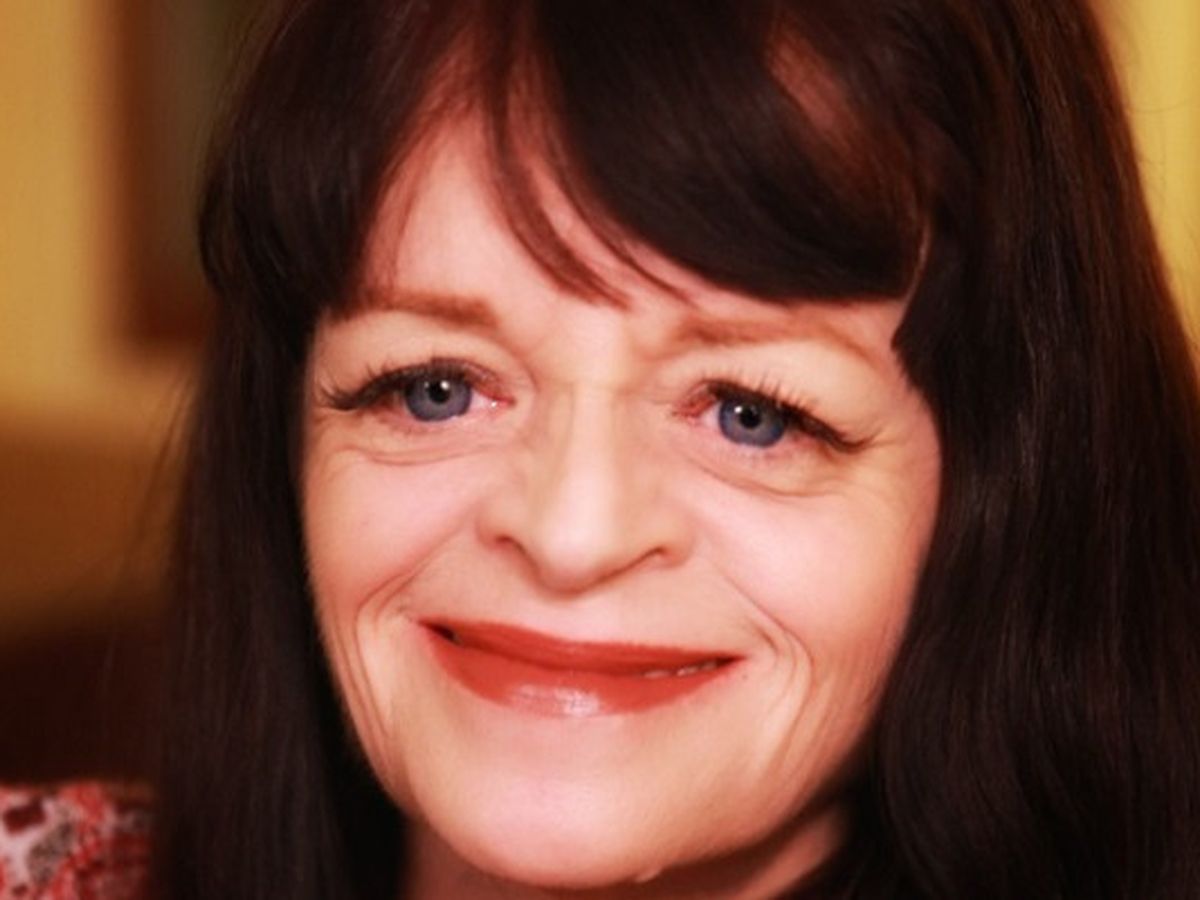
Photo credit: Brian Henderson/Barcroft Images
I am a single mom, and I have one daughter, age 22. My daughter and I are both physically disabled. We have Osteogenesis Imperfecta (OI) Type III/IV. We also both have severe scoliosis, are short-statured (4'2" tall) and we both use manual wheelchairs full time for mobility. People who have OI have bones that are thin, brittle, and break very easily - often without trauma.
Since birth, I've had approximately 150 fractures, as well as numerous surgeries to stabilize fractures, correct bone deformities, and strengthen my bones with the insertion of intramedullary rods (which act as internal splints). My daughter is less severely affected than I - she has had approximately 40 fractures and surgeries.
Despite the many physical challenges I've faced, I was raised to be independent and financially self-sufficient. My father told me (repeatedly!): "When you grow up you have to work and support yourself as long as you can. That way, if at some point you cannot work anymore, everyone will see how hard you tried, and they will bend over backwards to help you."
As I discovered (too late, unfortunately) that is not the case.
After graduating from high school, I accepted an offer for a job with a major airline as a reservations sales agent. I began my career with the airline in October, 1978. I worked full time for the airline for 22 years, ultimately becoming a reservations sales training instructor.
Fractures and surgeries kept me out of work an average of three months out of 12. In addition to basic living expenses, I've always had a lot of disability-related medical and non-medical expenses. For example, although my employer gave me basic medical insurance, because of my medical issues, I paid over 400.00/month for additional coverage. On top of that, there were deductibles, co-pays, etc.
Having a disability affects most decisions I make. We can't just live "anywhere" to save money. Finding a place to live is complicated. Can we get in, or are there steps? Can we get our wheelchairs close enough to the toilet to transfer onto the toilet seat? Is there enough room in the kitchen to maneuver our wheelchairs and position them so we can open the oven door to get foods in and out? Are there enough lower cabinets to store our kitchen equipment? Is there a drawer at the correct height that we can open and lay a cutting board across to use as a counter (kitchen counters are shoulder height for us)?
There are dozens of little things like this I have to take into account to live independently, and any place we live must meet the criteria. After looking at dozens of places to live, there are only one or two that meet our requirements, and if those cost more than I want to spend, I have to suck it up. This is true of just about everything my daughter and I need. Clothes have to be altered. I can't drive just any car. Having a disability affects everything, and none of the choices are easy or cheap.
While I was working, I did not qualify for any help from any government or privately funded organizations that provide services to people with disabilities. Any disability related expenses not covered by my medical insurance - medical or non-medical - I had to pay for out of pocket. Because adaptive equipment and home adaptations are outrageously expensive, I learned how to adapt to my environment as much as possible to save money.
Over my 22 year career with the airline, I never had the opportunity to accumulate any assets. So, I have nothing to show for my hard work - no house, no retirement savings, nothing. When I had a fracture or needed surgery, I was always out of work long enough to deplete all my sick time, but never long enough to have my long-term disability apply - so I learned quickly how to make my salary stretch to pay those bills that came in when I wasn't working. When I finally recovered and got back to work, I couldn't do they types of part time work other people often take on to meet emergency expenses, such as waiting tables. Most of the opportunities for the type of work that allow people to work around their permanent job schedules to make some extra money require physical "fitness."
I was forced to leave the airline on permanent disability due to a serious hit-and-run auto accident in October 1998. My car was totaled, and I suffered multiple fractures in my face, arms, and legs. It took me over a year to recover from those injuries, but I was left with chronic pain. When I first left my job, I wasn't worried about the financial aspects of leaving. After all, I'm disabled! And, despite being disabled, I worked! For years! All those organizations that administer programs and provide services to people with disabilities, both government and privately funded, were surely going to "bend over backwards to help me." As a matter of fact, I thought I might be better off, because I would qualify for programs and services I was ineligible for when I worked.
That's when I discovered how the system works.
There are two government cash-benefit programs available to people with disabilities; Supplemental Security Income (SSI), and/or Social Security Disability Insurance (SSDI). SSI is granted to those with disabilities who have never worked (92.1% of people categorized as having a "severe disability), or those who have not worked enough quarters to be fully "insured" into SSDI. SSI cash benefit is about 1/3 of the SSDI cash benefit - low enough to ensure those who receive it will also qualify for Medicaid.
SSDI pays 60% of your previous salary. If that amount exceeds Medicaid Income Guidelines, you're out of luck.
That is the position in which I found myself. I didn't qualify for Medicaid, and was enrolled in the Medicare program instead. Medicare does not cover many of the things people with disabilities need, such as home adaptations, home health aides, most adaptive equipment, etc.
Because government and privately funded organizations that provide services to people with disabilities use Medicaid Income Guidelines to determine eligibility for their programs/services, I'm not eligible for those, either.
I have to pay the same price for everything we need as I would if we were not disabled, but have hundreds of dollars per month of disability-related medical and non-medical expenses. Our "fixed" disability related medical expenses (Medicare Parts B and D premiums and prescription co-pays) are over 400.00/month. Other disability-related medical and non-medical expenses vary from month to month, and skyrocket if one of us fractures. I'm trying to meet these expenses on 40% less income than what I earned when working.
After experiencing first-hand and being directly affected by my choice to work and support myself for so many years, you might think my daughter would take the easier route and choose to be supported by government programs. Instead she is working towards a Master's degree in Public Health/Epidemiology in the hope of becoming an epidemiologist (she hopes to work for the CDC). If she succeeds (and there's no reason to think she won't - she works hard and maintains excellent grades), this career choice should provide her with enough income to satisfy her basic living expenses, disability-related medical expenses, and disability-related non-medical expenses, along with providing her with excellent medical benefits. I'm incredibly proud of her!
Although there have been many challenges over the years affecting our financial stability, up until December 2017, I'd been lucky to avoid any major medical issues for quite some time.
Then, on December 23 of last year, I was picking up something on the floor, lost my balance, tumbled out of my wheelchair, and hit the floor really hard (and at a very strange angle; I fell diagonally). I broke my left first metacarpal, had several hairline fractures in my right radius and ulna, and did some additional damage to my right femur/knee. I downplayed the injuries to my right arm and leg at the emergency room because had they applied casts, I would have been completely immobilized and unable to care for myself. Medicare does not cover home health aides for assistance with toileting/bathing/dressing/meals unless one also needs skilled nursing care, and fractures do not require nursing care. Because both my right radius and ulna and my right femur are supported internally by intramedullary rods, I knew they'd heal eventually without external support.
Luckily, my daughter was home from college for her winter break at the time, so she made sure I had meals, took care of our pets, and did necessary light housework while I recovered. (This was complicated by her own injury; she sprained her wrist when trying to move my wheelchair out of the way after I fell). Other than trying to get from my bed to my wheelchair and to the toilet and back several times a day (which was extremely difficult - I really need all four limbs to transfer - and three out of four were out of commission), I stayed in bed trying to heal as quickly as possible until she returned to school mid-January 2018.
Unfortunately, I still hadn't healed sufficiently to resume my normal activities when she left. Friends stepped in to help care for our pets and do some errands, for which I am eternally grateful. Unable to shop, I relied a lot on grocery and meal delivery services and ate more "convenience foods" than I normally would, which increased my food expenses by quite a bit. I was unable to do even light housekeeping, so had to hire someone to do what was necessary. My transportation expenses increased as I couldn't drive. What little savings I had was depleted during that time.
While I'm now almost recovered from my injuries (still having issues with my right knee/femur), another medical issue has arisen. In addition to Osteogenesis Imperfecta, I also have Dentinogenesis Imperfecta . Essentially, the same issues that affect my bones also affect my teeth - they're brittle and break easily. Furthermore, like many people afflicted with OI/DI, my upper jaw (maxilla) didn't develop properly. I began wearing partial dentures at the age of 16. By my mid-thirties, several of my (natural) teeth had broken off. I had to have multiple teeth/roots extracted and new dentures made at that time. I was still employed by the airline and had dental coverage, but even after applying that coverage I was responsible for $4500.00 of those expenses.
In the hit-and-run car accident in 1998, my maxilla (upper jaw) was fractured. As a result, my dentures were no longer aligned correctly. In the years since that accident, I have lost four more teeth on my lower jaw. These were the teeth my partial attached to. Each time I lost a tooth, my partial became more loose/misaligned and rubbed against my gums, causing painful ulcers to develop.
Because Medicare does not cover dental, I've been just living with the issues. As long as I could chew and eat, I dealt with it. For the past two years, I've only been able to chew on the left side of my mouth, having lost the molars on the right side.
Then, last week, when I was watching TV and sucking on a popsicle, I felt something hard in my mouth. I reached inside, and was horrified to discover my last remaining molar on the left side had broken off at the gum line.
I now have no teeth with which to chew, and no teeth to which my lower partial can attach. The metal clips which attached the partial to my teeth now scrape against my tongue. The partial is irritating my gums, causing multiple, painful ulcers. I'm only able to eat soups and soft foods. Even though I can't chew with them, I have to keep my lower partial in my mouth to avoid jaw pain. As I mentioned earlier, one of the issues many people wit OI/DI face is the upper jaw (maxilla/palate) not developing properly. It's too small and too high. Without dentures in my mouth to maintain proper vertical spacing, my jaw closes too much (malocclusion) and causes me considerable jaw joint pain (TMJ).
To get this corrected will mean the roots of those five teeth that have broken off over the years (which are decayed) must be extracted, and a new set of dentures made. Having OI/DI makes this more complicated and more expensive. Not all dentists are experienced with/willing to treat patients with DI.
Over the past week I've spent hours researching low-cost dental care for people with disabilities, including discussing the issue with my PCP, and while there are programs/services for children, there is nothing for adults unless one is Medicaid eligible. There are places that will do basic dental services on a sliding scale, but my issues aren't "basic" and the services don't include dentures. Even if there was a dentist who would treat me with a payment plan, I can't afford what would be years of monthly payments.
I've tried to be a pretty good sport about all the stuff I've faced over the years, but this issue has really sent me into a tailspin. I've become really depressed over this situation, and the pain its caused is a major factor with that.
Cooking (and eating) healthy meals has always been the something I've truly loved to do. With all my medical problems, eating healthy is so important! Just the thought of having to limit myself to liquids or soft foods for the rest of my life...well, I don't want to think about it. I'd rather not eat at all.
But, this is not just about eating. Having tooth roots decaying in my mouth can cause me some serious medical problems in the near future.
I've estimated the cost of the dental services I'll need at around $8,500.00, based on what the cost were to resolve my (similar) dental issues 25 years ago (the total was roughly $7500.00, but I had dental coverage then. The total exceeded the maximum yearly benefit the insurance allowed, hence the reason I had to pay $4500.00 out-of-pocket the last time. Costs have risen considerably since that time). If I raise in excess of what is needed for my dental care, any additional funds will be used to purchase a new wheelchair (my current chair is 21 years old).
For further insight into our lives, see this video.
Thank you so much for reading. I don't take help from other people for granted, and any donation will be appreciated more than you know.
Photo credit: Brian Henderson/Barcroft Images