- C
- M
- K
Please help.
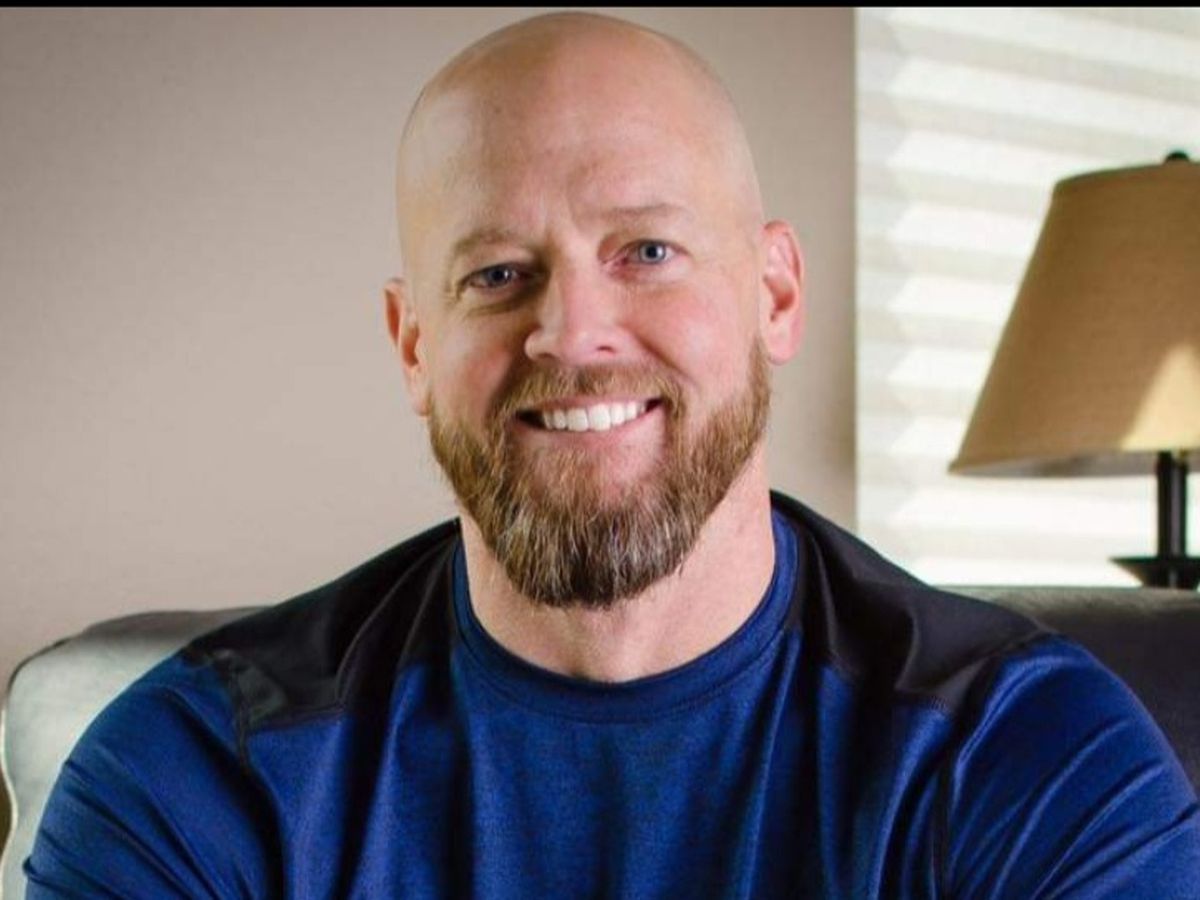
Greg is an amazing human who has honorably and proudly served our country in the Army for 4 years and the local community as a police officer for 15 years. But, sadly, his years of dedicated service has ultimately taken a toll on him, particularly in the form of Complex PTSD. I also suffer from PTSD myself, so I can somewhat empathize with him and the demons that he battles with each & every day.
Unfortunately, though, he has had an extremely stressful year after countless life-changing, triggering events, including getting hit by a car while on his bike in August and suffering multiple injuries as a result, then, experiencing a new traumatic event in December when the wildfires erupted in Louisville & Superior, CO. It not only threatened his daughter's childhood home and his current residence, but reactivates his experience in Iraq during Operation DESERT STORM every single day as he drives through his neighborhood. Since these events, he has been trapped in a world of hypervigilence due to his PTSD and affects every aspect of his life. We have recently learned of a treatment that could potentially help Greg significantly. It's called a Stellate Ganglian Block. It helps to quell the signals sent to the Amygdala of the brain, which is the brain's processing center for strong emotions, including fear and anger. Essentially, Greg's Amygdala has been stuck in "flight or fight" mode over the past year, particularly because other modalities and treatments have stopped working effectively. So, we are desperate to hopefully help Greg with this treatment, but it's very expensive. One treatment will cost $3999, but he may require another, since the treatment and/or may only be temporary.
Please read about his difficult journey over the years leading up to the present below, help raise awareness by sharing this post, and find it in your hearts to help my loved one find his way back to a place of peace and happiness that he most certainly deserves.
---------------------------------------------------
Greg served honorably in the Army for 4 years from 1988-1992. He and his unit were highly-decorated after their time in Operation DESERT STORM. After his commitment to the Army was served, he left the Army and transitioned back to the Civilian sector. He went back to school, got his degree from the University of Colorado at Boulder, then became a police officer for the city of Longmont. Over the 15 years he dedicated his life to serving the citizens of Longmont, he was a Patrol Officer, Gang Unit Officer, SWAT Sniper, Defensive Tactics Instructor, Less Lethal Munitions Instructor, Firearms Instructor, Fitness Instructor and as a presenter within the local school district through the Play-It-Safe program.
However, in 2006, he began experiencing symptoms of Post-Traumatic-Stress-Disorder (PTSD), but started having more serious symptoms in the Fall of 2015. That is when his PTSD symptoms began affecting the safety of the public and the reputation of the Longmont Department of Public Safety. On several occasions while on-duty, Greg "blacked out" while engaging with less than cooperative criminal suspects, coming back to his senses (reality) after a physical altercation was resolved. Greg describes "blacking out" as not having any conscious knowledge of his actions. He was simply "not there mentally." He would only realize what he was doing after he what he likened to waking up and opening his eyes, wondering "What just happened? How did I end up in this position with this person?" For Greg, it was never a case of him getting so angry that his anger took control. As you can most likely understand, Greg was very concerned with what was happening to him. Greg's ex-wife explained he had also done similar things; however, non-violent, while at home. She said he would sit and "rant very mean things" sometimes for hours, with no later recollection of the incidents. She admitted that she and their daughter had been scared of him for years. Greg's ex-wife, a therapist, told him to seek professional mental health intervention, but he was too hard-headed and refused. Greg believed "it" would pass and everything would be okay. He actively avoided work that had a high likelihood of angry, aggressive people being present out of fear of having another "blackout." Most who know Greg also know that isn't his normal work ethic.
In mid-April, 2016, Greg responded to a call of an unconscious, not breathing, five year-old girl. The little girl was deceased. After she was placed into the ambulance and for the first time in his 14-year policing career, Greg walked away with tears streaming down his face. After gathering his wits, he was assigned to guard the little girl's body at the hospital. Her family was allowed to enter the room and sit with her. At one point, the little girl's mother began mimicking the CPR Greg and another officer had performed at their home. Greg had to leave the room due to overwhelming emotions. He spent some time in the Emergency Room bathroom trying to regain his composure. Once he thought he had gained composure, he exited the bathroom and was asked if he would attend the fire, police and ER staff debrief held down the hall. Greg believes at that point he was in a "blacked out" state, only coming back to conscious thought after hearing himself decline the debrief with the words, "I'll slit throats!" Greg was scared of what he heard himself say and left the hospital.
Afterwards Greg spoke with his ex-wife on the telephone. She immediately told him, "Something just changes in you" and asked him to come home, but of course he didn't. When he did go home, Greg and his ex-wife talked about what happened and she asked him to seek immediate help. Once again, he declined and moved on.
Two weeks later, while standing near another officer who was simply speaking to a set of parents who had concerns about their daughter, Greg began to have what he thought were symptoms of a heart attack. He was transported to the hospital via an ambulance a short time later. He was told by the medical personnel that his heart was in great shape and he most likely had acid reflux. The following morning Greg's ex-wife asked him if he knew what "really" caused the heart attack symptoms. Greg didn't know, but he was confident that is wasn't acid reflux. She shared that she believed Greg "had a panic attack." He agreed with her, but was confused because he had never had a panic attack before and the situation he was involved in wasn't stressful. They both agreed Greg needed to go to his doctor as soon as possible.
After explaining what happened in great detail to his primary care physician, the doctor walked Greg straight to the Psychologist's office. After repeating what happened, the Psychologist immediately told Greg he had severe PTSD. He was told he was a danger to the public and was not be be in uniform or in contact with the public for at least six months. Greg and his family took a three-week vacation and he began treatment upon returning to Colorado. The psychology professional treating Greg assumed that his PTSD was the result of his military service 25 years prior. Unfortunately, she didn't take the time to get to know Greg before beginning treatment. Initially, Greg thought the treatment was helping as it allowed him to recall more details about the time he served in Desert Storm, but Greg never believed those experiences were the cause of his symptoms. Greg's life began to spiral out of control. He couldn't leave the interior of the Safety and Justice Center (S&J) without severe panic attacks and physical symptoms setting in. He felt normal and safe at home, within the S&J and within the community where he lives. That all changed quickly, however. Very soon, he experienced severe symptoms around people he didn't know in any city. Finally, Greg was unable to leave his own home, not even to go into his own fenced backyard, without experiencing the onset of a panic attack. Greg perceived that everyone he saw who he didn't know as an imminent threat and was getting ready to attack him. This is no joke, but instead the reality Greg was living in. Throughout this quick decline Greg began to have irrational suicidal ideations on a regular basis. For example, after trying to exit his backdoor to check on his dog, Greg froze at the door and watched a video play out in his mind, during which he continued onto the deck, placed a noose around his neck and threw himself off the edge. When Greg shared what had happened with his ex-wife, they both knew he needed to be somewhere safe and quickly! He needed intensive treatment not available through his insurance outpatient services. Greg learned through his own research of just the place where he needed to go. Because he couldn't fly without having an "attack", Greg drove to Arizona to a private in-patient psychiatric facility. Although the treatment was not covered by his insurance, Greg needed to do this for himself and for his family. The facility he went to has an excellent reputation, one of the best in fact, with 35 years in Trauma Psychiatry.
Greg received fantastic treatment. His symptoms lessened, but as the Psychiatrist and medial team said, "it was not a cure." He was diagnosed with Dissociative Amnesia, the official term for his "blackouts", as well as Major Depressive Disorder-Severe. But, unfortunately after the incredibly stressful year that he has endured, his severe PTSD symptoms have resurfaced to a debilitating degree.
Greg is not ashamed. By sharing his story Greg hopes to encourage younger officer and dispatchers to take preventative mental health seriously in an effort to avoid having to engage in a similar battle. He also hopes it will open the eyes of the seasoned officers and dispatchers to the reality of this issue and maybe influence them to monitor themselves and seek help, if needed. Greg's PTSD is treatable, but each person has different results. Each day brings some sort of struggle. Greg is currently dependent on his medications, but is still fearful of what he might do. That is the hardest part for him to deal with, but, hopefully, the SGB treatment will help him significantly. Here's more information on the procedure, if you're interested.
Please share this message with whomever you like. Email it, post it on Facebook, read it aloud as you walk down the street, whatever you can do to share it. Why is Greg so adamant about sharing his story? Here is why. Greg was a hard-charging, fearless, aggressive and righteous-seeking police officer. He thought nothing he did or witnessed bothered him in the least bit. He was strong, confident and able to take on any challenge or person in his path. He has always been there for his fellow officers and performed bravely and skillfully in all situations. His cup filled up and over-flowed following the death of the five year-old child, reducing him, who he thought he was, into a complete anxious, nervous mess, panic attack experiencing, recluse who now fears confrontation due to his inability to know if he will "blackout" and ruin his life, his daughter's life, and the reputation of the policing profession. Let his story help us increase our knowledge about police and military-related PTSD and help to remove the stigma of the issue.
As I said at the beginning, Greg is an amazing human and has touched so many people's lives. He is one of the most kind and generous people I know. He would give you the shirt off of his back, if you needed it. I want to show my appreciation for Greg and his sacrifice to our great nation and local communities by asking for your help to please help him. How? By helping him with the cost of this life-saving treatment.
Thank you so very much!!!
Organizer