- M
- B
- C
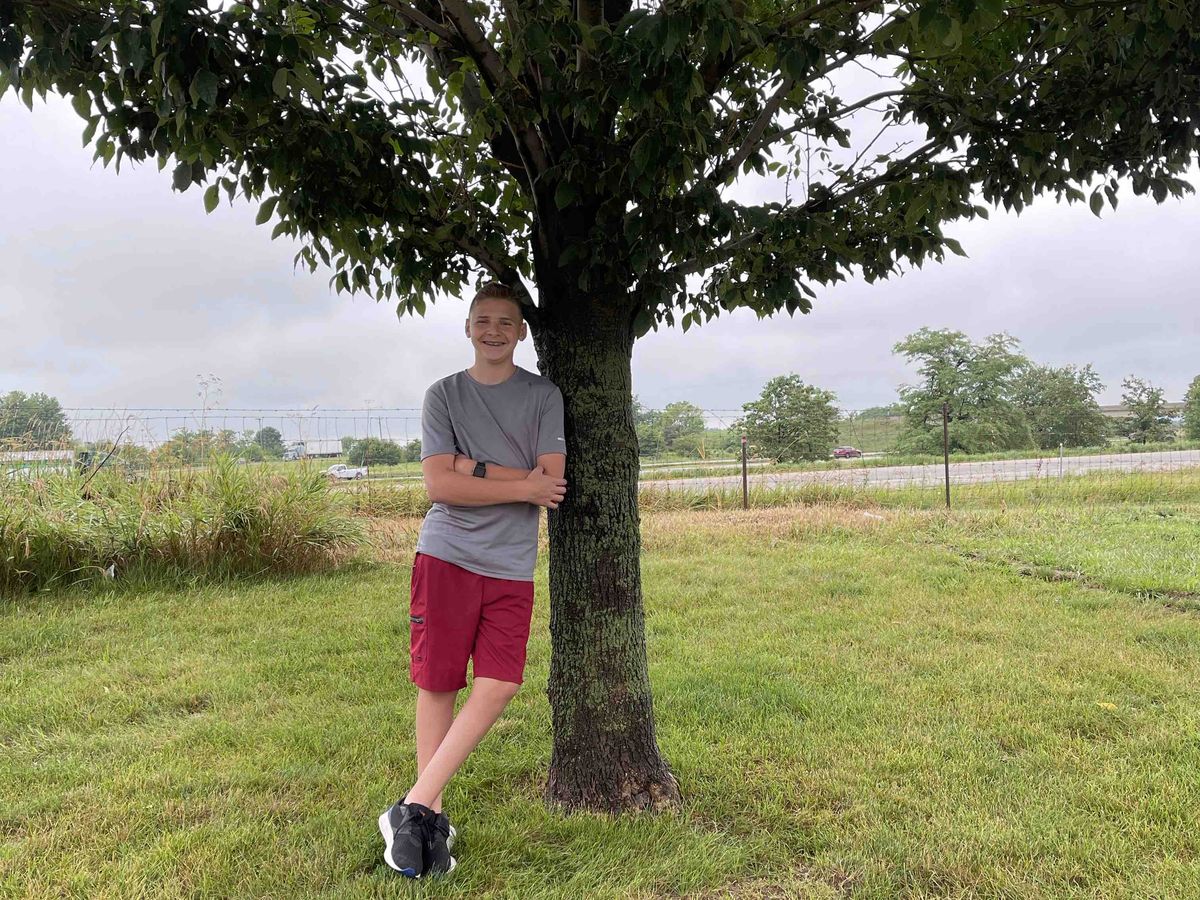
Hi, my name is Stephanie Willis. My husband Jason and I have 7 children. Two girls and five boys. We love our big family and all the craziness that comes with it. This fund raiser is for the kiddo that is directly in the middle of the chaos, Dawson.
Dawson was born with a tarsal coalition. We didn't know about it, which is common, until he started to experience pain a few years ago when walking or standing for an extended time. He was around 11 when this started to happen. We just kind of thought it was because he wasn't as active as our other kids. He is more of an indoor Lego kind of guy who enjoys researching and studying whatever his current interest is. Right now that would be computer programming and lightning (yup, lightning), but over the years it has been a large range of things including birch trees, blue jays, wolves, different types of wood and their uses, and the list goes on. When something catches his interest he studies and explores the topic to the full extent, usually driving the rest of the family nuts with all the random information he shares. He has the mind of an engineer, always wondering why things are the way they are and how they work.
I will include more information at the bottom for those of you interested in the more medical terminology but basically his middle tarsal bones on both feet are fused with scar tissue. These bones form joints that are supposed to move freely but instead his are rigid causing pain with every step and even from just putting weight on it. He is also flat footed and his left foot is worse than his right, although both are painful. After a day of activity the pain in his left foot can shoot up to his knee and even hip.
That brings me to how we ended up finding out about it. I will back up a few years here and tell you how it began. He is a very tough kid who rarely complains about anything but around age 11 (early 2018) he started complaining of foot pain. We thought his pain was just because he was out of shape since he wasn't a super physically active kid. He is quite thin and enjoys playing outside and swimming but he didn't play any sports so we just thought he might need to get a little more fit. We started to have him walk/jog on the treadmill or outside when the weather allowed but this seemed to only increase the pain. We finally took him to a podiatrist and we were told he had flat feet and that custom inserts should fix the problem. One year later and his pain was worse and we didn't know what else could be done. In 2019 one of my daughters severed her tendon and through this process we met a great orthopedic surgeon who had a reputation for being very skilled with feet. He said he would see Dawson so we set up an appointment and within 30 minutes he had taken x-rays and correctly diagnosed him. He said it was a very difficult surgery and suggested we see a pediatric surgeon who specialized in this area. We actually talked to three different surgeons, two of which strongly suggested we shouldn't have the surgery done and were only able to give us a 30% chance of success. Success being pain free after surgery. They also suggested that the surgery would cause other problems because his foot was misshapen and would not line up with the ankle and so on. This could ultimately result in the need to fuse the ankle joints. Again, this is my un-educated way of explaining this to you.
The third doctor gave us a much different outcome. I actually discovered him through a google search which resulted in a testimonial from a family in Australia who's daughter's story was almost identical to Dawson's. She is a dancer and started to have pain around the same age that Dawson did. They also were given little to no hope by many surgeons and ended up finding this same surgeon in NY. He preformed her surgery several years ago and she was able to dance again and is now a professional dancer. The first problem was that his offices were located in NY and LA and we are in Michigan. I still reached out to him and ended up sending them copies of the x-rays and MRI. After reviewing Dawson's information he was confident he could fix him. Even his left foot, which is very bad. The second problem was the cost. In 2019 we were quoted $25,000 for the left foot and $10,000 for the right on top of our insurance deductible which is $10,000 for out of network surgeons and then 20% of the remaining balance. At this point it was an impossible dream. There was no way we could come up with that kind of money so we just kind of put it on the back burner as something we could maybe do in the distant future after saving for years. Keep in mind we never actually talked to the surgeon we talked to his office manager.
This brings us to the present, a year and half after thinking we had hit a dead end. Dawson's pain has increased significantly. Just a trip to the grocery store is very painful and he ends up limping through the end and sitting down while I am checking out. He doesn't want to go to youth activities if he will be on his feet. Summer camp is a thing of the past. He views life through the lens of how much pain will this activity cause me. Because it has been so disheartening to see Dawson withdraw from life and very difficult to see him in so much pain we decided to reach back out to the surgeon in NY. This time we actually had a video call with the surgeon just last week on the 24th. He was amazing from the beginning. He walked us through all of it. We got to see some testimonies of his past patients living their lives pain free. We even got to see a clip of the dancer from Australia, the one who led me to this particular surgeon, dancing. He learned of Dawson's increasing pain and of our financial situation and afterwards said he was going to get back with us. He said he really wanted to do this surgery for Dawson and that he was going to look into our insurance and see what he could do and he would get back with us this week. Today, we spoke with his office manager again and she told us that he would do each surgery for a severely discounted rate. After asking her to repeat it three times and being assured three times of what the total cost we would be responsible for, I just cried. I couldn't even talk for a few minutes. I am crying now as I type this. They also said we won't have to pay the additional 20% which would have amounted to at least $11,500 for each foot because they are going to just accept whatever they get from our insurance company. I am so completely overwhelmed right now. I am so grateful to this surgeon and to the Lord for this amazing answer to many peoples prayers.
Our goal is to raise $20,000 to help cover the cost of the surgeries and traveling expenses. He is unable to preform this surgery in NY so we will have to travel to California for both of them. We will need to stay in LA at least 5 days for each surgery. We are moving ahead on the first surgery because there needs to be 3 months between surgeries and we will have to change insurance providers at the end of August due to a job change, so our most pressing need is the $7000 down payment. We will then have a few months to try to raise and save the remainder. They want to do the surgery as soon as 2 weeks from now if we can scrape it all together in time. If you feel led to donate to Dawson's surgery expenses we would be very grateful to you. If you are unable to give then we would be just as grateful for your thoughts and prayers.
More detailed medical information:
Tarsal Coalition | Symptoms & Causes
What are the tarsal bones, and what is tarsal coalition?
The tarsal bones in the middle and back of the foot—the calcaneus, talus, navicular and cuboid—together form joints that are extremely important to proper foot function. When there’s abnormal growth of bone cartilage or fibrous tissue across these joints (tarsal coalition), a child’s range of motion either decreases or ceases entirely, causing pain and rigidity in the area.
The most common coalitions occur either:
across a joint between the talus and calcaneus bones (talocalcaneal coalition, also referred to as a TC bar) (this one is Dawson's)
between the calcaneus and navicular bones (calcaneonavicular coalition, also referred to as a CN bar)
Calcaneonavicular coalitions are more common than talocalcaneal coalitions. Together, these two types account for about 90 percent of all coalitions. There are other more rare types, as well. More than 50 percent of the time, tarsal coalition occurs in both feet. Sometimes both types of coalition are present in the same foot.
What causes a tarsal coalition?
Torsal coalition can be a genetic error in the dividing of embryonic cells that form the tarsal bones during fetal development can sometimes be triggered by:
trauma to the area
infection
self-fusion of a joint caused by advanced arthritis (rare in children)
What are the symptoms of a tarsal coalition, and when do they show up?
Even though most children with tarsal coalitions are born with them, a child typically has no painful symptoms until sometime between the ages of 8 and 16—with two age peaks for the onset of symptoms (8 to 10 and 11 to 13). Late childhood/early adolescence is the time when a child’s bones are turning from mostly cartilage to mostly bone (ossifying). During this period, the hardening (calcifying) tarsal coalition grows more rigid and painful.
The following are the most common symptoms of a tarsal coalition. Keep in mind that each child may experience symptoms differently:
pain, typically on the outside and top of the foot (although some children have no pain)
flat feet or a flat foot (although not all children with flat feet have a tarsal coalition)
rigidity and stiffness in the affected foot<./li>
muscle spasms
Sometimes symptoms don't flare up until early adulthood.
How common is tarsal coalition?
Experts estimate that about 3 to 5 percent of people have a tarsal coalition. About 50 percent of these have it in both feet. (Dawson has it in both feet)
How serious is tarsal coalition?
The answer to this question depends on the child’s and family’s expectations. If sports are central to the child’s life, tarsal coalition could be viewed as a serious problem. If the child has only occasional aches, as when running in gym class, and sports are not very important to them, they probably won’t view the condition as a big problem.
A severe case of tarsal coalition can pose a functional problem for walking and may alter a child’s activity level, but it’s not life-threatening or limb-threatening.
What if tarsal coalition goes untreated?
Over time, a child, teen or young adult may experience enough pain that she can’t do the activities she wants to do. Later in life, they may have a very stiff foot (indicating a large coalition). The foot may be so stiff and painful that there’s no longer an option for surgical repair; in such cases, surgery would be a joint fusion to alleviate the pain.
Dawson was born with a tarsal coalition. We didn't know about it, which is common, until he started to experience pain a few years ago when walking or standing for an extended time. He was around 11 when this started to happen. We just kind of thought it was because he wasn't as active as our other kids. He is more of an indoor Lego kind of guy who enjoys researching and studying whatever his current interest is. Right now that would be computer programming and lightning (yup, lightning), but over the years it has been a large range of things including birch trees, blue jays, wolves, different types of wood and their uses, and the list goes on. When something catches his interest he studies and explores the topic to the full extent, usually driving the rest of the family nuts with all the random information he shares. He has the mind of an engineer, always wondering why things are the way they are and how they work.
I will include more information at the bottom for those of you interested in the more medical terminology but basically his middle tarsal bones on both feet are fused with scar tissue. These bones form joints that are supposed to move freely but instead his are rigid causing pain with every step and even from just putting weight on it. He is also flat footed and his left foot is worse than his right, although both are painful. After a day of activity the pain in his left foot can shoot up to his knee and even hip.
That brings me to how we ended up finding out about it. I will back up a few years here and tell you how it began. He is a very tough kid who rarely complains about anything but around age 11 (early 2018) he started complaining of foot pain. We thought his pain was just because he was out of shape since he wasn't a super physically active kid. He is quite thin and enjoys playing outside and swimming but he didn't play any sports so we just thought he might need to get a little more fit. We started to have him walk/jog on the treadmill or outside when the weather allowed but this seemed to only increase the pain. We finally took him to a podiatrist and we were told he had flat feet and that custom inserts should fix the problem. One year later and his pain was worse and we didn't know what else could be done. In 2019 one of my daughters severed her tendon and through this process we met a great orthopedic surgeon who had a reputation for being very skilled with feet. He said he would see Dawson so we set up an appointment and within 30 minutes he had taken x-rays and correctly diagnosed him. He said it was a very difficult surgery and suggested we see a pediatric surgeon who specialized in this area. We actually talked to three different surgeons, two of which strongly suggested we shouldn't have the surgery done and were only able to give us a 30% chance of success. Success being pain free after surgery. They also suggested that the surgery would cause other problems because his foot was misshapen and would not line up with the ankle and so on. This could ultimately result in the need to fuse the ankle joints. Again, this is my un-educated way of explaining this to you.
The third doctor gave us a much different outcome. I actually discovered him through a google search which resulted in a testimonial from a family in Australia who's daughter's story was almost identical to Dawson's. She is a dancer and started to have pain around the same age that Dawson did. They also were given little to no hope by many surgeons and ended up finding this same surgeon in NY. He preformed her surgery several years ago and she was able to dance again and is now a professional dancer. The first problem was that his offices were located in NY and LA and we are in Michigan. I still reached out to him and ended up sending them copies of the x-rays and MRI. After reviewing Dawson's information he was confident he could fix him. Even his left foot, which is very bad. The second problem was the cost. In 2019 we were quoted $25,000 for the left foot and $10,000 for the right on top of our insurance deductible which is $10,000 for out of network surgeons and then 20% of the remaining balance. At this point it was an impossible dream. There was no way we could come up with that kind of money so we just kind of put it on the back burner as something we could maybe do in the distant future after saving for years. Keep in mind we never actually talked to the surgeon we talked to his office manager.
This brings us to the present, a year and half after thinking we had hit a dead end. Dawson's pain has increased significantly. Just a trip to the grocery store is very painful and he ends up limping through the end and sitting down while I am checking out. He doesn't want to go to youth activities if he will be on his feet. Summer camp is a thing of the past. He views life through the lens of how much pain will this activity cause me. Because it has been so disheartening to see Dawson withdraw from life and very difficult to see him in so much pain we decided to reach back out to the surgeon in NY. This time we actually had a video call with the surgeon just last week on the 24th. He was amazing from the beginning. He walked us through all of it. We got to see some testimonies of his past patients living their lives pain free. We even got to see a clip of the dancer from Australia, the one who led me to this particular surgeon, dancing. He learned of Dawson's increasing pain and of our financial situation and afterwards said he was going to get back with us. He said he really wanted to do this surgery for Dawson and that he was going to look into our insurance and see what he could do and he would get back with us this week. Today, we spoke with his office manager again and she told us that he would do each surgery for a severely discounted rate. After asking her to repeat it three times and being assured three times of what the total cost we would be responsible for, I just cried. I couldn't even talk for a few minutes. I am crying now as I type this. They also said we won't have to pay the additional 20% which would have amounted to at least $11,500 for each foot because they are going to just accept whatever they get from our insurance company. I am so completely overwhelmed right now. I am so grateful to this surgeon and to the Lord for this amazing answer to many peoples prayers.
Our goal is to raise $20,000 to help cover the cost of the surgeries and traveling expenses. He is unable to preform this surgery in NY so we will have to travel to California for both of them. We will need to stay in LA at least 5 days for each surgery. We are moving ahead on the first surgery because there needs to be 3 months between surgeries and we will have to change insurance providers at the end of August due to a job change, so our most pressing need is the $7000 down payment. We will then have a few months to try to raise and save the remainder. They want to do the surgery as soon as 2 weeks from now if we can scrape it all together in time. If you feel led to donate to Dawson's surgery expenses we would be very grateful to you. If you are unable to give then we would be just as grateful for your thoughts and prayers.
More detailed medical information:
Tarsal Coalition | Symptoms & Causes
What are the tarsal bones, and what is tarsal coalition?
The tarsal bones in the middle and back of the foot—the calcaneus, talus, navicular and cuboid—together form joints that are extremely important to proper foot function. When there’s abnormal growth of bone cartilage or fibrous tissue across these joints (tarsal coalition), a child’s range of motion either decreases or ceases entirely, causing pain and rigidity in the area.
The most common coalitions occur either:
across a joint between the talus and calcaneus bones (talocalcaneal coalition, also referred to as a TC bar) (this one is Dawson's)
between the calcaneus and navicular bones (calcaneonavicular coalition, also referred to as a CN bar)
Calcaneonavicular coalitions are more common than talocalcaneal coalitions. Together, these two types account for about 90 percent of all coalitions. There are other more rare types, as well. More than 50 percent of the time, tarsal coalition occurs in both feet. Sometimes both types of coalition are present in the same foot.
What causes a tarsal coalition?
Torsal coalition can be a genetic error in the dividing of embryonic cells that form the tarsal bones during fetal development can sometimes be triggered by:
trauma to the area
infection
self-fusion of a joint caused by advanced arthritis (rare in children)
What are the symptoms of a tarsal coalition, and when do they show up?
Even though most children with tarsal coalitions are born with them, a child typically has no painful symptoms until sometime between the ages of 8 and 16—with two age peaks for the onset of symptoms (8 to 10 and 11 to 13). Late childhood/early adolescence is the time when a child’s bones are turning from mostly cartilage to mostly bone (ossifying). During this period, the hardening (calcifying) tarsal coalition grows more rigid and painful.
The following are the most common symptoms of a tarsal coalition. Keep in mind that each child may experience symptoms differently:
pain, typically on the outside and top of the foot (although some children have no pain)
flat feet or a flat foot (although not all children with flat feet have a tarsal coalition)
rigidity and stiffness in the affected foot<./li>
muscle spasms
Sometimes symptoms don't flare up until early adulthood.
How common is tarsal coalition?
Experts estimate that about 3 to 5 percent of people have a tarsal coalition. About 50 percent of these have it in both feet. (Dawson has it in both feet)
How serious is tarsal coalition?
The answer to this question depends on the child’s and family’s expectations. If sports are central to the child’s life, tarsal coalition could be viewed as a serious problem. If the child has only occasional aches, as when running in gym class, and sports are not very important to them, they probably won’t view the condition as a big problem.
A severe case of tarsal coalition can pose a functional problem for walking and may alter a child’s activity level, but it’s not life-threatening or limb-threatening.
What if tarsal coalition goes untreated?
Over time, a child, teen or young adult may experience enough pain that she can’t do the activities she wants to do. Later in life, they may have a very stiff foot (indicating a large coalition). The foot may be so stiff and painful that there’s no longer an option for surgical repair; in such cases, surgery would be a joint fusion to alleviate the pain.