- C
- C
“We are inevitably our brother’s keeper because we are our brother’s brother. Whatever affects one directly affects all indirectly.” - Dr. Martin Luther King Jr.
My eldest brother Dominic’s heart is failing. He is in an ICU in the Philippines where he has contracted Covid-19. This rural hospital is not equipped for the procedure he needs. He must travel hundreds of miles to the city for care. But he is poor, so he cannot afford the trip or procedure. His children look across the ocean, to my mother, for help paying a cost she too cannot afford.
1 to 2 million Philippine pesos ($20,000 to $40,000 USD). The cost of a procedure that will keep his heart beating. The number that separates life from death. But he doesn’t have enough. His kids don’t have enough. My mother doesn’t have enough. I don’t have enough. Time beats against us, against life.
As I relay his story to you, I think about how commonplace it is: overworked and overstressed hearts too poor to keep beating. The rhythm of life cut short by gross inequality. Facts speak for themselves:
• The world’s richest 1% have more than twice as much wealth as 6.9 billion people
• Almost half of humanity is living on less than $5.50 a day (In the Philippines, a worker could work an entire month to earn a $100, if they’re lucky)
• Every day 10,000 people die because they lack access to affordable healthcare
My brother finds himself dangling on the razor’s edge of these statistics. I write to do what I can to pull him back from it.
It’s strange. I call him brother, but I never met Dominic. He lives a world away, he in the Philippines and I in the United States. By most accounts, we are strangers. But this pandemic has taught me there are no strangers in this world. We are bound together. One’s sickness is everyone’s sickness. The agony of the poor impoverishes us all. We may try to avoid this truth, but it always comes home.
Take my mother as an example. She seems a stranger to you, but she is not. She, or someone like her, has nursed you or someone you love back to health. You have seen her enter your hospital room. You have seen her smiling as she checks your vitals and gives you medicine. She has made you smile, despite your predicament.
What you don’t see, behind her smile, is a story: how she left her home and eldest son in search of work. How the circuits of capitalism carried her, away from her kin, to the heart of an empire that held dominion over her native land. How she worked shift after shift after shift. How it was never enough. How her knees buckled, and eventually failed, under the weight of patients and recessions. How she still works through the pain, well into her seventies, to keep her family afloat. How her sister did the same, leaving her kids behind for five decades, working so they could live. How so many millions of their sisters do the same.
See her now, receiving news of her son’s illness from across the globe. See this woman, who has nursed you back to health, unable to nurse her own sick son, unable to pay for the care her wealthiest patients receive in a heartbeat. See her working against her frustration and grief to force a smile for you, her patient.
If you see what’s behind that smile, you may well understand how my brother’s suffering reverberates through her, to you and your loved ones. It also reverberates through me and my wife, both educators in the U.S. public school system. We, or someone like us, teach your children, your grandchildren, your nieces or nephews. We do it for inadequate pay. Not enough to repay the debt we took on for schooling. Not enough to pay the hospital bills my wife and I receive as she battles breast cancer. Certainly not enough to pay what it will cost to keep my brother’s heart beating.
Not enough. He doesn’t have enough. My mother doesn’t have enough. I don’t have enough. So many of us do not have enough. That’s the truth of it, at least until we create a more equitable world.
For now, all I have are these words that may touch a part of you that knows this truth and that answers the call of my brother – your brother – who suffers. Through your charity, you remember what inequitable and inhumane systems force us to forget: that we are not alone. That our hearts beat for each other. That, together, we scrape by. We buy each other time.
Facts about my brother Dominic’s situation
· Dominic’s heart condition requires Angioplasty, a surgical procedure that will cost between 1 to 2 million Philippine pesos ($20,000 to $40,000 USD).
· The hospital where Dominic was admitted (and where he is currently intubated for Covid-19) doesn't offer the procedure because of lack of technology and a specialist. He will need to be transported to another hospital in Manila where he can undergo surgery.
· He works full-time in the telecommunications industry. Still, his employment offers him little healthcare and no savings to pay for the bill.
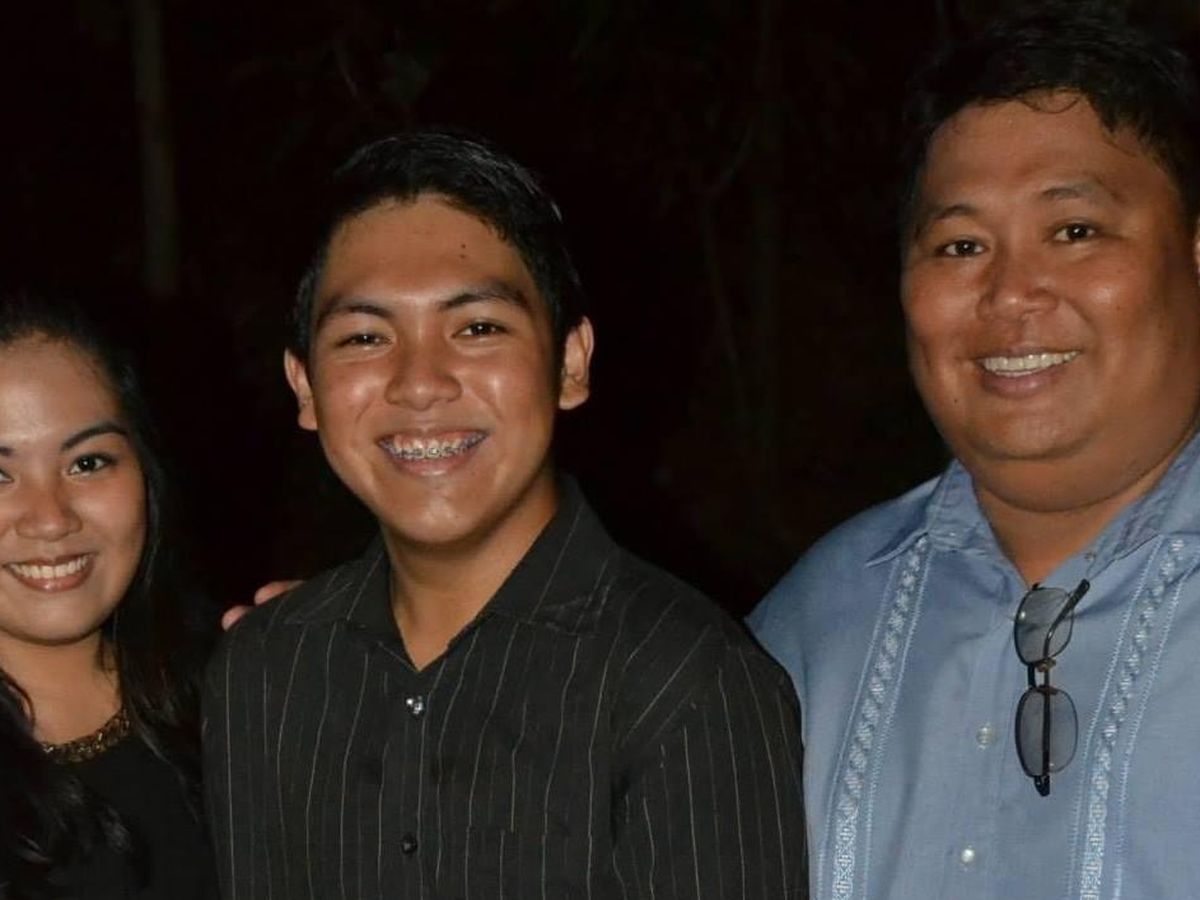
· He is a single father to two beautiful children. His daughter, Dyh Yan, is a public school teacher. His son, Dax, studied radiology. Both of them are under great distress given their dad’s situation.
· His daughter is doing all she can to contribute to her dad’s treatment: collecting money from poorly paid teachers and selling “pre-loved” trinkets and wares, which will add up to, at most, a few hundred dollars.
My eldest brother Dominic’s heart is failing. He is in an ICU in the Philippines where he has contracted Covid-19. This rural hospital is not equipped for the procedure he needs. He must travel hundreds of miles to the city for care. But he is poor, so he cannot afford the trip or procedure. His children look across the ocean, to my mother, for help paying a cost she too cannot afford.
1 to 2 million Philippine pesos ($20,000 to $40,000 USD). The cost of a procedure that will keep his heart beating. The number that separates life from death. But he doesn’t have enough. His kids don’t have enough. My mother doesn’t have enough. I don’t have enough. Time beats against us, against life.
As I relay his story to you, I think about how commonplace it is: overworked and overstressed hearts too poor to keep beating. The rhythm of life cut short by gross inequality. Facts speak for themselves:
• The world’s richest 1% have more than twice as much wealth as 6.9 billion people
• Almost half of humanity is living on less than $5.50 a day (In the Philippines, a worker could work an entire month to earn a $100, if they’re lucky)
• Every day 10,000 people die because they lack access to affordable healthcare
My brother finds himself dangling on the razor’s edge of these statistics. I write to do what I can to pull him back from it.
It’s strange. I call him brother, but I never met Dominic. He lives a world away, he in the Philippines and I in the United States. By most accounts, we are strangers. But this pandemic has taught me there are no strangers in this world. We are bound together. One’s sickness is everyone’s sickness. The agony of the poor impoverishes us all. We may try to avoid this truth, but it always comes home.
Take my mother as an example. She seems a stranger to you, but she is not. She, or someone like her, has nursed you or someone you love back to health. You have seen her enter your hospital room. You have seen her smiling as she checks your vitals and gives you medicine. She has made you smile, despite your predicament.
What you don’t see, behind her smile, is a story: how she left her home and eldest son in search of work. How the circuits of capitalism carried her, away from her kin, to the heart of an empire that held dominion over her native land. How she worked shift after shift after shift. How it was never enough. How her knees buckled, and eventually failed, under the weight of patients and recessions. How she still works through the pain, well into her seventies, to keep her family afloat. How her sister did the same, leaving her kids behind for five decades, working so they could live. How so many millions of their sisters do the same.
See her now, receiving news of her son’s illness from across the globe. See this woman, who has nursed you back to health, unable to nurse her own sick son, unable to pay for the care her wealthiest patients receive in a heartbeat. See her working against her frustration and grief to force a smile for you, her patient.
If you see what’s behind that smile, you may well understand how my brother’s suffering reverberates through her, to you and your loved ones. It also reverberates through me and my wife, both educators in the U.S. public school system. We, or someone like us, teach your children, your grandchildren, your nieces or nephews. We do it for inadequate pay. Not enough to repay the debt we took on for schooling. Not enough to pay the hospital bills my wife and I receive as she battles breast cancer. Certainly not enough to pay what it will cost to keep my brother’s heart beating.
Not enough. He doesn’t have enough. My mother doesn’t have enough. I don’t have enough. So many of us do not have enough. That’s the truth of it, at least until we create a more equitable world.
For now, all I have are these words that may touch a part of you that knows this truth and that answers the call of my brother – your brother – who suffers. Through your charity, you remember what inequitable and inhumane systems force us to forget: that we are not alone. That our hearts beat for each other. That, together, we scrape by. We buy each other time.
Facts about my brother Dominic’s situation
· Dominic’s heart condition requires Angioplasty, a surgical procedure that will cost between 1 to 2 million Philippine pesos ($20,000 to $40,000 USD).
· The hospital where Dominic was admitted (and where he is currently intubated for Covid-19) doesn't offer the procedure because of lack of technology and a specialist. He will need to be transported to another hospital in Manila where he can undergo surgery.
· He works full-time in the telecommunications industry. Still, his employment offers him little healthcare and no savings to pay for the bill.
· He is a single father to two beautiful children. His daughter, Dyh Yan, is a public school teacher. His son, Dax, studied radiology. Both of them are under great distress given their dad’s situation.
· His daughter is doing all she can to contribute to her dad’s treatment: collecting money from poorly paid teachers and selling “pre-loved” trinkets and wares, which will add up to, at most, a few hundred dollars.
Organizer and beneficiary
Mollie Twohig
Beneficiary