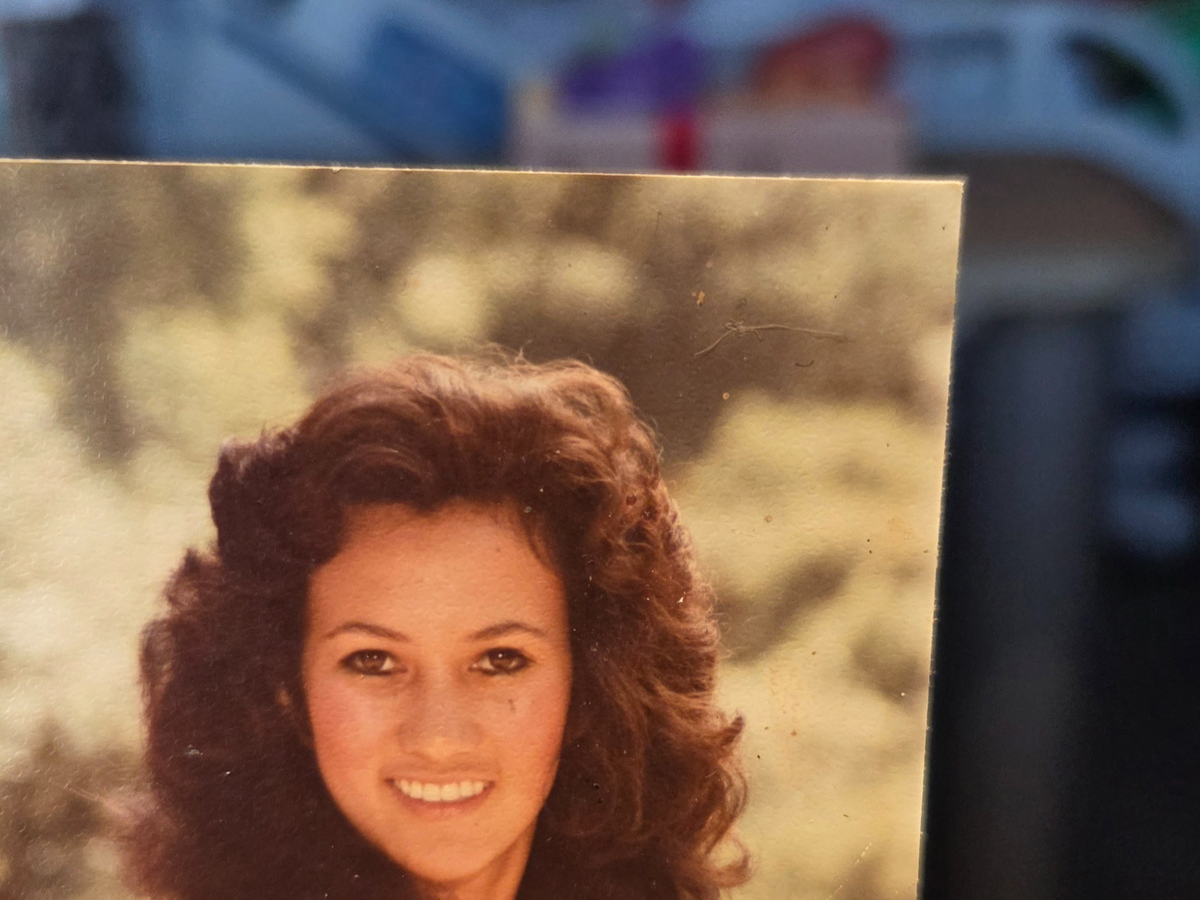
My sister Nicole — or “Coly,” as I’ve called her since we were kids — had a severe hemorrhagic stroke on the very first day of the year. One moment, she was living her life, and the next, I was getting a call no one ever wants to receive.
After hours of trying to track down where she had been taken, I finally connected with the hospital. That’s when Dr. Tom called me. He was compassionate and patient, but his words shattered me. He explained that Coly had suffered a massive brain bleed. She had already sustained significant brain damage, and he wasn’t sure she would survive. He gently told me to gather the family and prepare to say “goodbye.”
I broke down. And while I was still crying, he had to ask me the hardest question I’ve ever been asked:
“Would your sister want a DNR?”
Even with the most invasive surgery, he said, she would likely not survive without extreme medical intervention. In that moment — still in shock, still trying to understand what was happening — I had to make the decision to place a Do Not Resuscitate order on my sister. If her heart stopped, they would keep her comfortable and let her go peacefully. I made that decision through tears.
I flew out immediately and went straight to the Neuro ICU at Kaiser Redwood City. Seeing her there broke me all over again. She was intubated. A feeding tube ran through her nose. PICC lines, tubes, monitors — her body covered in medical equipment. She had a urinary wick, diapers, and was completely unresponsive from the heavy medications keeping her stable. On top of everything, she was already living with severe scoliosis, cataracts, and near blindness. Now she was also paralyzed on her right side.
The days that followed were a roller coaster of impossible decisions. At first, the choices presented to me were devastatingly blunt:
Do every intervention and accept that she would have no quality of life, or let her go peacefully with a morphine drip?
Even as she began showing small signs of awareness — following simple commands, pulling the pigtail out of her hair, making purposeful movements — the conversations didn’t change. Three different doctors gave me three different timelines for making a life-or-death decision: one said the next day, another said a week, and another said two weeks.
Then came Dr. Leung — the first doctor who truly gave me hope grounded in reality. He told me, “You don’t have to make any decisions right now. She’s making progress. We can take this day by day. When the time comes, we’ll talk through the options and you’ll have time.”
For the first time, I could breathe.
We are now 20 days into the new year and 20 days into Coly’s fight to stay with us. She is neurologically stable. She had a PEG tube surgically placed last week for long term feeding. She’s battling a staph infection and is in isolation. She has Medi Cal, but she has no income and lost her disability benefits six years ago.
The next step is finding a long-term care skilled nursing facility that can handle stroke rehabilitation, PEG tube care, and infection isolation. This is not easy to find, and it is not inexpensive.
What we do know is that she cannot return to our mother’s house, where she had been living. The home is in severe disrepair and is not safe or healthy for someone in her condition.
How Your Support Helps (Phase 1 → Phase 2)
Phase 1 (Current):
Right now, your support will help reimburse the urgent out of pocket expenses I’ve personally covered to stay close to Nicole during this crisis — hotel, rental car, gas, groceries, and basic needs while being at the hospital every day. These costs added up quickly, but being near her was essential for her care, advocacy, and safety.
Phase 2 (Soon):
As soon as we know more about her long term care plan — including placement in a skilled nursing facility, rehabilitation needs, and ongoing medical support — this same fundraiser will shift into supporting that next chapter of her recovery. I will keep everyone updated as we learn more.
Coly needs a safe place to heal. She needs stability. She needs care. And she needs support that I cannot provide alone.
If you are able to help — in any amount — it will go directly toward giving her the dignity, safety, and long term support she deserves. My sister is still here. She is still fighting. And I am fighting for her.
Thank you for reading, for caring, and for helping us navigate this incredibly difficult chapter.