
- R
- J
Hi I am Kathleen Rea a friend of Mika's.
Mika, a dancer, scholar, capoeirista, filmmaker, and mother of two young kids has had severe pneumonia for the past three weeks and has been in the hospital for 12 days and just got news of further complications and procedures that are needed that will extend her hospital stay. She would like to purchase a blue light therapy device that she can use on her lung area to support her recovery as well as hire night time care support. The device works well for the lungs because it is malleable and can be wrapped around her torso.
The device is a Celluma Pro costs $1745.85 and amount raised over that amount will be put towards hiring nighttime care.
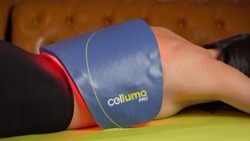
Here is same data on blue light therapy for lung healing
Light Therapy and Lung inflammation
Below is an excerpt from another Dr. Hamblin paper:
Mechanisms and applications of the anti-inflammatory effects of photobiomodulation.
Michael R Hamblin 1, 2, 3,*
1. Wellman Center for Photomedicine, Massachusetts General Hospital, BAR414, 40 Blossom Street, Boston, MA 02114, USA
2. Department of Dermatology, Harvard Medical School, Boston, MA 02115, USA
3. Harvard-MIT Division of Health Sciences and Technology, Cambridge, MA 02139, USA
Celluma Red LED on Back Celluma Pro on Upper Back Celluma Pro on Lower Back
(page 10). Aimbire and his laboratory in Brazil have carried out several studies on the use of PBM to reduce acute lung inflammation (ALI) in various animal models. In a mouse model of lung inflammation caused either by inhalation of lipolysaccharide or intranasal administration of TNFα they analyzed the bronchoalveolar lavage fluid (BALF). PBM (660 nm, 4.5 J/cm2) was administered to the skin over the right upper bronchus 15 min after ALI induction. PBM attenuated the neutrophil influx and lowered TNFα in BALF. In alveolar macrophages, PBM increased cAMP and reduced TNFα mRNA.
They also studied a different model of ALI caused by intestinal ischemia and reperfusion (I/R), that produces an analogue of acute respiratory distress syndrome (ARDS) [78]. Rats were subjected to superior mesenteric artery occlusion (45 min) and received PBM (660 nm, 7.5 J/cm2) carried out by irradiating the rats on the skin over the right upper bronchus for 15 and 30 min, and rats were euthanized 30 min, 2, or 4 h later. PBM reduced lung edema, myeloperoxisdase activity, TNF-α and iNOS, LLLT increased IL-10 in the lungs of animals subjected to I/R.
A third animal model was related to asthma [79]. Mice were sensitized to ovalbumin (OVA), and then challenged by a single 15-min exposure to aerosolized OVA. PBM was applied as above (660 nm, 30 mW, 5.4 J). Bronchial hyper-responsiveness (as measured by dose response curves to acetylcholine) was reduced by PBM as well as reductions in eosinophils and eotaxin. PBM also diminished expression of intracellular adhesion molecule and Th2 cytokines, as well as signal transducer and activator of transduction 6 (STAT6) levels in lungs from challenged mice. Recently Rigonato-Oliveira et al. presented a study that concluded that the reduced lung inflammation and the positive effects of PBM on the airways appear to be mediated by increased secretion of the anti-inflammatory cytokine IL-10, and reduction of mucus in the airway [80].
How Light Therapy Reduces Pain
Poor circulation and the lack of oxygen and other essential molecules (i.e., glucose, Adenosine Triphosphate (ATP)) in blood vessels can cause pain or a lack of sensation. Light energy stimulates the release of nitric oxide, causing blood vessels to increase in diameter (vasodilation) and allowing more blood flow, oxygen, and other important nutrients to be delivered to the tissue. This increase in oxygen and nutrients, along with stimulation of the light energy emitted from Celluma increases ATP production, which activates pain relieving pathways. This decreases pain and inflammation, and increases tissue regeneration in the localized area.
Here at Celluma, we continue to explore new indications for LED light therapy, design innovative products and to conduct clinical trials to assess efficacy and applications. Speak with our Clinical Specialists to answer any questions you may have Monday-Friday from 7AM-5PM Pacific.