- M

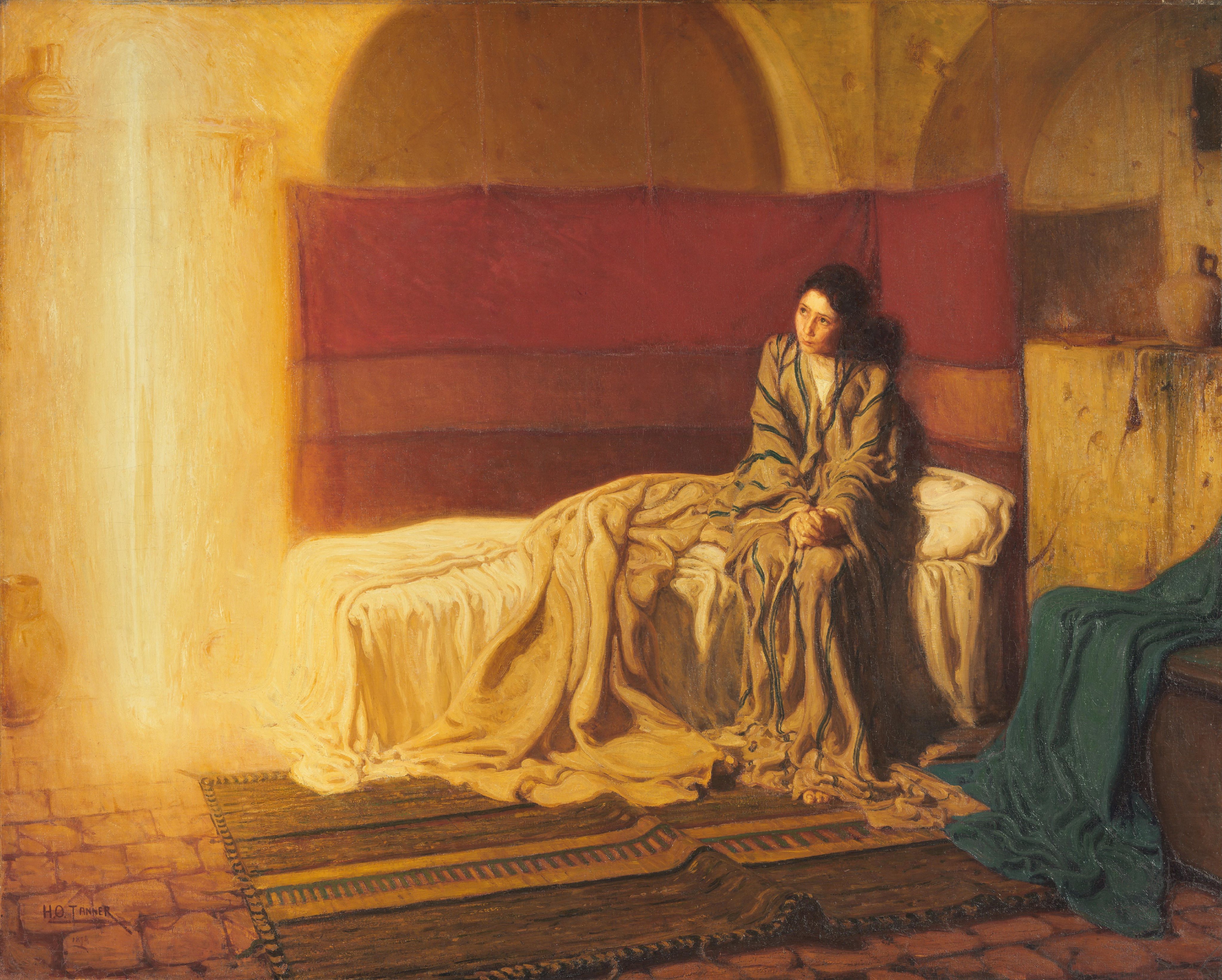
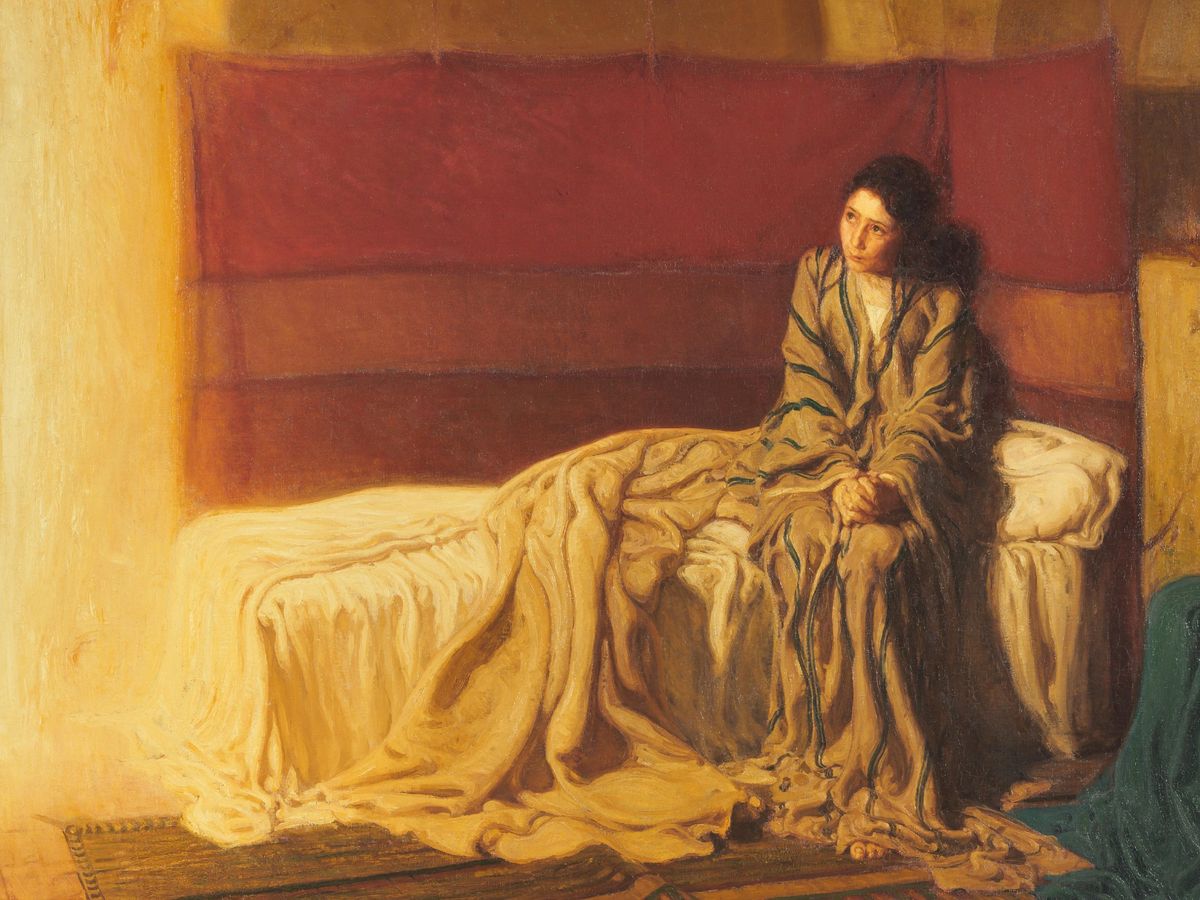
التهجد At-Tahajjud: The Night Vigil
0% complete
$3,041 raised of
19 donations
“To hear these women through music is perhaps the most beautiful way to revive their legacy, for they taught us that Truth itself is harmony and beauty. This performance does just that. It is a unique and unprecedented project, breathing life into the voices of Muslim women mystics from the medieval ages through contemporary song and sound.” — Zahra Moballegh, on At-Tahajjud
My name is Preben Antonsen. I am a composer based in Finland and California, and I've launched a fundraiser to help complete the recording of my most significant work to date. We have an all-star cast: Anne Harley, soprano; Alison Bjorkedal, harp; Brian Walsh, clarinet; and Scott Fraser, recording engineer. All these folks have worked together for years.
The recording will be made in spring 2026, and then released on the Voices of the Pearl record label in fall 2026, with CD and digital distribution.
We will aim for reaching the fundraising goal by October, but the fundraiser will remain open through January. Any funds received beyond those required for the recording will go towards a complete public performance of the cycle, at the Claremont Consortium or as part of the Golden Thread concert series in Los Angeles.
The lore behind this work is extensive. Zahra Moballegh has been a great help with the linguistic and scholarly side of the project. She is a professor of philosophy, women in Islam, and related topics, teaching & researching at Harvard the past several years.
Read on for more information about the music, the mystical tradition it springs from, and my own thoughts on the role of asceticism in human life.

“My God! The stars have set, everyone’s eyes are closed, the rulers have locked the gates of the city, and every lover is alone with his beloved; this is when I devote myself to You.” — Rabi'a al-'Adawiyya
At-Tahajjud is a cycle of fifteen songs based on the words of Sufi women who lived from the 9th-12th centuries. It was commissioned by Anne Harley as part of her ongoing Voices of the Pearl series. Set in the original Arabic, it is structured as an all-night vigil, beginning at dusk with Rabi'a al-Adawiyya's famous prayer written above, and ending at dawn with words that echo the opening.
Here are the mystics whose words make up At-Tahajjud:
Habiba al-‘Adawiyya
Rayhana
Rabi‘a al-‘Adawiyya
Rabi‘a Bint Isma’il
Sha’wana
Hind Bint al-Muhallab
Dhakkara
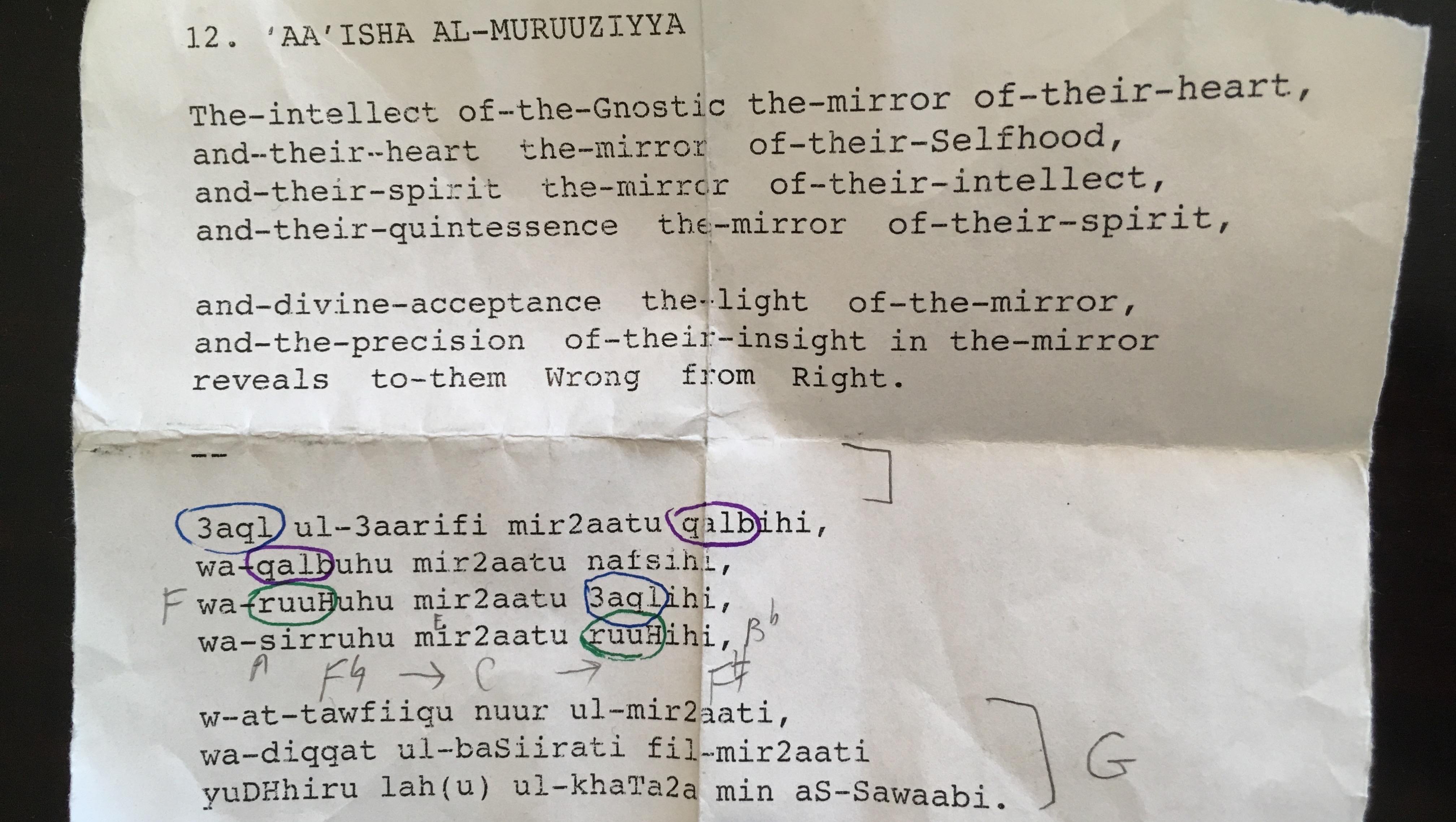
‘Aisha of Merv
Fatima al-Barda’iyya
‘Athama
Have you encountered these women before, or even heard of them? In fact, they were hailed in their time, and ever since, as channels of true divine revelation. At-Tahajjud reintroduces them to us in a lyrical setting, where the beauty of their words will have a chance to be appreciated.
A theme that recurs throughout their work is the importance of shajan. In its theological sense, shajan is a cosmic longing without object. It does not seek satisfaction, but is eternal. According to many Sufi women, it is the only truthful way to approach God. Their practice of ceaseless weeping is a testament to this. As Shawana says, to break off weeping is the same as abandoning love.
I have heard Arabic musicians half-jokingly say that all Arabic songs have the same lyrics: “the Beloved is far away.” At-Tahajjud is no exception. Indeed, as I embarked on the composing of this piece, I wondered where the emotional variety could come from. Outwardly, every poem expresses the same thing — longing for the Beloved. How many ways could I contrive to portray this specific feeling?
But by the end, I found that I had generated more variety in my music than ever before. I had discovered, and have since absorbed into my life, a truth that these women knew a thousand years ago: sorrowful longing is our connection to the infinite, and thus contains all things.
At-Tahajjud, therefore, is a central expression of my musical theology. In this view, shajan is not just one musical mood among many — it is the wellspring from which music itself is drawn. It creates variety and multiplicity, giving the moods their depth and definition — not paving them over with sadness, but granting them their distinctiveness. Shajan is the prism through which the full spectrum of human feeling is refracted.
The cosmic drama of the soul
One of my goals with this piece has been to put forth a different view of the ascetic life, one hopefully closer to the truth of what it really consists.
What motivates the renunciant to spend their life in solitude and prayer, sacrificing most, if not all of their freedoms and comforts? Some aspects are understandable. Anyone can see the appeal of escaping the hectic nonsense of the modern world. The longing for peace is surely universal. And it is not difficult to imagine persons in whom this longing is particularly strong, and who are willing to make large sacrifices in its pursuit.
But most people, I think, imagine the ascetic life as involving a reduction, a simplification, a narrowing, of the range of possible experience and feeling — and that this is merely one of the costs of a more peaceful existence. For some renunciants, this is perhaps true.
However. When giving up the finite in exchange for the infinite, you may get more than you bargained for.
The fact is, the spiritual life opens up a range of experience so vast that it is almost unfathomable to those of us remaining in the world. As Rautavaara says, “Mysticism is only an exceptionally intensive way of experiencing reality.”
But venturing out into the infinite reality means baring one's soul to truth, without ceasing. Just as water carves and reshapes entire continents of stone, truth scours our hearts of all delusion. It is a consuming fire. Deep encounters with it can be inutterably excruciating. And all humans have these encounters, sooner or later. But they are often relegated to rare moments — the major turning points in life — occurring only when it is absolutely necessary.
But for the ascetic, to bare the soul to the whips and scorns of the divine is a daily enterprise. All the trappings of their lifestyle are designed to facilitate this struggle. But what a task! To bear the full totality of the truths of existence, directly in the heart, from dawn to dusk, dusk to dawn, and day after day, year after year — one's whole life? Surely this is a great emotional labor. Who is able to do it? Only those who are willing, or called, to this titanic challenge. The purpose of the ascetic life is to live constantly immersed in the truth, on behalf of those who cannot.
It is my great hope that the listener of At-Tahajjud can somehow glimpse the cosmic drama unfolding in the hearts of many across time — those living in quiet, hidden places. As we stand on the shore, they set sail across the infinite ocean, suffering in ways unknowable, beholding impossible things, taking flight into distant, ethereal dimensions. Perhaps it is we who are content with little. And perhaps it is they, these Sufi women and others, who can say with Therese of Lisieux — “I choose everything.”
*******
All texts of At-Tahajjud are drawn from the book Early Sufi Women by Abu ‘Abd ar-Rahman Muhammad ibn al-Husayn as-Sulami. A valuable work of history believed to be lost for centuries, it has been translated into English by Rkia Cornell. I have corresponded with Cornell briefly and she has been wonderfully supportive of this project. Another book of hers, Rabi'a From Narrative to Myth is a tour-de-force of scholarship which goes deeper into these topics, for those curious to learn more.
Thank you all so much for your support!