- C
- Q
- L
THE NITTY-GRITTY
Algonquin wolves are a threatened species. Researchers estimate there could be as few as 250 of these wolves left, but much is uncertain about the population size and range. This uncertainty has led to weak protections that hamper the species' recovery.
These rare wolves are the only Threatened species in Ontario that can be legally hunted and trapped.
Amazingly, hunting and trapping are the primary threats to the species. Protection has not been enforced across the province because it's hard to tell a coyote apart from an Algonquin wolf, and coyotes are virtually unprotected in Ontario.
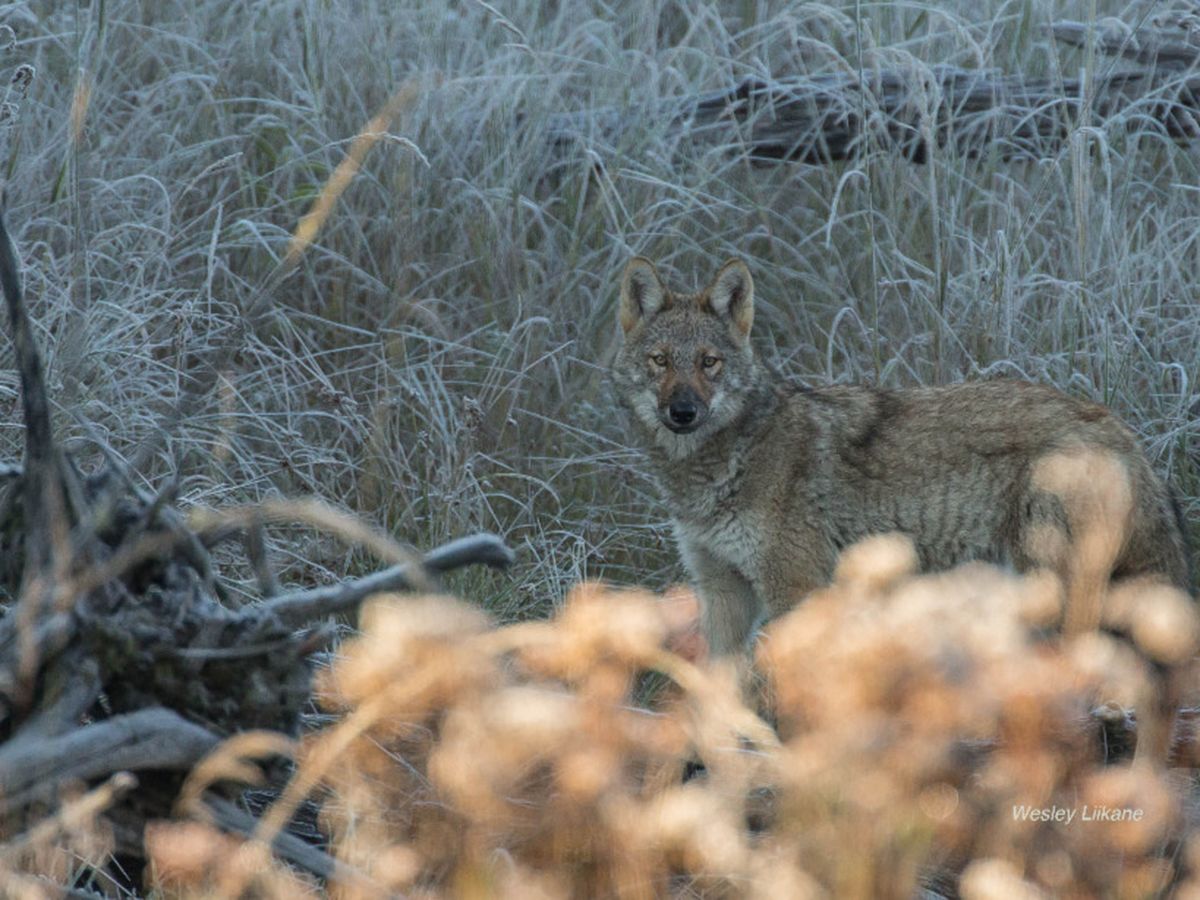
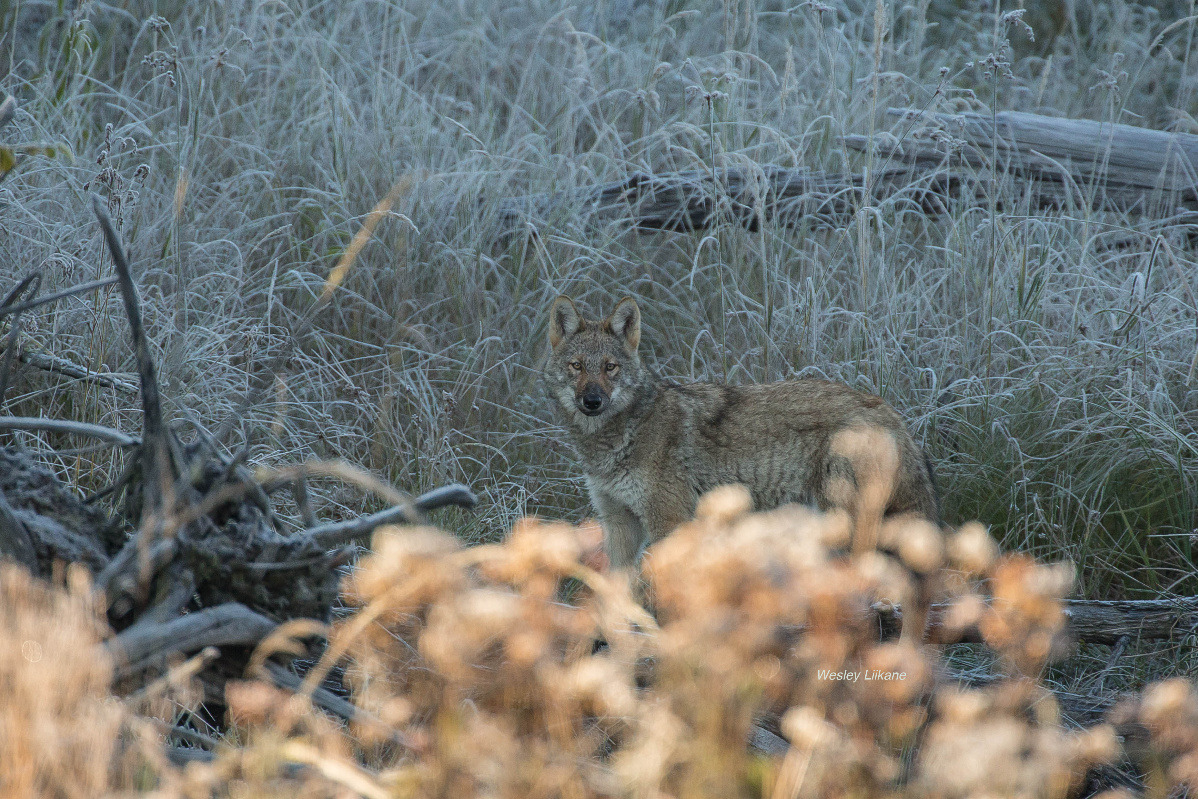 Canid near Algonquin Park. Photo: Wes Liikane, Cowboy with a Camera
So far, protections from hunting and trapping are restricted to areas where DNA from Algonquin wolves has confirmed their presence - around 4 provincial parks in Ontario. DNA is needed to identify an Algonquin wolf because hybridization with eastern coyotes makes them hard to tell apart visually from their coyote cousins. We need your help today to collect DNA in the unprotected areas and see if we can find Algonquin wolves and make sure they get the protection they need.
We use non-invasive DNA surveys to identify Algonquin wolves in their suspected range, to help count them, and protect them under the Endangered Species Act. DNA is naturally preserved in cold temperatures, and since snow makes it extra easy for trained trackers to follow wolves and find scat (poop), urine, and hair left in lays (think: beds of snow where wolves sleep), it's time to start tracking! We'd like to spend as much time surveying before the New Year as possible, so we're asking for your help today.
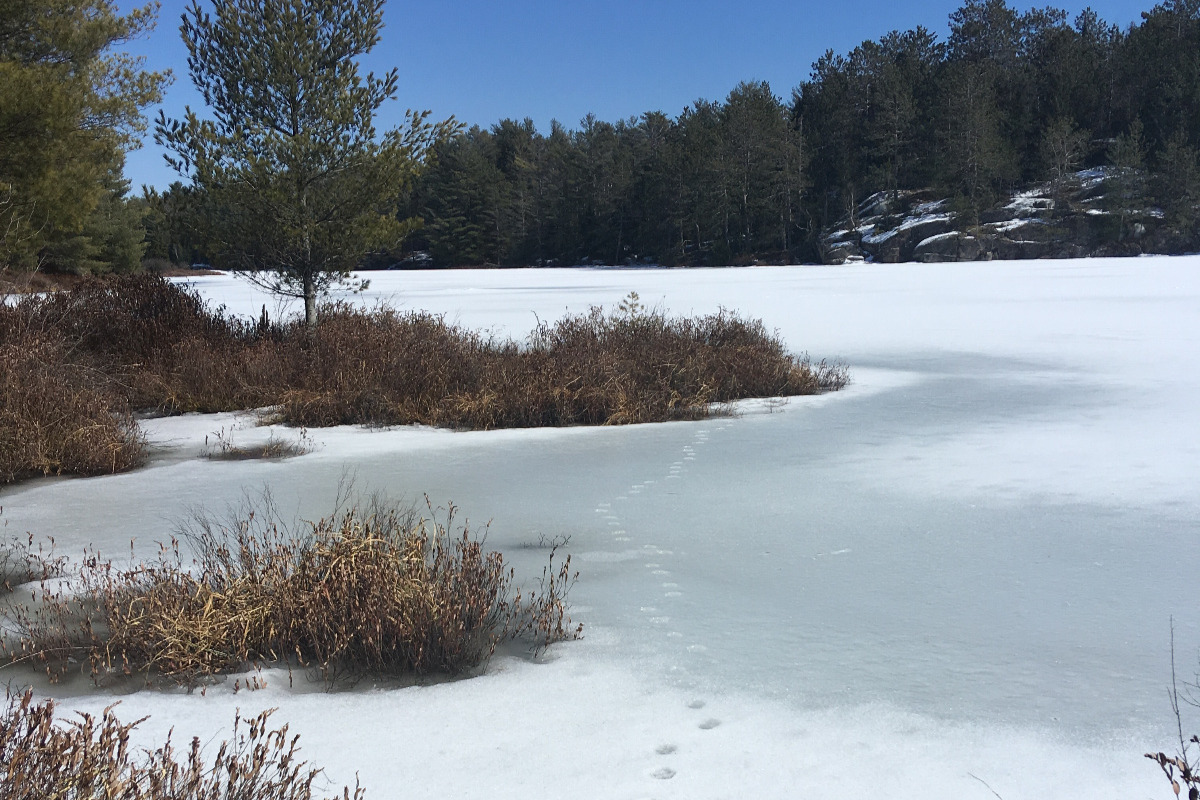 These large canine tracks led us to a few DNA samples left by the animals to mark their territory at the edge of a lake in unprotected crown land, central Ontario.
 Samples we collect each winter are analyzed at Trent University to determine species (wolf, coyote...) and sex (female, male). Researchers will use this information to more accurately determine the population size, range, and can even build family trees to determine how individuals in a pack are related. After all, wolf packs are wolf families.
Will you help us get back into the field early this year? The more we raise for the Ontario Wolf Survey, the more samples we can collect, the more citizen scientists we can equip with DNA kits, the more wolves we could find, and the more protection can result in the upcoming Recovery Strategy for the Algonquin wolf in Ontario!
Despite their iconic howling, without you, wolves have no voice.
HOW FUNDS ARE USED FOR THE ONTARIO WOLF SURVEY
Money we raise will be used by staff at the registered charity Earthroots to travel to suspected wolf range, hike, ski, snowshoe and drive around to locate DNA samples, purchase DNA collection equipment, and even equip citizen scientists in wolf range with their own kits to help us along.
When it comes to capturing DNA in the field, it's amazingly lo-tech and affordable equipment: freezer bags, screw top lids, nitrile gloves, sterile swabs to remove DNA from poop, permanent markers, ice packs and coolers to keep the DNA frozen...
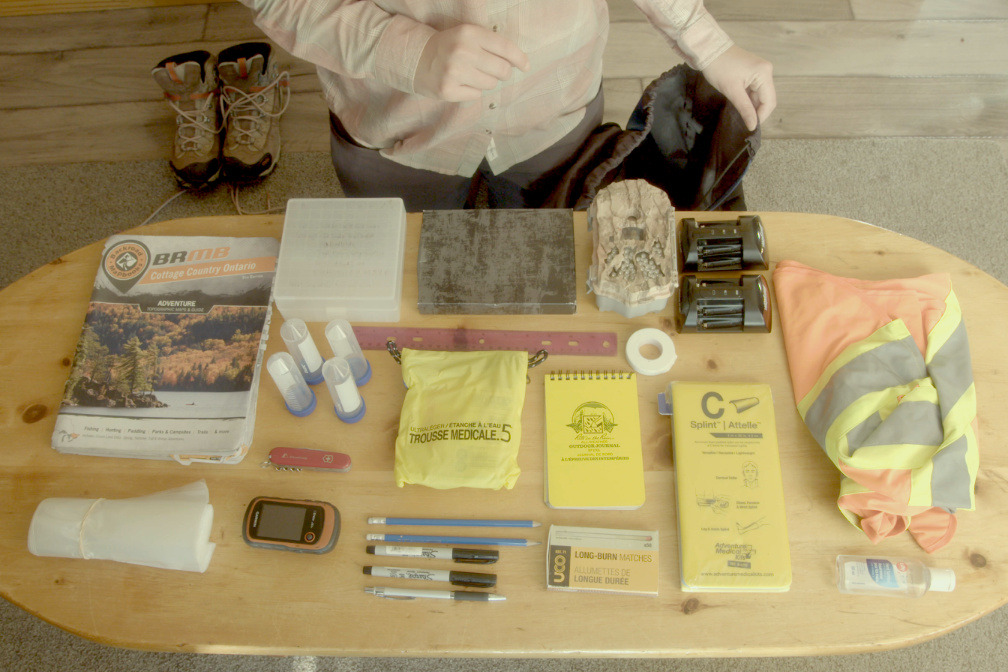 This is what we carry as we track wolves: DNA collection supplies, trail cams and maps. Citizen science kits are much lighter and easier to carry! Photo: Mark Utley.
Extra funds not needed in the field will be used to fund the genetic analyses for all DNA samples we collect. This hi-tech lab work is done at the Natural Resources DNA Profiling and Forensics Centre at Trent University in Peterborough, Ontario. Because we submit so many samples, we are lucky to get an amazing deal on this normally costly analysis. And, because most Algonquin wolf researchers are professors at Trent University, this is the ideal lab to consolidate data and ensure it is used to support recovery by expert ecologists and government researchers that work together at Trent.
ABOUT EARTHROOTS' WOLVES ONTARIO CAMPAIGN
Earthroots is a charitable conservation organization based in Toronto. For the last 31 years, we've used research, education and civic engagement to achieve meaningful protection for wildlife, wilderness and watersheds across the province.
Earthroots' flagship wildlife campaign is called Wolves Ontario , a campaign which launched in 1999. After steadfast campaigning, we achieved the first protections for wolves in Ontario: no hunting during pup-rearing season, year-round protection for the wolves around Algonquin Provincial Park, bag limits for hunters, and a commitment by the government to manage wolves for their inherent and ecological value. The DNA-based Ontario Wolf Survey is the research project under the Wolves Ontario campaign.
When snow conditions are poor, a tape measure is a wildlife tracker's best friend. Wolves and coyotes have much longer strides than foxes, although all canids can leave behind this single-file gait track. When the rear foot steps directly in the front foot's track, it's called "direct register", a sign that canine tracks are wild rather than domestic.
ABOUT ALGONQUIN WOLVES
Scientists using modern genetic techniques realized that Algonquin Park's wolves belong to a unique species. This corroborated observations dating back over a hundred years that the wolves in south-central Ontario looked different than the bigger wolves up north. We now call these smaller wolves Algonquin wolves in Ontario, but they are also known as eastern wolves across Canada.
Algonquin wolves once roamed North America's eastern deciduous forests. Due to widespread persecution, land clearing and subsequent genetic dilution from hybridizing with the coyotes that spread east from the Great Plains, Algonquin wolves are now among the rarest wolves on earth.
They were listed as a Threatened species in Ontario in 2016. Unfortunately, the government quickly stripped the automatic province-wide protection afforded to all Threatened species, and allows these wolves to be hunted and trapped for 6 months of the year in all but 4 areas in and around Provincial Parks. They allow wolf killing still because they want to allow coyote killing, and the two animals can be impossible to tell apart on sight.
Algonquin wolves are the only Threatened species that can still be legally killed. Hunting and trapping are the known primary threats to the species.
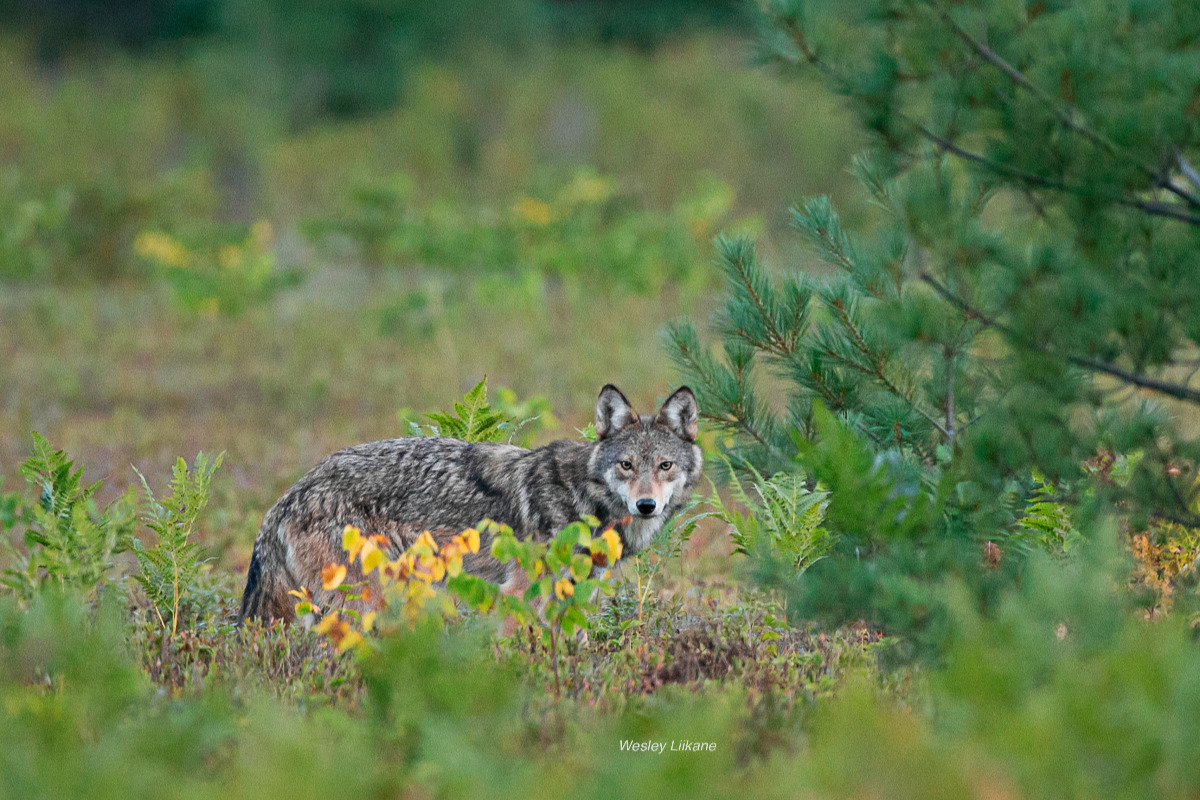 A large canid in Algonquin Provincial Park. About 70% of the park's large canids are Algonquin wolves, according to the most recent published research. Photo: Wesley Liikane, Cowboy with a Camera.
While the Algonquin wolves that live in their namesake Provincial Park are well studied, we don't know all that much about the rest of this species' individuals. What we do know is that the wolves are rare, often surrounded by grey wolves or eastern coyotes that they will mate with if they cannot find one of their own kind. Moreover, relative to these closely-related canids, Algonquin wolves are more susceptible to being killed by hunters and trappers.
Without further protection outside the few provincial parks where DNA research has confirmed the presence of these wolves, the species recovery is in serious jeopardy.
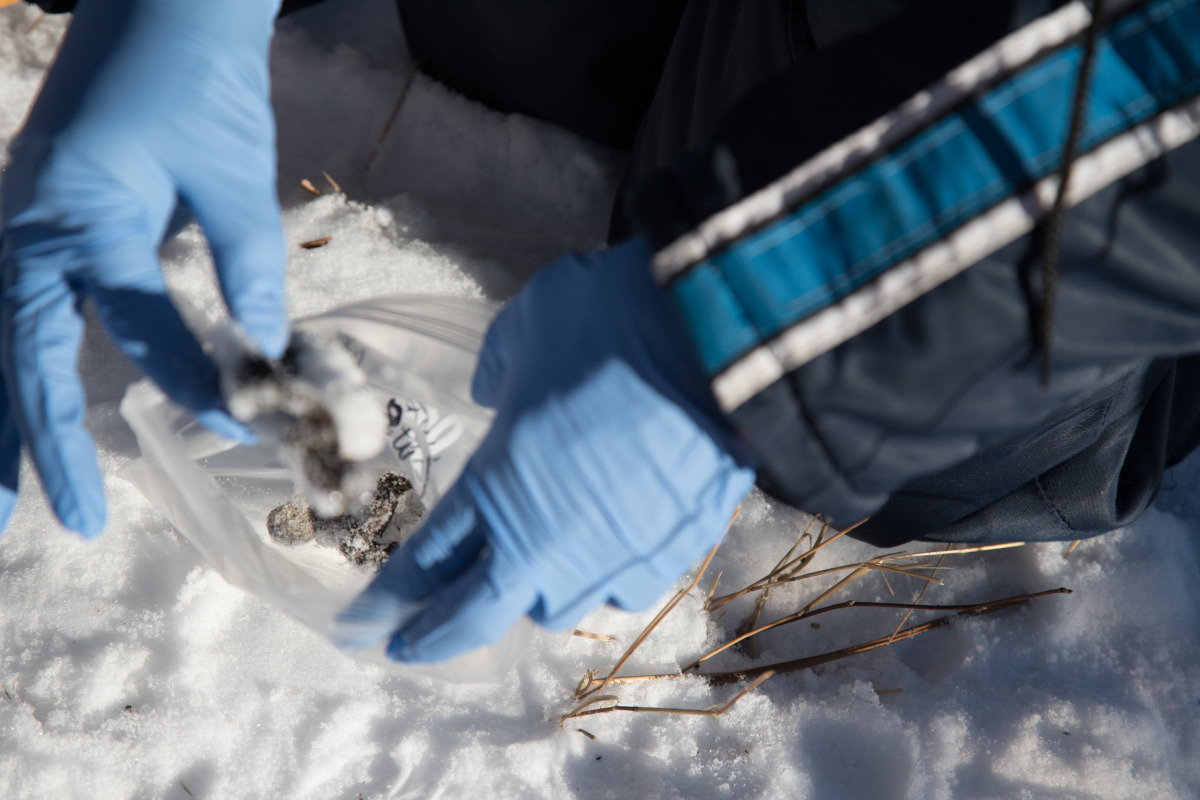
A citizen scientist collects a scat sample for DNA capture in the lab at Trent University. Photo: Andrew Budziak.
The wolves' legal listing as Threatened species in Ontario means that a Recovery Strategy is being developed. The strategy will give the Ontario government direction regarding future protections.
The Recovery Strategy was delayed earlier this year, which means we now have another year to learn as much as possible about the wolves to make sure the Strategy provides the best evidence-based direction to the Ontario government about protection and recovery. Scientists predict that protection from hunting and trapping will enable the Algonquin wolves to survive into adulthood, find a wolf of their own kind to mate with, and naturally displace eastern coyotes in habitat better suited to wolves. In this way, hunting and trapping bans will likely reduce the hybridization between wolves and coyotes, and ensure this ecologically unique species is around for our grandchildren to hear howling.
ABOUT THE LEAD BIOLOGIST
Hannah Barron is a conservation biologist fascinated by the rocky relationship humans have with keystone carnivores like wolves. She's determined to foster professional and public appreciation for non-invasive research techniques (even the famously unglamorous poop collecting) that protect animals from the impacts of research.
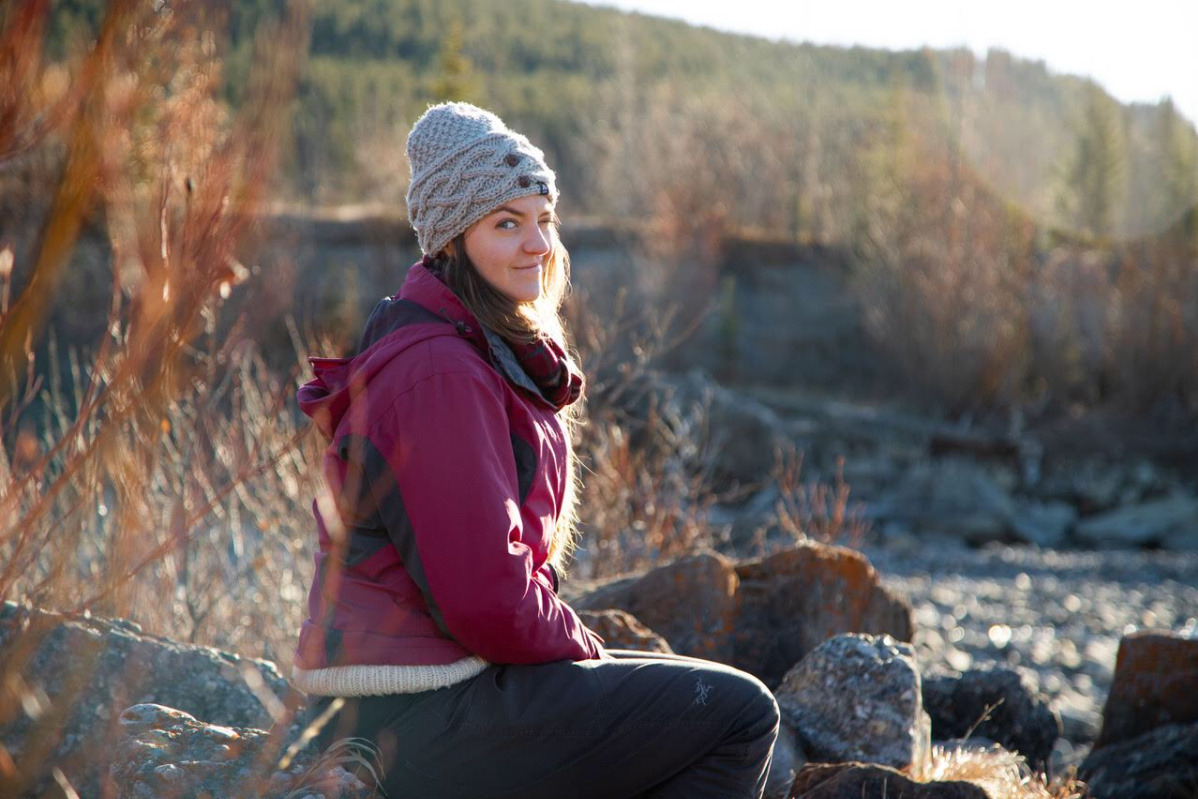 Hannah in the field. Listen here to CBC Quirks & Quarks feature. Photo: Andrew Budziak.
She's tracked wolves in BC, Alberta, the sub-arctic, and Ontario. When she's not tracking wolves for work, she lives in rural Ontario with her mutt Charlie Dickens, and is happily surrounded by forest and fields inhabited by eastern coyotes. She feels weird about writing like this in third person.
Cover photo: Wes Liikane, Cowboy with a Camera
Organizer and beneficiary
Amber Ellis
Beneficiary