- A
- F
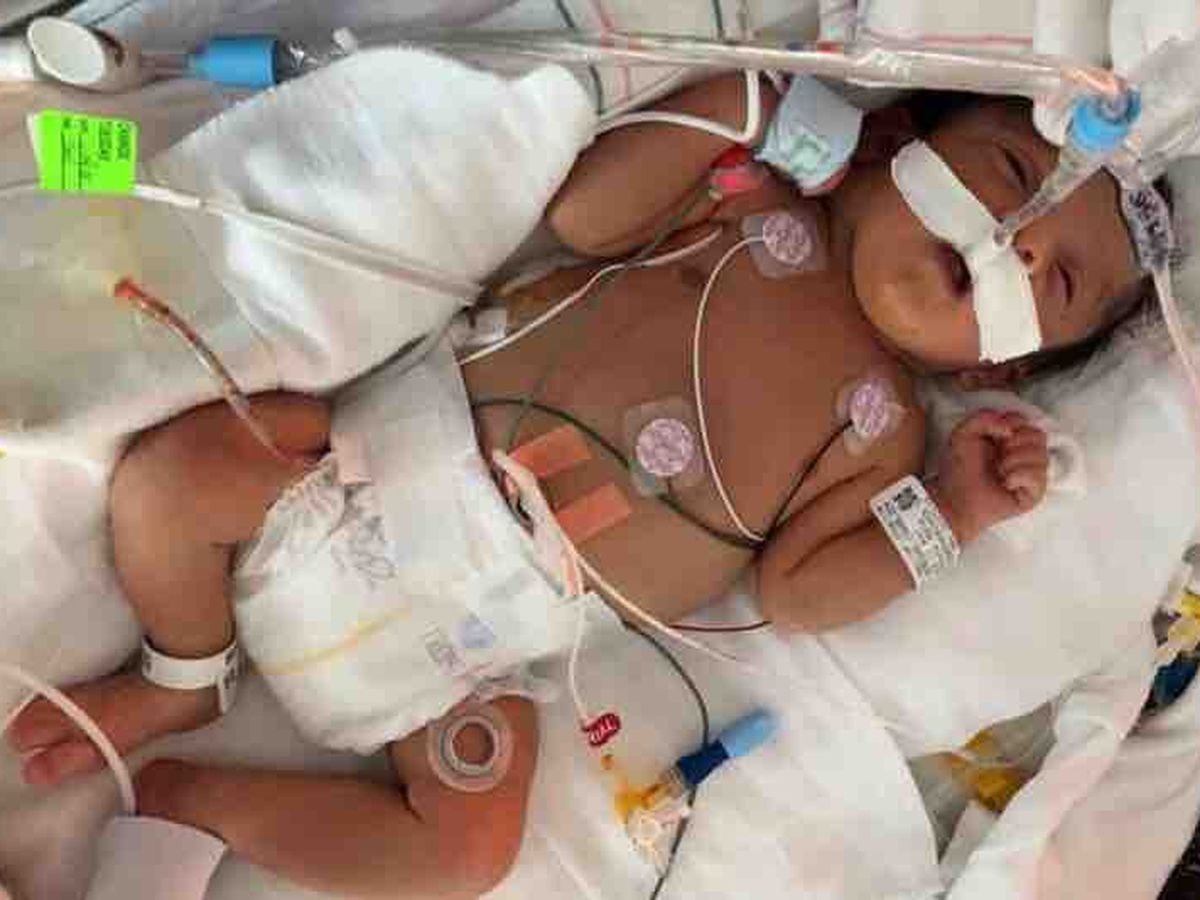
On June 10, 2018, my first child Ohtli Alex Venegas, was born via C-section. Within the first 3 seconds of his life, Alex’s lungs collapsed. His nurse quickly assisted him and after a few minutes, he was breathing on his own again but was having a very difficult time. This resulted in his nurse putting him on a ventilator to help aid him. While the ventilator tube was being put down his esophagus, she noticed there was something deeper in his esophagus blocking access to his stomach. While being stitched up by my OB, Alex’s nurse quickly explained to me that Alex needed to be taken to X-ray because she believed that the esophagus was disconnected from his stomach.About an hour later, the CHET (Children’s Hospital Emergency Transport) team from Rady Children’s Hospital in San Diego came into my room with Alex incubated and connected to a ventilatorthe CHET team explained that Alex needed to be taken to Rady Children Hospital right away because his X-ray and Echocardiogram showed that he had two heart murmurs, four ribs connected to each other, four spinal discs slightly connected to each other, and a birth defect called Esophageal Atresia (EA). This meant that his esophagus was disconnected from his stomach and needed surgery right away otherwise, he would not be able to swallow anything down to his stomach. Unfortunately, leaving him at Palomar Hospital in Escondido, CA, was not an option because none of the doctors were familiar with Esophageal Atresia repairs. My husband, mom, mother-in-law, and sister followed the CHET team to Rady Children’s Hospital while I stayed at Palomar Hospital for 3 days to recover from my C-section. The very next morning, Alex had his Esophageal Atresiarepaired. His doctors finished that afternoon and explained to my husband that it was a very difficult surgery because Alex’s lungs were immature. They also explained that throughout the surgery, they had to take breaks in order to give his lungs a break as well as his esophagus being too short and had to stretch it so that it would be able to connect to his stomach.He explained that Esophageal Atresia repairs (especially Alex’s) are likely to cause the esophagus to narrow, which will cause problems swallowing food. Alex’s doctor said we would have to keep a close eye on him when he eats. Especially once he starts eating solids at 6 months, since that’s when the esophagus tends to narrow. After the first two days in the NICU, Alex spent another 30 days there while he healed from his surgery. His cardiologist doctors monitored his heart murmurs. His lungs matured and didn’t need a ventilator, and as he, my husband and I completed Occupational Therapy (Skills in Feeding, Eating, and Swallowing). My husband’s job was kind enough to let him take those 32 days off but unfortunately, with no pay. After those traumatizing 32 days, we finally got to go home. We were home for two weeks, until Alex started having trouble eating. We first thought it was a cold, since he sounded really congested. We took him to the emergency department. We were lucky that one of the assisting Esophageal Atresia repair doctors was there and he admitted us for the night since he knew Alex’s history was very critical. He asked the Gastroenterology (GI) department to take a look at his case. The GI department then ordered an Esophagram(x-ray study how well your esophagus is working and assess your swallowing process) the next morning. Ten minutes after Alex had his esophagram,a GI fellow came into our room and explained to me and my husband that they did not expect for this to happen so soon but they have to take Alex right away to get his esophagus dilated with a balloon because his esophagus was extremely narrow. They thought that by the time he was 6 months, he would need dilations but not at 2 months. After his procedure was done, his GI doctor showed us pictures how narrow Alex’s esophagus was. He couldn’t believe Alex was still eating with his esophagus that narrow. He told us the goal is to open his esophagus to 10cm, which will take about 6 months to a year to reach. But even after we reach 10cm, Alex will have to be watched up until he understands that he can’t eat large amounts at a time nor eat quickly and he will have to be on reflex medication for many years to prevent any discomfort in his esophagus. In the first dilation, he was able to dilate to 6 cm but Alex’s GI doctor said just like any wound, the tearing in his esophagus will heal which will cause the esophagus to narrow again. Alex is now 4 months and is still getting dilations every 2-3 weeks. His GI doctor always leaves in a NG tube (feeding tube) in case Alex’s esophagus narrows before his next scheduled dilation. With the NG tube in, we can use it to feed him while also preventing his esophagus from completely narrowing close. Alex also has monthly checkups with his cardiologist and orthopedic doctors to have his heart murmurs, spinal discs, and ribs checked.
YOUR HELP:
This is where your help comes in, as mentioned before, since my husband had to take 32 days off of work in order to be with our child, this has caused us to fall very behind on our bills and unfortunately, I must take 2-3 years off of work and school in order to take care of Alex’s needs. Although Alex’s care is our number one priority, both of these causes have made it very difficult to afford the many treatments that he needs. Unfortunately, Alex’s reflux medication is not covered through our insurance. By donating to Alex’s cause, it will help us better afford his medication, treatments, constant doctor visits and other medical bills. We’d like to thank you all in advance for your donations. Small or large amount of donation will truly make a positive impact in our lives. Thank you so much.
YOUR HELP:
This is where your help comes in, as mentioned before, since my husband had to take 32 days off of work in order to be with our child, this has caused us to fall very behind on our bills and unfortunately, I must take 2-3 years off of work and school in order to take care of Alex’s needs. Although Alex’s care is our number one priority, both of these causes have made it very difficult to afford the many treatments that he needs. Unfortunately, Alex’s reflux medication is not covered through our insurance. By donating to Alex’s cause, it will help us better afford his medication, treatments, constant doctor visits and other medical bills. We’d like to thank you all in advance for your donations. Small or large amount of donation will truly make a positive impact in our lives. Thank you so much.