- D
- P
Hi I’m Susie Greenhill, a writer living in a small community in Southern Lutruwita /Tasmania and I’m helping raise funds for my dear friend Sacha Kamau’s desperately needed pudendal nerve decompression surgery.
Like many other Australian women, I’ve followed the current conversation on the state of women’s health in our country with dismay. The stories of women who have suffered due to system-wide failures are many. Most of us have personal experience of friends and loved-ones who have been disbelieved, dismissed or even ridiculed by medical health professionals who seem to have a profoundly inadequate understanding of female health. Sacha’s story is a shocking example of the real human suffering these systemic failures can cause.
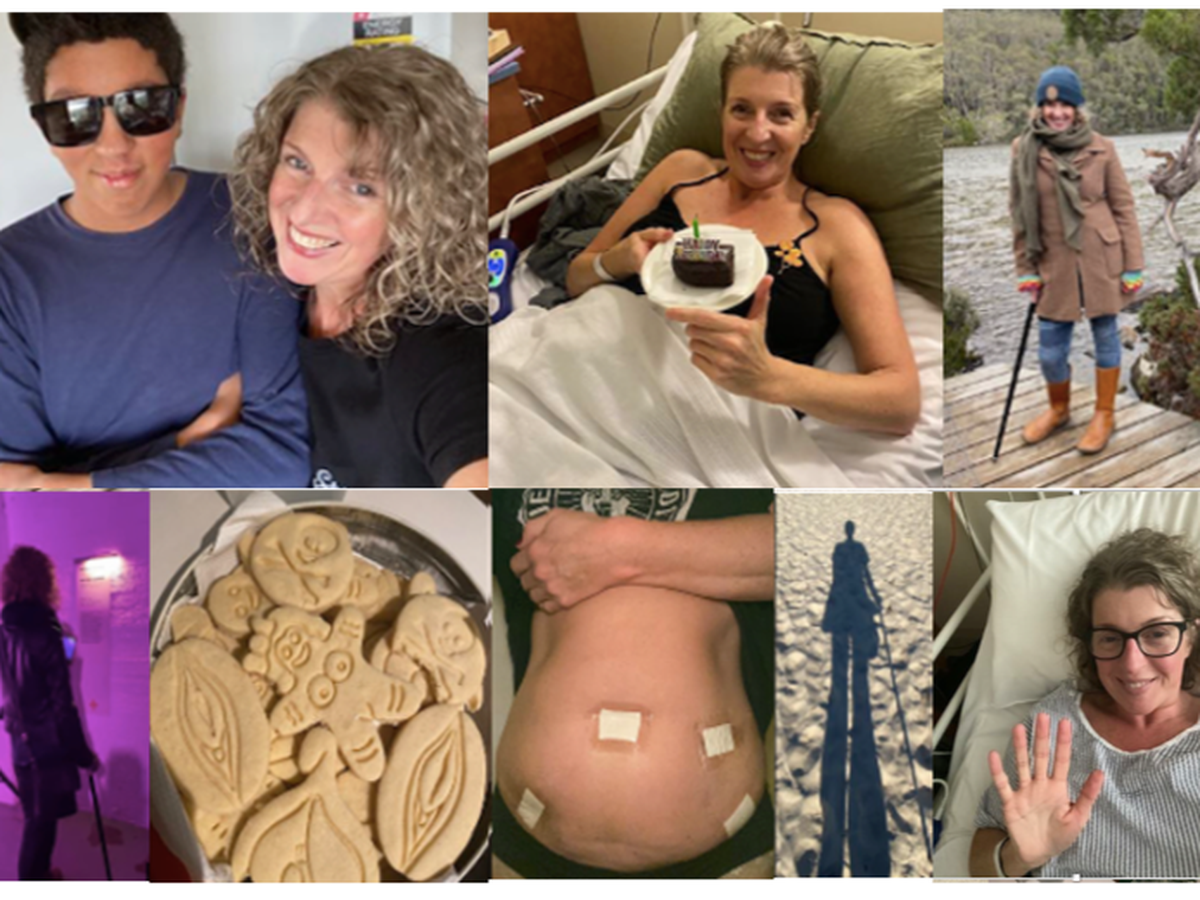
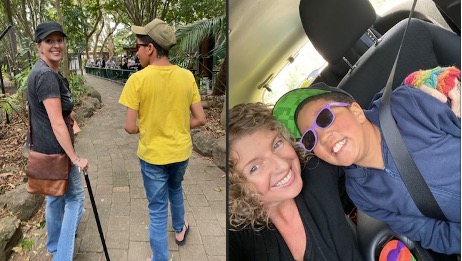
I first met Sacha as a parent at our local primary school around six years ago. I was immediately drawn to her vibrant personality. Despite her poor health, Sacha is full of warmth, intelligence, creativity, empathy and kindness. She’s a loving, dedicated single mother and home-educator to her fabulous fourteen year-old neurodivergent son Zac, and a maker of the most divine Burnt Basque Cheesecake.
Sacha suffered for ten years with severe pelvic pain from undiagnosed endometriosis and adenomyosis. Between 2013 and 2023, she saw dozens of doctors, therapists and specialists in Melbourne and Hobart. Rather than finding the support she needed, Sacha’s concerns were belittled and disbelieved. She was told that she was exaggerating the extent of her pain, that she needed mental rather than physical treatment and that her symptoms were all in her head. She was accused of drug-seeking upon requests for pain management, and refused simple procedures that could have provided a straightforward diagnosis.
In mid 2023, following a particularly soul-destroying appointment at the Royal Hobart Hospital Pain Clinic, where Sacha was told by a senior specialist that nothing further could be done for her, and that she needed anti-depressants rather than pain medication, Sacha made one final appointment with a private female specialist at a Hobart women’s clinic. Distraught and in tears after so many years of inadequate care, Sacha begged this female doctor for help. The doctor booked Sacha in for her first internal pelvic ultrasound, and she was immediately diagnosed with severe adenomyosis and endometriosis. By this time, both diseases were so advanced that her only treatment option was a hysterectomy and endo incision surgery.
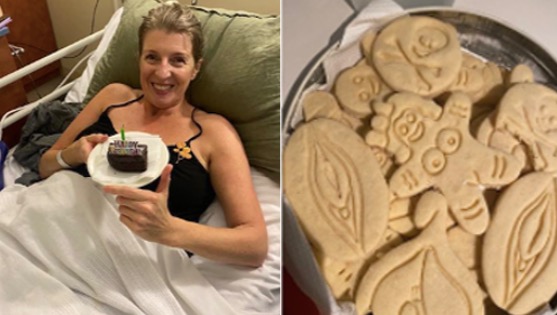
In September 2023 Sacha underwent surgery at the Hobart Private Hospital. She celebrated her fiftieth birthday in a hospital bed with appropriately shaped cookies baked by a friend (see pics!) and was over-joyed at the thought that the worst part of her decade long nightmare was now over, and recovery was finally in sight.
Two weeks into her recovery after surgery, Sacha was experiencing intensifying pain. Barely able to walk, Sacha returned to her GP where she was told her pain was normal and sent home without a physical exam. Even after her diagnosis and surgery, Sacha’s pain and awareness that something was seriously wrong, was dismissed by a trusted health professional. Late that night, suffering a catastrophic post-operative infection, Sacha had a near-fatal haemorrhage. Just as she was falling asleep, she realised she was lying in a pool of blood, and was rushed by ambulance to the Royal Hobart Hospital for emergency surgery. Sacha lost two litres of blood that night, had she not woken she would likely not have survived.
Over the weeks that followed, while struggling with the effects of medical trauma but hopeful that she could now finally begin to heal, Sacha’s pain did not abate as expected. On the 1st of May 2024, her hopes of relief were crushed when her surgeon performed an internal vaginal nerve block which confirmed a suspected diagnosis of pudendal neuralgia. The pudendal nerve extends from the lower back to the genitals and anus, its entrapment and resulting compression is a rare and life-altering condition that causes persistent and disabling pain. Because of the nerve’s location, sensitivity and enervation of urinary, bowel and sexual functioning, pudendal neuralgia is considered one of the most painful of all neuralgias. Its effect on a sufferer’s quality of life is over-whelming.
Since that time, I have watched my vivid, joyous friend, who had already struggled for so many years, become almost totally bed-ridden with the pain of this brutal condition.
After exhausting all alternatives, pudendal nerve decompression surgery is Sacha’s only chance at returning to any kind of normal life, and of being the kind of mother she longs to be to her son.
This surgery is highly specialised, performed by only a handful of surgeons globally. It is not yet offered in Australia nor covered by Medicare. Sacha’s surgeon, Dr Eric Bautrant at Axium Hospital in Paris, has assessed Sacha as an excellent candidate, and her surgery is booked for August this year. France specialises in treatment of pudendal neuralgia due to its incidence among elite male athletes in the Tour de France.
It is taking immense courage for Sacha to speak publicly of this kind of condition and ask for help (particularly after so many years of being wrongly disbelieved by health professionals), but there really is no alternative. This surgery is desperately and urgently needed, and she has been inspired by the success stories of other Australian women who have taken this path.
All donations received here will go directly to Sacha. They will pay for the cost of the surgery itself, accommodation, flights to France and insurance. Despite being a disabled single mother of a high-needs child, Sacha has managed to contribute AU$20 000 of her own money towards costs, which will go towards financing her son’s care and travel expenses. Any support received beyond the target will go towards covering these extensive but necessary extra costs.
You can read a more detailed account of Sacha's health history and a breakdown of costs below.
My hope is that this fundraiser can not only bring relief to Sacha, and let her know she’s not alone, but can also shed a light on the shameful failures of the women’s health system in our country, and help to prevent such a devastating outcome from occurring again.
On behalf of Sacha and Zac, I want to thank you all so very much for your support. It’s impossible to overstate how much your donations (no matter how small) will mean to this beautiful little family who are so in need of our help.
Thank you.

What is Pudendal Nerve Entrapment / Pudendal Neuralgia?
Pudendal neuralgia is a chronic, disabling condition that affects the pudendal nerve, which runs from the lower back to the genitals and anus. It causes pain, numbness, burning and tingling in the pelvic area, greatly affecting quality of life.
The pudendal nerve is the major nerve of the pelvis, it enervates urinating, bowel movements, sexual function and when it’s inflamed or damaged, all those functions become very painful or they no longer work. It also affects sitting, standing, walking, lifting, and bending.
The pain caused by pudendal neuralgia becomes constant and unbearable. It is considered one of the most painful of all neuropathies to endure.
Pudendal neuralgia causes urinary, bowel and sexual dysfunction. Depression, anxiety, insomnia and fatigue are also common among sufferers.
Pudendal neuralgia is caused by nerve compression, trauma, errors in surgery and infection. It is also associated with endometriosis and pelvic inflammatory disease. Two thirds of pudendal neuralgia sufferers are women, though the centre of research and treatment is France, where the condition occurs among elite cyclists.
Treatment for the condition is limited but includes temporary nerve blocks, pain management and physiotherapy. The most successful treatment for Pudendal nerve entrapment to date is decompression surgery.
What are Endometriosis and Adenomyosis?
As many as 1 in 7 Australians suffer from endometriosis, and the average wait for diagnosis is around 7 years. This long wait time is due to systemic failures including shortfalls in funding in women’s health research, and lack of awareness and training among health professionals.
Endometriosis is a chronic disease where tissue similar to the lining of the uterus grows outside the uterus. This growth leads to inflammation and scar tissue forming in the pelvic region and (in rare cases of severe disease) elsewhere in the body.
Severe endometriosis is characterized by many deep endometrial implants and large cysts on at least one ovary. Symptoms include debilitating pelvic pain particularly around menstruation, urinary, bowel and sexual pain and dysfunction, nausea, fatigue, depression, anxiety and infertility. Surgery is recommended for severe disease.
Adenomyosis is a condition that affects the uterus. It happens when the cells that normally line the inside of the uterus also grow in the muscle layer of your uterus.
Symptoms include prolonged periods, painful periods, pain during sex, chronic pelvic pain, anaemia, fatigue, infertility.
It's thought that about 1 in 5 females has adenomyosis.
Hysterectomy is the most effective treatment for severe and disabling adenomyosis.
How have late-diagnosed pelvic disease and pudendal neuralgia affected Sacha’s life?
Sacha is 51 years old and is sole carer, home educator and centre of the universe to her teenage neurodivergent son, Zac. She and Zac live by a small beach in rural Lutruwita / Tasmania.
Sacha has been living with the debilitating pain of severe, late-diagnosed adenomyosis and endometriosis for ten years, since Zac was a toddler, and pudendal neuralgia for two.
The debilitating symptoms of pelvic disease forced Sacha to give up her career at Oxfam in 2016, a devastating blow particularly for a single mother with a mortgage to pay. Since her hysterectomy and pudendal nerve entrapment in 2023, Sacha has been mostly bed-ridden and in unbearable pain.
From Sacha:
“Before this pain I loved being an active, fun mum, going for walks with Zac, gardening and growing food, swimming. I loved sitting in cafes watching the world go by. Loved cooking and driving my car. Loved watching movies at the cinema. Now I cannot sit for more than a few minutes at a time without excruciating pain. I’m rarely able to drive my car. I require opioid pain medications just to be able to do a bare minimum. I experience severe pain in my public region, hips, abdomen, pubic bone, coccyx, knees and feet. I can walk only short distances and require the aid of a cane.
I’m rarely able to drive and struggle to be on my feet for longer than 20 minutes before the pain becomes too much and I need to lay flat. I barely sat to eat a meal in the past two years. I’ve only managed it for a couple of special outings with Zac to our favourite local café after taking an impressive cocktail of medications. Sitting is extremely painful and like most people with pudendal neuralgia I avoid it at all costs.
I’m forced to shape my life around bowel movements, laxatives and pain management. My bowel often doesn’t function for several days at a time despite taking medication, and then goes into overdrive. I have excruciating pain after every bowel movement.
In terms of how pudendal neuralgia has affected me… it has really destroyed my life. It’s damaged my relationships, kept me largely housebound, and stopped me from being the mother I want to be. Becoming disabled by excruciating pain has been devastating, and the impact on my mental health has been severe.”
Why this surgery and why France?
Since 2023 Sacha has had chiropractic and physiotherapy, nerve blocks, steroid injections and opioid pain medication. Nerve blocks provide 100% relief but only last seven hours, while the steroid injections given at the same time, which are designed to last longer, have no effect. Even high doses of opioid medications have been ineffective for managing pain.
Pudendal nerve decompression surgery was pioneered in France, where a relatively high incidence of pudendal neuralgia occurs among male athletes competing in the Tour de France. Less than ten doctors in the world perform the surgery, and most surgeons are in France, Belgium & Vienna.
Sacha’s surgeon, Dr Eric Bautrant, a Gynaecological and Pelvic Specialist at Axiom Hospital in Paris, is one of the top three decompression surgeons in the world. Dr Bautrant has assessed Sacha as an excellent candidate for surgery, with a high chance of significant recovery.
Costs and funding target:
Surgery AU$16,139
Flights Hobart-Paris return: AU$18,675 (Sacha is unable to sit for more than a few minutes at a time without terrible pain. She will need premium economy or business class for pain management and to give herself the best chance of recovery after her surgery).
Accommodation AU$7456
Insurance AU$1000
Total target: $43 000+
(Total costs including Sacha’s $20 000, are approximately AU$60 000)
From Sacha:
“Unfortunately I am at the end of the road for treatment that is available in Australia. It is a very expensive trip to France. Zac is highly dependent on me, he’s unable to stay with his father so he will need to accompany me. His support worker will travel with us as I cannot travel alone and he will care for Zac when I am unable to.”
Health timeline/ history:
2013-23 Undiagnosed pelvic disease:
Sacha started experiencing pelvic pain in 2013.
By 2016 her pain was so disabling she was forced to leave her career at Oxfam, a particularly devastating blow for a single mother paying off a mortgage.
Through-out this period she sought treatment in Melbourne and Hobart.
“I saw countless doctors and specialists who all dismissed my pain. I was told I was exaggerating and catastrophising the excruciating pain I was in. I spent hours researching what this pain could be, desperate to get my life back. I was regularly denied CT scans and MRI’s that I thought would show what was wrong. I knew something was seriously wrong, but I was treated like I was crazy. It was infuriating.”
In June 2022 my pain suddenly escalated and I needed a wheelchair to get me around an art gallery I was visiting. It was confronting and scary. Since then I have been bedridden a lot of the time. But at that stage (pre-hysterectomy) I was still driving my car regularly, and still occasionally going out.
During this time I was regularly seeing doctors, chiropractors and physiotherapists trying to reduce my pain but it was only getting worse, and I was still being denied tests.
I’d spent an absolute fortune on medical bills, but I was treated like I was crazy by health professionals. I was told on numerous occasions that the pain was all in my head, and I needed to get mental health help.”
2023 Diagnosis of severe endometriosis and adenomyosis:
At her own request, Sacha was referred to the Royal Hobart Hospital Pain Clinic.
The appointment was with a senior pain specialist.
“After going through my medical history the specialist told me to stop taking my pain medication (the only thing that was keeping me going) and start taking anti-depressants. I was in tears. I asked for tests to be done as I knew something was wrong. I was told “There is nothing wrong with you and in the ten years you’ve been in pain you’ve had more than enough tests. There is nothing we can do for you.”
Still in severe pain, Sacha saw a private doctor at a women’s health clinic in Hobart where she had an internal ultrasound for the first time, and was finally diagnosed with severe pelvic disease.
From Sacha:
“I was distraught and literally begged her to help me. She organised an internal pelvic ultrasound and I was diagnosed with severe adenomyosis and endometriosis. My endometriosis, which usually requires laporoscopic surgery to be diagnosed, was so advanced it was clearly visible via ultrasound and was diagnosed on the spot.
At my three month follow up with the RHH Pain Clinic they were stunned to hear that I hadn’t taken their advice, that I had sought help elsewhere, and had got a diagnosis. They apologised and actually congratulated me on my perseverance. My GP did the same thing.
I was so unbelievably angry. This pain should have been taken seriously ten years earlier.
In Melbourne I’d lost three pregnancies, the Recurrent Miscarriage Clinic at the Women’s Hospital (who were monitoring me) blamed the miscarriages on ‘a run of bad luck.’ While I will never know for sure, I now believe the most likely cause were the untreated diseases I had in my pelvis - severe adenomyosis and endometriosis which both cause miscarriages and infertility.
I finally had an actual diagnosis for ten years of chronic, disabling pain. I wanted to call and tell every single doctor and specialist that had dismissed me. I was dealing with a lot of anger and my mental health by this stage was terrible. I was and still am suffering from severe depression and anxiety.”
Late 2023 Hysterectomy and emergency surgery:
Overjoyed by the prospect of finally finding relief, Sacha was scheduled for surgery. She paid privately to have the surgery happen within three months rather than spend three to four years on the public waiting list. On 1/9/23 at Hobart Private Hospital, Sacha had a hysterectomy for adenomyosis and endo excision surgery. Her uterus was so diseased she was told it was four times the normal size and had to be chopped into pieces to remove it vaginally.
“After the surgery my pain did not reduce as expected post operatively. Over 2.5 weeks my pain became unmanageable and was increasing. I visited my GP who discussed how to better manage the pain. No physical check. I was sent home. At around midnight I suddenly haemorrhaged. I was rushed into hospital and lost 2 litres of blood. They were unable to stop the bleeding so a surgical team was called in.
I had a developed a ‘catastrophic infection’ that had weakened my stitches and an artery was bleeding. It was a terrifying experience. I thought I was going to die.”
May 2024 Pudendal Neuralgia diagnosis:
During her recovery, and still in severe pain, Sacha received conflicting and confusing advice from her practitioners.
“My recovery from surgery was very difficult and my pain was almost impossible to control.
I felt that something had gone terribly wrong during one of my surgeries. My endo surgeon was concerned that MRIs indicated nerve contact. My GP felt that there may be nerve impingement. Eventually I insisted on seeing my surgeon who arranged for a diagnostic pudendal nerve block which sadly confirmed a diagnosis of Pudendal Neuralgia.”
Note from Susie:
For the sake of brevity and clarity, we have only included some of Sacha's experiences with the health system here. Sacha has documented many more, and we're working towards sharing her story more broadly in future. Right now, our focus is solely on getting Sacha to Paris for surgery, in the hope she will finally find real relief from her pain.
Organizer and beneficiary

Sacha Kamau
Beneficiary