Help Build the First Open-Source Continuous Mining Pilot
I’m raising $20,000 to purchase, refurbish, and install the key missing component for SEM TECH: an acid-resistant continuous vacuum filtration drum.
SEM TECH, short for Salt Electro Mining Technology, is an open-source electrochemical mining and refining system designed to recover critical minerals, precious metals, rare earth elements, platinum-group metals, and heavy metals from ores, mine waste, slags, and e-waste.
The technology is built around a low-cost ion exchange membrane and electrolysis process that can regenerate acids and oxidizers on-site, concentrate dissolved metals into recoverable solids, and reduce reliance on expensive chemical inputs. The long-term goal is to make critical mineral recovery cheaper, cleaner, more modular, and accessible enough for wider use by industry, researchers, and independent builders.
The patent and technology are being released openly under a Creative Commons public-domain-style license so the knowledge can be shared, improved, and adopted as quickly as possible.
Current funding goal: continuous filtration
This GoFundMe is focused on one immediate milestone:
$18,000 — Acid-resistant continuous vacuum filtration drum
$2,000 — fittings, seals, installation materials, plumbing, repairs, and contingency
Total current goal: $20,000
The vacuum filtration drum is the key piece of equipment needed to move SEM TECH beyond small batch testing and toward continuous ton-per-day pilot operation.
Next funding goal: advanced elemental analysis
After the filtration drum is funded, the next major funding goal will be approximately $30,000 to purchase and refurbish a used ICP-MS or ICP-OES analytical system.
This equipment is extremely important because SEM TECH is being developed to recover and separate elements that may exist at very low concentrations. Many platinum-group metals, rare earth elements, and critical minerals can be present in ores, tailings, slags, and waste streams at trace levels. To properly measure recovery rates, separation efficiency, losses, contamination, and purity, the project needs analytical capability far beyond basic visual testing or standard XRF readings.
An ICP-MS can allow trace-level analysis down to parts-per-billion and, for some elements and methods, parts-per-trillion sensitivity. An ICP-OES can also provide strong multi-element analysis for process development, especially where concentrations are higher. Either system would greatly expand SEM TECH’s research capability.
Having this level of analysis would allow:
Accurate measurement of trace precious metals, rare earths, and critical minerals
Better proof of recovery efficiency from ore, mine waste, slags, and e-waste
Development of advanced elemental separation methods
Tracking of which elements stay dissolved, plate out, precipitate, or migrate through membranes
Faster improvement of leaching chemistry, membrane recipes, and electrode designs
More credible data for grants, industrial partners, investors, and public demonstrations
Without this equipment, many important results must be sent out for third-party testing, which is slow and expensive. Having in-house trace-level analysis would dramatically speed up research and help turn SEM TECH from a promising open-source technology into a fully validated process platform.
Why this fundraiser matters
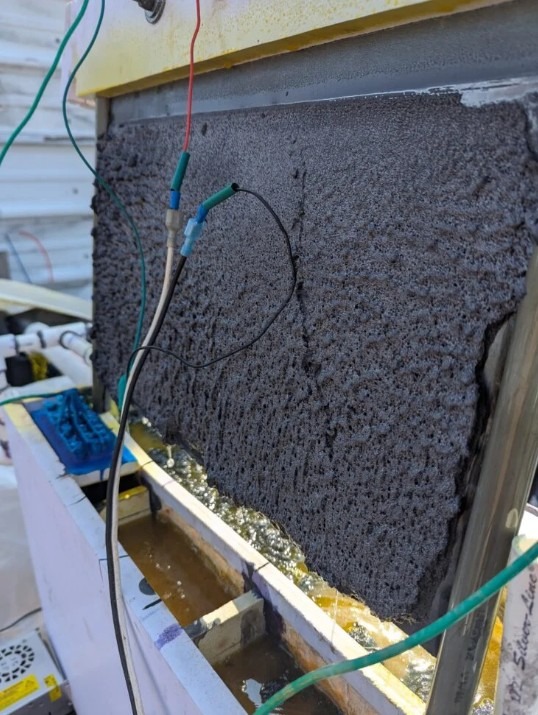
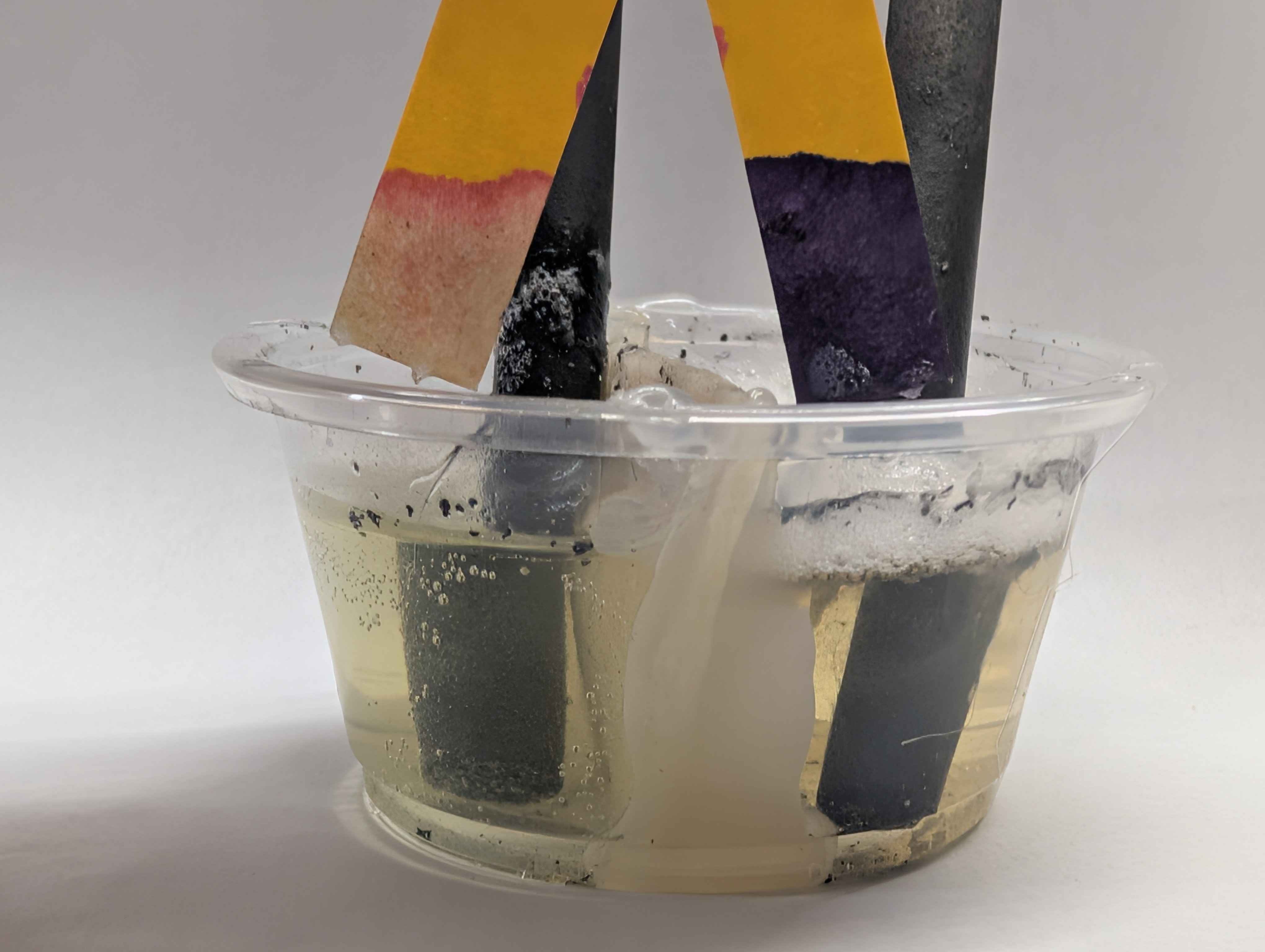
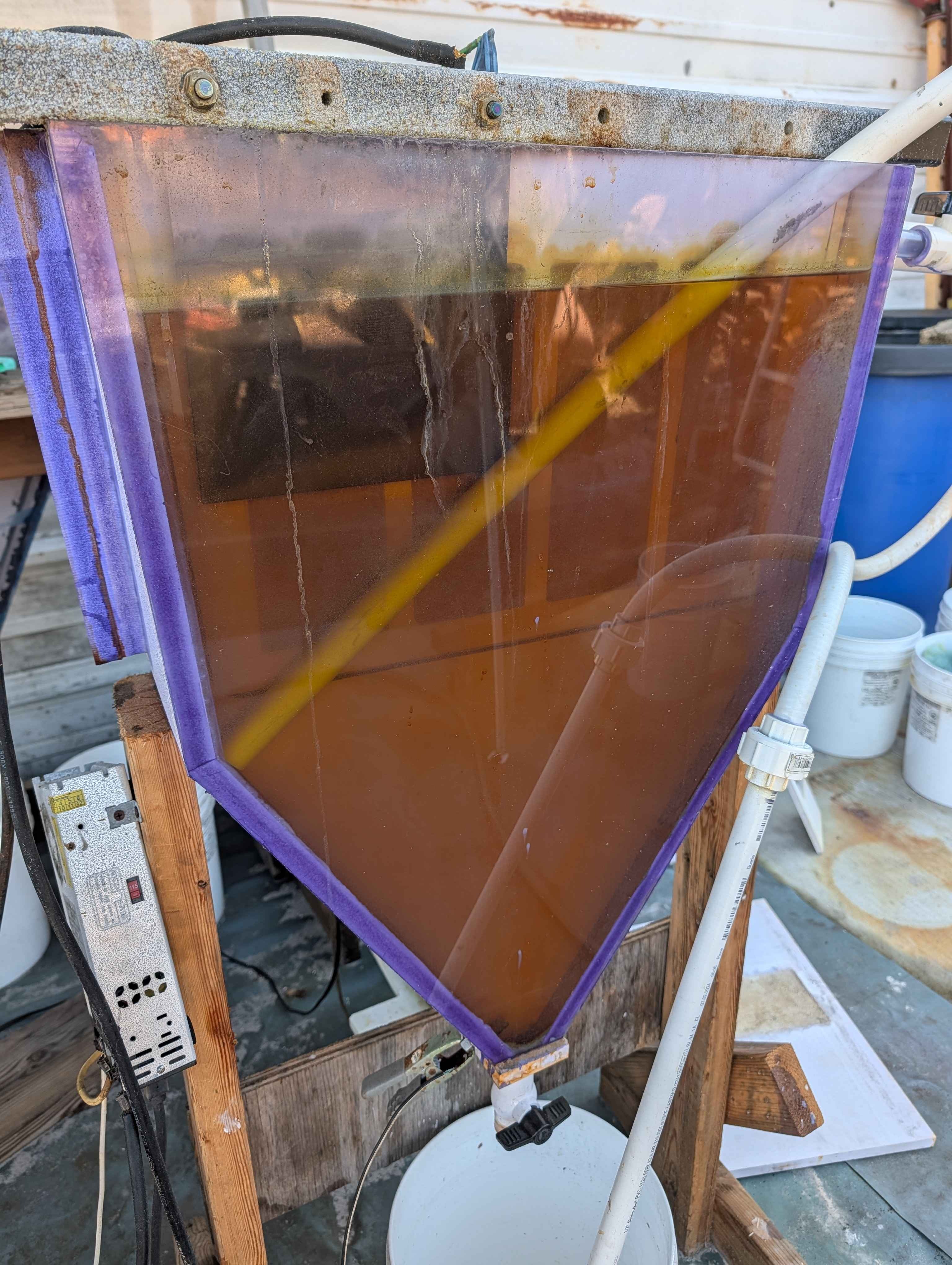
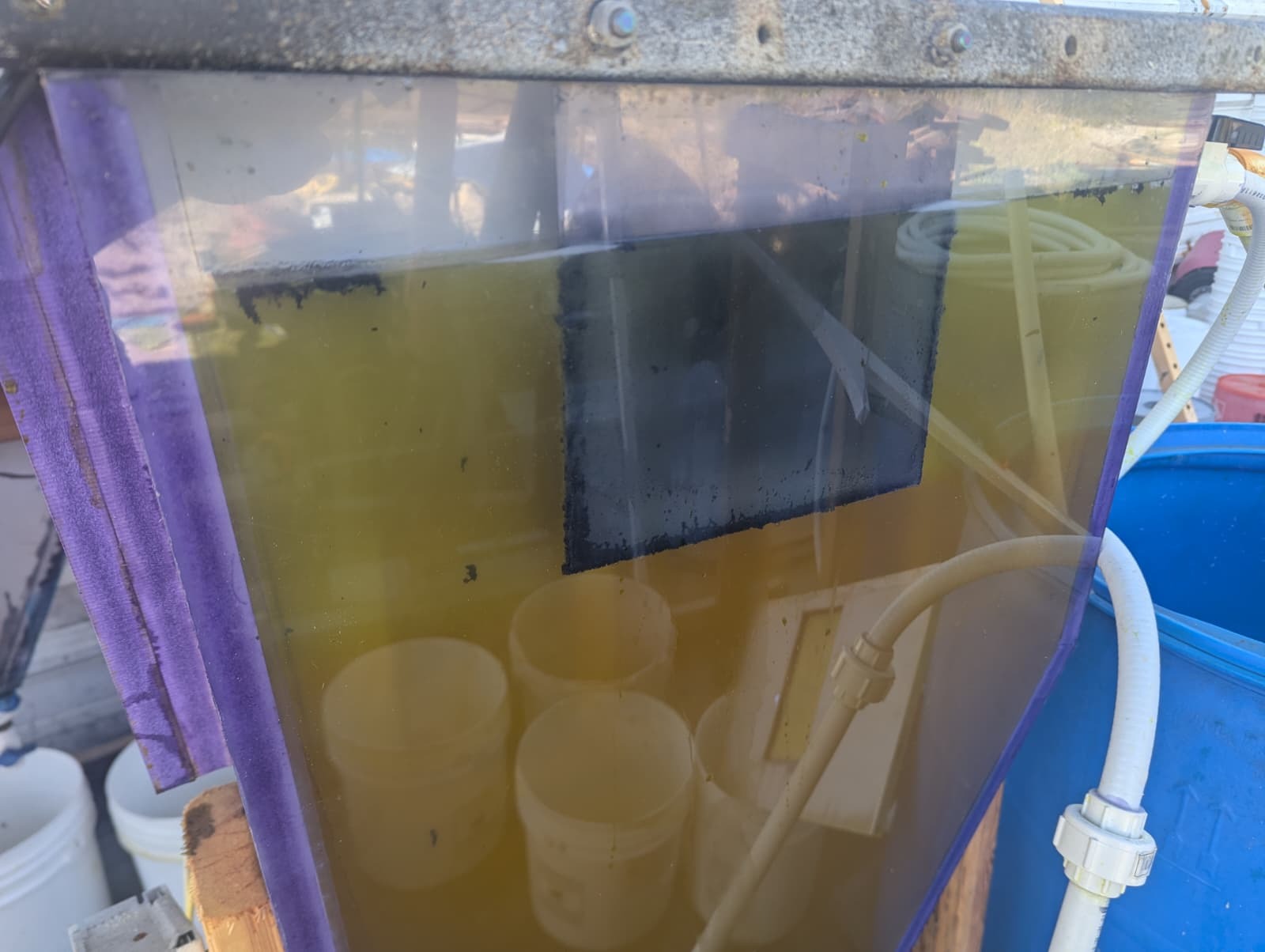
Small-scale SEM TECH units have already been built and tested. The process has shown the ability to leach and concentrate valuable metals from real-world materials, including ore, mine waste, and other feedstocks.
The next major bottleneck is not proving that the chemistry works. The bottleneck is continuous material handling.
At small scale, batch testing is slow because solids must be loaded, leached, filtered, washed, removed, and replaced manually. To move toward meaningful demonstration at ton-per-day scale, SEM TECH needs continuous filtration so the system can keep running instead of stopping after every batch.
That is what the vacuum filtration drum makes possible.
A continuous vacuum filtration drum allows wet ore or processed material to be continuously separated from the leaching solution, washed, discharged, and cycled through the process. This is the critical step needed to move SEM TECH from small batch demonstrations toward a true continuous pilot system.
What has already been done
SEM TECH has already advanced through years of hands-on development, including:
Low-cost ion exchange membrane development
Working electrolysis cell designs
Ore and mine waste processing tests
Recovery of mixed-metal concentrates
Development of acid and oxidizer regeneration methods
Small-scale electrochemical mining and refining experiments
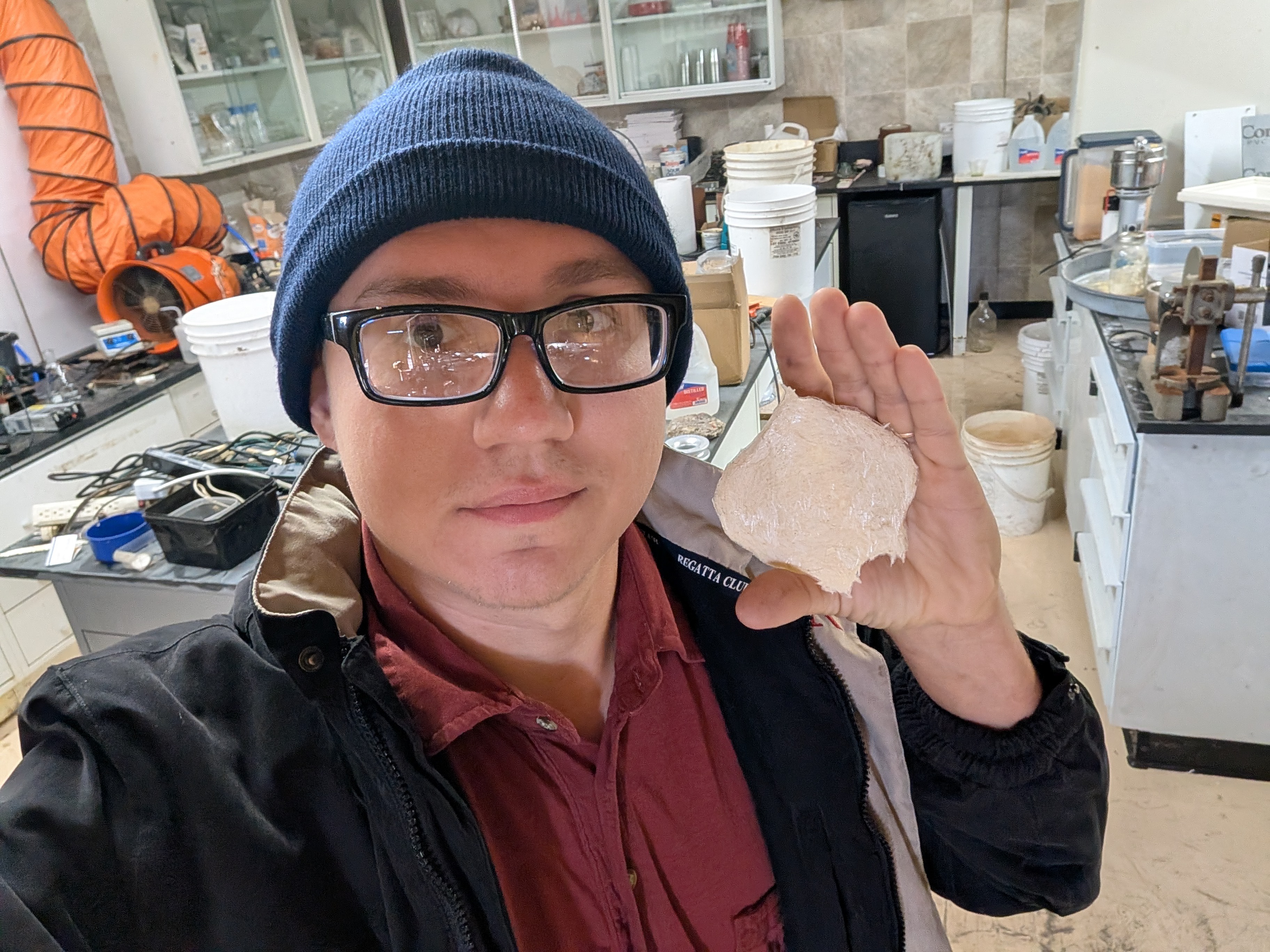
Construction of a dedicated testing lab
Public documentation through videos and open-source release plans
Patent work dedicated toward open public use
The current goal is to scale from small batch work toward a continuous system capable of demonstrating practical throughput.
Why this matters
The United States and many other countries urgently need better ways to recover critical minerals. Many valuable elements are locked in low-grade ores, mine tailings, slags, e-waste, and waste streams that are currently ignored, exported, or treated as liabilities.
Conventional mining and refining can require large centralized plants, expensive reagents, toxic waste handling, and major capital investment. SEM TECH is being developed as a modular electrochemical alternative that can potentially recover valuable materials while regenerating process chemicals and reducing waste.
The long-term vision is simple:
Turn mine waste and low-grade feedstocks into domestic critical mineral resources using open-source technology.
How your donation helps
Every donation helps move SEM TECH toward the next visible milestone: a continuous pilot demonstration.
$100 helps buy materials, chemicals, and consumables needed to test new membrane recipes, leaching methods, electrode designs, and feedstocks.
$1,000 helps buy or fund equipment, tools, pumps, sensors, lab hardware, and fabrication parts needed to expand SEM TECH’s capabilities and develop new processes.
$5,000 helps fund development of new systems and units, such as gas scrubbers, improved electrolysis cells, filtration upgrades, safety systems, and continuous processing equipment.
Larger donations directly accelerate the move from small batch testing toward a complete pilot-scale SEM TECH demonstration.
If you cannot donate, sharing this fundraiser with people in mining, metallurgy, chemistry, critical minerals, e-waste recycling, environmental cleanup, open-source hardware, or energy technology helps tremendously.
The next milestone
Once the filtration drum is funded and installed, the plan is to run and document a more complete SEM TECH demonstration using real feedstocks such as ore, mine waste, slags, e-waste, and other metal-bearing materials.
The goal is to show the full process more clearly:
Feedstock preparation
Electrochemical leaching
Solid-liquid separation
Solution recycling
Metal concentration and recovery
Waste reduction and process cleanup
Public documentation of the results
This equipment is the bridge between small-scale batch experiments and a real continuous processing demonstration.
Thank you for helping support open-source critical mineral recovery and the next stage of SEM TECH.


