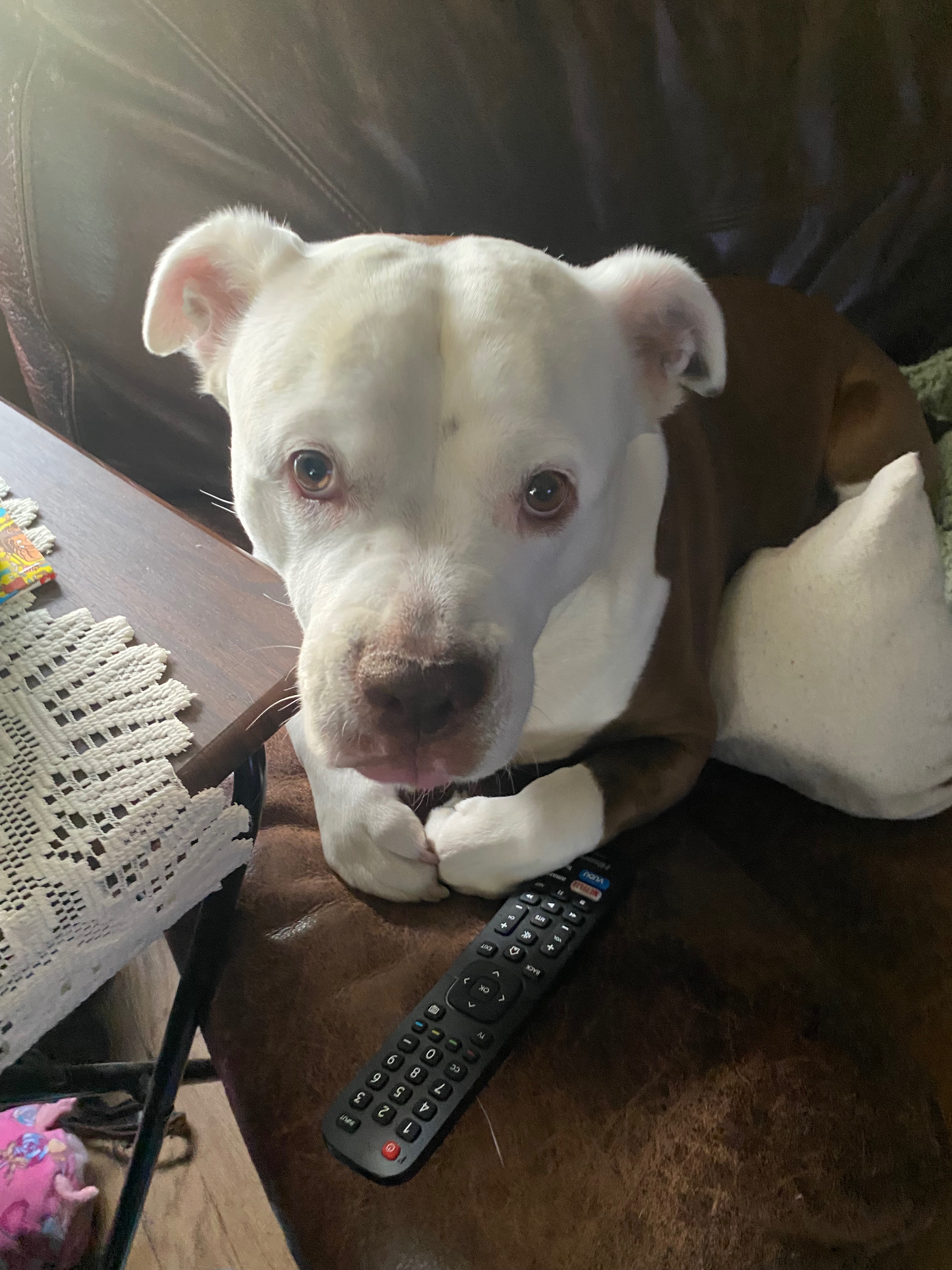



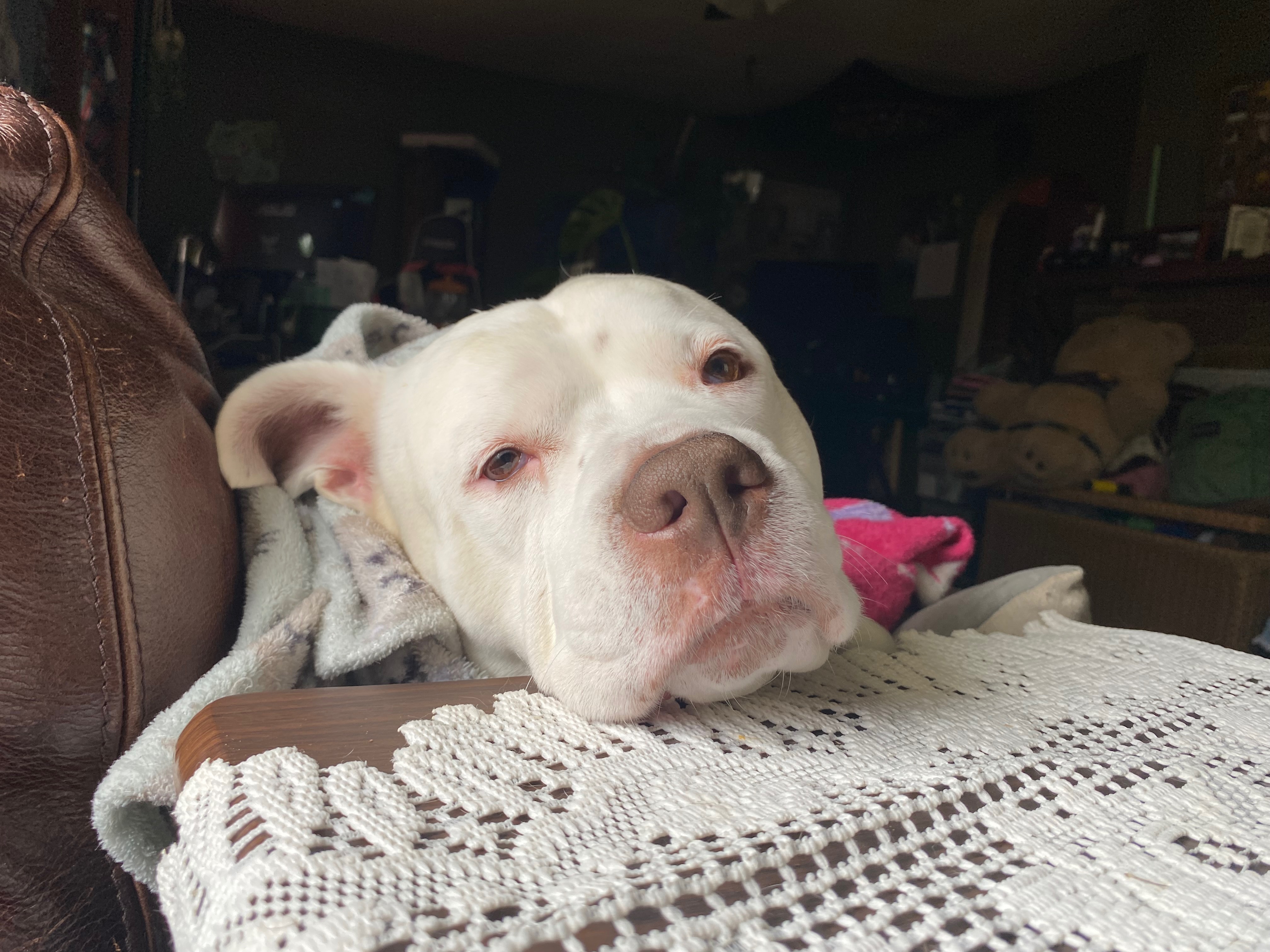
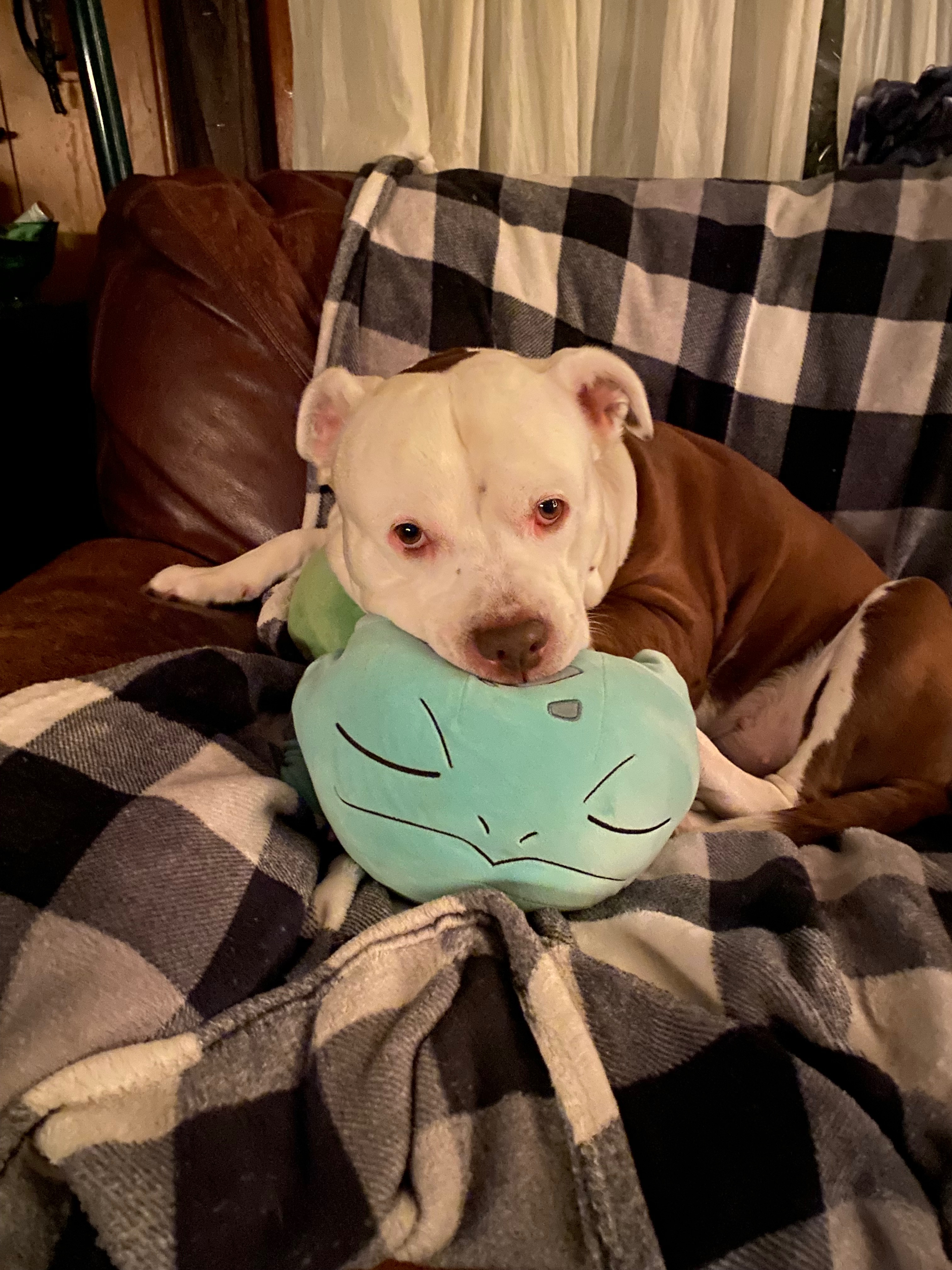
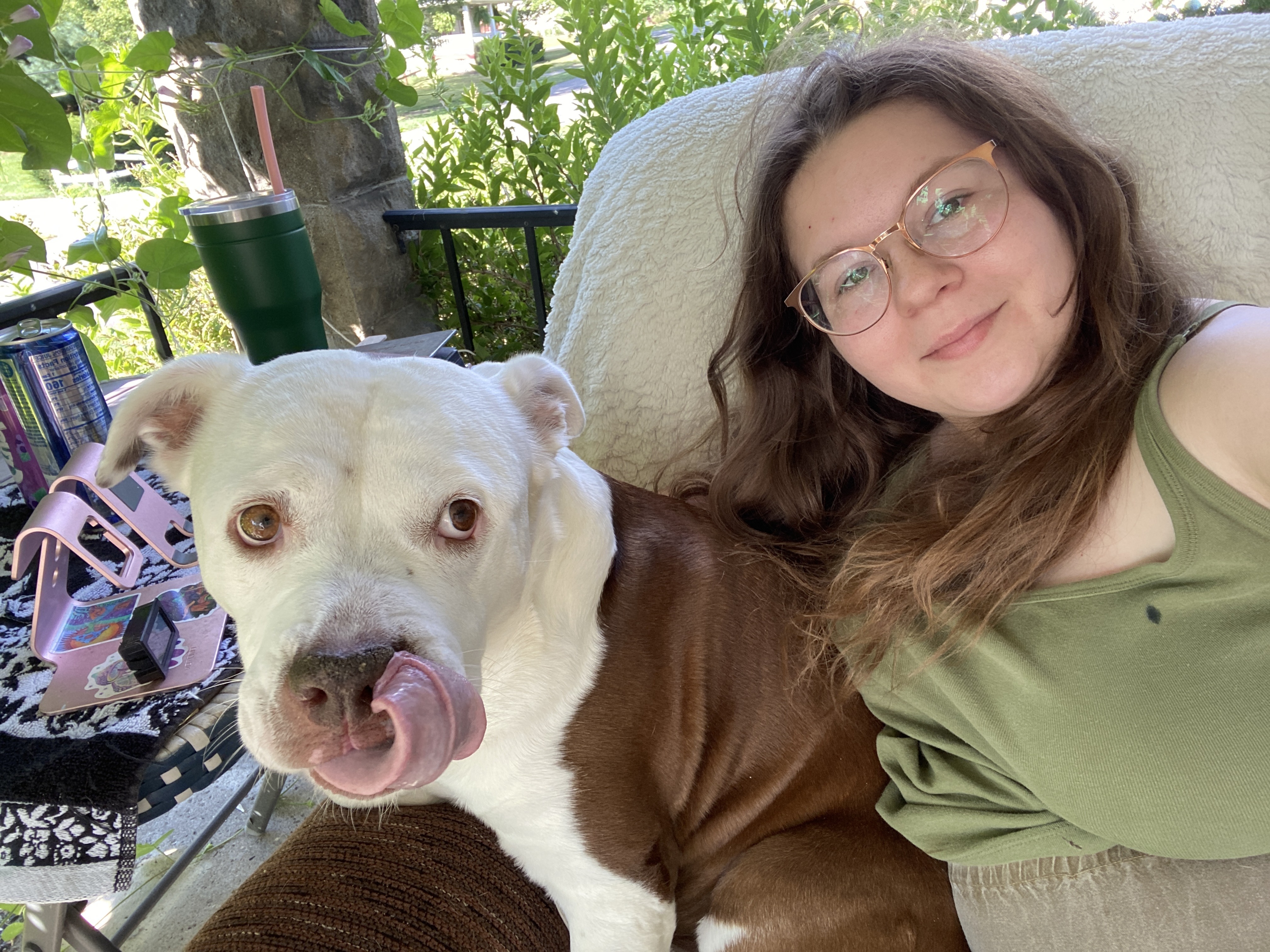
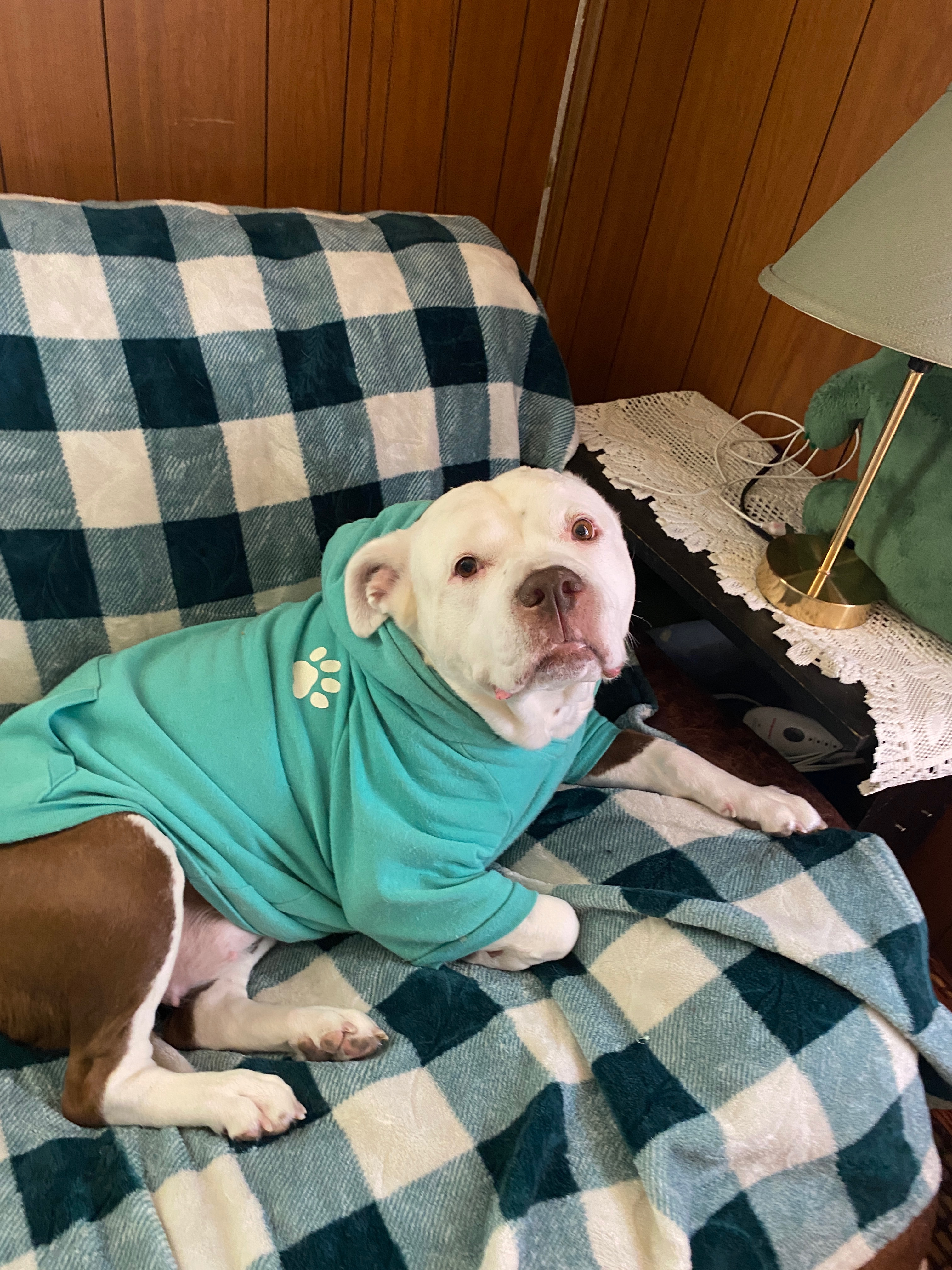
During the massive heat wave that we experienced in the beginning of July, Lydia developed severe respiratory distress. We knew something was wrong right away and took her to our local vet. There, they prescribed her doxycycline for suspected infection and furosemide to rule out heart disease.
Completing the course of antibiotics was an uphill battle. The drugs made it hard for her to eat and sleep; she was miserable. We stayed up with her through the nights, spoon-fed her meals, and held her up so that she could get a few moments of rest; she couldn't lie down.
We went to a better-equipped vet to get chest X-rays and more bloodwork. The worst news... there's fluid around her heart. Her heart wasn't working properly. Weeks went by, every 12 hours for a pill. Slowly, her body became used to the diuretic. The fluid outpaced the medication. Soon, she was on one pill every eight hours. Later, a pill and a half. Eventually, she was taking two pills every eight hours with really no sign of relief. Her belly grew, the body retaining the fluid. Our dog was fat, and not in a funny or cute way—a scary way. She almost looked pregnant. Life here for her was nearly as uncomfortable as it was on the antibiotics.
Our vet told us she needed to see a cardiac specialist. We're distraught, and our minds are racing. We can't afford that, but we'd have to find a way for Lydia. Anything for her. So we set up this GoFundMe in order to get her the help she needed. We started selling our luxury collections; anything we had to liquidate, we did. We weren't about to give up on our dog just because we couldn't afford it. She's better than that; she's our entire world.
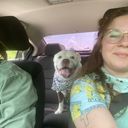
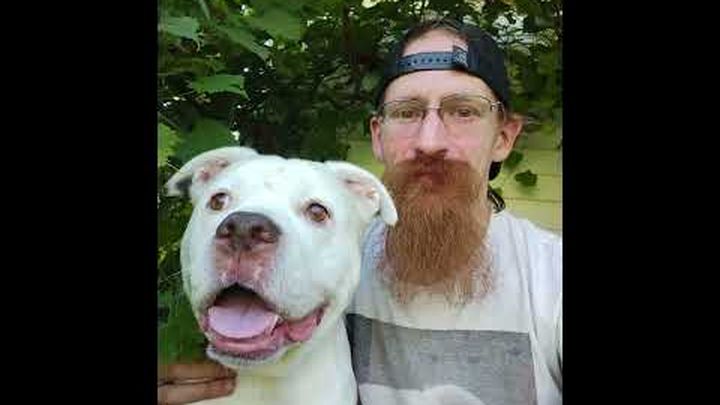
This dog isn't just a dog, she's Lydia Wilhelminia Beauxregard. This is the dog that helped us to get sober, to help me with the passing of my father. She helped us through the COVID lockdown and the losses of our jobs. She's the one constant positive. It always hasn't been that way for her, though.
We first got Lydia in 2017, from two people who saw her as less than a dog—less than dirt, even. They abused her, locked her in a room, children poking and prodding her—they weren't the only ones. She had gone through four homes in seven days—misery for a puppy. How could she acclimate? How could she know who to trust? Then we get a call from a friend, "Hey, you want this dog?" We go to meet her, and it's love at first sight. This tiny bundle of needle teeth is ours—had put our lives on an even keel. If you have had a puppy before, you know it's no walk in the park, but it sure as hell is rewarding. She learned quick and enjoyed every moment we spent with her. All the treats and walks a dog could ask for, homemade meals and cuddles. She's home.
This brings us back to now. Our vet had told us she needed a cardiac specialist, and that's what we were going to do. We raised the funds with the help of friends, family, and even kind strangers like you, and we got her there.
Lydia met with a full cardiac team and got an EKG workup. We looked at her entire works in real time. Her GI system is immaculate, the liver looks great, pancreas, gallbladder, all good. Her heart walls are normal, no swelling, no worms, no masses. The right side is pretty much just sleeping on the job. There's barely any fluid around her heart and lungs, not just because the pills work but because it primarily is building up in the abdomen. We drained 3.5 liters. That's almost a gallon, just a few grams shy of eight pounds. That's the same as if she was carrying a gallon of milk in her belly. Squeezing on everything, reducing her lung capacity, compacting her guts, making it hurt to poop. Draining the fluid brings her back to semi-normal, but it's going to build up overtime.
Lydia now has a new set of prescriptions, a new diuretic a steroid and taurine along with new diet changes. She can't have peas, lentils or chickpeas. We were told that there's a new study where these foods can contribute to heart failure in certain breeds of dogs. She is still going to get cooked for, but this means that cooking her food is going to be more expensive. Commercial options are extremely limited and also expensive.
This is where we need help from you. Lydia is going to need ongoing care. More bloodwork, a kidney diagnostic, and help with the increased cost of her new prescriptions and diet.
There is a chance that this is genetic, and no fight to be fought. There's also a chance that this regimen corrects the issue, assuming that it's dietary. It will take at minimum four months and multiple more trips to the vet to be certain.
If you've ever had a dog, a cat, any child you care for, you understand how difficult it is to see them in pain. You fight for them, you fight for those who don't have a voice. This is for Lydia, she's never had a voice, but she found us and we have her. And we'll be damned if we see my dog die just because we can't afford vet bills. We are Lydia's voice, and with your contribution, you can be too.
Lydia needs your help, we need your help. Please donate what you can, and if you can't, please share to get the word out.
She's not just a dog.
She's Lydia Wilhelminia Beauxregard.
2021 Study of peas in dog food by Dr. Jerry Klein, Chief Veterinarian
Organizer