- L
- B
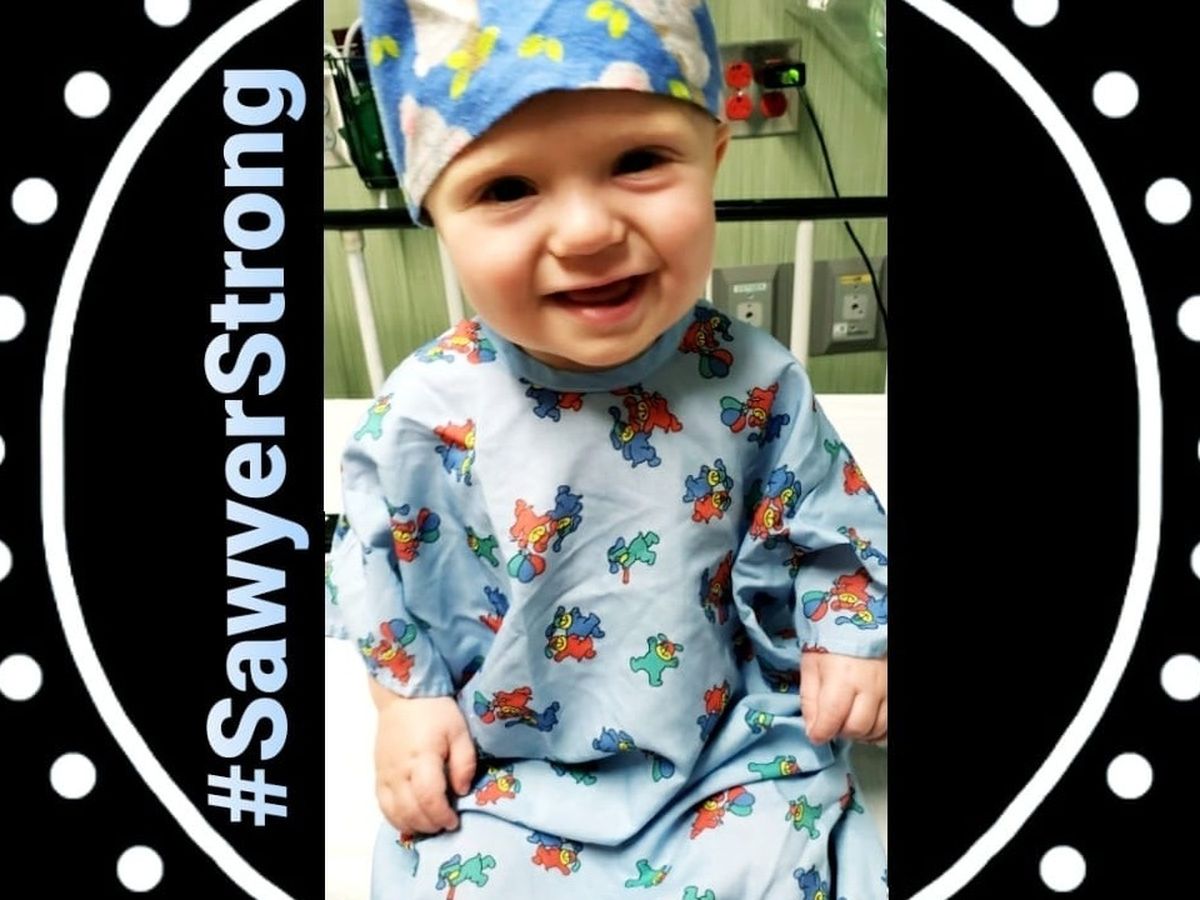
We are setting up a Gofundme for Brian and Wendy with all that is going on medically with Sawyer. The medical bills are adding up, and the traveling back and forth to the Mayo, and the work Wendy is missing is starting to take a toll on them financially. They are doing everything possible to get to the bottom of Sawyer's medical issues, and unfortunately, we are finding their journey is only beginning. The funds raised will help with the financial burden, which in turn will help alleviate the stress on Brian and Wendy. This will allow them to focus totally on Sawyer and his healing. Brian and Wendy are getting and feeling all your prayers and want everyone to know how much they appreciate the love.
A little medical background on Sawyer...
Sawyer was born with a congenital airway anomaly called laryngomalacia (aka "floppy airway"). This birth defect can range from mild to severe, and unfortunately, Sawyer has a more severe form of it. For perspective, only about 5% of cases land in the severe category. Laryngomalacia often comes with comorbidities and can lead to GERD, feeding difficulties, sleep difficulties, and of course breathing difficulties. In Sawyer's first several months of life he had worsening stridor and retractions with difficulties feeding. He also was found blue and not breathing at one point, which gave us the final push to seek an ENT evaluation. This lead up to his first surgery (supraglottoplasty #1) at 4 months old. Sawyer didn't handle coming out of anesthesia very well and needed to be emergently intubated and landed in the PICU. He ended up being in the hospital for almost a month, and eventually needed a revision supraglottoplasty (surgery #2) during that hospitalization. Sawyer came home with an oximeter after discharge, but still continued to have stridor, desats (dips in his oxygen) and retractions. After pushing the ENT, we were able to finally get an official sleep study done when he was 6 months old. This sleep study revealed severe obstructive sleep apnea and central apnea (he would stop breathing on average 45 times an hour). At 6 months old Sawyer started CPAP. It was recommended by his sleep doctor (pulmonologist) to be reevaluated by ENT at 1 year old for possible surgical intervention of his severe apnea. After completing an in office scope (a flexible scope that goes in Sawyers nose and down into his airway when he's awake and screaming ☹) the ENT said he saw nothing wrong and thought maybe acid reflux was the cause of his apnea). In my momma heart I knew that it didn't add up, and so we decided to get a second opinion at the Mayo Clinic (they have an Aerodigestive Clinic for kids just like Sawyer). At 14 months old Sawyer spent a week at the Mayo Clinic for a full evaluation and testing. They did a sleep state endoscopy which revealed a cyst in his airway (likely caused by the emergency intubation after surgery #1) and severe laryngomalacia. It was decided to operate at that time and remove one side of arytenoid tissue (not to be confused with adenoid). This was surgery #3. The hope was that it would improve Sawyers breathing enough at night that he would no longer need the CPAP. This was important because we also learned that Sawyer started to develop midface hypoplasia from his CPAP. This can happen when CPAP is started so young because the face is still growing. The unfortunate part is that if it becomes severe enough, it can lead to obstructive sleep apnea (real catch 22 right?!?! ). At 16 months old Sawyer had another sleep endoscopy due to his continued sleep apnea, it revealed that the other arytenoid tissue was now collapsing and needed to be reduced. So surgery #4 took place at that time, and they also removed his tonsils and adenoids. Healing from this surgery was a lot more difficult for Sawyer, as he was in so much more pain. At about 10 days after surgery Sawyer became ill and we had him tested for COVID. It was positive, and he was pretty sick for a couple days with an awful cough needing nebs. He eventually healed and life went on. His stridor seemed to be less, and his snoring was noticeably more quite. We were hopeful for the first time that our journey with CPAP was over. After about a month though, we noticed the stridor start to come back. We also noticed that Sawyers behavior changed after stopping his CPAP (more labile/moody), seemed to tire easily, and his development also seemed to slow down (especially with language skills). We had an in office scope which showed some scarring, and another sleep study with revealed that he still had severe obstructive sleep apnea, central apnea, and now also PLMD (periodic limb movement disorder). So at 19 months old Sawyer went in for another sleep endoscopy, which showed severe scarring ("mangled mess" is what I think he called it) requiring a revision (surgery #5). The ENT believes that COVID played a part in the crazy scarring. With so many surgeries in his airway, this unfortunately has created some desensitization and difficulties with swallowing for Sawyer. Our 1 night hospital stay turned into almost two weeks, and we are now dealing with dysphagia, aspiration, NG tube (feeding tube), and many more follow ups. We will continue to work with speech therapy, and are starting OT. We are hoping to have the NG in for only a few weeks max. Because of Sawyers history with scarring and such an abnormal airway, the team wants close follow up with him. He also continues to have sleep apnea. We return to the Mayo in mid March for another week of testing (he will have an in office scope, swallow study, MRI, and sleep endoscopy). He will need to have routine sleep studies to check his apnea, and will likely start CPAP again after his NG tube is out.
A little medical background on Sawyer...
Sawyer was born with a congenital airway anomaly called laryngomalacia (aka "floppy airway"). This birth defect can range from mild to severe, and unfortunately, Sawyer has a more severe form of it. For perspective, only about 5% of cases land in the severe category. Laryngomalacia often comes with comorbidities and can lead to GERD, feeding difficulties, sleep difficulties, and of course breathing difficulties. In Sawyer's first several months of life he had worsening stridor and retractions with difficulties feeding. He also was found blue and not breathing at one point, which gave us the final push to seek an ENT evaluation. This lead up to his first surgery (supraglottoplasty #1) at 4 months old. Sawyer didn't handle coming out of anesthesia very well and needed to be emergently intubated and landed in the PICU. He ended up being in the hospital for almost a month, and eventually needed a revision supraglottoplasty (surgery #2) during that hospitalization. Sawyer came home with an oximeter after discharge, but still continued to have stridor, desats (dips in his oxygen) and retractions. After pushing the ENT, we were able to finally get an official sleep study done when he was 6 months old. This sleep study revealed severe obstructive sleep apnea and central apnea (he would stop breathing on average 45 times an hour). At 6 months old Sawyer started CPAP. It was recommended by his sleep doctor (pulmonologist) to be reevaluated by ENT at 1 year old for possible surgical intervention of his severe apnea. After completing an in office scope (a flexible scope that goes in Sawyers nose and down into his airway when he's awake and screaming ☹) the ENT said he saw nothing wrong and thought maybe acid reflux was the cause of his apnea). In my momma heart I knew that it didn't add up, and so we decided to get a second opinion at the Mayo Clinic (they have an Aerodigestive Clinic for kids just like Sawyer). At 14 months old Sawyer spent a week at the Mayo Clinic for a full evaluation and testing. They did a sleep state endoscopy which revealed a cyst in his airway (likely caused by the emergency intubation after surgery #1) and severe laryngomalacia. It was decided to operate at that time and remove one side of arytenoid tissue (not to be confused with adenoid). This was surgery #3. The hope was that it would improve Sawyers breathing enough at night that he would no longer need the CPAP. This was important because we also learned that Sawyer started to develop midface hypoplasia from his CPAP. This can happen when CPAP is started so young because the face is still growing. The unfortunate part is that if it becomes severe enough, it can lead to obstructive sleep apnea (real catch 22 right?!?! ). At 16 months old Sawyer had another sleep endoscopy due to his continued sleep apnea, it revealed that the other arytenoid tissue was now collapsing and needed to be reduced. So surgery #4 took place at that time, and they also removed his tonsils and adenoids. Healing from this surgery was a lot more difficult for Sawyer, as he was in so much more pain. At about 10 days after surgery Sawyer became ill and we had him tested for COVID. It was positive, and he was pretty sick for a couple days with an awful cough needing nebs. He eventually healed and life went on. His stridor seemed to be less, and his snoring was noticeably more quite. We were hopeful for the first time that our journey with CPAP was over. After about a month though, we noticed the stridor start to come back. We also noticed that Sawyers behavior changed after stopping his CPAP (more labile/moody), seemed to tire easily, and his development also seemed to slow down (especially with language skills). We had an in office scope which showed some scarring, and another sleep study with revealed that he still had severe obstructive sleep apnea, central apnea, and now also PLMD (periodic limb movement disorder). So at 19 months old Sawyer went in for another sleep endoscopy, which showed severe scarring ("mangled mess" is what I think he called it) requiring a revision (surgery #5). The ENT believes that COVID played a part in the crazy scarring. With so many surgeries in his airway, this unfortunately has created some desensitization and difficulties with swallowing for Sawyer. Our 1 night hospital stay turned into almost two weeks, and we are now dealing with dysphagia, aspiration, NG tube (feeding tube), and many more follow ups. We will continue to work with speech therapy, and are starting OT. We are hoping to have the NG in for only a few weeks max. Because of Sawyers history with scarring and such an abnormal airway, the team wants close follow up with him. He also continues to have sleep apnea. We return to the Mayo in mid March for another week of testing (he will have an in office scope, swallow study, MRI, and sleep endoscopy). He will need to have routine sleep studies to check his apnea, and will likely start CPAP again after his NG tube is out.
Organizer and beneficiary
Wendy Anderson
Beneficiary