- M
- J
- S
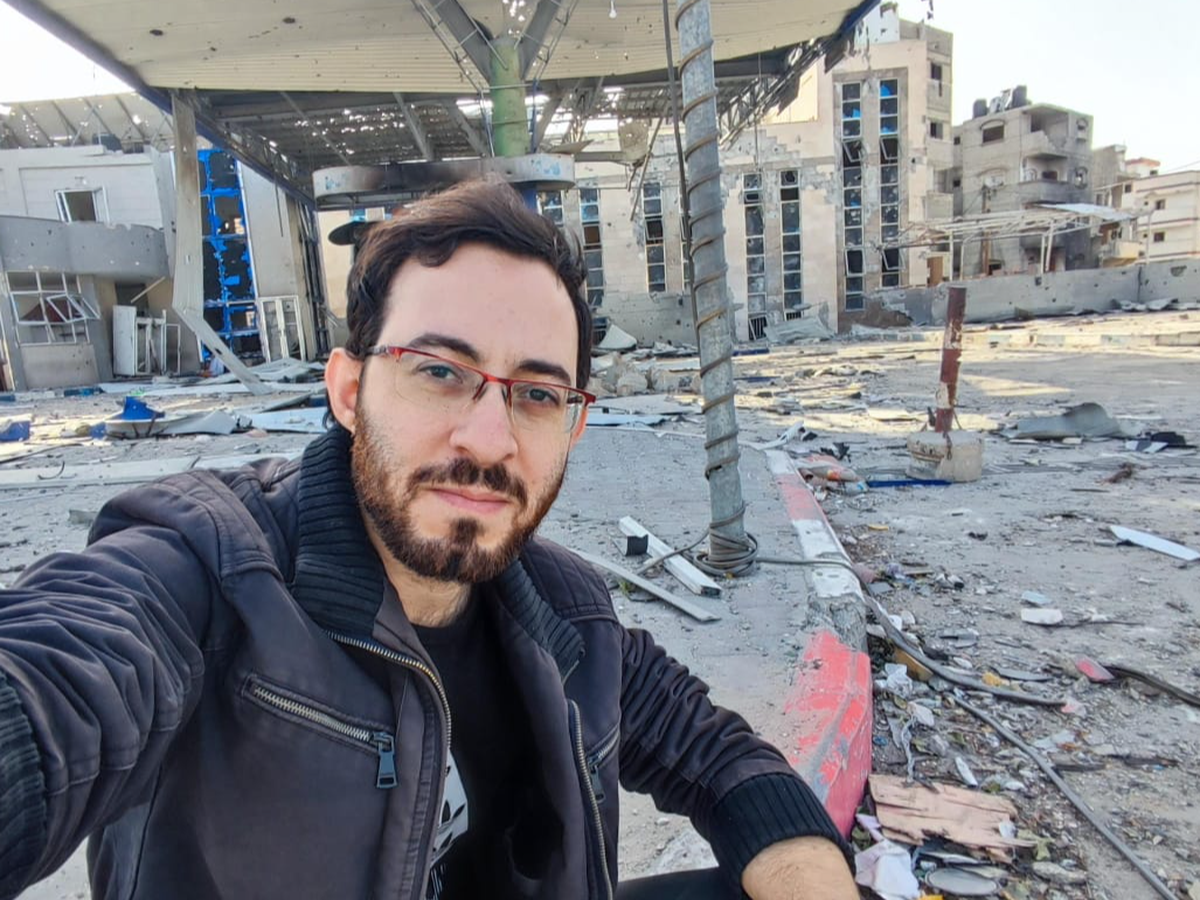
Help Ahmed and his family in Gaza
0% complete
£1,499 raised of £1K
39 donations
Hello, my name is Joseph Terry. I'm a sports reporter and language professional from the UK.
Over the past three years I've developed a working relationship with Ahmed Al-Ghazali, an Arabic translator from Gaza City. In that time, I've known him to be kind-hearted, hard-working and a talented linguist.
Unfortunately, at this moment in time, being a translator couldn't be further from his thoughts. His focus now is ensuring he and his family survive on a daily basis in the most harrowing conditions imaginable.
His mother, three brothers and he are currently in a refugee camp in the north of Gaza, in the Zeitoun district of the city. They had to move there because their house was destroyed. Their business is gone, they've lost family members and they are desperate.
More pressingly, they need to move south as soon as possible to get out of harm's way given the ongoing military actions in that region.
This is urgent, it's happening right now, and with your donation, we can help this good, decent man to move and keep himself and his family safe. The money will be sent directly to Ahmad's bank account and will be used for travel, food and initial accommodation costs.
Thank you.
**********************************************************************
If you want to understand more about what Ahmed's life is like right now, he shared this hour-by-hour account of a typical day with me.
06:00 – The day begins with the ceaseless buzzing of drones overhead. I wake on a thin mattress on the floor of a crowded tent, where I live with my mother and my three brothers. One of them is just sixteen. He used to laugh a lot before the war. Now he barely speaks. My mother is the strongest person I know, but I see her break a little more each day. She has lost her husband, her home, her life as she knew it. My older brother tries to protect us, but how do you protect someone from hunger, cold and grief?
The tent is small. We don’t have a private area. We sleep shoulder to shoulder. The camp is a maze of cloth and desperation. There’s no real division, just scattered families trying to survive.
07:00 – I join the line at a nearby water station with my empty jugs. Families can stand there under the sun for hours, waiting for their turn. Inside the tent, water runs out quickly, and we live in constant fear that today there will not be enough for everyone. The jugs are heavy, and my arms ache, but it’s not just the weight – it’s the fear. Every step could be my last. I carry the water back for my family, but I also carry the weight of everything we’ve lost. Sometimes I wonder how much longer I can keep doing this.
08:00 – Breakfast is plain and repetitive: dry bread with a little canned food left over from yesterday. In the camp, no one knows if tomorrow will bring anything different. What we find one day often disappears the next.
09:00 – I walk past other tents to the small shop nearby. I see people I used to know – neighbours, classmates, even relatives. But they’re not the same anymore. Their eyes are hollow. Their faces are drawn with fear and exhaustion. We don’t greet each other like we used to. We just nod, sometimes not even that. The buzzing of drones follows me everywhere, louder than the sound of footsteps on the gravel.
The store shelves hold only a few cans of processed meat and powdered milk. Vegetables, fresh meat and fruit exist only in our memories. The mood is tense. People are tired, hungry and grieving. Sometimes there are arguments over bread or water. Sometimes silence is louder than any fight.
10:00 – Back in the tent, we divide the little food we have. The canvas walls give no privacy, and the smell of cooking or smoke from other tents seeps inside. Every bite is measured, every portion shared carefully, because there is never enough.
The buzzing overhead grows sharper, piercing through the fabric of the tent. The children cover their ears, crying, anxious. Sometimes we see tanks. Sometimes soldiers. But mostly, we hear them. The sounds of war never stop. The drones are always above us, watching. We live under their shadow. There is no escape, not even in sleep.
12:00 – The midday sun fills the tent like an oven, the canvas walls radiating the heat back down on us. Without electricity, there is no fan, no way of escaping the suffocating air. We sip tiny amounts of fresh water sparingly, using sea water for washing and cleaning.
Lunch is another small can of tuna with bread. The children ask for chicken, fruit or milk, but there is none. Fresh meat has vanished. Even canned goods are scarce and opening one feels like opening something priceless.
14:00 – I go to check if any vendors have arrived at the camp. They bring almost nothing. What was available yesterday cannot be found today. Each day is an uncertain battle for food.
Everything around me is broken. Buildings that once held laughter and life are now skeletons of concrete and ash. The streets are filled with rubble, twisted metal and shattered glass. It’s not safe, but we go anyway. We have no choice. Even the air feels heavy with sorrow. Every corner reminds me of someone we lost.
15:00 – Neighbours in nearby tents gather to discuss how to stretch the little food and water we have left. Some boil sea water to try to quench their thirst. The camp is filled with low murmurs of worry.
16:00 – I try to charge my phone using a small generator, its rumble blending with the buzzing outside. Fuel is scarce, and using it for a phone feels almost wasteful, but it is the only way to stay connected.
My work feels like a ghost from another life. We’ve lost our business. We’ve lost everything. Sometimes I think about how to earn money, how to rebuild. But then I remember: we don’t even have a home. We don’t have safety. How can you build a future when the present is crumbling around you?
17:00 – Evening approaches. Exhaustion sets in from hours of waiting, searching and struggling. Life in the tent drains the body and the spirit. Every sound outside feels closer, every shadow heavier.
18:00 – Dinner is canned beans again, shared between all of us in the tent. The children complain of hunger and thirst. Their small voices echo painfully in the cramped space, but there is nothing more to give.
19:00 – Darkness envelops the camp. No lights, no electricity. The tent is lit only by a single candle; its flickering reflected on the canvas walls. The buzzing drones continue, filling the night with their metallic hum.
We tell stories to the children, huddled together on the floor. The tent flaps with the evening breeze, offering little comfort. Words are the only warmth we can provide.
21:00 – The air grows cooler now, but the buzzing continues. The tent feels fragile, too thin to shield us from anything outside. Sleep feels impossible when the noise above us never leaves.
22:00 – I lie down on the mattress, body aching from the hard ground beneath. Stomach empty, lips dry, I whisper a prayer for strength. Sleep, if it comes, will be restless and broken. I am always afraid. For my mother. For my brothers. For myself. I fear the next bomb, the next loss, the next goodbye. I fear that my little brother will forget what peace feels like. I fear that we will never be whole again. Fear is constant. It lives with us in the tent. It sleeps beside us.
Organizer