- l
- J
- R
Thank you in advance for stopping to read this!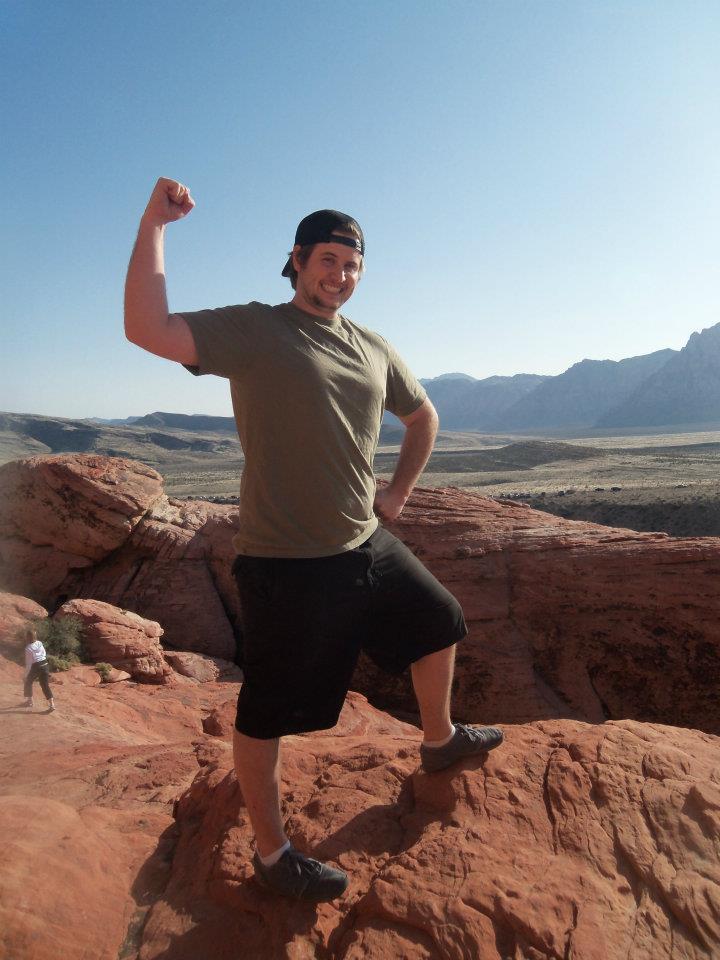
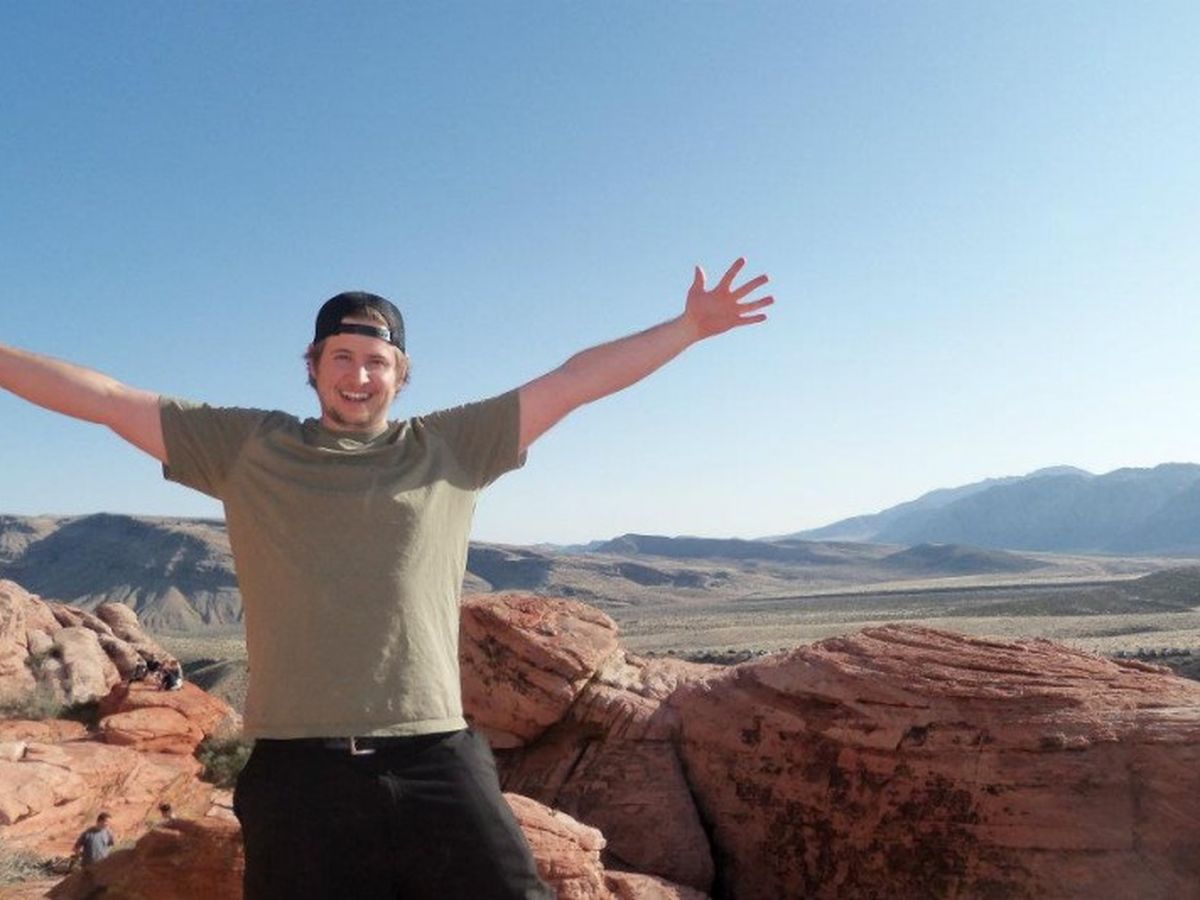
(photos taken at Red Rock Canyon in April 2012)
Some of you may know my brother, Steve Atherton. At 27, he is still Stevie to me, my little brudder. Well, my big little brother (3 years younger and a foot taller than me). He is brilliant, very intelligent and one of the funniest, goofiest people I know. Always a ham, Stevie loved making others laugh! Stevie spent his childhood in sports, excelling in every physical activity. He made it to All Stars in Little League; he spent a couple of seasons playing soccer for the Slithering Snakes and The Lethal Leopards; he snowboarded, surfed and bodyboarded; he was a skateboarder, sponsored by ET Surf; he rode BMX bikes and rollerbladed with me when we were young. We camped and fished, hiked and climbed. He started going to the gym and lifting weights. Stevie's crown and glory was his ability to golf. He made Varsity golf in high school and played with the local Community College team.
My brother doesn't do any of these things anymore. His snowboard is collecting dust on a shelf in the garage; his wetsuits are crispy and deteriorating; his golf clubs are a decorative feature; skateboards and bodyboards are retired. He is left with just the memories of how he used to spend his earlier years. His days are consumed with sleeping and being in pain. He frequents doctor's offices and hospitals. He is poked, prodded and scanned. At 25 years old, he was granted permanent disability. I had seen him in and out of hospitals for the couple of years prior, but to have the title of being labeled as “permanently disabled” was a real eye opener – and truly heart breaking. As some of you may know, disability is a far cry from a livable income.
Steven is a prisoner in his own body, consumed by a rare, 1-in-a-million autoimmune disease called Stiff Person Syndrome.
What you are about to read is most likely nothing you have heard of. The following is the chain of events that Steven has fallen victim to over the last since 2012. Not all of these statements have a specific correlation to SPS, but it is a means of information regarding what he has been through. This last 4+ years in a nutshell…
In 2012, Steve had visited Lake Mead and came home with what he assumed to be heat exhaustion. He was sick and vomiting, with an overall unwell feeling. As I am sure many of you very well know, it’s always hard when a loved one is sick and all there is to do is feel helpless. His unwell feeling progressed to feeling flu-ish off and on for quite a while. Little did we know he would never get better…
Over the following months, his illness progressed and we learned that Steve had extremely resistant stomach bacteria; a very strong antibiotic was hard pressed to stop the intruder. Along with the bacteria came gastroparesis, a disorder that slows or stops the movement of food from the stomach to the small intestine. Weight loss and increased vomiting ensued. He ended up losing over 120 pounds in a mere 10 months.
One night while I was at work, I got a call that my brother was in the hospital. He ended up being admitted and stayed for 11 days. We learned that he had an incredibly irregular and inconsistent heartbeat. With a heart rate of 170 while alert and awake, and the low 30s while asleep, he was considered for a pacemaker. There was an alarm that would sound when it dropped too low and it chimed all night. The doctor made us aware that he would have been the youngest patient that he had operated on for this procedure. Hesitant about having a pacemaker for the rest of his life, he decided to hold off on the operation.
Throughout his illness, there were many misdiagnoses, such as Cushing’s and West Nile Virus. Doctors and specialists were stumped. He was tested for cancer, Multiple Sclerosis, HIV, hepatitis – they wanted to rule out all that they could. He has had blood tests, spinal taps, liver and muscle biopsies, PET scan, hospital stays and check-ups.
Doctors have recorded him walking, as well as muscle studies. He had a positive muscle study wherein the needle which was used to check muscle reaction was completely bent during the study, due to aggressive involuntary muscle flexion. There was a positive nerve conduction study, too. Steve also has what is called a NASH liver. Non-alcoholic steatohepatitis (NASH) causes the liver to swell and become damaged.
The past half-decade has been riddled with vomiting, weight gain, weight loss, a myriad of meds. On the kitchen counter and nightstand there was Valium, muscle relaxants, antibiotics, Parkinson’s meds for tremors, meds to keep him awake, and meds that helped him sleep.
In a desperate attempt to find an answer, Steven has visited Mayo Clinic in Arizona, USC, UCLA. Doctors and specialists had been baffled for a long time, leaving us all in a frustrated anger. It is the most helpless feeling to see someone you love laying in a hospital bed, unsure if he will soon be better. There have been sleepless nights, tears, anger and frustration.
After years of getting the run around and hitting dead ends, Steve saw a neurologist at USC in 2014. The doctor, being familiar with SPS, ran a test that would potentially give some answers to the years of unanswered questions. My brother tested positive for the all-telling GAD65 antibody, and it was way off the scales.
Steven was finally diagnosed with Stiff Person Syndrome. It took 2 1/2 long years to finally get this answer. Albeit a diagnosis, it wasn’t the news we wanted to hear. None of us knew what this disease was. After reading about it and better understanding this rare thief, we were just a bit clearer. There is no cure for this secretive disease. Only a slowed progression can be offered. Some days he is more comfortable than others. Most days he is in bed, in pain, unable to do much at all. Seeing his ankles, feet and toes contorted is saddening. Just for a moment, flex your bicep – really, do it – now hold that flex as long as you can. Tiring, right? That’s what his body is doing all day long, every day, for the last 4 years. He is tired, sore, exhausted.
Steven has trouble walking, difficulty standing from sitting, and struggles to walk up/down stairs. His toes are contorted in a flexed, upward position. Muscle pain, neuropathy pain, stiffness and tremors are part of the daily norm.
What in the World is Stiff Person Syndrome?
In the United States, a rare (or orphan) disease is defined by the National Organization of Rare Diseases (NORD) as a disorder affecting less than 200,000 Americans (approximately 1 in 1,500 individuals). One such rare disease is believed to affect only 1 in 1,000,000 individuals, worldwide.
This orphan is known as Stiff Person Syndrome (SPS) Although actually an Autoimmune Disease, it is most often treated by a Neurologist. It is characterized by rigidity and / or spasticity of the skeletal muscles, tremors, and anxiety. The result of constant spasms is unrelenting pain and commonly, eventual disability.
As SPS progresses, virtually no muscle is spared from spasms, and these may be violent enough to result in torn muscle tissue or broken bones. Frequent falls are common among those with SPS, as they lack normal balance. These falls can be serious due to an inability to react, and muscles may become rigid during the crisis. Unique to SPS is a hyper-excitability of the muscles, known as the startle response. Emotional stress, a sudden, unexpected noise, or even a gentle touch, are known to trigger a Myoclonic Seizure of prolonged, severe spasms, and extreme rigidity.
Average time to diagnose the disease is 7 years, and misdiagnoses during this period include: Anxiety (Conversion) Disorder, Phobia, Multiple Sclerosis, Dystonia, PTSD, Fybromialgia, Parkinson's Disease, and Psychosomatic Illness It is discouraging that a lack of awareness of Stiff Person Syndrome is responsible for this prolonged delay in diagnosis.
The cause of SPS is unknown, and there is no cure. It has been theorized that SPS may be caused by a virus which enters the brain and CSF, introducing elevated levels of the auto-antibody, glutamic acid decarboxylase (GAD65), preventing adequate production of gamma-Aminobutyric acid (GABA) in the brain. This is a crucial neurotransmitter, and one of the body's natural anti-anxiety chemicals. Diagnosis is most often made from a blood test which reveals even the slightest elevated level of GAD65, although a percentage will eventually be diagnosed without any elevation of GAD65.
There are treatments which can relieve the patient of some pain, spasticity, and anxiety. These treatments may slow the progression of the disease but it is rarely halted, and disability can be delayed, although once a patient has become wheelchair-bound it is doubtful the disability will be reversed.
Common treatments for Stiff Person Syndrome symptoms include: • High doses of Valium (Diazepam) and/or Ativan (Lorazepam) for anxiety and muscle spasms • Baclofen, a muscle relaxant (often dispensed from an implanted pump, called Intrathecal Baclofen*) • Neurontin (Gabapentin), a seizure medicine, and • Intravenous Immunoglobulin (IVIg), made from thousands of healthy blood donors for a single dose, to help negate some of the effects of GAD antibodies, and contribute to the production of GABA.
These treatments will be required for the life of the patient, in varying doses and frequency. Other Autoimmune Diseases, including Diabetes Mellitus, Thyroiditis, Lupus, and Pernicious Anemia, are commonly found in those with Stiff Person Syndrome. Depression is common and difficult to treat due to Neurological side effects from most Antidepressants, exacerbating SPS symptoms.
Fast-forward to his current lifestyle: Steve is currently undergoing IVIg treatments; he sits for hours each visit, receiving treatment two times every two weeks. IVIg is a sort of plasma transfusion that helps to stop the GAD65 antibodies from attacking the part of his brain that plays a role in his central nervous system. Each bag of plasma, which he is given via IV, is comprised of the plasma from 1,000 to 15,000 donors. He takes neuropathy medications, and muscle relaxants. He is considered disabled and no longer drives. His appetite is rarely one that supports the necessary nutrition to exist healthfully.
I try my best to connect with Stevie, although he is in CA to be near treatment centers, but I no longer have the relationship I used to have with him. I miss my brother more than I can express. Please don’t take for granted the relationships and closeness that you DO have. You may not have it one day.
I have decided to donate plasma, as it is what is keeping my brother going right now. It is a process that takes about 2-3 hours. Some locations may even pay $20-$40 for your donation. If you cannot afford to donate to this page, a plasma donation would be a neat way to contribute!
Medical bills have skyrocketed and there are many envelopes floating around with my brother’s name on them – and not the fun ones. I ask that you donate any dollar amount that is comfortable for you. If you cannot share monetarily, please share this page – making others aware of SPS is critical. If you don’t want to share this page, please take a moment to pray. If you do not pray, just hug the person nearest you and tell you that you love them, because the person I want to hug the most right now isn’t near me. I love you, brudder.
References
Stiff Person Syndrome, (2016). Retrieved from http://stiffpersonsyndrome.info/
(photos taken at Red Rock Canyon in April 2012)
Some of you may know my brother, Steve Atherton. At 27, he is still Stevie to me, my little brudder. Well, my big little brother (3 years younger and a foot taller than me). He is brilliant, very intelligent and one of the funniest, goofiest people I know. Always a ham, Stevie loved making others laugh! Stevie spent his childhood in sports, excelling in every physical activity. He made it to All Stars in Little League; he spent a couple of seasons playing soccer for the Slithering Snakes and The Lethal Leopards; he snowboarded, surfed and bodyboarded; he was a skateboarder, sponsored by ET Surf; he rode BMX bikes and rollerbladed with me when we were young. We camped and fished, hiked and climbed. He started going to the gym and lifting weights. Stevie's crown and glory was his ability to golf. He made Varsity golf in high school and played with the local Community College team.
My brother doesn't do any of these things anymore. His snowboard is collecting dust on a shelf in the garage; his wetsuits are crispy and deteriorating; his golf clubs are a decorative feature; skateboards and bodyboards are retired. He is left with just the memories of how he used to spend his earlier years. His days are consumed with sleeping and being in pain. He frequents doctor's offices and hospitals. He is poked, prodded and scanned. At 25 years old, he was granted permanent disability. I had seen him in and out of hospitals for the couple of years prior, but to have the title of being labeled as “permanently disabled” was a real eye opener – and truly heart breaking. As some of you may know, disability is a far cry from a livable income.
Steven is a prisoner in his own body, consumed by a rare, 1-in-a-million autoimmune disease called Stiff Person Syndrome.
What you are about to read is most likely nothing you have heard of. The following is the chain of events that Steven has fallen victim to over the last since 2012. Not all of these statements have a specific correlation to SPS, but it is a means of information regarding what he has been through. This last 4+ years in a nutshell…
In 2012, Steve had visited Lake Mead and came home with what he assumed to be heat exhaustion. He was sick and vomiting, with an overall unwell feeling. As I am sure many of you very well know, it’s always hard when a loved one is sick and all there is to do is feel helpless. His unwell feeling progressed to feeling flu-ish off and on for quite a while. Little did we know he would never get better…
Over the following months, his illness progressed and we learned that Steve had extremely resistant stomach bacteria; a very strong antibiotic was hard pressed to stop the intruder. Along with the bacteria came gastroparesis, a disorder that slows or stops the movement of food from the stomach to the small intestine. Weight loss and increased vomiting ensued. He ended up losing over 120 pounds in a mere 10 months.
One night while I was at work, I got a call that my brother was in the hospital. He ended up being admitted and stayed for 11 days. We learned that he had an incredibly irregular and inconsistent heartbeat. With a heart rate of 170 while alert and awake, and the low 30s while asleep, he was considered for a pacemaker. There was an alarm that would sound when it dropped too low and it chimed all night. The doctor made us aware that he would have been the youngest patient that he had operated on for this procedure. Hesitant about having a pacemaker for the rest of his life, he decided to hold off on the operation.
Throughout his illness, there were many misdiagnoses, such as Cushing’s and West Nile Virus. Doctors and specialists were stumped. He was tested for cancer, Multiple Sclerosis, HIV, hepatitis – they wanted to rule out all that they could. He has had blood tests, spinal taps, liver and muscle biopsies, PET scan, hospital stays and check-ups.
Doctors have recorded him walking, as well as muscle studies. He had a positive muscle study wherein the needle which was used to check muscle reaction was completely bent during the study, due to aggressive involuntary muscle flexion. There was a positive nerve conduction study, too. Steve also has what is called a NASH liver. Non-alcoholic steatohepatitis (NASH) causes the liver to swell and become damaged.
The past half-decade has been riddled with vomiting, weight gain, weight loss, a myriad of meds. On the kitchen counter and nightstand there was Valium, muscle relaxants, antibiotics, Parkinson’s meds for tremors, meds to keep him awake, and meds that helped him sleep.
In a desperate attempt to find an answer, Steven has visited Mayo Clinic in Arizona, USC, UCLA. Doctors and specialists had been baffled for a long time, leaving us all in a frustrated anger. It is the most helpless feeling to see someone you love laying in a hospital bed, unsure if he will soon be better. There have been sleepless nights, tears, anger and frustration.
After years of getting the run around and hitting dead ends, Steve saw a neurologist at USC in 2014. The doctor, being familiar with SPS, ran a test that would potentially give some answers to the years of unanswered questions. My brother tested positive for the all-telling GAD65 antibody, and it was way off the scales.
Steven was finally diagnosed with Stiff Person Syndrome. It took 2 1/2 long years to finally get this answer. Albeit a diagnosis, it wasn’t the news we wanted to hear. None of us knew what this disease was. After reading about it and better understanding this rare thief, we were just a bit clearer. There is no cure for this secretive disease. Only a slowed progression can be offered. Some days he is more comfortable than others. Most days he is in bed, in pain, unable to do much at all. Seeing his ankles, feet and toes contorted is saddening. Just for a moment, flex your bicep – really, do it – now hold that flex as long as you can. Tiring, right? That’s what his body is doing all day long, every day, for the last 4 years. He is tired, sore, exhausted.
Steven has trouble walking, difficulty standing from sitting, and struggles to walk up/down stairs. His toes are contorted in a flexed, upward position. Muscle pain, neuropathy pain, stiffness and tremors are part of the daily norm.
What in the World is Stiff Person Syndrome?
In the United States, a rare (or orphan) disease is defined by the National Organization of Rare Diseases (NORD) as a disorder affecting less than 200,000 Americans (approximately 1 in 1,500 individuals). One such rare disease is believed to affect only 1 in 1,000,000 individuals, worldwide.
This orphan is known as Stiff Person Syndrome (SPS) Although actually an Autoimmune Disease, it is most often treated by a Neurologist. It is characterized by rigidity and / or spasticity of the skeletal muscles, tremors, and anxiety. The result of constant spasms is unrelenting pain and commonly, eventual disability.
As SPS progresses, virtually no muscle is spared from spasms, and these may be violent enough to result in torn muscle tissue or broken bones. Frequent falls are common among those with SPS, as they lack normal balance. These falls can be serious due to an inability to react, and muscles may become rigid during the crisis. Unique to SPS is a hyper-excitability of the muscles, known as the startle response. Emotional stress, a sudden, unexpected noise, or even a gentle touch, are known to trigger a Myoclonic Seizure of prolonged, severe spasms, and extreme rigidity.
Average time to diagnose the disease is 7 years, and misdiagnoses during this period include: Anxiety (Conversion) Disorder, Phobia, Multiple Sclerosis, Dystonia, PTSD, Fybromialgia, Parkinson's Disease, and Psychosomatic Illness It is discouraging that a lack of awareness of Stiff Person Syndrome is responsible for this prolonged delay in diagnosis.
The cause of SPS is unknown, and there is no cure. It has been theorized that SPS may be caused by a virus which enters the brain and CSF, introducing elevated levels of the auto-antibody, glutamic acid decarboxylase (GAD65), preventing adequate production of gamma-Aminobutyric acid (GABA) in the brain. This is a crucial neurotransmitter, and one of the body's natural anti-anxiety chemicals. Diagnosis is most often made from a blood test which reveals even the slightest elevated level of GAD65, although a percentage will eventually be diagnosed without any elevation of GAD65.
There are treatments which can relieve the patient of some pain, spasticity, and anxiety. These treatments may slow the progression of the disease but it is rarely halted, and disability can be delayed, although once a patient has become wheelchair-bound it is doubtful the disability will be reversed.
Common treatments for Stiff Person Syndrome symptoms include: • High doses of Valium (Diazepam) and/or Ativan (Lorazepam) for anxiety and muscle spasms • Baclofen, a muscle relaxant (often dispensed from an implanted pump, called Intrathecal Baclofen*) • Neurontin (Gabapentin), a seizure medicine, and • Intravenous Immunoglobulin (IVIg), made from thousands of healthy blood donors for a single dose, to help negate some of the effects of GAD antibodies, and contribute to the production of GABA.
These treatments will be required for the life of the patient, in varying doses and frequency. Other Autoimmune Diseases, including Diabetes Mellitus, Thyroiditis, Lupus, and Pernicious Anemia, are commonly found in those with Stiff Person Syndrome. Depression is common and difficult to treat due to Neurological side effects from most Antidepressants, exacerbating SPS symptoms.
Fast-forward to his current lifestyle: Steve is currently undergoing IVIg treatments; he sits for hours each visit, receiving treatment two times every two weeks. IVIg is a sort of plasma transfusion that helps to stop the GAD65 antibodies from attacking the part of his brain that plays a role in his central nervous system. Each bag of plasma, which he is given via IV, is comprised of the plasma from 1,000 to 15,000 donors. He takes neuropathy medications, and muscle relaxants. He is considered disabled and no longer drives. His appetite is rarely one that supports the necessary nutrition to exist healthfully.
I try my best to connect with Stevie, although he is in CA to be near treatment centers, but I no longer have the relationship I used to have with him. I miss my brother more than I can express. Please don’t take for granted the relationships and closeness that you DO have. You may not have it one day.
I have decided to donate plasma, as it is what is keeping my brother going right now. It is a process that takes about 2-3 hours. Some locations may even pay $20-$40 for your donation. If you cannot afford to donate to this page, a plasma donation would be a neat way to contribute!
Medical bills have skyrocketed and there are many envelopes floating around with my brother’s name on them – and not the fun ones. I ask that you donate any dollar amount that is comfortable for you. If you cannot share monetarily, please share this page – making others aware of SPS is critical. If you don’t want to share this page, please take a moment to pray. If you do not pray, just hug the person nearest you and tell you that you love them, because the person I want to hug the most right now isn’t near me. I love you, brudder.
References
Stiff Person Syndrome, (2016). Retrieved from http://stiffpersonsyndrome.info/