

Organized by Maine Access Points
Help MAP Meet Increasing Xylazine Wound Care Needs!
“Thank you for all your time and energy you put in with helping us stay healthy and up to date on information! I had a friend stop in and her arm looked awful, like really bad and of course she didn't want to go to the hospital. So I hooked her up with the wound care kits and all the stuff she needed to clean it up, keep it clean and heal!! Thank God it started getting better!! Because of everything you all do, she still has her arm. I APPRECIATE YOU ALL!!” - Anonymous MAP participant, Aroostook County
Xylazine (also known as tranq) has been a steadily increasing presence in the illicit drug supply since 2020 and is now present in the majority of samples of heroin and fentanyl that we have tested. The usefulness of this drug is its ability to prolong the effects of fentanyl, which has a very short half-life in the body. There is an unfortunate drawback: because Xylazine is a vasoconstrictor, when it’s used frequently for a long time it causes the veins to shrink and white blood cells are not able to travel to the extremities. White blood cells are responsible for fighting off infection and healing tissue damaged by injury. When these crucial immune system warrior cells are not able to reach areas of the body that have become injured, the results can be devastating. Something as minor as a papercut can rapidly escalate, growing from a cut, to a blister, to a scab before becoming necrotic. When left untreated, these wounds require skin grafts and amputations in order to save the person’s life.
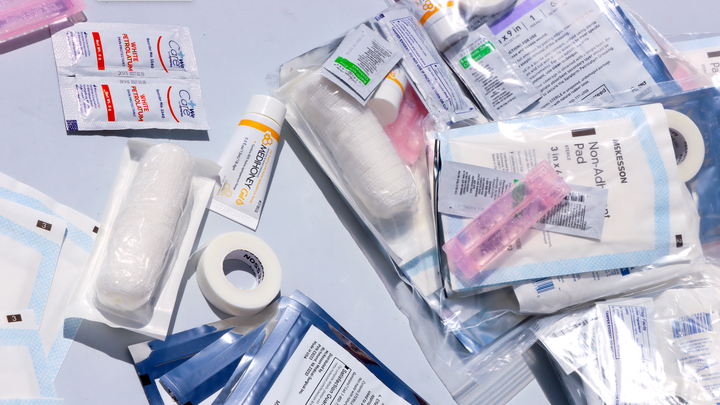
As a state which is over 97% rural, the vast majority of Mainers do not have easy access to a hospital. Among the many and varied Mainers who use drugs, access to reliable transportation in these car-dependent areas can be a major barrier, for folks who are even interested in seeing a doctor in the first place. Too often stigma related to drug use reduces the quality of care that people are able to receive, which is a strong disincentive for people suffering from xylazine wounds to seek medical treatment before it’s too late. A study published in 2024 found that more than 75% of people with xylazine wounds do not seek wound care in a medical setting, instead preferring to treat their own wounds. When people have access to the gold standard of supplies, such as Medihoney ointment, Xeroform dressings, and other items which we include in our xylazine wound care kits, they use them and are able to recover fully from their injuries on their own. When they do not have access, they resort to using things like hand sanitizer to clean their wounds and things like duct tape to cover them, all of which makes the wounds worse.
The same study mentioned above found that Syringe Service Programs (like ours, hello!) distribute almost 80% of the wound care supplies people use to treat xylazine wounds specifically. It’s us, y’all. It’s Maine Access Points and YOU, our generous donors, who prevent the worst outcomes EVERY DAY for people who use drugs in Maine. They say “an ounce of prevention is worth a pound of cure” and this is such a poignant example of that principle in action. A tube of Medihoney costs us $8.83 while on average the estimated lifetime cost of an amputation is over $500,000. It’s clear that not only is this the most effective way to reduce suffering and increase health, it is also the cheapest. Unfortunately, there are few grants that will fund our crucial wound care services despite the need for them. In these uncertain times, we need you, our community, to help us take care of people in the safest, easiest, most effective and inexpensive way available. We save us!
We are also gratefully accepting material donations. If you are a healthcare organization looking to donate wound care supplies to us, please send us an email.
THANK YOU SO MUCH FOR DONATING WHAT YOU CAN TO HELP US TACKLE THIS PUBLIC HEALTH CRISIS! PLEASE SHARE OUR FUNDRAISER WITH FOLKS WHO MAY BE INTERESTED.
REACH OUT TO US BY EMAIL WITH ANY QUESTIONS, AND AS ALWAYS, LOVE PEOPLE WHO USE DRUGS!
Cover photo by Jessica Shaye (@madeupofmemories)
- W
- A

17 supporters
 guidestar.org/profile/82-5123216