- N
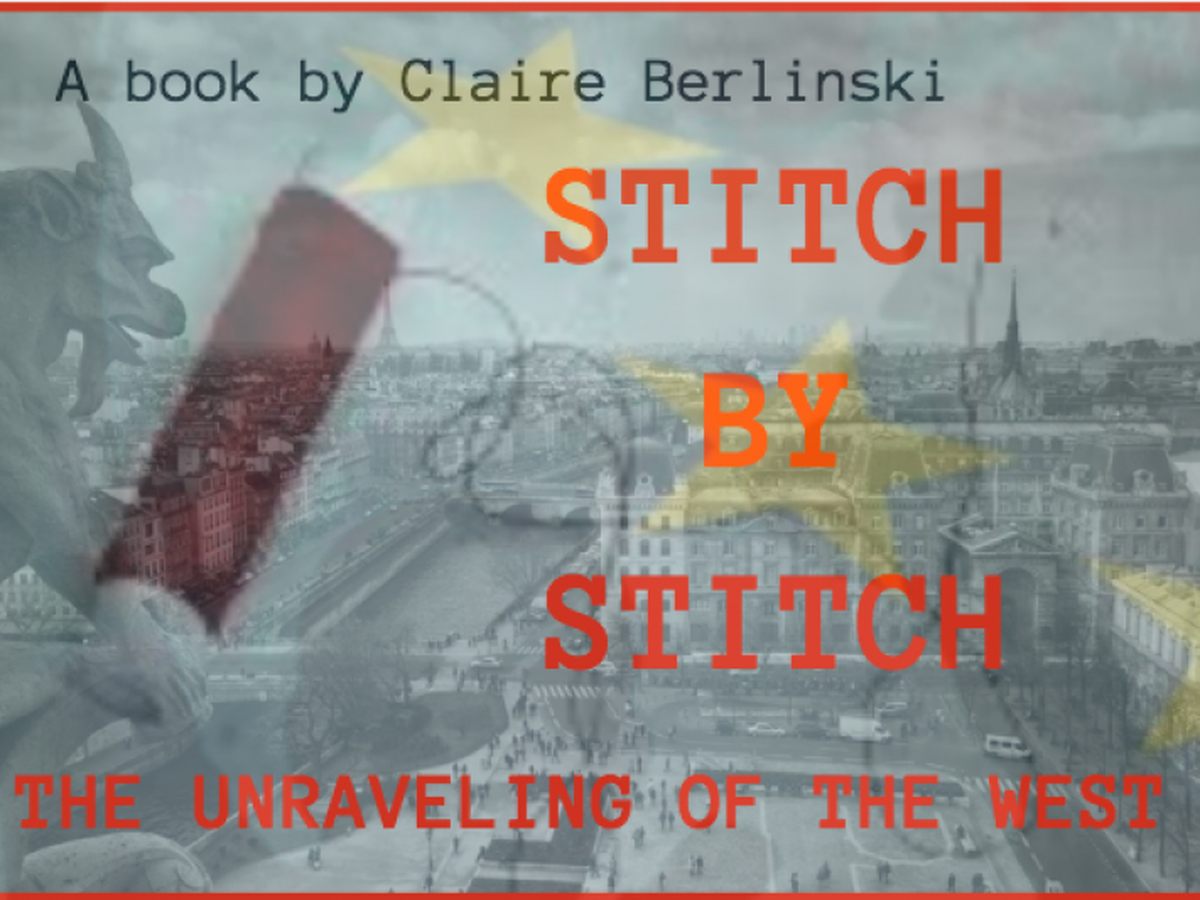
STITCH BY STITCH: A BOOK
0% complete
€52,670 raised of €60K
782 donations
The election of Donald Trump has shaken Americans to their roots. Many are now thinking deeply about politics for the first time in their lives. Others are questioning everything they thought they knew.
Claire Berlinski, a historian by training, has been a foreign correspondent for thirty years. In Stitch by Stitch, she places the breaking news that flashes and flickers incessantly over our cellphone screens in a wider historical and global context. This context is often absent from our discussion of the news, but without it, we cannot make sense of it.
From this context we can see that events that seem to us new are not. They recapitulate distinct, recurrent patterns, and from these patterns we can discern, step by step, what is likely to happen to us next.
What many Americans see as a uniquely American crisis is no such thing. Since the end of the Cold War, liberal democracy has come under threat the world around. It is now in particular danger—and in some places dead—in Europe. The rise of antiliberal political movements and regimes in Europe is a more direct threat to Americans than they realize, and it is closely connected to their own recent political experiences. Europe’s past and its recent history suggest lessons to Americans who are struggling to respond intelligently to Trumpism.
Stich by Stich argues that threat to liberal democracy comes in the form of a distinct, rival ideology that is at once historically familiar and genuinely novel: the New Caesarism, or illiberal democracy—a hollow form of democracy that spreads mimetically and consolidates itself through the new technologies of the 21st century. When American pundits and journalists call the Trump presidency “unprecedented,” they do their audience a disservice. There are countless recent precedents abroad, and they are often eerily similar. The idea that our experience has no precedent and no analogue is bound up in a particular notion of American exceptionalism, one that has persuaded us we exist outside of time, history, and the world—an idea that is not only wrong, but harmful. It deprives us of the ability to learn from the experience of other countries and from historical evidence that is not only abundant, but relevant to us.
The author is intimately familiar with the recent precedents she describes. She has lived through every stage of the new Caesarism: She watched it arrive in Turkey, where she spent a decade reporting on the rise and consolidation of the regime of Recep Tayyip Erdoğan. Millions of others have lived through a similar chain of events in in a long list of countries from Hungary to the Philippines. Most importantly, they have lived through them in Russia. Russia is the pioneer, and the chief global exporter, of this empty form of democracy, as well as the ideology upon which it rests and its techniques of control.
The new Caesars are learning from each other. Above all, they’ve learned the recipe for creating an illiberal democracy from Vladimir Putin, the ur-Caesar. The steps are distinct and predictable. First, rewrite history. Then foster nostalgia for an authoritarian past. Exploit ethnic, racial, religious, and class divisions. Magnify fear of foreigners and outsiders. Enter Caesar—the voice of the “real people” in their struggle against a nebulous class of “elites.” Conflate entertainment and politics. Create chaos, confusion, and a sense of permanent emergency. Destroy confidence in the idea of objective truth. Humiliate or destroy the people who are better fit to be leaders. Gain control of the media to starve adversaries of access to the public. Discredit what media you cannot control. Reward loyalists with government tenders. Punish the disloyal with punitive taxes and lawsuits. Stack the courts. Jigger the constitution so that opponents have no hope of coming to power through democratic means. Erode critical civil rights and freedoms, stitch by stitch—until elections still happen, but denuded of everything that makes elections meaningful.
If we fail to understand how and why liberal democracy around the world is collapsing, we have scant hope of preserving ours. If we fail to understand why the West, in particular, has come under attack, we have no hope of responding intelligently or organizing ourselves to defend it. Stitch by Stitch shows that Europe—the other half of the West, from which we have been deliberately and systematically alienated—is now the central battlefield in the war for liberal democracy. The crisis in Europe has become so acute that its long postwar peace, the basis of the postwar global order, is under threat.
To survive, illiberal democracies—and Putin’s regime in particular—must undermine liberal democracies. Successful liberal democracies are an inherent threat to these regimes. Their existence refutes the story the Caesars tell their citizens about the world. This is why Russia is working assiduously to discredit liberal democracies and replace them with illiberal regimes sympathetic to the Kremlin. To do this, he must alienate the United States from Europe, and alienate European nations from each other. This is precisely what is happening, putting our security and the world’s at risk.
Claire Berlinski is an essayist, literary critic, novelist, travel writer, and biographer. She brings thirty years of personal experience with the new Caesarism to vivid life, showing readers exactly what it is like to live in the kind of society we are now on the path to becoming. The result is a book that falls under no conventional category: It is a work of scholarship that is informed by her background as a historian and the academic literature about this regime type. But it is also riveting journalism, a memoir, a warning, and a step-by-step guide to escaping the trap.
If you would like to read this book, please contribute: It is, so far, wholely crowdfunded.
Claire Berlinski, a historian by training, has been a foreign correspondent for thirty years. In Stitch by Stitch, she places the breaking news that flashes and flickers incessantly over our cellphone screens in a wider historical and global context. This context is often absent from our discussion of the news, but without it, we cannot make sense of it.
From this context we can see that events that seem to us new are not. They recapitulate distinct, recurrent patterns, and from these patterns we can discern, step by step, what is likely to happen to us next.
What many Americans see as a uniquely American crisis is no such thing. Since the end of the Cold War, liberal democracy has come under threat the world around. It is now in particular danger—and in some places dead—in Europe. The rise of antiliberal political movements and regimes in Europe is a more direct threat to Americans than they realize, and it is closely connected to their own recent political experiences. Europe’s past and its recent history suggest lessons to Americans who are struggling to respond intelligently to Trumpism.
Stich by Stich argues that threat to liberal democracy comes in the form of a distinct, rival ideology that is at once historically familiar and genuinely novel: the New Caesarism, or illiberal democracy—a hollow form of democracy that spreads mimetically and consolidates itself through the new technologies of the 21st century. When American pundits and journalists call the Trump presidency “unprecedented,” they do their audience a disservice. There are countless recent precedents abroad, and they are often eerily similar. The idea that our experience has no precedent and no analogue is bound up in a particular notion of American exceptionalism, one that has persuaded us we exist outside of time, history, and the world—an idea that is not only wrong, but harmful. It deprives us of the ability to learn from the experience of other countries and from historical evidence that is not only abundant, but relevant to us.
The author is intimately familiar with the recent precedents she describes. She has lived through every stage of the new Caesarism: She watched it arrive in Turkey, where she spent a decade reporting on the rise and consolidation of the regime of Recep Tayyip Erdoğan. Millions of others have lived through a similar chain of events in in a long list of countries from Hungary to the Philippines. Most importantly, they have lived through them in Russia. Russia is the pioneer, and the chief global exporter, of this empty form of democracy, as well as the ideology upon which it rests and its techniques of control.
The new Caesars are learning from each other. Above all, they’ve learned the recipe for creating an illiberal democracy from Vladimir Putin, the ur-Caesar. The steps are distinct and predictable. First, rewrite history. Then foster nostalgia for an authoritarian past. Exploit ethnic, racial, religious, and class divisions. Magnify fear of foreigners and outsiders. Enter Caesar—the voice of the “real people” in their struggle against a nebulous class of “elites.” Conflate entertainment and politics. Create chaos, confusion, and a sense of permanent emergency. Destroy confidence in the idea of objective truth. Humiliate or destroy the people who are better fit to be leaders. Gain control of the media to starve adversaries of access to the public. Discredit what media you cannot control. Reward loyalists with government tenders. Punish the disloyal with punitive taxes and lawsuits. Stack the courts. Jigger the constitution so that opponents have no hope of coming to power through democratic means. Erode critical civil rights and freedoms, stitch by stitch—until elections still happen, but denuded of everything that makes elections meaningful.
If we fail to understand how and why liberal democracy around the world is collapsing, we have scant hope of preserving ours. If we fail to understand why the West, in particular, has come under attack, we have no hope of responding intelligently or organizing ourselves to defend it. Stitch by Stitch shows that Europe—the other half of the West, from which we have been deliberately and systematically alienated—is now the central battlefield in the war for liberal democracy. The crisis in Europe has become so acute that its long postwar peace, the basis of the postwar global order, is under threat.
To survive, illiberal democracies—and Putin’s regime in particular—must undermine liberal democracies. Successful liberal democracies are an inherent threat to these regimes. Their existence refutes the story the Caesars tell their citizens about the world. This is why Russia is working assiduously to discredit liberal democracies and replace them with illiberal regimes sympathetic to the Kremlin. To do this, he must alienate the United States from Europe, and alienate European nations from each other. This is precisely what is happening, putting our security and the world’s at risk.
Claire Berlinski is an essayist, literary critic, novelist, travel writer, and biographer. She brings thirty years of personal experience with the new Caesarism to vivid life, showing readers exactly what it is like to live in the kind of society we are now on the path to becoming. The result is a book that falls under no conventional category: It is a work of scholarship that is informed by her background as a historian and the academic literature about this regime type. But it is also riveting journalism, a memoir, a warning, and a step-by-step guide to escaping the trap.
If you would like to read this book, please contribute: It is, so far, wholely crowdfunded.
Organizer
Claire Berlinski
Organizer