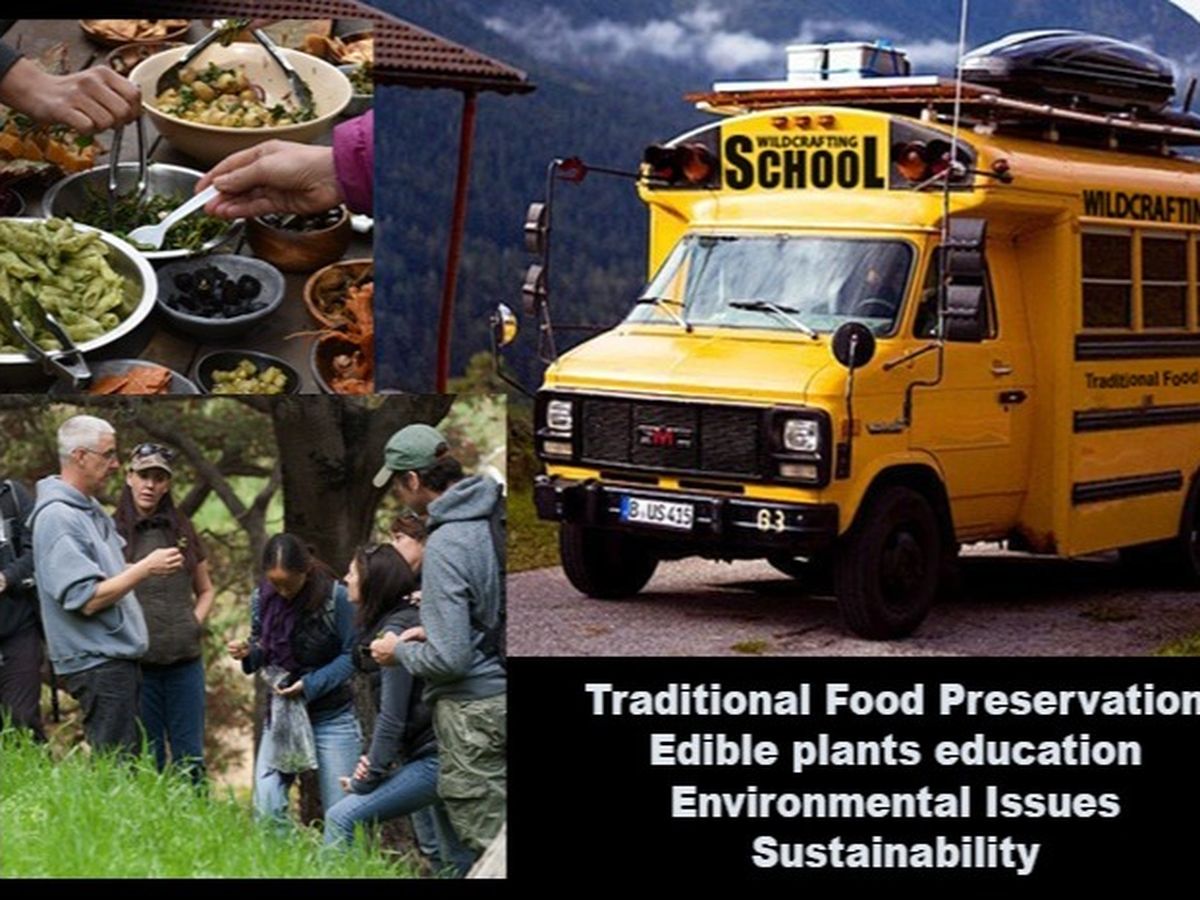
Help me put together a mobile school and research workshop
This is a project I am very excited about, but I need your help.
I know a lot of the pictures I share on social media are beautiful and could make someone think that a wildcrafter like myself lives in paradise but… to put it bluntly, over the last few years, I’ve witnessed and experienced the effects of pollution, fires, climate change, urban expansion, habitat destruction and chemical assault (herbicides) on the environment. The latest used as a “remedy” for non-native plants which often were or still are crops in different countries and packed with nutrition. Where I live, a perfect example is black mustard which has taken over the local hills.
Our relationship to the environment is out of whack, our “processed” food system is unhealthy, a lot of knowledge our elders had on food preservation and how to interact properly with nature is getting lost. Many people are looking into solutions, I want to do my part.
My plan is to purchase a bus or used RV and convert it into a sort of mobile school as well as a research center. It would allow me to travel for somewhat long period in different states and countries, do research, connect with like-minded people and teach in other locations than the Los Angeles area. Part of this fundraising would also be used to buy very basic video equipment (GoPro and editing software) so I can share information online.
I’ve managed to save some money for this project but honestly, I can’t pull it off by myself and without your support. Anything you can do to help is appreciated, donating 5 dollars, 20, 100 or more.
Some of my goals with this “mobile” school/workshop would be to:
· Examine possible positive solutions to environmental issues such as non-native plants, food can be part of those solutions instead of herbicides such as Round-up. How can we turn those “invasive” into gourmet food and other creative uses?
· Teach traditional food preservation techniques and the culinary/medicinal uses of plants in various locations as I move around. (I’ll make an online calendar).
· Continue doing zoom classes but this time I’ll be able to talk about plants, recipes and preservation techniques using plants that may be more local to YOUR location.
· Explore our relationship to nature, how to interact with it in a beneficial and creative ways.
· Instead of our big and often unhealthy international food system, is it possible to create a true regional cuisine that is beneficial to the ecosystem by incorporating those unwanted plants and growing native plants?
· Connect with other professionals (naturalists, environmentalist, wildcrafters, botanists, regenerative farmers, chefs and others), get their perspective on those issues, what are potential solutions to our environmental downward spiral? How to they approach those issues?
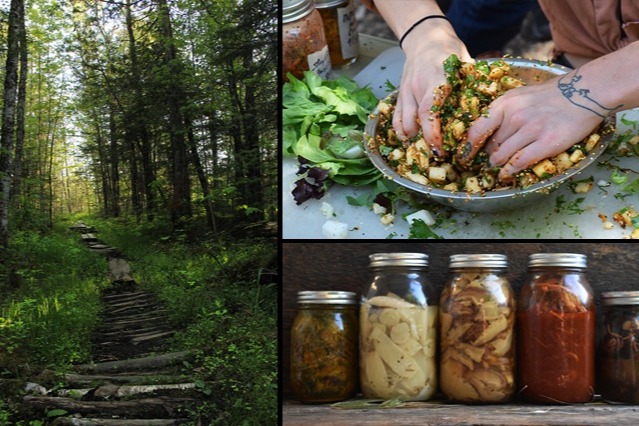
As usual I would share freely all the information about this journey, research and findings on a personal blog and social media but I am also looking at the possibilities of a documentary, online videos and use what I learn in this journey for a future book.
The money would be used for the following:
Purchase a used bus or RV – I’m looking at a used vehicle in somewhat decent shape, but the choice will be determined by what I can raise and afford.
I’ll be happy if I have enough to purchase the vehicle but depending on how much money I can raise but I’m also looking at the following:
- Make the vehicle as eco-friendly as possible – use of solar power and alternative energies for example
- Customize the interior to include shelves and storage for research projects (fermentation, etc.)
- Equipment to be completely off grid if necessary (solar fridge, GPS, heater…)
- Basic video equipment (GoPro) and editing software so I can share information online
- Equipment for classes and workshop as necessary
If possible, funds available for lab work and analysis of plants in coordination with schools and universities. This could determine nutritional value, methods of preparation and uses.
I deeply appreciate your support in this journey. I always say that my main work is to plant seeds in people’s head, make them think and look at possibilities. In those trying times we need to research and look at positive solutions in our relationship with nature, share them and do our part to create a better world.
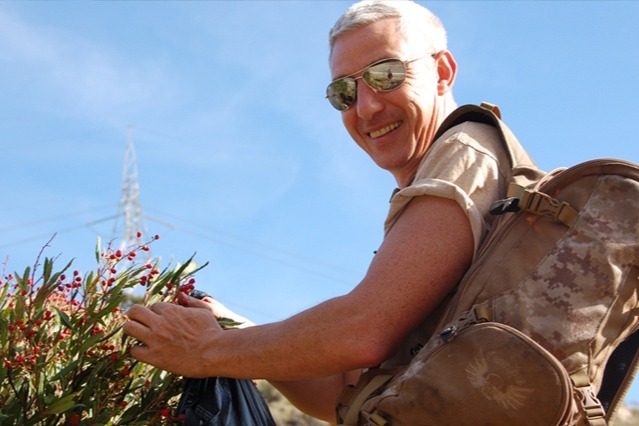
My story in a few words:
I was born in Belgium in a small farming town. Nothing much to do there so, as a child, I spent most of my time in local fields and forest. This is where I gained my connection and love for nature. I grew up in an old 17th century farm, we had a huge garden and raising our own chicken and rabbits. To a large degree we were pretty much self-sufficient. Gathering wild food to extend our diet wasn’t something weird or special, a lot of the elders still had the knowledge of basic edible plants and it wasn’t uncommon for my grandma to send me in nature to get dandelion, hazelnuts, chickweed, walnuts and so on.
As a kid, I really wanted to do what I’m presently doing; researching plants and their uses but at the time we didn’t have the internet, very few books existed on the subject and there wasn’t anyone local who could teach me more about wild food and traditional method of food preservation.
So I ended up doing my next love which was art. I enrolled at the Academy of Fine Art and studied photography, painting, and sculpting. I avoided the “starving artist” phase by becoming a graphic artist and commercial illustrator. To make a very long story short, in the early 90s I ended up in Los Angeles which was perfect for my craft and made most of my living doing illustrations and designing corporate brochures, magazines, logos and later on web sites.
My reconnection to nature was serendipitous, in 1999 I decided to do learn a bit more about survival skills and connected with a local survival instructor and wild food expert (Christopher Nyerges). That first class was a true epiphany and I remember deciding right then and there that this is what I wanted to do with my life – I had reconnected with my lost “life goal”. What really prompted me in that direction was the realization that we were literally surrounded by tremendous amount of delicious organic wild food and incredible flavors, but nobody was really investigating the subject.
And so my epiphany became my obsession and for the next 15 years I ended up attending probably 400 classes and workshops with anyone who could teach me about the subject but in the same time I was truly living it, finding recipes and learning all about food preservation. In 2007 I started teaching and in 2015, I decided to quit my job and devote myself to the study of wild food and traditional food preservation techniques.
Since then I have written three books related to wild edibles and their uses in traditional food preservation such as fermentation, pickling, canning and so on. The books have been well received but, as an author, you do not really make money writing. It is really about sharing knowledge.
It’s been a long exciting journey but in the last 5 years the impact of severe and quite sudden environmental changes prompted me to really take a hard look at our connection to the natural world. We are definitely not going toward the right direction and I can bluntly say that in these last 3 years, I’ve probably lost more than 10 miles of immaculate land due to the impact of pollution, pesticides, herbicides, habitat destruction and urban expansion. Forests that were pristine a few years ago are now becoming toxic dumps due to the large number of herbicides sprayed in the battle against “invasive” plants and trash/pollution from urban expansion.
Looking at those issues made me realize how we need to rethink the whole system and our own interaction with nature.
Factually in Southern California and many other states, the vast majority of what people will find as wild edibles are non-native and invasive plants such as European stinging nettles, chickweed, curly dock, many types of mustard, chervil, fennel and countless others. In fact, many of these plants have effectively taken over some parts of our environment. Where I live, wild mustard is covering our local hills. Most of those unwanted plants are crops in different countries but yet, locally, there are viewed as noxious “weeds” and the two solutions applied are either herbicides or habitat restoration, which means removing the plants and getting rid of the resource.
There are no positive solutions. The biggest food waste locally is probably unused non-native wild edible. We are talking tens of thousands of acres.
Why are we destroying and polluting the environment to remove plants which are nutritious and crops in different countries while we have people in Los Angeles who can not even afford to buy decent food? And why are we destroying the landscape by growing non-native food (pretty much 95% of what you buy at the store) while we could investigate a true local cuisine using some of the native resources? Is it possible to create a local cuisine that is helping nature and makes us healthier? How can we establish a relationship with our environment in a way that is not just sustainable but BENEFICIAL?
I could write pages and pages of similar questions, but this is really what I want to investigate with this journey. Presently, I have more questions than answers, but I think WE NEED to do something about it, we need to rethink the system and look at positive solutions.
Your help is appreciated, and I will make sure to take you with me on this journey by sharing information, recipes, discoveries, and experiments online.
Lots of love! - Pascal
This is a project I am very excited about, but I need your help.
I know a lot of the pictures I share on social media are beautiful and could make someone think that a wildcrafter like myself lives in paradise but… to put it bluntly, over the last few years, I’ve witnessed and experienced the effects of pollution, fires, climate change, urban expansion, habitat destruction and chemical assault (herbicides) on the environment. The latest used as a “remedy” for non-native plants which often were or still are crops in different countries and packed with nutrition. Where I live, a perfect example is black mustard which has taken over the local hills.
Our relationship to the environment is out of whack, our “processed” food system is unhealthy, a lot of knowledge our elders had on food preservation and how to interact properly with nature is getting lost. Many people are looking into solutions, I want to do my part.
My plan is to purchase a bus or used RV and convert it into a sort of mobile school as well as a research center. It would allow me to travel for somewhat long period in different states and countries, do research, connect with like-minded people and teach in other locations than the Los Angeles area. Part of this fundraising would also be used to buy very basic video equipment (GoPro and editing software) so I can share information online.
I’ve managed to save some money for this project but honestly, I can’t pull it off by myself and without your support. Anything you can do to help is appreciated, donating 5 dollars, 20, 100 or more.
Some of my goals with this “mobile” school/workshop would be to:
· Examine possible positive solutions to environmental issues such as non-native plants, food can be part of those solutions instead of herbicides such as Round-up. How can we turn those “invasive” into gourmet food and other creative uses?
· Teach traditional food preservation techniques and the culinary/medicinal uses of plants in various locations as I move around. (I’ll make an online calendar).
· Continue doing zoom classes but this time I’ll be able to talk about plants, recipes and preservation techniques using plants that may be more local to YOUR location.
· Explore our relationship to nature, how to interact with it in a beneficial and creative ways.
· Instead of our big and often unhealthy international food system, is it possible to create a true regional cuisine that is beneficial to the ecosystem by incorporating those unwanted plants and growing native plants?
· Connect with other professionals (naturalists, environmentalist, wildcrafters, botanists, regenerative farmers, chefs and others), get their perspective on those issues, what are potential solutions to our environmental downward spiral? How to they approach those issues?
As usual I would share freely all the information about this journey, research and findings on a personal blog and social media but I am also looking at the possibilities of a documentary, online videos and use what I learn in this journey for a future book.
The money would be used for the following:
Purchase a used bus or RV – I’m looking at a used vehicle in somewhat decent shape, but the choice will be determined by what I can raise and afford.
I’ll be happy if I have enough to purchase the vehicle but depending on how much money I can raise but I’m also looking at the following:
- Make the vehicle as eco-friendly as possible – use of solar power and alternative energies for example
- Customize the interior to include shelves and storage for research projects (fermentation, etc.)
- Equipment to be completely off grid if necessary (solar fridge, GPS, heater…)
- Basic video equipment (GoPro) and editing software so I can share information online
- Equipment for classes and workshop as necessary
If possible, funds available for lab work and analysis of plants in coordination with schools and universities. This could determine nutritional value, methods of preparation and uses.
I deeply appreciate your support in this journey. I always say that my main work is to plant seeds in people’s head, make them think and look at possibilities. In those trying times we need to research and look at positive solutions in our relationship with nature, share them and do our part to create a better world.
My story in a few words:
I was born in Belgium in a small farming town. Nothing much to do there so, as a child, I spent most of my time in local fields and forest. This is where I gained my connection and love for nature. I grew up in an old 17th century farm, we had a huge garden and raising our own chicken and rabbits. To a large degree we were pretty much self-sufficient. Gathering wild food to extend our diet wasn’t something weird or special, a lot of the elders still had the knowledge of basic edible plants and it wasn’t uncommon for my grandma to send me in nature to get dandelion, hazelnuts, chickweed, walnuts and so on.
As a kid, I really wanted to do what I’m presently doing; researching plants and their uses but at the time we didn’t have the internet, very few books existed on the subject and there wasn’t anyone local who could teach me more about wild food and traditional method of food preservation.
So I ended up doing my next love which was art. I enrolled at the Academy of Fine Art and studied photography, painting, and sculpting. I avoided the “starving artist” phase by becoming a graphic artist and commercial illustrator. To make a very long story short, in the early 90s I ended up in Los Angeles which was perfect for my craft and made most of my living doing illustrations and designing corporate brochures, magazines, logos and later on web sites.
My reconnection to nature was serendipitous, in 1999 I decided to do learn a bit more about survival skills and connected with a local survival instructor and wild food expert (Christopher Nyerges). That first class was a true epiphany and I remember deciding right then and there that this is what I wanted to do with my life – I had reconnected with my lost “life goal”. What really prompted me in that direction was the realization that we were literally surrounded by tremendous amount of delicious organic wild food and incredible flavors, but nobody was really investigating the subject.
And so my epiphany became my obsession and for the next 15 years I ended up attending probably 400 classes and workshops with anyone who could teach me about the subject but in the same time I was truly living it, finding recipes and learning all about food preservation. In 2007 I started teaching and in 2015, I decided to quit my job and devote myself to the study of wild food and traditional food preservation techniques.
Since then I have written three books related to wild edibles and their uses in traditional food preservation such as fermentation, pickling, canning and so on. The books have been well received but, as an author, you do not really make money writing. It is really about sharing knowledge.
It’s been a long exciting journey but in the last 5 years the impact of severe and quite sudden environmental changes prompted me to really take a hard look at our connection to the natural world. We are definitely not going toward the right direction and I can bluntly say that in these last 3 years, I’ve probably lost more than 10 miles of immaculate land due to the impact of pollution, pesticides, herbicides, habitat destruction and urban expansion. Forests that were pristine a few years ago are now becoming toxic dumps due to the large number of herbicides sprayed in the battle against “invasive” plants and trash/pollution from urban expansion.
Looking at those issues made me realize how we need to rethink the whole system and our own interaction with nature.
Factually in Southern California and many other states, the vast majority of what people will find as wild edibles are non-native and invasive plants such as European stinging nettles, chickweed, curly dock, many types of mustard, chervil, fennel and countless others. In fact, many of these plants have effectively taken over some parts of our environment. Where I live, wild mustard is covering our local hills. Most of those unwanted plants are crops in different countries but yet, locally, there are viewed as noxious “weeds” and the two solutions applied are either herbicides or habitat restoration, which means removing the plants and getting rid of the resource.
There are no positive solutions. The biggest food waste locally is probably unused non-native wild edible. We are talking tens of thousands of acres.
Why are we destroying and polluting the environment to remove plants which are nutritious and crops in different countries while we have people in Los Angeles who can not even afford to buy decent food? And why are we destroying the landscape by growing non-native food (pretty much 95% of what you buy at the store) while we could investigate a true local cuisine using some of the native resources? Is it possible to create a local cuisine that is helping nature and makes us healthier? How can we establish a relationship with our environment in a way that is not just sustainable but BENEFICIAL?
I could write pages and pages of similar questions, but this is really what I want to investigate with this journey. Presently, I have more questions than answers, but I think WE NEED to do something about it, we need to rethink the system and look at positive solutions.
Your help is appreciated, and I will make sure to take you with me on this journey by sharing information, recipes, discoveries, and experiments online.
Lots of love! - Pascal