- T
- R
- V
ENGLISH BELOW :
Per chi non mi conoscesse io sono Sara, vivo da qualche anno in Ecuador piú specificamente nella foresta amazzonica in una comunitá indigena Waorani.
Da circa un anno ho iniziato a divulgare la mia esperienza e le sfide del contesto in cui vivo sui social e questa é la mia prima raccolta fondi, vi lascio un pó di contesto per comprendere meglio il fine di questa raccolta fondi!
Contesto storico: Il contatto del popolo Waorani è sicuramente uno dei più dolorosi e violenti della storia dell’Ecuador.
I Waorani, infatti, sono stati contattati in maniera forzata, ignorando la loro volontà, e tutto per interessi economici.
A realizzare il primo contatto con i Waorani sono stati dei missionari evangelici che, in nome dell’evangelizzazione di questa popolazione, hanno iniziato a sorvolare la foresta nell’area in cui vivevano e, poco a poco, a creare un contatto.
I Waorani inizialmente non reagirono bene, infatti attaccarono e lasciarono senza vita tutti i primi missionari evangelici che si erano avvicinati.
Nonostante ciò, la missione evangelica proseguì.
Si scoprì solo successivamente che, in realtà, l’Istituto Linguistico Estivo (in spagnolo: Instituto Lingüístico de Verano) aveva accordi con una multinazionale petrolifera che aveva interesse nell’esplorare proprio quella zona di territorio, che fino ad allora non era ancora stata esplorata proprio a causa delle popolazioni indigene che vivevano lì.
Quindi, la missione di conversione religiosa era mascherata da interessi economici.
Con il primo contatto, avvenuto circa nel 1950, gli effetti sulla popolazione Waorani furono disastrosi.
Circa la metà dei Waorani vennero contagiati dai missionari con malattie che fino a quel momento erano per loro sconosciute, come ad esempio la poliomielite.
Dal contagio con la polio, circa la metà dei Waorani che esistevano in quel momento (circa 500) non sopravvissero.
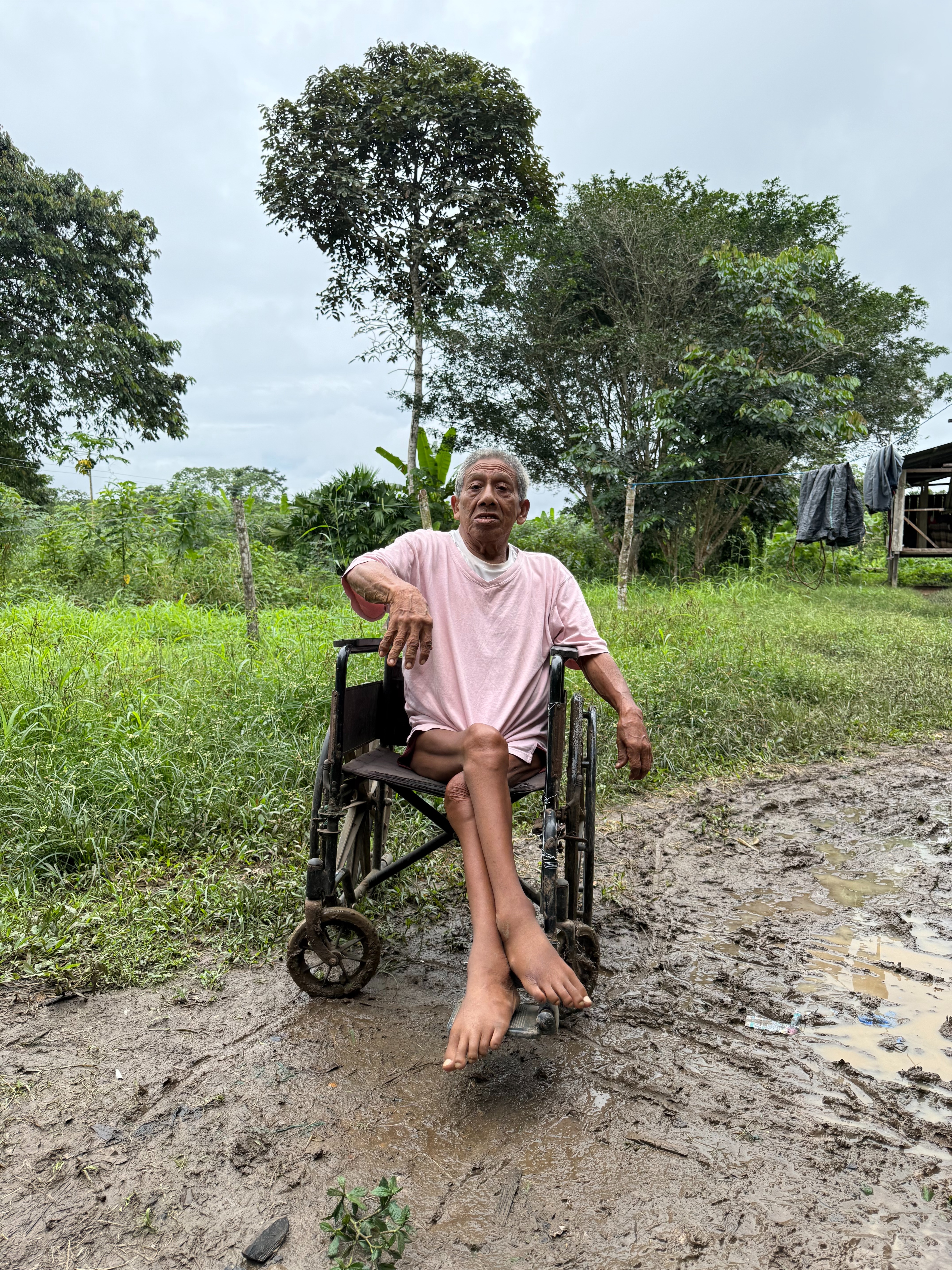
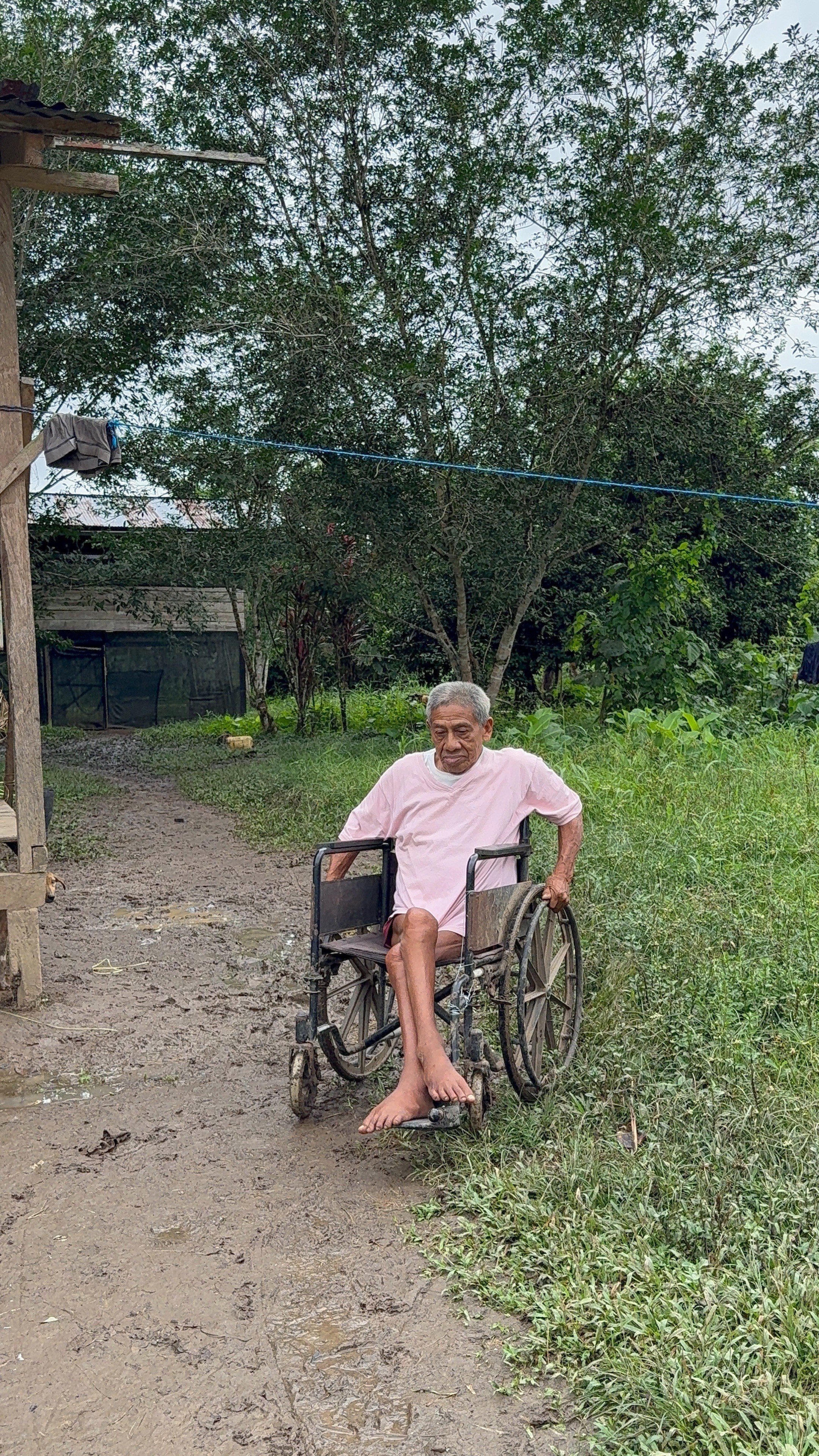
Uno dei Waorani ad essere stato contagiato, e che però è sopravvissuto, è Nenekawe.
Dal contagio con la polio, Nenekawe rimase però parzialmente paralizzato.
Nella cultura Waorani, i Pikenani, ovvero gli anziani o i saggi, sono coloro che prendono le decisioni più importanti, che custodiscono la storia e la cultura: sono dei pilastri fondamentali.
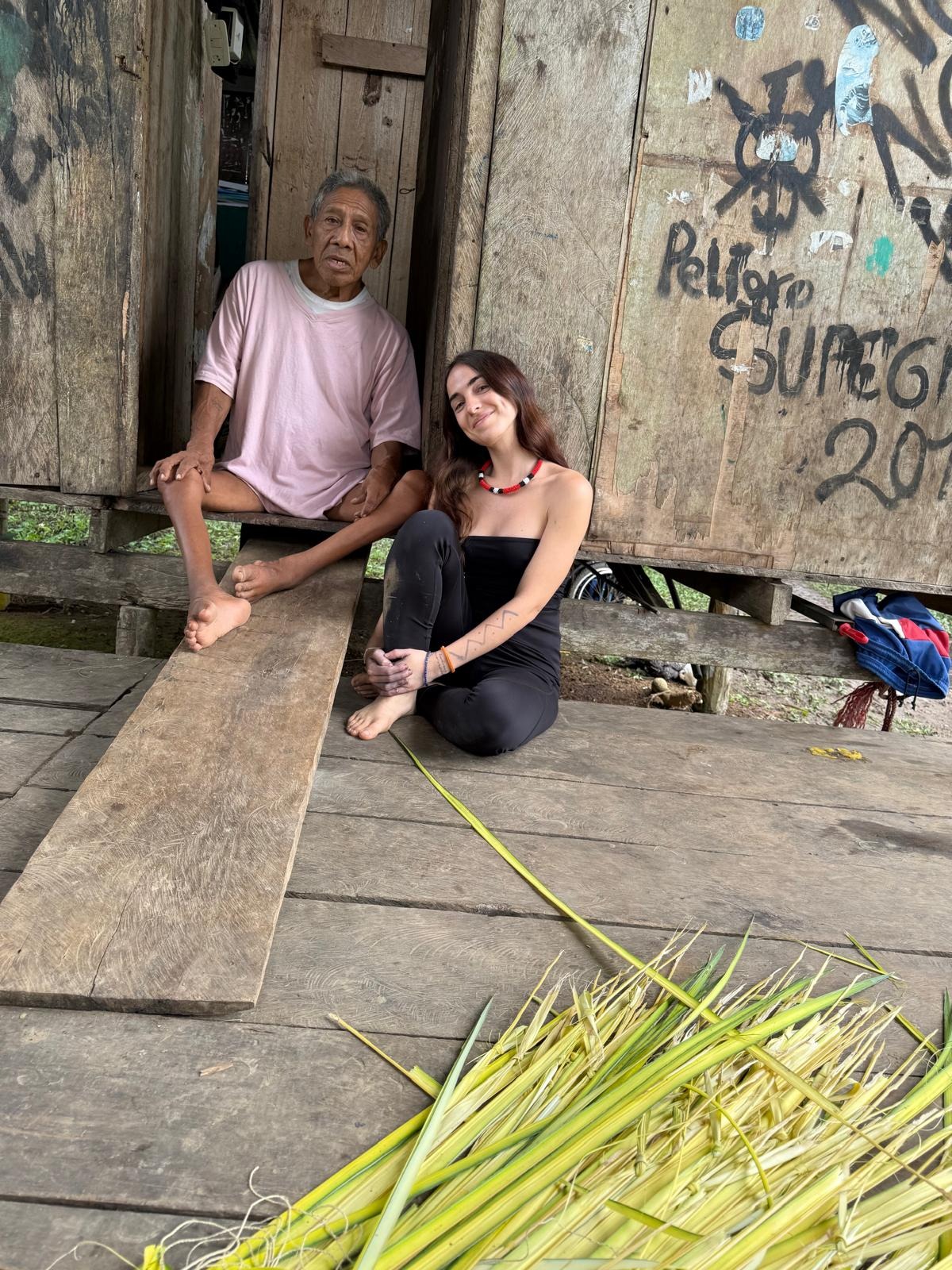
Nenekawe è un Pikenani che mi ha accolta nella sua casa, che mi chiamava “nipote mia” per il legame di parentela (non di sangue) che abbiamo.
Per me è stato un onore, ma non voglio fermarmi solo a questo.
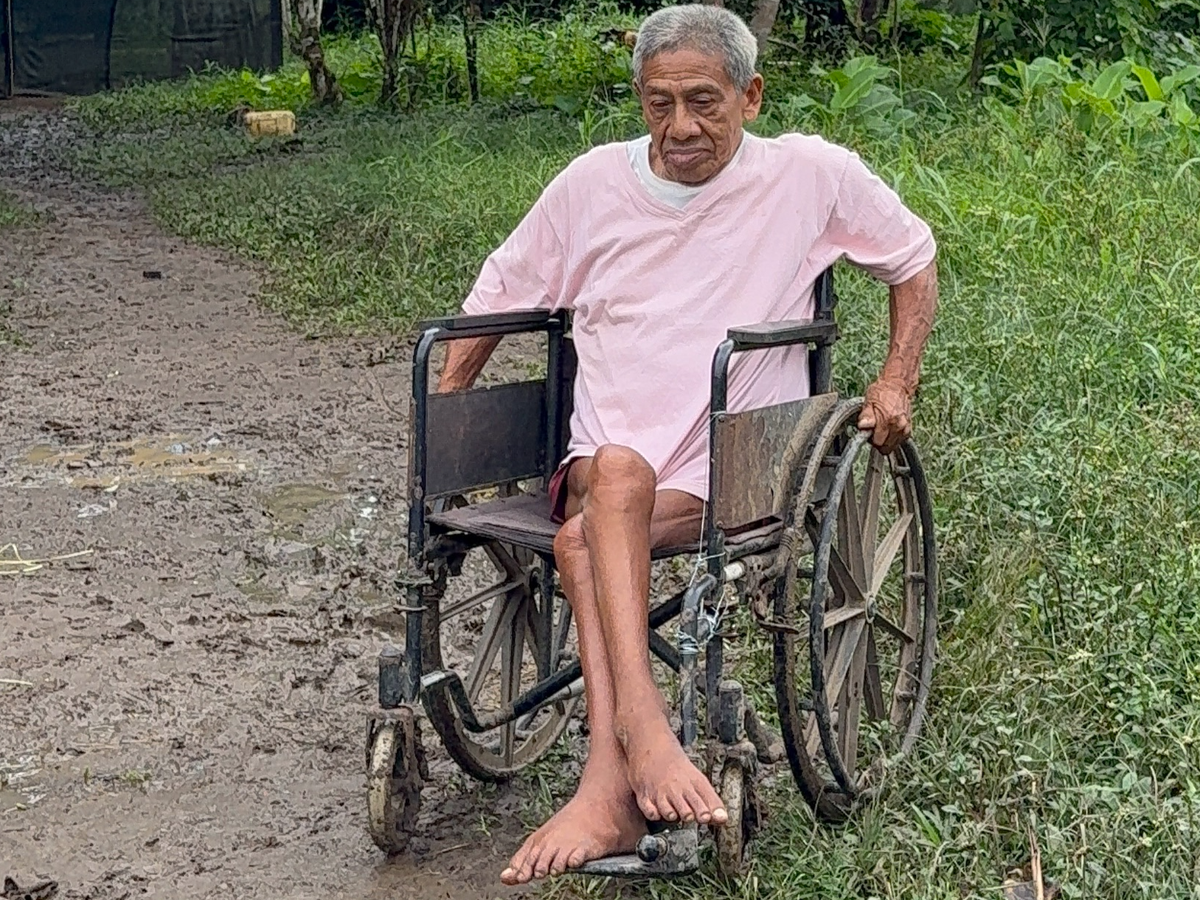
Quando ci siamo conosciuti mi ha espressamente detto che avrebbe avuto bisogno di una nuova sedia perchè la sua ormai era in pessime condizione e che lui lo aveva già fatto presente ma nessuno lo stava aiutando.
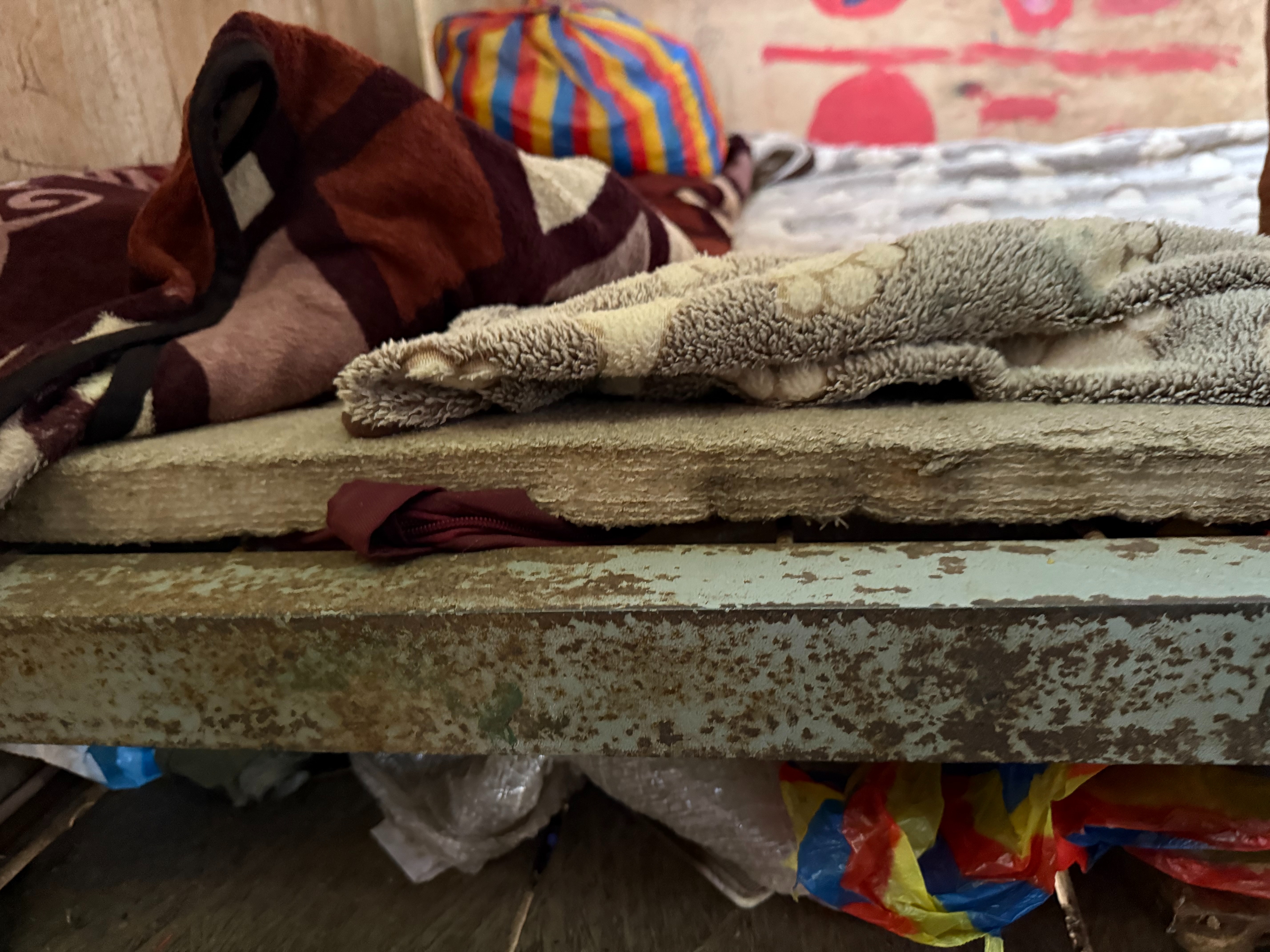
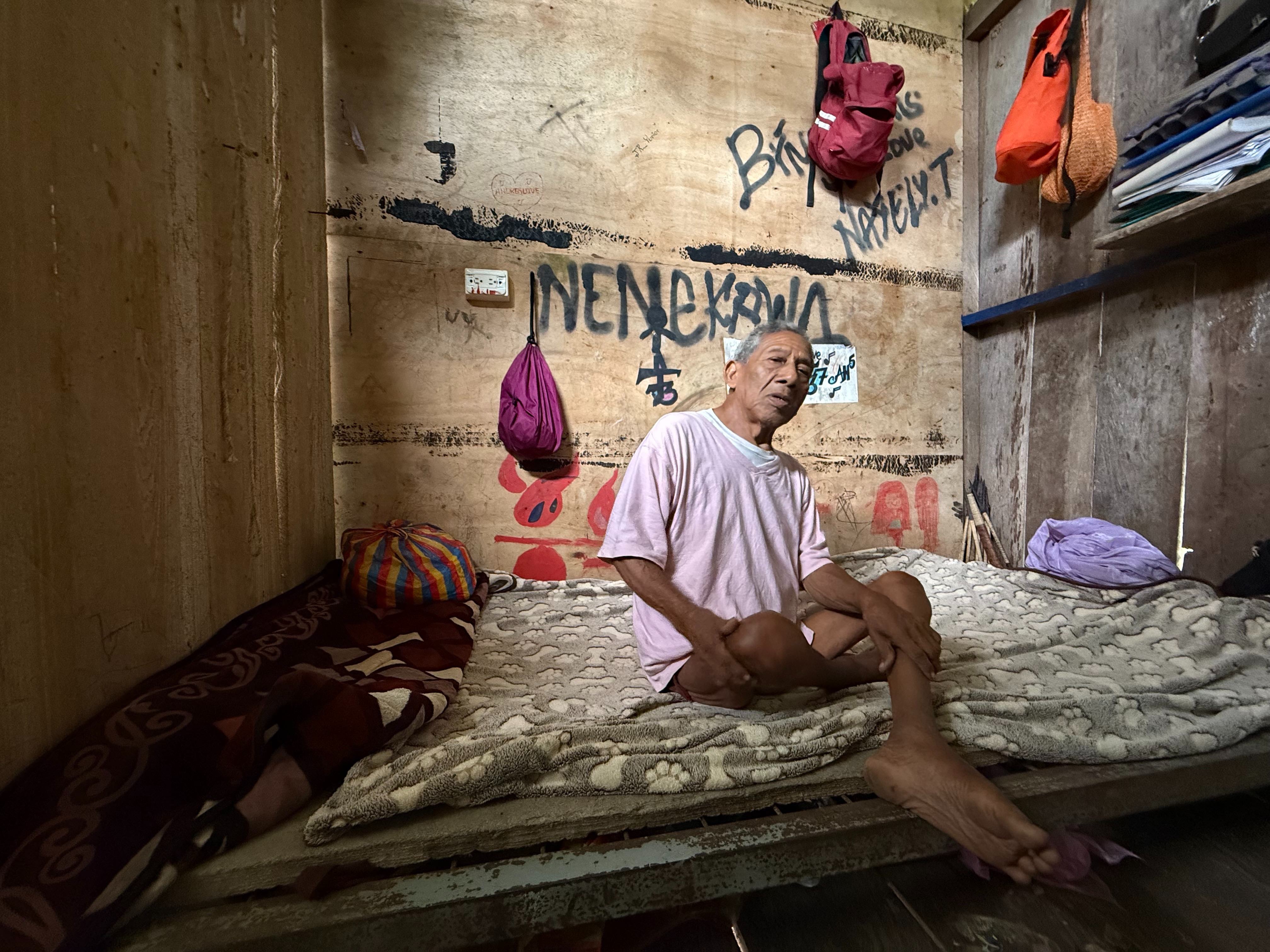
Mi ha mostrato la sua stanza, e mi ha fatto notare che sarebbe piú comodo per lui avere un materasso su cui dormire.
Mi piacerebbe che, tutti insieme, potessimo aiutare Nenekawe a muoversi meglio nella foresta.
Che potessimo offrirgli un materasso più comodo dove dormire, e magari aggiungere anche delle coperte nuove, un cuscino e qualche altra piccola cosa come regalo.
La sua sedia a rotelle è vecchia ed è tutta rotta.
Purtroppo qui in Ecuador non esiste un sistema efficiente di aiuto per le comunità in generale, e figuriamoci per gli anziani.
Ma sono sicura che, nel nostro piccolo, riusciremo ad aiutare Nene.
Grazie!
English Version:
For those who don’t know me, my name is Sara. I’ve been living in Ecuador for a few years now, more specifically in the Amazon rainforest, in an Indigenous Waorani community.
About a year ago, I started sharing my experience and the challenges of the context I live in on social media. This is my very first fundraiser, and I want to give you a bit of context so you can better understand the purpose of this campaign.
Historical context:
The contact between the Waorani people and the outside world is undoubtedly one of the most painful and violent in Ecuador’s history.
The Waorani were contacted by force, against their will, all in the name of economic interests.
The first contact with the Waorani was made by evangelical missionaries who, in the name of evangelizing this population, began flying over the forest where they lived and gradually tried to establish contact.
The Waorani did not react well at first — they attacked and killed all the first evangelical missionaries who approached them.
Despite this, the evangelical mission continued.
It was only later discovered that the Summer Institute of Linguistics (in Spanish: Instituto Lingüístico de Verano) had agreements with an oil company that was interested in exploring that very territory, which until then had remained untouched precisely because of the Indigenous peoples living there.
So, the religious conversion mission was actually driven by economic interests.
With the first contact, which happened around 1950, the effects on the Waorani population were devastating.
About half of the Waorani were infected by the missionaries with diseases that were previously unknown to them — such as polio.
Due to polio, about half of the Waorani living at that time (around 500 people) did not survive.
One of the Waorani who was infected but survived is Nenekawe.
However, after contracting polio, Nenekawe was left partially paralyzed.
In Waorani culture, the Pikenani — elders or wise ones — are those who make the most important decisions, who preserve the history and the culture: they are fundamental pillars.
Nenekawe is a Pikenani who welcomed me into his home, for me it was an honor — but I don’t want to stop there.
When we met, he told me clearly that he needed a new wheelchair because the one he has is in very bad condition. He said he had already told others, but no one was helping him.
He showed me his room and pointed out how much more comfortable it would be to have a mattress to sleep on.
I would love it if, together, we could help Nenekawe move more easily through the forest.
If we could offer him a more comfortable mattress to sleep on — maybe even some new blankets, a pillow, and a few other small things as a gift.
His current wheelchair is old and completely broken.
Unfortunately, here in Ecuador, there is no efficient support system for communities in general — let alone for elders.
But I’m sure that, even with a small effort on our part, we can help Nene.
Thank you!