- B
- S
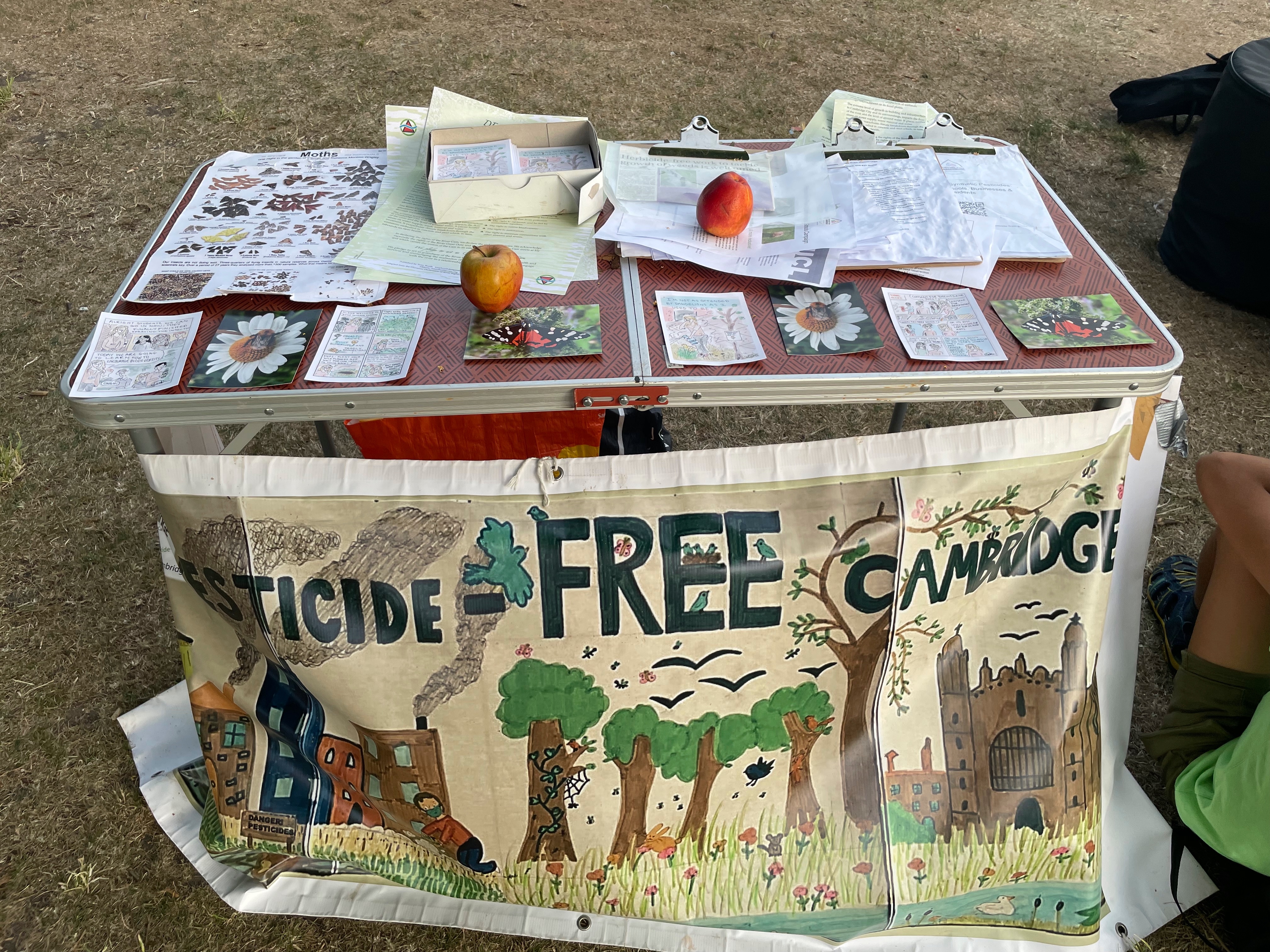
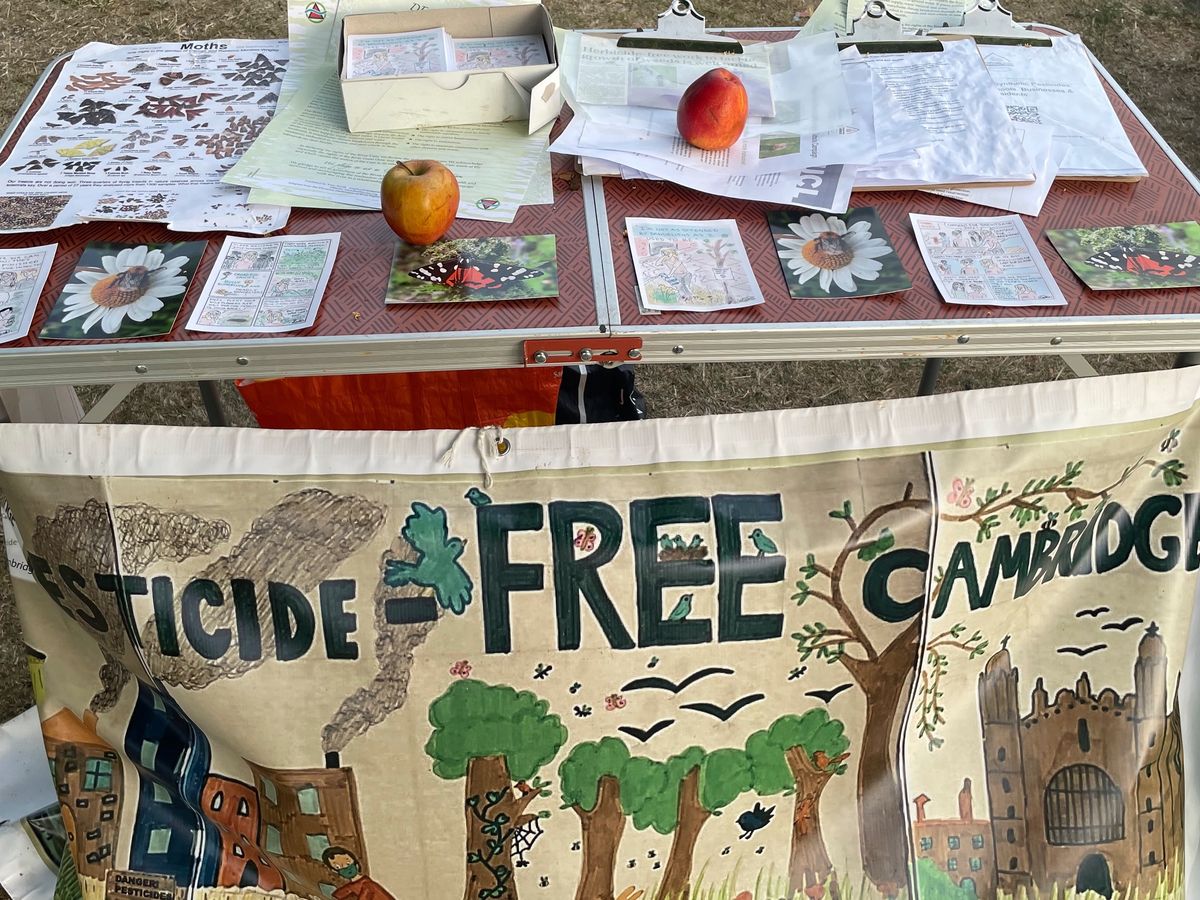
Pesticide-Free Cambridge Fundraiser
0% complete
30 £ récoltés sur
3 dons
Introduction
Pesticide-Free Cambridge was founded in 2018 as a Cambridge based group that bridges activist and academic approaches to tackling environmental challenges. We follow the Ecological Public Health and Planetary Health principles that highlight the interlinked relationship between environmental, climatic and human health, and are working to rid synthetic pesticides – both insecticides and herbicides- from our streets, verges, homes, businesses and schools. Our campaign is driven by the view that pesticide-exposure - both in green spaces and the built environment - is a combined biodiversity, public health and disability access equality matter, the latter in light of the disproportionate impact that low-dose pesticide exposure can have on people with allergies and hypersensitivities to active ingredients.
Our website provides full details of our campaigns, meetings, events and the research that informs our work. We run a Facebook page and Instagram . The UCL Pesticides and Urban Nature project informs our campaigns and methods, and in part measures the socio-political impacts of our work. We give talks at events , and contribute to the media in the form of newspapers, radio, and magazines. We work with various collaborators and allied groups, including local and national environmental charities including Friends of the Earth Cambridge, Friends of the Cam, University of Cambridge Climate Society, Pesticide Action Network UK, Students Organising for Sustainability (SOS), Hidden Disabilities Sunflower, and local residential associations and community groups.
Our Campaigns
We have led a series of local campaigns : with Cambridge City Council, Cambridgeshire County Council, and the Combined Authority Mayor, we launched Pesticide-free Schools in 2022; in 2024 we started Pesticide-Free Colleges with the University of Cambridge Climate Society. This featured roundtable meetings with College Head Gardeners and Estates/Facilities leads. We also run Pesticide-free Hospitals. Our greatest success so far is our Banning Local Authority Herbicide campaign , which involved persuaded Cambridge City Council to cease all routine herbicide use on the verges, road channels, and street infrastructure that they manage, following a series of ward-specific herbicide-free trials. This involved a five-year campaign, from a petition in 2019, to a City Council motion in 2021, from which emerged a City Council Herbicide Working Group, on which we sit, and to the council purchasing new mechanical equipment for managing street vegetation. The City Council formally ratified the resulting herbicide-free policy in Spring 2025.
Our current priorities
We now have a three year manifesto to focus our efforts on a number of targeted campaigns with three priority areas:
1. A national campaign to ban insecticidal powders, commonly used for ants in and around the built environment, with devastating impacts on non-target wildlife, biodiversity, and human health, especially for vulnerable populations.
2. A national campaign to achieve greater transparency over pesticide usage, and pesticide-free practices, within institutional policy surrounding biodiversity/sustainability, and disability access.
3. Expanding existing research and campaign collaborations, to maximise the impact and reach of our work
Why we need funding
So far, we have relied on private funds, and supporter donations to fund our website, email account, and public liability insurance that enables us to attend events. Our day-to-day work is carried out entirely by our two Project Leads , and a very small team of volunteers who juggle campaigning work with demanding day-jobs.
We urgently need to raise funds to keep these platforms going as a priority area. If we manage to raise further funds over and above the bare essentials, these would go towards employing someone to maximise our website's SEO, to manage our social media platform, and to boost our social media reach. This will be crucial to the success of our new campaigns. It would also enable us to hold several in-person events to focus attention on the biodiversity and health impacts of insecticidal powders in the built environment, and to work towards achieving better transparency in policy surrounding pesticide use by service providers.
Outcomes and Impact
Over the next 1-3 years, the main aim is to achieve behavioural and cultural change as well as change in national policy, with two main target outcomes: i) a total ban of insecticidal powder use in domestic, educational, and commercial premises; and ii) an obligatory inclusion of pesticides within all public-facing organisational biodiversity, sustainability, and disability access policy documentation.
Actions
These intended outcomes will be implemented through:
- Improved social media presence and website content/design.
- Increased participation at public events.
- Two soon-to-be launched national petitions, ongoing work with policy makers.
- A series of planned workshops on urban pesticides and environmental conservation that will bring together academics, activists, and policy makers.
- Collaborations with film and radio documentary makers.
- Ongoing collaboration with local community groups.
Target fundraising costs
In order of priority we need to raise funds to cover the following costs. Only once we meet the costs for our initial target will we move on to the bigger costs further down the priority list:
- Basic running costs: Website hosting, email, insurance, printing, running events: £1000
- IT/Social Media assistant: £1500
- Venue hire and catering for 2 x workshops: £1500
We’d be hugely grateful for any donation that you might consider giving to us. We will keep you updated on our Blog of our fundraising progress.