- B
- K
POV: A transplant is the only solution, but the insurance doesn't cover everything, and post-op meds will cost $3k per month. For the rest of your life. You are 40.
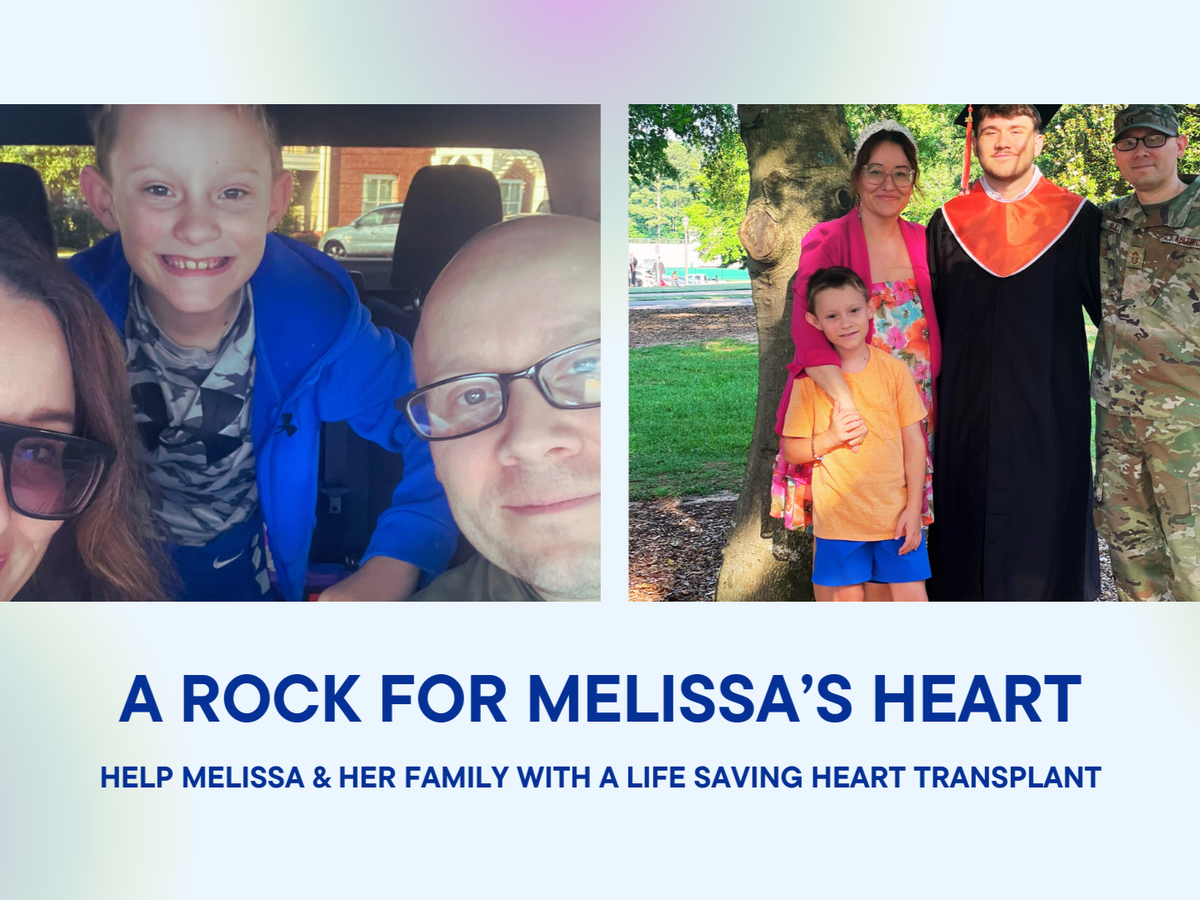
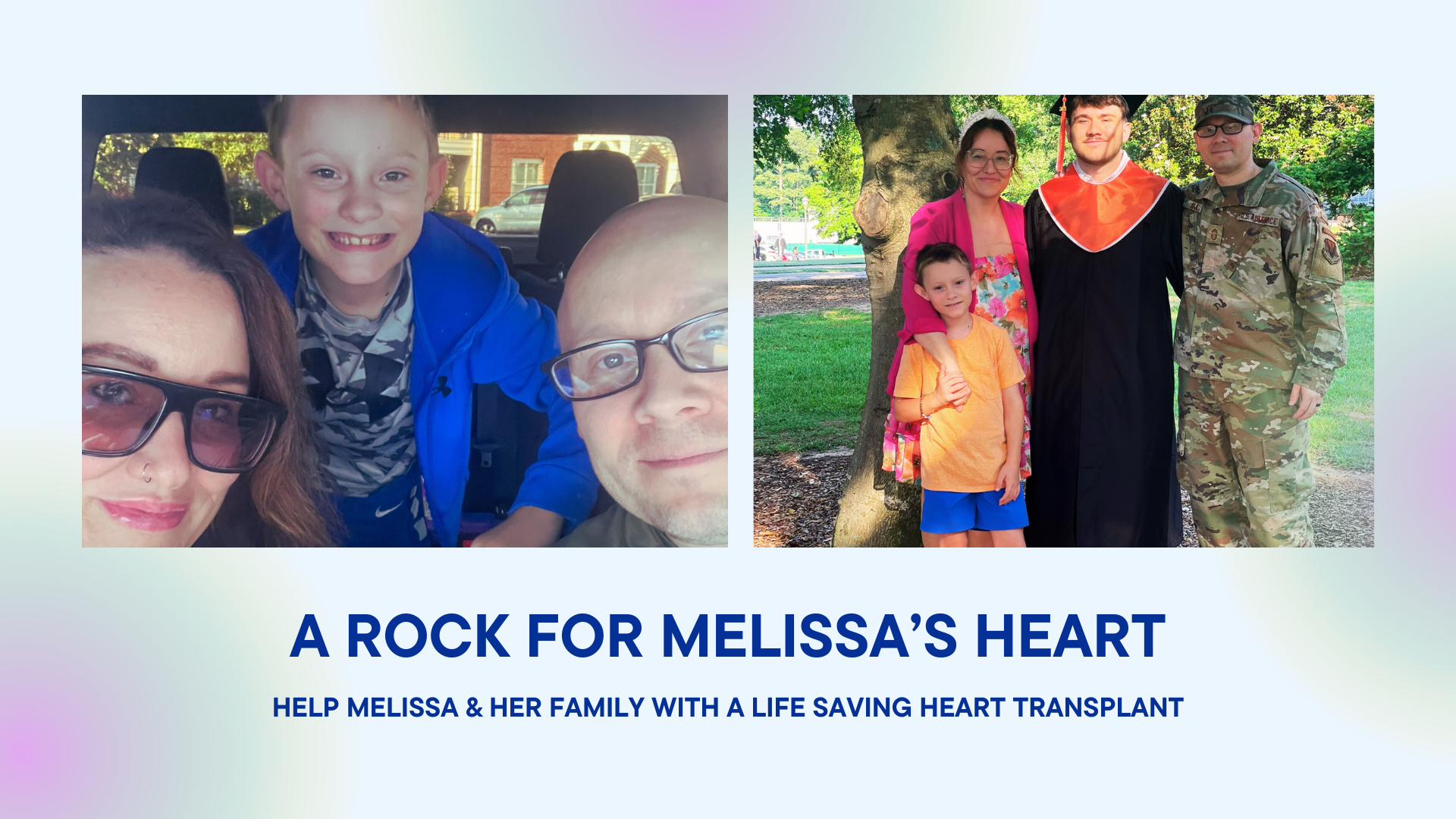
Melissa has been living with heart failure for ten years. She's about to get a transplant that will save her life, but she and her family need help with medical costs. Let's be her rock!
Imagine, you are a healthy, active fitness professional, newly married and excited to give birth to a sweet baby boy. Some ten weeks from the delivery date, you go in for a routine appointment and....end up in the hospital instead. That day, your entire life changes forever. Not only do you have to have an emergency pre-term delivery that is incredibly traumatic for you, the baby, your husband, and young son, but in the process of delivering the baby, your heart unexpectedly and inexplicably fails.
They call it "peripartum cardiomyopathy." Pregnancy-induced heart failure. You endure several months of NICU, your newborn miraculously survives and thrives, and your family rallies around you. You're overjoyed to be a mom. Your son grows and delights the world with his light. But your heart...well, it doesn't get better. You feel pretty awful, all the time. Your energy doesn't return.
You go to doctor after doctor. They are baffled by your case. Your husband, who serves the country in the United States Air Force, does all he can to support you. You read incredible amounts of incomprehensible information and stay on hold for hours and wait for callbacks. You can't work, you struggle to complete basic everyday tasks. Your treatments are complicated, delayed. You are shuffled from one specialist to another. You are dismissed, put on the back burner, left to try to figure out a baffling and debilitating condition on your own. Nonetheless, you persevere.
Years go by. You experience marginal improvements, but the care continues to be mismanaged. The many treatments you try are expensive and ineffective. The side effects are debilitating. Still, you manage to work, take care of your children, husband, and household. You manage to find moments of joy along the way. You privilege the time you spend with your family to make memories with them because you honestly don't know how long you will be around. The doctors still don't have a solution. You try new doctors when your family relocates. You have a device implanted in your heart to shock you back to life in case your heart can't make it through the day.
You live with it. You become accustomed to a life punctuated with hospitalizations, surgeries, complications, side effects, bed days, tears, anguish, mismanaged care, anxiety, stress, grief...
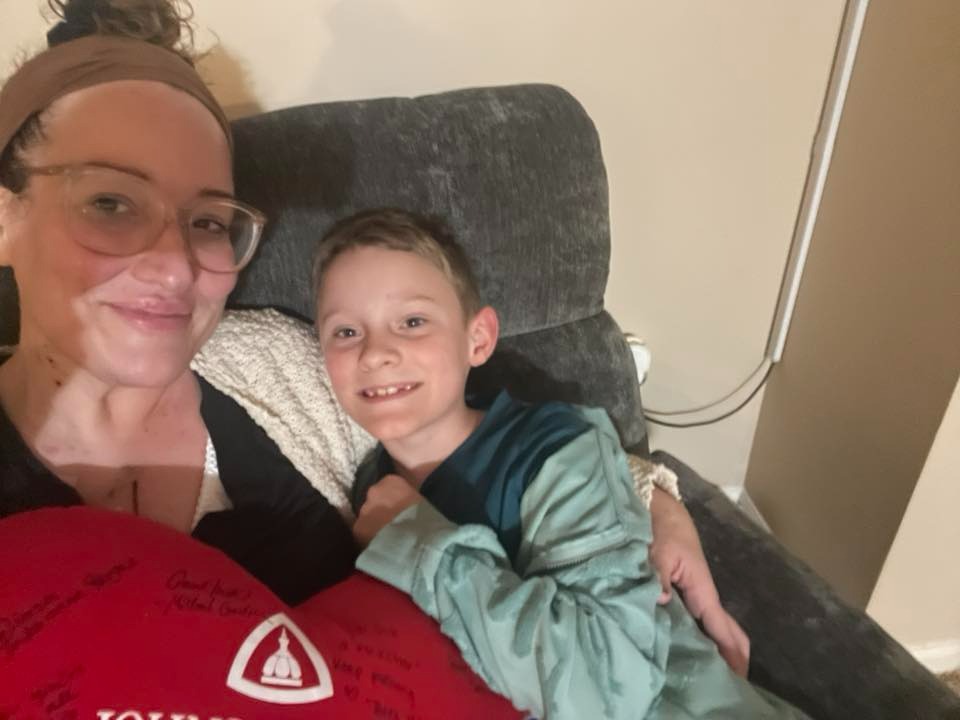
Finally, after ten years, you find your way to a medical team who gives you the correct diagnosis. And it's a good thing, because your heart is declining. You have basically been spending your days in bed. The new team at Johns Hopkins finally figures out what is really going on - two genetic mutations that are both rare on their own, but together? Astronomically rare.
It's not pregnancy-induced heart failure. It is a rare cluster of genetic conditions: DSP and LMNA. You need a transplant, and you need it right away.
This brings mixed emotions. On one hand, there is great happiness to finally know the root cause of the heart failure. On the other, there is great fear and anxiety around not only the procedure itself, but around the logistics of keeping the family going during the long transplant process, and, of course, because of the costs.
They sit you down at the hospital during the evaluation and they walk you through what you will need.
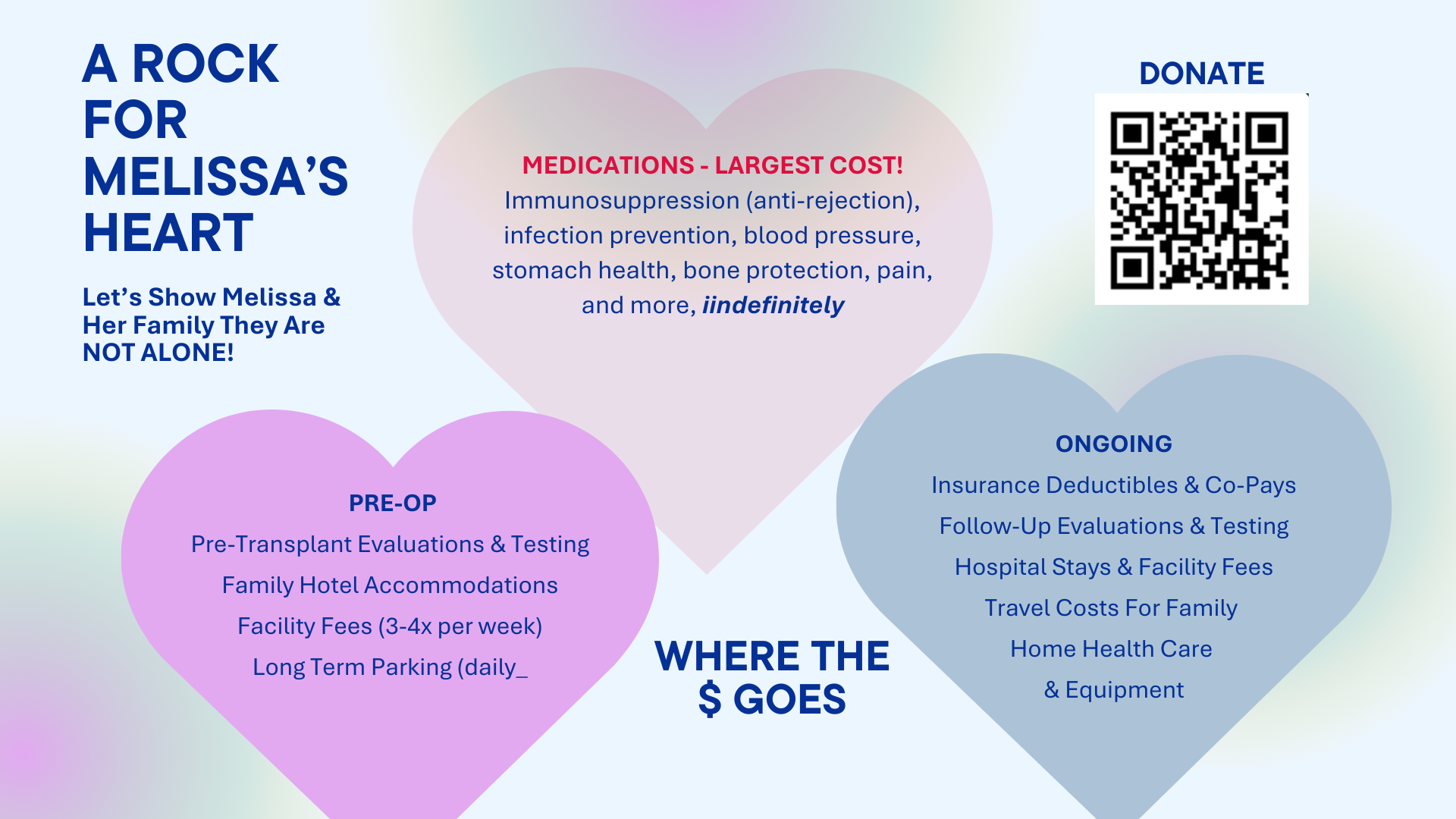
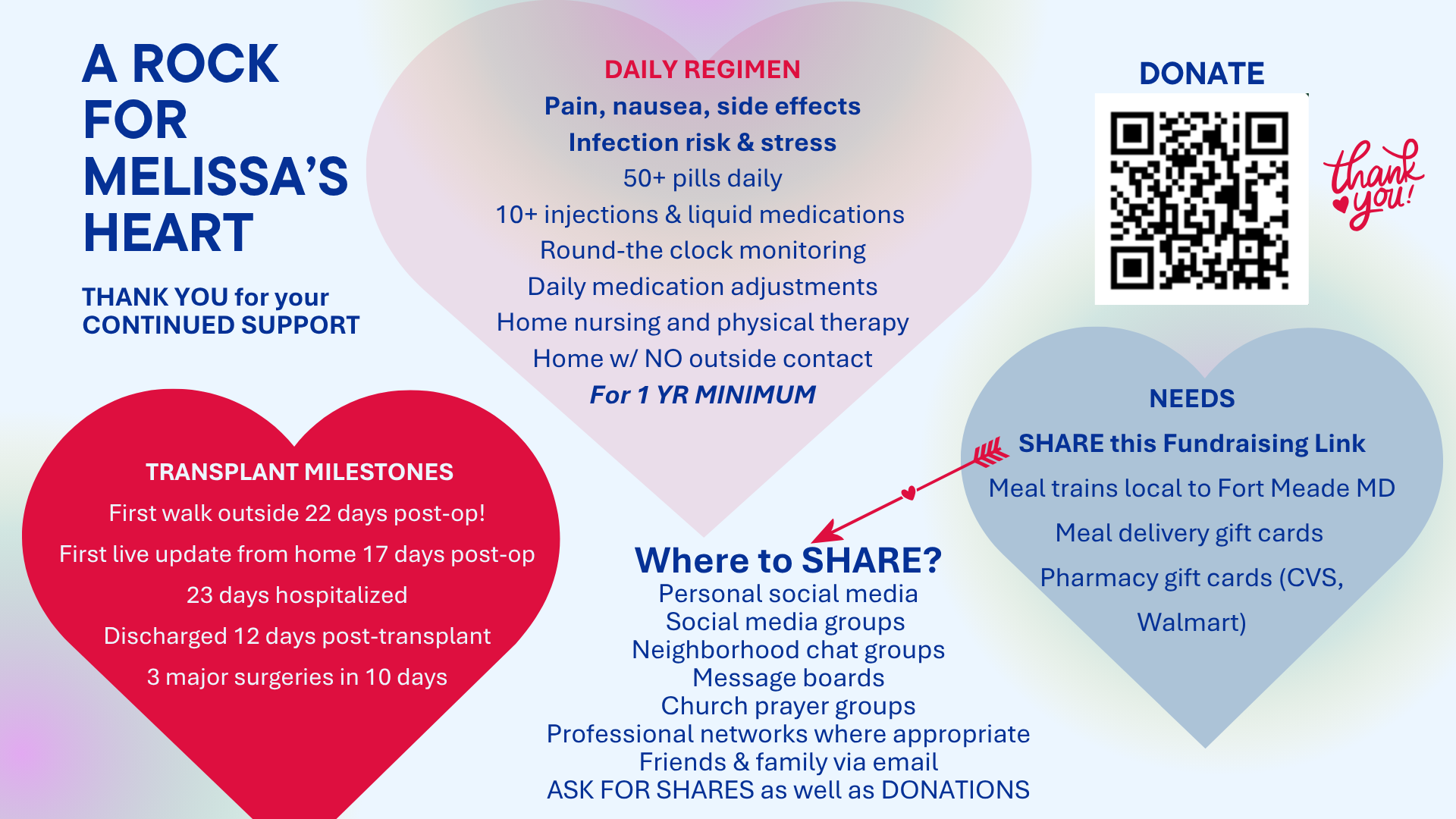
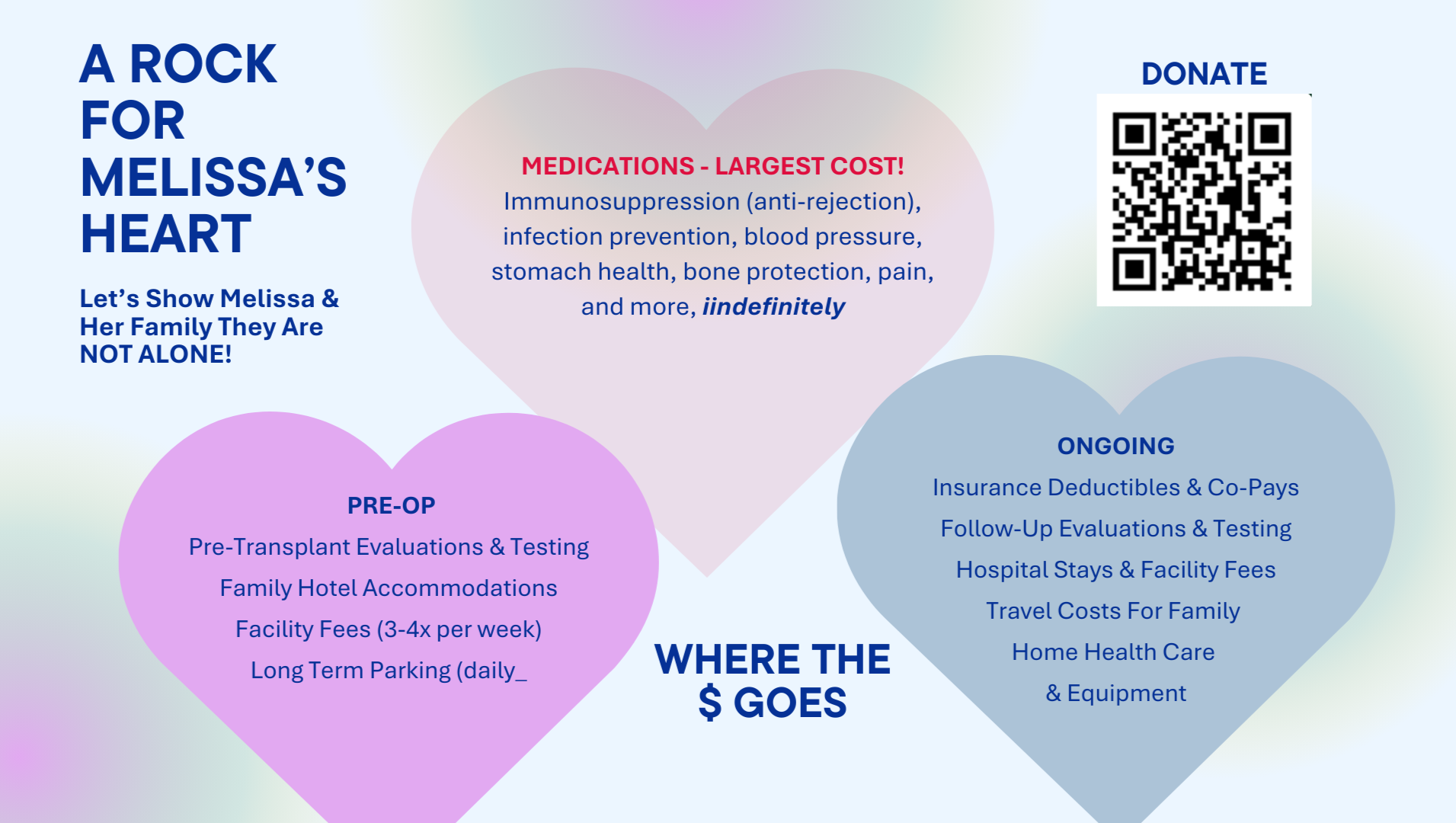
Mostly it's medications. Up to 16 different medications post-op that will costs *thousands* per month out of pocket. These are for immunosuppression (anti-rejection), infection prevention, blood pressure, stomach health, bone protection, pain, and more. But then there are facility fees (separate from insurance) billed several times a week. You'll need to see a social worker, you'll need long-term parking at the hospital for months, you'll need equipment for the home...your head spins with everything there is to pay for and organize, and you're so tired you can barely think.
That's when you ask a friend to help you with a gofundme.
-----
My name is Sarah and Melissa has been my friend for close to 20 years now. By the grace of God, she was the trainer assigned to me when I joined a gym right after giving birth to my daughter in 2010. She has become one of my closest, dearest friends since then. She has always been one of the strongest people I know, with a spark and a love for sports and fitness, the environment and the outdoors, animals, and her fellow humans. Her humor, generosity, and the energy she has to give to the world are unmatched.
Melissa has not been able to work for several months now as her health had seriously declined. Her circle of friends and family are so happy to know that finally some smart doctors have figured out how to help her recover her health and functioning.
The financial impact of the transplant, however, is crushing. In addition to the costs described in the story above, she will need help with: Insurance deductibles and co-pays, pre-transplant evaluations and testing, follow-up care and testing, additional hospital stays and doctors' fees not covered by insurance, travel costs related to hospital stays for herself and family, and more, while not being able to work.
PLEASE NOTE that ALL the costs listed here are AFTER insurance! Thank you for your support. Every little bit helps sustain the family through this transition time. Thank you for your help and your prayers!
Organizer and beneficiary

Melissa Drake
Beneficiary