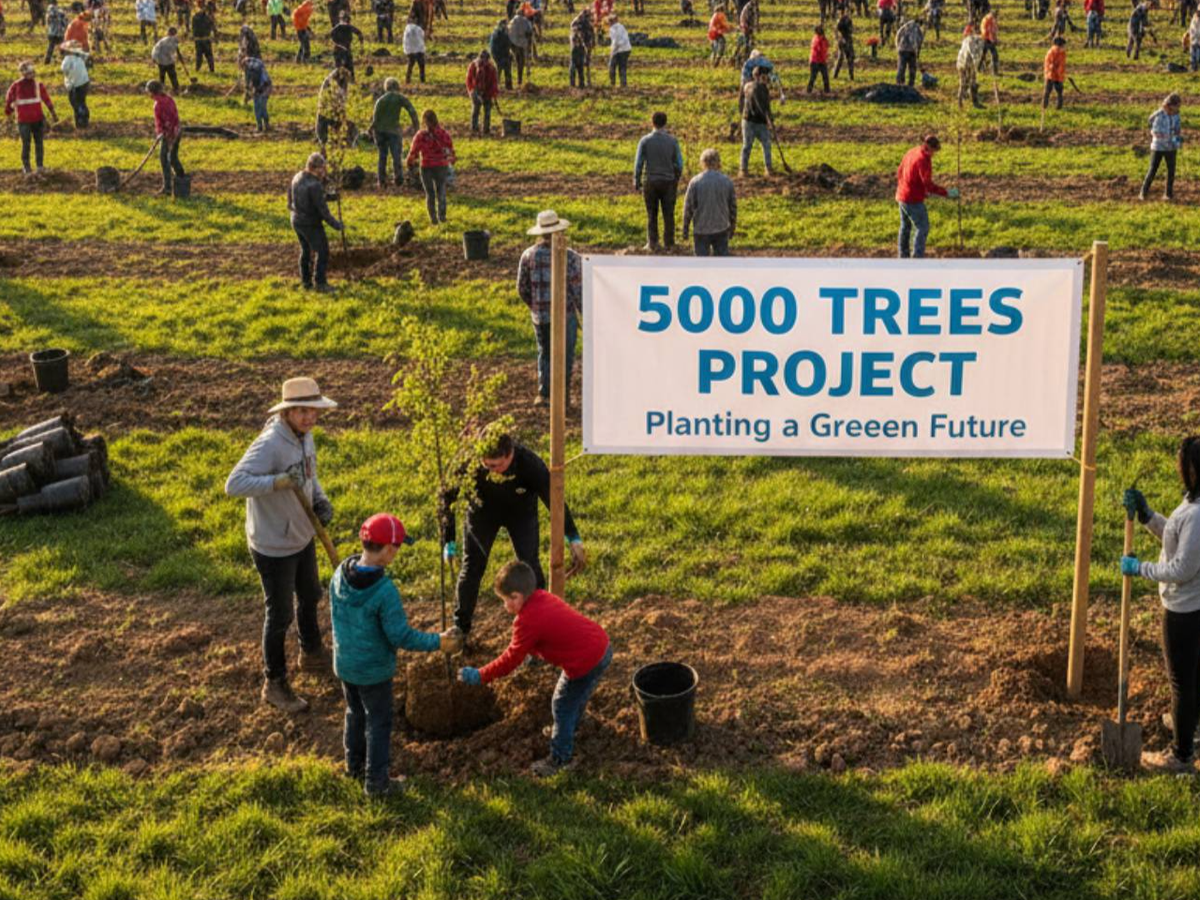
5000 Trees Project Plan: Planting a Greener Future
1. Project Overview and Goals
This project aims to successfully plant 5,000 native tree saplings within a designated area during the Winter. The primary goal is to enhance local biodiversity, contribute to carbon sequestration, and engage the community in environmental stewardship.
Metric Target Success Criteria
Quantity 5,000 Trees 5,000 saplings successfully planted.
Survival Rate 85% after 1 Year Verification post-maintenance period.
Community Engagement 100 Volunteers Recruitment and participation goal met.
Budget Within defined limit All costs tracked and reconciled within allocated funds.
2. Project Scope and Deliverables
In-Scope
Site selection and land access agreement.
Procurement of 5,000 native tree saplings (e.g., Oak, Maple, Pine, etc.).
Procurement of planting tools (spades, gloves), protective gear (stakes, tree guards).
Coordination of a single large-scale planting day event.
Initial 6-month maintenance and watering plan.
Out-of-Scope
Long-term maintenance beyond 12 months.
Large-scale heavy machinery operation (except initial site preparation, if required).
Funding for permanent site infrastructure (e.g., fencing, irrigation systems).
3. Project Phases and Timeline
The project is structured into three main phases, with an estimated duration of 6 months leading up to the post-planting maintenance period.
Phase Description Estimated Duration Key Milestones
Phase 1: Preparation Site confirmation, agreements, permits, and resource securing. 8 Weeks Final Site Agreement, 100% Tree Order Placed, Volunteer Sign-up Launched.
Phase 2: Planting Event Final site preparation and execution of the main planting day. 2 Weeks Site Preparation Complete, All 5,000 Trees Planted, Post-Event Cleanup.
Phase 3: Post-Planting & Review Initial maintenance, survival rate checks, and final project documentation. 6 Months Initial Watering Complete, Survival Check (Month 6), Final Project Report.
4. Resource Management
A. Budget Categories (Estimated Allocation)
Category Allocation Notes
Sapling & Materials 50% Cost of 5,000 trees, stakes, guards, fertilizer.
Logistics & Equipment 20% Tool rental, volunteer refreshments, waste disposal.
Permitting & Site Fees 15% Land access agreements, liability insurance.
Contingency 15% Unforeseen costs (e.g., urgent watering, replacement saplings).
B. Core Team Roles
Project Lead: Overall accountability, stakeholder communication, budget oversight.
Logistics Coordinator: Manages supplies, transportation, site setup, and breakdown.
Volunteer Coordinator: Handles recruitment, communication, registration, and on-site briefing.
Technical Arborist: Advises on tree selection, planting depth, and initial maintenance protocols.
5. Risk Management Plan
Risk Probability Impact Mitigation Strategy
Low Tree Survival Medium High Select only native, climate-appropriate species. Implement a robust 6-month watering schedule (Phase 3).
Low Volunteer Turnout Medium Medium Partner with local schools/businesses early. Offer incentives (e.g., certificates, T-shirts).
Inclement Weather High Medium Define a clear rain/snow date for the main event. Ensure adequate muddy-site gear is available.
Supply Chain Delays Medium Medium Order saplings and materials 10 weeks in advance and secure firm delivery dates from multiple nurseries.
6. Project Closeout
The project will officially close upon completion of the 6-month survival check and submission of the Final Project Report. This report will document actual costs, volunteer hours, tree survival rate, and lessons learned for future planting initiatives.
Organizer